

Curated Christmas Wrapping: Sustainable Luxury Unwrapped
Choosing Christmas wrapping that reflects both luxury style and environmental values can feel like a challenge for British shoppers who want something truly special. With the festive season fast approaching, finding gift wrap that combines sustainable materials with a personal, artful touch is more important than ever. This guide explores how curated Christmas wrapping uses elegant reusable fabrics and unique embellishments to create memorable, eco-friendly gift presentations for a thoughtful and ethical celebration.
Table of Contents
- Defining Curated Christmas Wrapping
- Types of Fabric Gift Wrap and Collections
- How Personalised Embroidery Adds Value
- Eco and Ethical Impact in 2025
- Common Pitfalls and What to Avoid
Key Takeaways
| Point | Details |
|---|---|
| Embrace Curated Wrapping | Transition to curated Christmas wrapping to enhance gift presentation and embrace sustainability through reusable fabrics and techniques. |
| Select Sustainable Materials | Prioritise materials like organic cotton and linen that are not only visually appealing but also beneficial for the environment. |
| Incorporate Personalisation | Add value to gifts with personalised embroidery that enhances emotional connection and promotes reusability. |
| Avoid Common Pitfalls | Steer clear of non-recyclable materials and create a system for storing reusable wraps to maximise their potential sustainability. |
Defining Curated Christmas Wrapping
Curated Christmas wrapping transcends traditional gift presentation, emerging as an artful practice that combines aesthetic elegance with sustainable consciousness. This sophisticated approach transforms gift-giving from a routine exchange into a meaningful cultural ritual, where wrapping practices carry profound emotional significance.
At its core, curated Christmas wrapping represents a deliberate selection of materials and techniques that elevate the gifting experience. Unlike conventional disposable paper wrappings, this approach prioritises reusable fabrics, personalised embellishments, and environmentally considerate choices. Fabric wrapping methods like Furoshiki and artisan-crafted textiles not only reduce waste but also communicate intention and care through each carefully selected wrap.
The practice goes beyond mere aesthetics, serving as a statement of environmental responsibility and cultural appreciation. Sustainable wrapping becomes a narrative of mindful consumption, where each fold and fabric choice tells a story of ecological awareness and personal thoughtfulness. By selecting materials that can be reused, gifters contribute to reducing holiday waste while creating memorable, visually stunning gift presentations.
Pro tip: When selecting your Christmas wrapping materials, prioritise natural fabrics like organic cotton or linen that can be beautifully repurposed after the festive season, transforming a single-use tradition into a sustainable practice.
Here is a comparison of materials commonly used for curated Christmas wrapping, highlighting their sustainability, appearance, and reuse potential:
| Material | Sustainability Benefits | Visual Appeal | Possibilities for Reuse |
|---|---|---|---|
| Organic Cotton | Biodegradable, low-impact | Soft, natural elegance | Easily repurposed |
| Linen | Durable, resource-efficient | Rustic sophistication | Multiple uses at home |
| Silk Satin | Renewable, luxury feel | Glossy, formal look | Formal occasions reuse |
| Upcycled Fabrics | Reduces waste, unique prints | Diverse, creative styles | Varied craft projects |
Types of Fabric Gift Wrap and Collections
Fabric gift wrapping represents a rich tapestry of cultural traditions and sustainable practices, spanning diverse global techniques that transform gift presentation into an art form. Traditional wrapping styles like Furoshiki and bojagi showcase how different cultures have long embraced textile-based gift presentation, offering elegant alternatives to disposable paper wrappings.
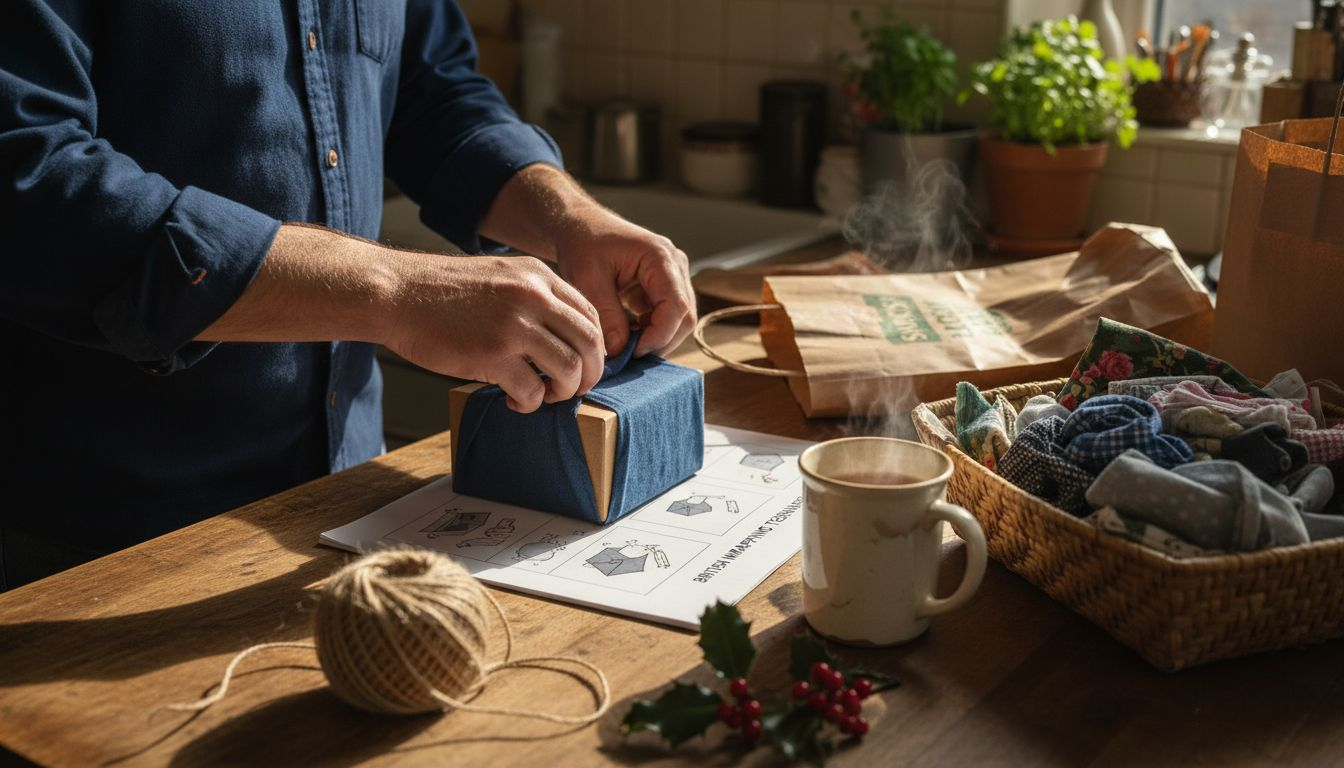
The world of fabric wraps encompasses a stunning array of materials and styles, each bringing unique aesthetic and functional qualities. Luxury fabric collections typically feature materials such as satin, silk, cotton, and linen, each offering distinct textures and visual appeal. Silk satin provides a smooth, lustrous finish perfect for formal gifts, while organic cotton and linen present a more natural, understated elegance that speaks to environmental consciousness.
These fabric wrap collections are not merely decorative but represent a sophisticated approach to gifting that prioritises sustainability and cultural expression. From Japanese Furoshiki cloths designed to be intricately folded and reused, to hand-embroidered napkins that become part of the gift itself, these wrapping methods transform the entire gifting experience. They reduce waste, create memorable presentations, and honour the cultural traditions of mindful gift-giving.
Pro tip: Invest in a versatile collection of fabric wraps in neutral colours and classic patterns, allowing you to mix and match for different occasions while building a sustainable gift-wrapping arsenal.
This summary outlines the cultural fabric wrapping techniques featured in sustainable gifting:
| Technique | Regional Origin | Distinctive Feature | Environmental Advantage |
|---|---|---|---|
| Furoshiki | Japan | Intricate folding styles | Complete reusability |
| Bojagi | Korea | Patchwork and embroidery | Zero waste presentation |
| Hand embroidery | Global | Personalised stitched motifs | Increases item longevity |
How Personalised Embroidery Adds Value
Personalised embroidery transforms ordinary fabric gift wraps into extraordinary keepsakes, elevating the entire gift-giving experience through intricate cultural craftsmanship and artistic expression. This meticulous technique goes beyond mere decoration, creating a profound emotional connection between the giver and recipient by infusing each wrapped present with unique, meaningful storytelling.
The art of personalised embroidery offers multiple dimensions of value. Customised motifs and monograms can capture individual stories, commemorate special moments, or reflect the recipient’s personality. Creative embroidery techniques allow for deeply personal touches, such as incorporating family crests, significant dates, or intricate designs that speak directly to the recipient’s interests, making the wrapping itself a treasured component of the gift.
Beyond aesthetic appeal, personalised embroidery represents a sustainable luxury approach to gift presentation. By transforming fabric wraps into lasting artifacts, these embellished textiles transcend their initial purpose, becoming cherished items that can be preserved, reused, or repurposed. The intricate handwork signals remarkable attention to detail, demonstrating a commitment to quality and intentionality that mass-produced paper wrappings simply cannot match.
Pro tip: Select embroidery threads and designs that complement the recipient’s personal style, ensuring the fabric wrap becomes a memorable extension of the gift itself.
Eco and Ethical Impact in 2025
The landscape of sustainable gifting is undergoing a transformative shift, with ethical packaging practices becoming increasingly mandatory in 2025. Consumers are no longer passive participants but active drivers of environmental responsibility, demanding transparency in material sourcing, production processes, and waste reduction strategies for Christmas gift wrapping.
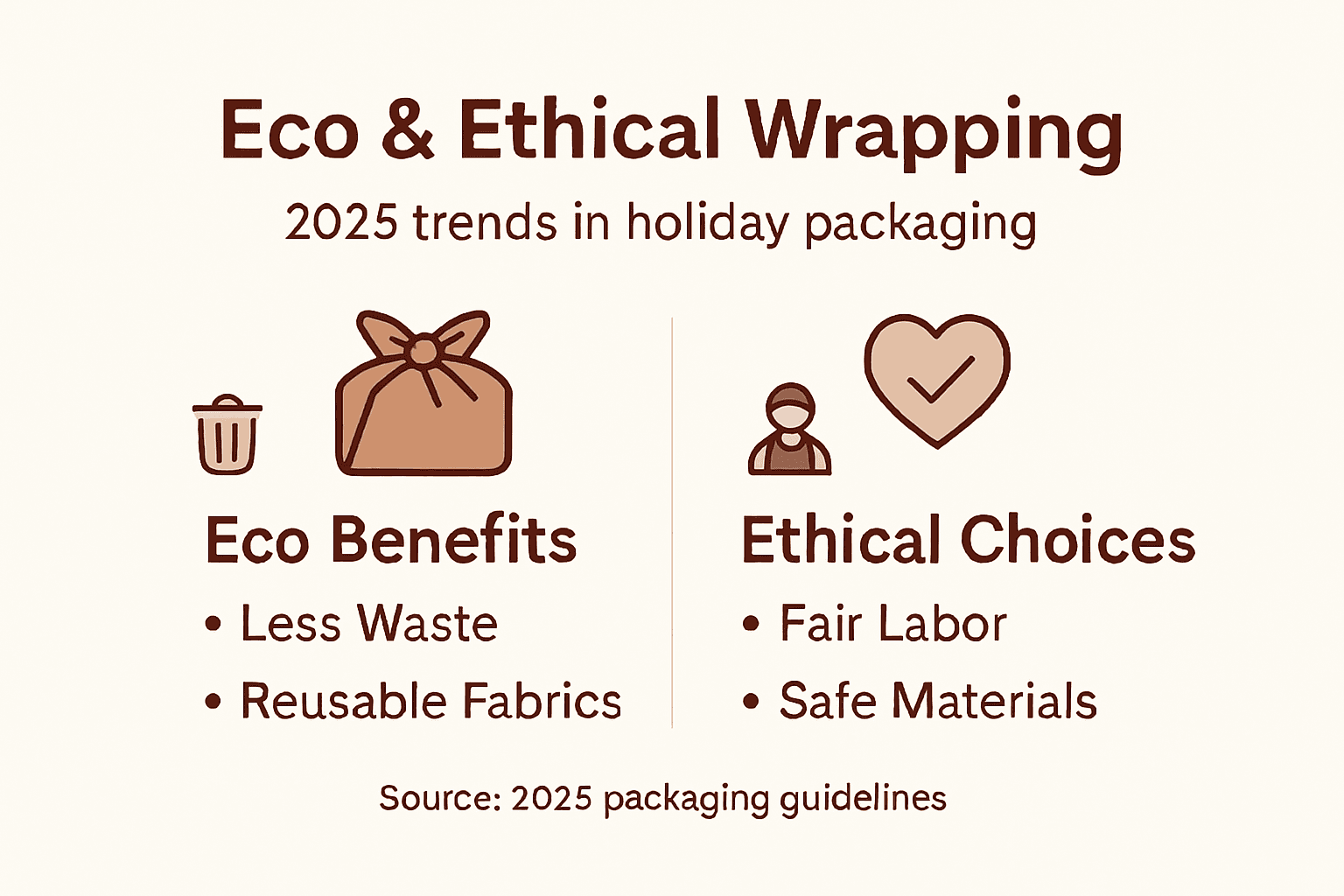
Extended Producer Responsibility (EPR) laws are reshaping the packaging industry, compelling brands to rethink their approach to material selection and waste management. Sustainable packaging now requires comprehensive lifecycle assessments, focusing on reducing carbon footprints and supporting circular economy principles. This means fabric gift wraps must not only be biodegradable but also produced using environmentally conscious methods, minimising harmful chemical treatments and prioritising renewable resources.
The ethical impact extends beyond environmental considerations, encompassing social responsibility in manufacturing. Brands are increasingly scrutinised for their labour practices, material sourcing, and overall commitment to global sustainability. The curated Christmas wrapping of 2025 represents more than a decorative choice; it is a statement of values, reflecting a holistic approach to consumption that considers ecological preservation, worker welfare, and long-term planetary health.
Pro tip: Research the supply chain and ethical credentials of your fabric wrap providers, ensuring your sustainable luxury choices genuinely contribute to positive global impact.
Common Pitfalls and What to Avoid
Navigating the world of sustainable Christmas wrapping requires careful consideration of materials and practices that can undermine environmental intentions. Common wrapping mistakes often stem from overlooking critical recycling guidelines, with seemingly innocent choices potentially creating significant waste and ecological damage.
Key pitfalls to avoid include selecting wrapping materials with non-recyclable elements. Problematic materials like metallic papers, glittery embellishments, and plastic-coated wrappings create significant challenges for waste management. Synthetic inks and non-biodegradable decorations can contaminate recycling streams, rendering entire batches of potentially recyclable materials unusable. Consumers must scrutinise every aspect of their wrapping choices, from the base material to decorative elements, ensuring each component supports genuine sustainability.
Beyond material selection, another critical area of concern involves the disposal and potential reuse of wrapping materials. Many sustainable alternatives, such as fabric wraps and quality gift bags, are frequently discarded after a single use, negating their environmental potential. Conscious gifters should develop strategies for storing, maintaining, and creatively repurposing wrapping materials, transforming them from single-use items into versatile, long-lasting resources that reduce overall waste and consumption.
Pro tip: Create a dedicated storage system for reusable fabric wraps, ensuring they remain clean, pressed, and ready for future gifting occasions.
Transform Your Gift-Giving with Sustainable Luxury Wrapping
The challenge of finding beautiful, eco-friendly gift wrap that respects both the planet and loved ones is real. If you want to avoid wasteful traditional papers and embrace the artistry of curated Christmas wrapping, choosing reusable fabric wraps personalised with embroidery offers a meaningful solution. This approach not only elevates your gift presentation but also reflects your commitment to sustainability and thoughtful giving.
Discover our Reusable Fabric Wrap - Luxurious Christmas Collection designed specifically to match the elegance and environmental values highlighted in this article.
Experience the joy of gifting with wraps that tell a story through their fabric quality, cultural inspiration, and personalised embroidery. Visit Nicholas & Rose Limited to explore collections that help you avoid common wrapping pitfalls, champion ethical impact, and create memorable eco-friendly celebrations. Take the next step towards sustainable luxury gift wrapping today and make your 2025 Christmas truly unforgettable.
Frequently Asked Questions
What is curated Christmas wrapping?
Curated Christmas wrapping is an artful approach to gift presentation that combines aesthetic elegance with sustainability. It focuses on using reusable fabrics and personalised embellishments instead of conventional disposable paper, turning gift-giving into a meaningful ritual while reducing waste.
What materials are best for sustainable Christmas wrapping?
The best materials for sustainable Christmas wrapping include organic cotton, linen, silk satin, and upcycled fabrics. These options not only offer aesthetic appeal but also provide ecological benefits, such as biodegradability and reusability, making them ideal for mindful gifting.
How can personalised embroidery enhance gift wrapping?
Personalised embroidery adds emotional value to fabric wraps by incorporating customised motifs or monograms, which can reflect the recipient’s personality or commemorate special moments. This enhances the gifting experience by creating a deeper connection between the giver and recipient.
What common mistakes should be avoided in eco-friendly wrapping?
Common mistakes include using wrapping materials with non-recyclable components such as metallic papers and plastic-coated wrappings. It’s also important to consider the disposal and potential reuse of wrapping materials to ensure they genuinely contribute to sustainability rather than resulting in additional waste.
Recommended
- Eco Aware Wrapping: Defining Sustainable Luxury – Nicholas & Rose Limited
- Sustainable Holiday Wrapping Guide for Luxury Christmas Gifts – Nicholas & Rose Limited
- 7 Christmas Wrapping Tips 2025 for Sustainable Luxury Gifts – Nicholas & Rose Limited
- Gift Wrap Etiquette: Sustainable Luxury for 2025 – Nicholas & Rose Limited