

Festive Fabric Wrapping: Personalised Eco Luxury
Every year, British households generate over 227,000 miles of discarded holiday wrapping paper. For the eco-conscious luxury shopper, this staggering figure reveals why sustainable alternatives matter more than ever. Unique, reusable fabric wrapping adds elegance to Christmas gifting while allowing for a deeply personal touch through bespoke embroidery. Discover how you can honour tradition, impress loved ones, and help protect the planet with every British celebration.
Table of Contents
- Defining Festive Fabric Wrapping And Common Myths
- Popular Styles And Personalisation Choices
- How Reusable Fabric Wrapping Works
- Eco Impact Compared To Traditional Paper
- Personalised Embroidery: Process And Value
- Avoiding Common Fabric Wrapping Mistakes
Key Takeaways
| Point | Details |
|---|---|
| Sustainable Choice | Fabric wrapping is a reusable alternative that significantly reduces waste compared to traditional paper wrapping. |
| Personalisation Benefits | Personalised fabric wraps enhance the gifting experience by adding emotional value and individual significance. |
| Versatile Styles | Fabric wraps offer a variety of styles that can be tailored to different occasions, making them a flexible option for gift presentation. |
| Environmental Impact | Using fabric for wrapping helps minimise ecological footprints, as it often involves sustainable materials and reduces reliance on single-use products. |
Defining festive fabric wrapping and common myths
Fabric wrapping represents a sophisticated and environmentally conscious alternative to traditional paper gift packaging. In cultures across Asia, fabric wrapping techniques have long been established as both an art form and a sustainable practice, demonstrating how gift presentation can transcend mere decoration.
Contemporary fabric wrapping challenges several persistent myths about holiday gift presentation. Many consumers mistakenly believe that fabric wraps are complicated, expensive, or less aesthetically pleasing than paper. However, reusable fabric wraps offer multiple advantages: they create minimal waste, can be beautifully personalised, and represent a meaningful commitment to sustainable gifting practices. Traditional cloth wrappings like Japan’s furoshiki and Korea’s bojagi provide historical precedent for these elegant, eco-friendly alternatives.
The essence of festive fabric wrapping lies in its versatility and cultural richness. Unlike disposable paper wrapping, fabric wraps can be carefully selected to match the recipient’s taste, embroidered with personal messages, or chosen to complement the gift’s significance. They transform the act of gift-giving from a momentary exchange into a more thoughtful, considered experience that respects both the recipient and the environment.
Pro tip: Select fabric wraps in neutral, versatile colours that can be reused across multiple occasions, maximising both their aesthetic appeal and environmental benefit.
Popular styles and personalisation choices
Fabric wrapping offers an exquisite canvas for creative expression, with diverse personalisation techniques that transform gift presentation into an art form. Holiday gift wrapping styles encompass a rich spectrum of approaches, from traditional Japanese furoshiki techniques to contemporary embroidered designs that reflect individual taste and sentiment.
Traditional personalisation methods include selecting fabrics with meaningful patterns, colours, or textures that resonate with the recipient’s personality. Embroidery stands out as a particularly sophisticated option, allowing gift-givers to add monogrammed initials, special dates, or short heartfelt messages directly onto the fabric wrap. These personalised touches elevate the gift from a simple exchange to a memorable, cherished experience.
Modern fabric wrapping styles range from minimalist solid colours with elegant knot techniques to vibrant, patterned fabrics featuring seasonal motifs or cultural designs. The versatility of fabric wraps means they can be tailored to suit various occasions - from formal corporate gifting to intimate family celebrations. Some individuals opt for reversible fabrics, creating multiple styling options within a single wrap and maximising the potential for reuse across different contexts.
Pro tip: Invest in a small collection of neutral-toned, high-quality fabric wraps with simple embroidery options, enabling you to create personalised gifts that can be adapted for multiple occasions and recipients.
How reusable fabric wrapping works
Reusable fabric wrapping represents an innovative approach to gift presentation that combines sustainability with elegant functionality. Gift wrapping techniques like furoshiki and bojagi demonstrate how thoughtful folding methods can transform a simple piece of fabric into a sophisticated gift covering that adapts to various item shapes and sizes.
The core mechanism of fabric wrapping relies on strategic folding, knotting, and securing techniques that eliminate the need for disposable papers or adhesives. Traditional methods from Asian cultures provide a blueprint for modern sustainable gifting, where a single fabric piece can be manipulated to create secure, aesthetically pleasing wrappings for gifts ranging from small jewellery boxes to larger household items. The fabric’s flexibility allows for multiple wrapping styles, with techniques that can be learned and perfected with practice.

Practical considerations make fabric wrapping particularly appealing for environmentally conscious consumers. Most fabric wraps are machine washable, ensuring they can be reused multiple times without losing their quality. This characteristic dramatically reduces waste compared to traditional paper wrapping, which is typically discarded after a single use. The durability of high-quality fabrics means a single wrap can potentially be used for dozens of gifts over several years, representing a significant reduction in environmental impact and a smart long-term investment in sustainable gifting practices.
Here’s a concise comparison of traditional paper wrapping and fabric wrapping for holiday gifts:
| Aspect | Traditional Paper Wrapping | Fabric Wrapping |
|---|---|---|
| Environmental Impact | Single-use, high waste | Reusable, minimal waste |
| Aesthetic Options | Limited, can tear easily | Personalised, elegant styles |
| Cost Over Time | Recurring annual expense | One-time investment |
| Cultural Value | Little, often generic | Rich, heritage techniques |
Pro tip: Invest in lightweight, versatile fabrics with minimal patterns to maximise the number of occasions and gift types your fabric wrap can accommodate.
Eco impact compared to traditional paper
The environmental consequences of traditional paper gift wrapping are profound and increasingly unsustainable. Sustainable fabric wrapping practices demonstrate a compelling alternative that significantly reduces waste and supports more responsible consumption patterns. While conventional wrapping paper typically ends up in landfills after a single use, fabric wraps offer a dramatically different ecological narrative.
A comprehensive environmental assessment reveals stark differences between paper and fabric wrapping. Traditional wrapping paper often contains non-recyclable elements like metallic coatings, glitter, or mixed materials that prevent effective recycling. In contrast, fabric wraps crafted from organic or recycled materials can be used dozens of times, dramatically reducing the carbon footprint associated with gift presentation. A single high-quality fabric wrap might replace hundreds of disposable paper wrappings over its lifetime, representing a meaningful reduction in waste generation.
Beyond waste reduction, fabric wrapping contributes to broader environmental preservation efforts. The production of conventional wrapping paper involves significant deforestation and water consumption, whereas many fabric alternatives are produced using more sustainable manufacturing processes. Organic cotton, recycled polyester, and other eco-friendly materials provide alternatives that minimise environmental impact while delivering aesthetically pleasing and durable gift presentation solutions. The lifecycle of a fabric wrap extends far beyond a single holiday season, making it an intelligent choice for environmentally conscious consumers.
Pro tip: Select fabric wraps made from natural or recycled materials and commit to washing and storing them carefully to maximise their potential for repeated use.
Personalised embroidery: process and value
Personalised embroidery transforms fabric wrapping from a mere packaging solution into a deeply meaningful artistic expression. Heritage fabric embroidery techniques represent a nuanced craft that intertwines cultural tradition with contemporary gifting practices, elevating the entire gift-giving experience through intricate stitchwork and thoughtful design.
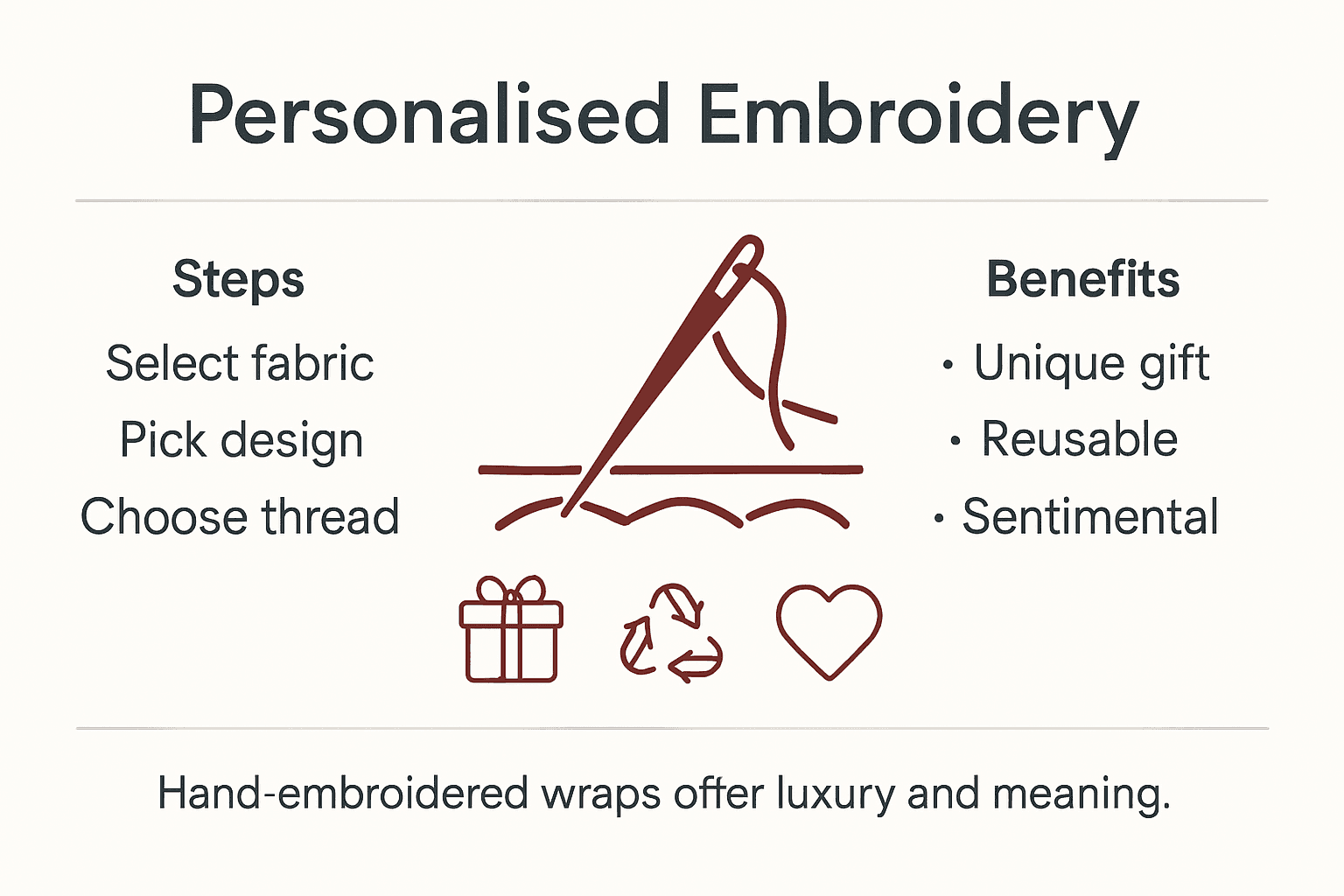
The embroidery process involves meticulous craftsmanship, where skilled artisans carefully select thread colours, stitch styles, and placement to create designs that resonate with personal significance. Techniques range from delicate monogramming featuring the recipient’s initials to elaborate decorative patterns that capture the essence of the occasion. Each stitch tells a story, transforming a simple fabric wrap into a cherished keepsake that extends far beyond the momentary exchange of a gift.
Beyond aesthetic appeal, personalised embroidery adds substantial emotional and cultural value to gift presentation. The intentionality behind selecting specific designs, colours, and stitching styles communicates a level of care and consideration that mass-produced wrapping materials cannot replicate. Whether commemorating a milestone, celebrating a relationship, or simply expressing individual style, embroidered fabric wraps become meaningful artefacts that capture the sentiment of human connection.
Pro tip: Choose embroidery threads and designs that complement the recipient’s personal aesthetic, ensuring the fabric wrap becomes a treasured memento in its own right.
Avoiding common fabric wrapping mistakes
Mastering fabric wrapping requires understanding and navigating potential pitfalls that can compromise the aesthetic and functional quality of your gift presentation. Common fabric wrapping challenges often stem from fundamental misunderstandings about material selection, wrapping technique, and gift proportionality.
One of the most critical errors is selecting inappropriate fabric weight and texture. Lightweight or overly slippery fabrics can result in unstable wrapping that fails to securely hold the gift, potentially leading to embarrassing gift-giving moments. Conversely, excessively heavy or stiff fabrics can make intricate folding techniques challenging and create awkward, bulky presentations. The ideal fabric strikes a delicate balance between structural integrity and elegant drape, allowing for clean, precise wrapping that maintains the gift’s shape and enhances its visual appeal.
Technical wrapping proficiency is equally crucial in avoiding common mistakes. Improper knotting techniques can cause gift slippage, while inconsistent folding leads to uneven edges and unprofessional appearances. Precise measurement is paramount consumers must learn to carefully assess their gift’s dimensions and select fabric sizes that provide minimal excess while ensuring complete coverage. Developing muscle memory for specific folding methods like the traditional Japanese furoshiki techniques can transform fabric wrapping from a potential source of frustration into an elegant, intuitive practice.
For quick reference, here are the key factors when choosing fabric for wrapping gifts:
| Factor | Importance | Suggested Approach |
|---|---|---|
| Fabric Weight | Balances structure and drape | Medium-weight cotton blends |
| Pattern/Colour | Enhances reusability and style | Neutral, versatile tones |
| Durability | Allows for multiple uses | High-quality, washable |
| Size | Ensures complete coverage | Proportional to the gift |
Pro tip: Practice your fabric wrapping techniques on simple, geometric objects before attempting to wrap irregularly shaped gifts, building confidence and precision.
Discover the Elegance of Personalised Reusable Fabric Wrapping
If you are searching for a sophisticated and eco-conscious way to present your Christmas gifts this year fabric wrapping is the answer. This article has shown how personalised embroidery elevates traditional wrapping into a lasting keepsake while reducing waste and adding emotional value. At Nicholas & Rose you can explore our Reusable Fabric Wrap - Luxurious Christmas Collection designed specifically to combine elegance with sustainability.
Transform your festive gifting with beautiful fabric wraps that balance style and environmental care. Act now to select your personalised wraps and embrace a zero-waste celebration that your loved ones will truly treasure. Find all your curated gift wrapping solutions and more at Nicholas & Rose Limited and make every present a beautiful experience.
Frequently Asked Questions
What are the benefits of using fabric wrapping over traditional paper?
Using fabric wrapping significantly reduces waste as it is reusable, unlike traditional paper which is typically discarded after one use. Fabric wraps can also be personalised, adding a unique touch to each gift, and are often more durable and aesthetically pleasing.
How do I choose the right fabric for wrapping gifts?
Select a medium-weight fabric that balances structure and drape, preferably in neutral or versatile patterns to enhance reusability. Ensure the fabric is durable and washable to maximise its lifespan for multiple uses.
Can fabric wraps be personalised?
Yes, fabric wraps can be personalised through various techniques such as embroidery, which allows you to add monograms, special dates, or heartfelt messages, making the gift more meaningful.
What techniques can I use for fabric wrapping?
Popular techniques include traditional folding methods like Japanese furoshiki and Korean bojagi, which allow you to effectively wrap gifts of various shapes and sizes by expertly knotting and securing the fabric.
Recommended
- 7 Personalised Gift Wrap Ideas for Eco-Conscious Gifting – Nicholas & Rose Limited
- 7 Personalised Christmas Gift Ideas for Eco-Luxury Homes – Nicholas & Rose Limited
- Ready‑To‑Gift Wrap: Eco‑Luxury That Elevates Gifting – Nicholas & Rose Limited
- Personalised Wrapping: Everything You Need to Know – Nicholas & Rose Limited