

How to Make Gift Wraps UK: Luxury Eco-Friendly Fabric Ideas
More than 10 million metres of traditional gift wrap end up in British landfills each year, leaving eco conscious shoppers searching for better options. Upgrading to sustainable fabrics not only supports a greener planet but also offers a luxurious and personal touch that disposable paper cannot match. Discover how using premium eco friendly materials and a few simple techniques can turn British gift giving into an elegant, reusable tradition.
Table of Contents
- Step 1: Select Premium Eco-Friendly Fabrics
- Step 2: Personalise Fabric With Embroidery
- Step 3: Prepare And Cut Fabric To Size
- Step 4: Sew And Finish Edges For Durability
- Step 5: Test And Style Your Completed Wraps
Quick Summary
| Key Point | Explanation |
|---|---|
| 1. Choose Sustainable Fabrics | Select eco-friendly materials like organic cotton and linen for luxurious, responsible gift wrapping options. |
| 2. Personalise with Embroidery | Use embroidery to add unique designs that reflect the recipient’s personality, turning wraps into cherished keepsakes. |
| 3. Measure and Cut Carefully | Precision cutting ensures a perfect fit for your gifts; always add extra fabric for folds when measuring. |
| 4. Finish Edges for Durability | Employ techniques like rolled hems or pinking shears to prevent fraying and enhance the longevity of wraps. |
| 5. Experiment with Styling Techniques | Try various folding methods and natural embellishments to showcase creativity and elevate the presentation of your gifts. |
Step 1: Select premium eco-friendly fabrics
Selecting the right eco-friendly fabric transforms your gift wrapping from mundane to magnificent. When creating luxury fabric gift wraps, you want materials that are both environmentally responsible and visually stunning.
Start by exploring sustainable textiles like organic cotton, linen, hemp, and recycled silk. Reusable cloth wrapping techniques provide an elegant alternative to traditional disposable paper wraps. Look for fabrics with organic certifications and minimal environmental impact. Natural fibres like organic cotton breathe beautifully and offer exceptional texture.
Consider fabric weight and drape carefully. Lightweight cottons work brilliantly for smaller gifts, while substantial linens provide structure for larger packages. Opt for neutral tones like cream, soft grey, and earthy browns that complement multiple gift styles. Avoid synthetic materials that shed microplastics.
Pro tip: Purchase fabric remnants or repurpose existing textiles to maximise sustainability and reduce waste. A beautiful silk scarf or vintage tablecloth can become an exquisite gift wrap with minimal environmental footprint.
Here is a comparison of popular eco-friendly fabrics for gift wrapping:
| Fabric Type | Sustainability Benefits | Visual Appeal |
|---|---|---|
| Organic Cotton | Biodegradable, low-impact farming | Soft, natural look |
| Linen | Durable, minimal water use | Crisp, classic texture |
| Hemp | Fast-growing, pesticide-free | Rustic, earthy finish |
| Recycled Silk | Reuses waste, high value | Luxurious sheen |
Step 2: Personalise fabric with embroidery
Embroidery transforms ordinary fabric gift wraps into extraordinary personalised keepsakes that recipients will treasure. Your goal is to add unique character and sentiment to each wrapped gift through carefully chosen embellishments.
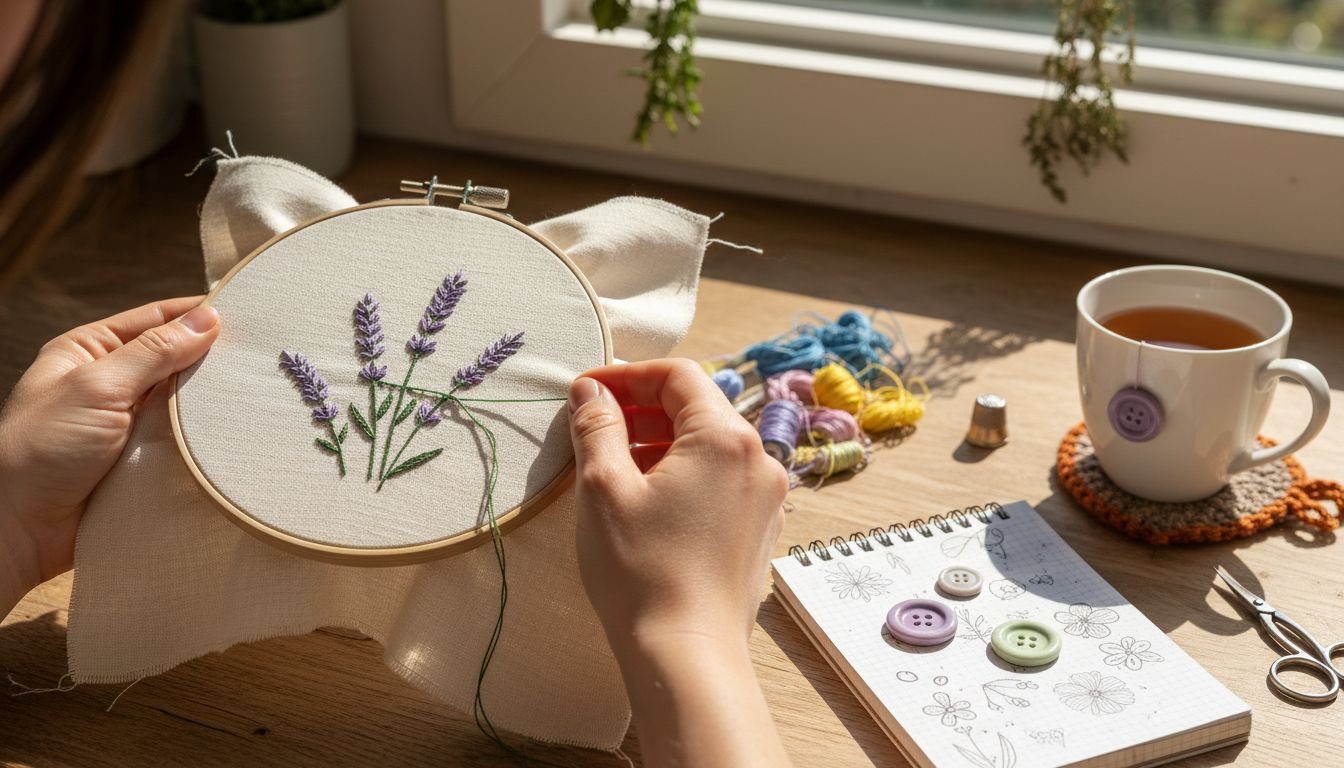
Hand-stamped techniques offer creative opportunities for customising your fabric wraps. Begin by selecting embroidery threads in complementary colours that match your fabric base. Consider using organic cotton or silk threads for an eco-conscious approach. Simple stitching techniques like backstitch or running stitch can create elegant monograms, delicate floral patterns, or meaningful symbols that make each wrap special.
When selecting your embroidery design, think about the recipient’s personality and interests. A nature lover might appreciate botanical motifs, while a minimalist could prefer geometric patterns. Practice your stitching on scrap fabric first to build confidence and ensure clean lines. Use an embroidery hoop to keep fabric taut and prevent puckering, which helps maintain a professional finish.
Pro tip: Invest in high-quality embroidery needles with sharp points that glide smoothly through fabric, and always keep your threads untangled and organised for seamless crafting.
Step 3: Prepare and cut fabric to size
Creating perfectly sized fabric gift wraps requires precision and careful measurement. Your objective is to transform your chosen fabric into elegant wrapping surfaces that showcase both sustainability and craftsmanship.
Step by step fabric cutting techniques provide essential guidance for achieving professional results. Begin by laying your fabric flat on a clean cutting surface. Measure your intended gift dimensions carefully, adding an extra 10 centimetres on each side to allow for folding and neat wrapping. Use a fabric ruler and sharp fabric scissors to ensure straight edges. For square wraps popular in Japanese furoshiki techniques, focus on creating perfect symmetrical cuts.
Consider the fabric weight and drape when determining size. Lightweight cottons work beautifully for smaller items, while heavier linens provide structure for larger packages. Avoid stretching the fabric during measurement to maintain accurate dimensions. If working with delicate or slippery materials, use pattern weights to hold fabric steady while cutting.
Pro tip: Invest in a rotary cutter and self-healing cutting mat for extremely precise fabric edges that minimise fraying and create a professional finish.
Step 4: Sew and finish edges for durability
Creating long lasting fabric gift wraps requires careful edge finishing that prevents fraying and maintains the beautiful appearance of your sustainable wrapping materials. Your goal is to transform raw fabric edges into professionally finished surfaces that will withstand multiple uses.
Fabric edge treatment techniques are crucial for preventing unravelling and ensuring your gift wraps remain pristine. For machine sewers, a simple rolled hem provides an elegant finish. Select a thread colour matching your fabric or opt for a complementary contrast. If using a sewing machine, adjust the stitch length to around 2.5 millimetres for a clean professional edge. For those preferring hand sewing, a fine backstitch or blind hem technique works wonderfully.
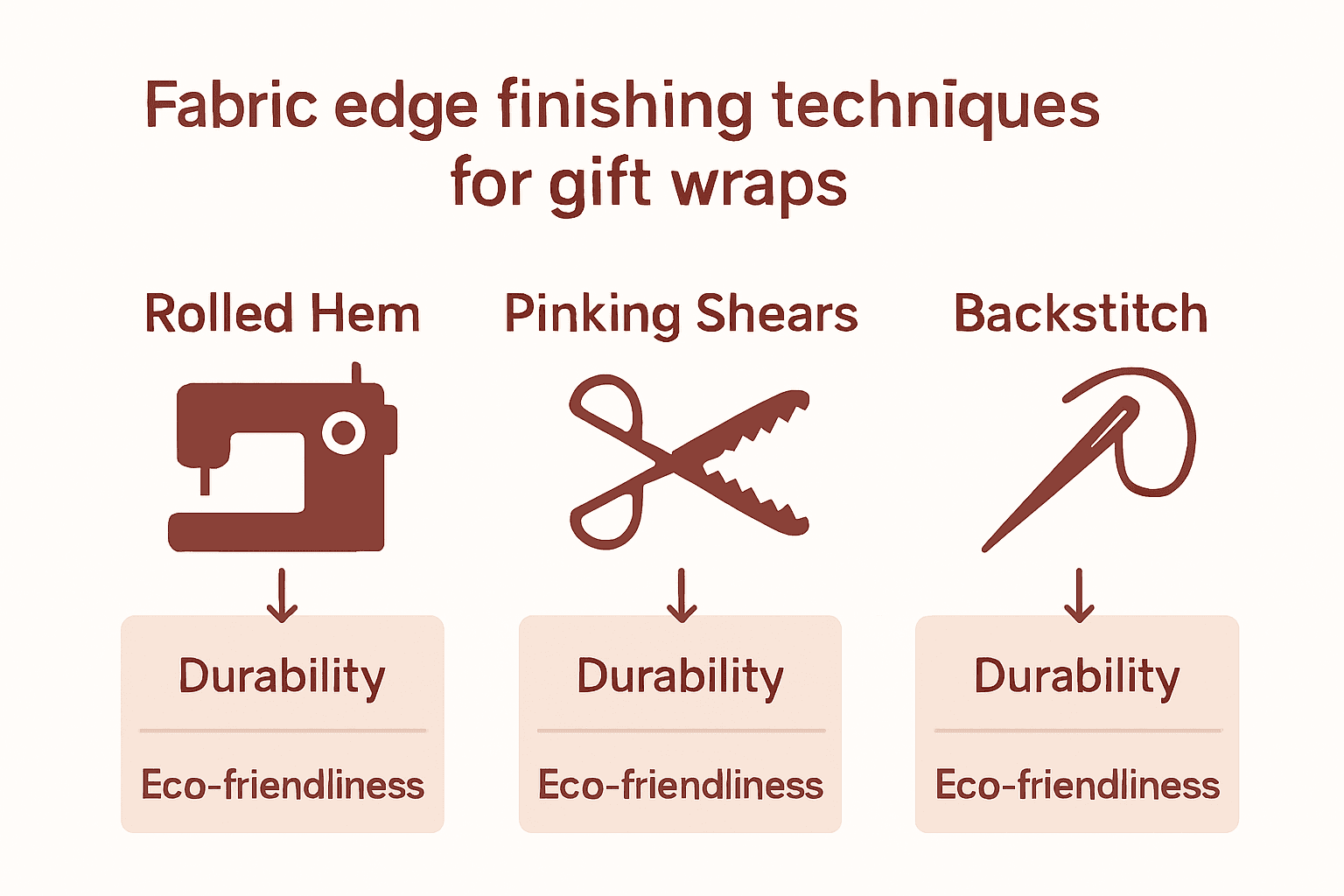
Alternatively, consider using pinking shears for a quick and effective edge treatment. These specialised scissors create a zigzag pattern that naturally reduces fabric fraying. When working with delicate fabrics like silk or lightweight cotton, choose a lightweight interfacing to stabilise edges before finishing. Press your edges carefully with a warm iron to create crisp lines before sewing, which helps achieve a more polished result.
Pro tip: Always test your edge finishing technique on a small fabric scrap first to ensure the method suits your specific fabric weight and texture.
Review of common edge finishing methods for durability and sustainability:
| Technique | Best For | Environmental Impact |
|---|---|---|
| Rolled Hem (Machine) | Regular use wraps | Minimal, reusable |
| Hand Backstitch | Fine, delicate work | Low, handcrafted |
| Pinking Shears | Quick, casual wraps | No added materials |
| Lightweight Interfacing | Slippery fabrics | Depends on materials |
Step 5: Test and style your completed wraps
With your fabric gift wraps meticulously crafted, the final stage involves exploring creative styling techniques that transform your sustainable wrapping into an art form. Your objective is to showcase the versatility and elegance of your handmade fabric wraps.
Sustainable wrapping techniques offer numerous creative possibilities for personalising your gift presentation. Begin by testing different folding methods such as the traditional Japanese furoshiki techniques or simple geometric folds. Practice wrapping various shaped gifts from rectangular boxes to awkwardly shaped items to understand how your fabric drapes and moves. Pay attention to the weight and flexibility of different fabric types and how they perform during wrapping.
Consider complementing your fabric wrap with natural embellishments like twine, dried flower sprigs, or wooden gift tags to enhance the eco friendly aesthetic. Experiment with different fabric textures and colours to create visual interest. Some wraps might look stunning with a crisp fold and minimal decoration, while others might benefit from more intricate wrapping styles that highlight the fabric’s unique characteristics.
Pro tip: Photograph your favourite wrap styles as a reference for future gift giving, creating a personal catalogue of sustainable wrapping techniques you can replicate and refine.
Elevate Your Gift Giving with Luxurious Eco-Friendly Fabric Wraps
Wrapping gifts can be challenging when you want to combine elegance with sustainability. This article highlights the art of selecting premium eco-friendly fabrics, perfect sizing, and personalised embroidery to create gift wraps that are not only beautiful but also reusable and durable. Say goodbye to fragile, wasteful paper wraps and embrace fabrics that offer softness, structure, and unique character for every special gift.
Discover how our Reusable Fabric Wrap - Luxurious Christmas Collection can help you achieve stunning, personalised gift presentations with minimal environmental impact.
Take the next step towards elegant and eco-conscious gift wrapping with our beautifully crafted wraps that can be customised to your liking. Visit Nicholas & Rose Limited now to explore our collections including the exclusive Favourite Four for timeless sustainable gifts. Start your journey in transforming every present into a cherished keepsake today.
Frequently Asked Questions
What types of eco-friendly fabrics are best for gift wrapping?
Selecting sustainable textiles like Organic Cotton, Linen, Hemp, and Recycled Silk can elevate your gift wrapping. These materials not only look stunning but also have minimal environmental impact, making them ideal choices for luxury eco-friendly fabric wraps.
How can I personalise my fabric gift wraps?
You can personalise fabric wraps through embroidery. Use complementary threads to create unique designs that reflect the recipient’s personality, such as monograms or floral patterns, to add a special touch to your gifts.
What measurements do I need to consider when cutting fabric for gift wraps?
When cutting fabric, measure your gift dimensions and add an extra 10 centimetres on each side for folding. This ensures a neat wrap that showcases your gift beautifully and accommodates varying fabric weights.
How can I finish the edges of my fabric gift wraps for durability?
To prevent fraying, use techniques like a rolled hem for machine sewing or backstitch for hand sewing. These methods provide long-lasting edges that maintain the appearance of your wraps, allowing for multiple uses over time.
What styling techniques can enhance my finished fabric wraps?
Experiment with different folding techniques, such as traditional Japanese furoshiki or geometric styles, to showcase your wraps. Adding natural embellishments like twine or dried flowers can create visual interest and enhance the eco-friendly aesthetic of your presentation.
Recommended
- Ready‑To‑Gift Wrap: Eco‑Luxury That Elevates Gifting – Nicholas & Rose Limited
- 7 Top Reusable Fabric Wraps for Luxurious Eco Gifts – Nicholas & Rose Limited
- Complete Guide to UK-Made Gift Wrap – Nicholas & Rose Limited
- 7 Personalised Gift Wrap Ideas for Eco-Conscious Gifting – Nicholas & Rose Limited
- Tygguide: Välj rätt tyg för möbler och inredning | Stiligt