

Monochrome Christmas Wrap: Eco-Friendly Elegance for Babies
Every parent faces the challenge of finding a truly meaningful gift wrap that is both stylish and gentle for newborns. The rise of fabric wraps inspired by Japanese Furoshiki and monochrome Christmas wrap offers a fresh solution, blending minimalist design with eco-friendly values. This approach transforms baby gift-giving into a creative and sustainable act, providing soft, safe materials and the option for personalisation that matches modern British eco-consciousness.
Table of Contents
- Defining Monochrome Christmas Wrap For Babies
- Types Of Monochrome Fabric Gift Wrap
- Personalisation Through Embroidered Details
- Sustainability Advantages Over Disposable Paper
- Choosing Safe And Stylish Options For Children
Key Takeaways
| Point | Details |
|---|---|
| Sustainable Elegance | Monochrome Christmas wrapping promotes an eco-friendly approach through reusable fabrics and minimalist designs. |
| Versatile Fabric Options | Various fabrics, such as cotton and linen, enhance the aesthetic while providing practical benefits for gift-giving. |
| Personalised Touch | Embroidery adds a unique, meaningful element to fabric wraps, making gifts more special and memorable. |
| Safety Considerations | Selecting lightweight, breathable, and hypoallergenic materials ensures comfort and safety for babies and young children. |
Defining Monochrome Christmas Wrap for Babies
Monochrome Christmas wrap represents a sophisticated approach to sustainable gift presentation, specifically designed for celebrating newborns and young children. This elegant wrapping style embraces minimalist colour palettes like black, white, and soft grey, transforming traditional gift-giving into an artistic experience.
The concept of monochrome wrapping goes beyond aesthetic appeal, integrating principles of eco-conscious design. Elegant minimalist approaches demonstrate how simple colour schemes can create profound visual impact, particularly when applied to baby gift presentations. These wrapping techniques prioritise both visual sophistication and environmental responsibility.
Key characteristics of monochrome baby gift wrapping include:
- Soft, neutral colour palettes
- Sustainable fabric materials
- Minimalist design principles
- Potential for personalisation through subtle embellishments
- Versatility across different gift types and occasions
The design philosophy behind monochrome wrapping draws inspiration from ergonomic textile principles. Woven fabric characteristics emphasise safety, softness, and developmental considerations - attributes equally important in selecting gift wrapping materials for infants.
Pro tip: Choose reusable fabric wraps in neutral tones that can be personalised with delicate embroidery for a timeless, eco-friendly gift presentation.
Types of Monochrome Fabric Gift Wrap
Monochrome fabric gift wrapping offers a sophisticated and environmentally conscious alternative to traditional paper wrapping, with a range of versatile fabric options designed to elevate the gift-giving experience. Fabric wrap techniques showcase multiple materials that can transform ordinary presents into elegant, sustainable presentations.
Traditional wrapping styles draw inspiration from various cultural practices, with Japanese Furoshiki being a particularly notable technique. Sustainable wrapping trends reveal a diverse range of fabric options, including:
- Cotton cloths
- Linen textiles
- Vintage scarves
- Silk squares
- Lightweight tea towels
- Upcycled fabric remnants
Each fabric type offers unique characteristics that make it suitable for monochrome gift wrapping. Cotton and linen provide durability and a crisp appearance, while silk adds a luxurious sheen to the presentation. The key is selecting materials that are both aesthetically pleasing and practical for wrapping various gift shapes and sizes.
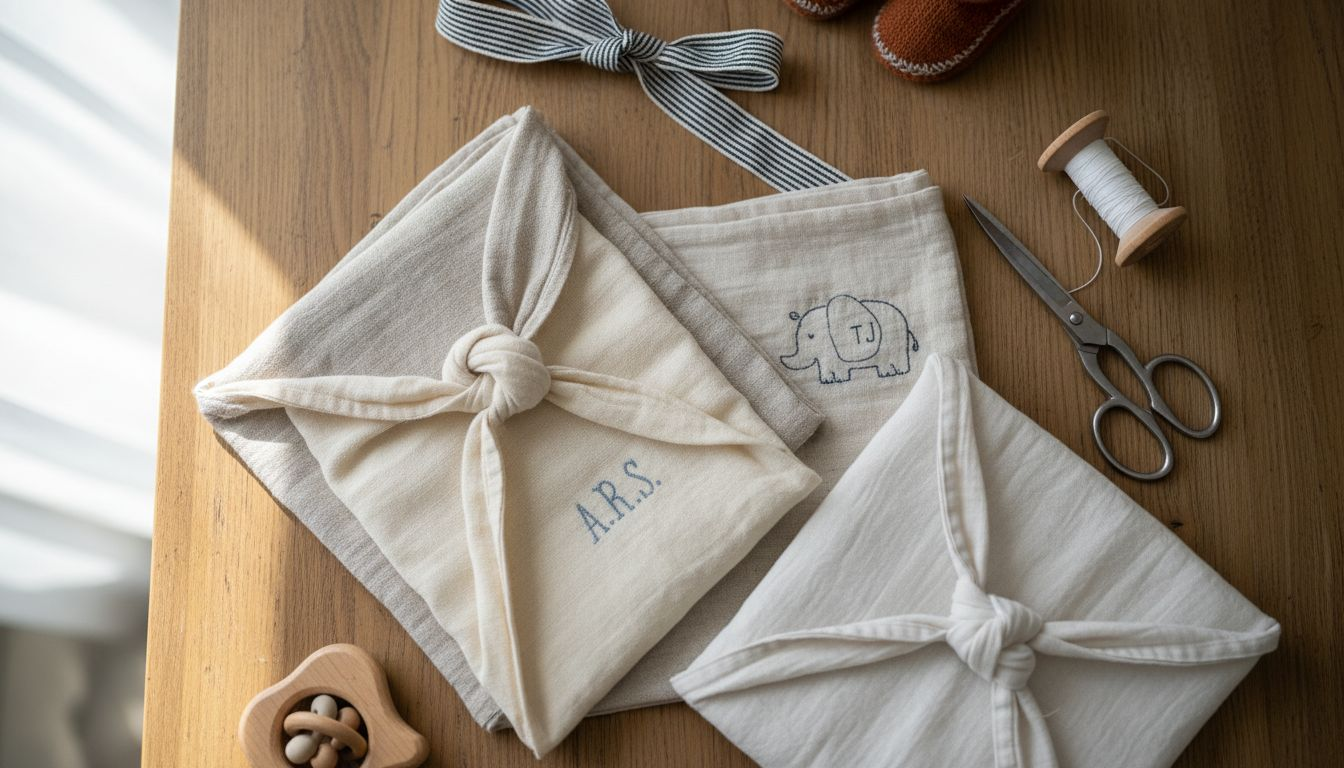
These fabric options not only look elegant but also contribute to reducing waste. By choosing reusable wrapping materials in neutral, sophisticated tones, gift-givers can create a timeless and environmentally responsible approach to presenting gifts.
Here’s how common monochrome fabric wrap materials compare for baby gifts:
| Fabric Type | Appearance | Environmental Impact | Best For |
|---|---|---|---|
| Cotton Cloth | Crisp and structured look | Highly sustainable | Everyday gifts |
| Linen Textile | Textured and airy feel | Flax is low-impact crop | Summer and eco-conscious |
| Silk Square | Smooth, glossy surface | Biodegradable but delicate | Special occasions |
| Vintage Scarf | Distinctive patterns possible | Upcycling reduces waste | Keepsake or sentimental use |
| Tea Towel | Subtle, practical texture | Long lifespan | Kitchen or utility gifts |
Pro tip: Select fabric wraps with minimal patterns in soft grey, white, or black tones to maintain a sophisticated monochrome aesthetic while ensuring versatility for multiple occasions.
Personalisation Through Embroidered Details
Personalising monochrome fabric gift wrap through embroidery transforms a simple wrapping technique into a meaningful, bespoke gift experience. Embroidered gift tag techniques offer intricate ways to create unique, memorable presentations that extend far beyond traditional gift-giving.
Embroidery provides multiple personalisation opportunities for monochrome fabric wraps, enabling gift-givers to create truly distinctive presentations. Potential personalisation methods include:
- Recipient’s initials
- Birth date
- Special commemorative messages
- Delicate geometric patterns
- Minimalist monogram designs
- Symbolic baby-related motifs
The art of personalisation goes beyond mere decoration. Reusable embroidered gift bags demonstrate how embroidery can transform fabric wraps into cherished keepsakes that recipients can treasure long after the gift-giving moment. Machine and hand embroidery techniques offer flexibility in creating intricate, sophisticated designs that complement the minimalist monochrome aesthetic.
By selecting neutral tones and thoughtful embroidery details, gift-givers can create sophisticated, environmentally conscious presentations that feel both personal and timeless. The key is selecting designs that are subtle, elegant, and meaningful to the recipient.
Pro tip: Choose embroidery threads in tones that complement your monochrome fabric, ensuring the personalisation feels integrated and understated rather than overpowering.
Sustainability Advantages Over Disposable Paper
Fabric gift wrapping represents a revolutionary approach to sustainable gift presentation, offering significant environmental benefits compared to traditional disposable paper wrapping. Fabric wrapping techniques demonstrate how simple textile choices can dramatically reduce waste and create meaningful, reusable gift experiences.
The environmental advantages of fabric wrapping are profound and multifaceted:
- Zero single-use waste generation
- Potential for multiple reuses
- Natural fibre compositions
- Compostable material options
- Reduced plastic contamination
- Lower carbon footprint compared to paper wrapping
Green gifting trends highlight fabric wraps as an intelligent sustainability solution. By transforming wrapping from a disposable product into a potential keepsake, these textile alternatives challenge traditional gift-giving practices. The fabric becomes an extension of the gift itself, offering aesthetic value and practical utility far beyond the initial unwrapping moment.

Parents and gift-givers can significantly reduce environmental impact by selecting high-quality, durable fabric wraps made from natural fibres. These wraps not only minimise waste but also provide a tactile, elegant alternative to paper that can be cherished, repurposed, and passed down through generations.
Pro tip: Select fabric wraps made from organic cotton or linen to maximise environmental benefits and ensure durability for multiple gift-giving occasions.
Choosing Safe and Stylish Options for Children
Children’s fabric wrapping requires meticulous consideration of safety and aesthetic principles, balancing design elegance with essential protective standards. Safe wrapping techniques emphasise selecting materials that provide comfort, breathability, and unrestricted movement for infants and young children.
Key safety considerations for selecting child-friendly fabric wraps include:
- Lightweight, breathable natural fibres
- Soft textures without rough edges
- Minimal chemical treatments
- Hypoallergenic material selections
- Fabrics that allow skin ventilation
- Absence of small decorative elements
European product safety regulations underscore the critical importance of material selection for children’s products. These standards mandate rigorous testing for potential hazards such as choking risks, toxic substances, and physical constraints that might impede a child’s natural movement or development.
Parents should prioritise muslin, organic cotton, and lightweight linen fabrics that offer optimal safety and aesthetic appeal. These materials provide gentle touch, temperature regulation, and a sophisticated monochrome presentation that grows with the child’s changing needs.
This table summarises the safety priorities for children’s monochrome fabric wraps:
| Safety Focus | Why It Matters | Example Material |
|---|---|---|
| Breathability | Prevents overheating | Muslin |
| Softness | Gentle for sensitive skin | Organic cotton |
| Hypoallergenic properties | Reduces risk of irritation | Linen (unbleached) |
| Durable seams | Avoids loose parts and hazards | Double-stitched edges |
Pro tip: Always inspect fabric wraps for loose threads, potential choking hazards, and ensure the material can withstand multiple washes while maintaining its structural integrity.
Elevate Your Baby’s Christmas with Elegant, Sustainable Wrapping
Choosing the right wrapping for your newborn’s gifts is about more than just aesthetics. The article highlights how monochrome fabric wraps combine timeless sophistication with eco-friendly values while addressing parents’ desires for soft, safe, and reusable materials. Traditional wrapping paper often ends up wasted before your baby’s arrival, but our Reusable Fabric Wrap - Luxurious Christmas Collection offers a stylish and sustainable alternative designed specifically for babies and toddlers. Each wrap is crafted from breathable, natural fibres that prioritise your child’s sensitive skin and can be personalised with delicate embroidery to create a lasting keepsake.
Discover the perfect blend of safety, style, and sustainability on our website https://nicholasandrose.co.uk. Explore our Newborn Essentials selection to find carefully chosen fabrics that meet the highest safety standards and celebrate your baby’s first Christmas with elegant gifts wrapped in love and thoughtfulness. Act now to transform your gift-giving into an unforgettable, eco-conscious experience that honours both your values and your baby’s wellbeing.
Frequently Asked Questions
What is monochrome Christmas wrap for babies?
Monochrome Christmas wrap for babies is a sustainable gift-wrapping style that uses minimalist colour palettes like black, white, and soft grey. This approach focuses on eco-conscious design, transforming traditional gift presentation into an elegant experience.
What types of fabric are suitable for monochrome gift wrapping?
Common fabrics for monochrome gift wrapping include cotton cloths, linen textiles, silk squares, vintage scarves, and lightweight tea towels. Each fabric type offers unique characteristics suitable for elegant baby gift presentation while promoting sustainability.
How can I personalise monochrome fabric wraps for gifts?
Personalisation of monochrome fabric wraps can be achieved through embroidery that includes the recipient’s initials, birth dates, or thoughtful messages. Subtle geometric patterns and minimalist designs can also enhance the aesthetic while making the gift feel special.
What are the sustainability benefits of using fabric wraps over traditional paper?
Fabric wraps eliminate single-use waste, can be reused multiple times, and often consist of natural fibres. They reduce plastic contamination and have a lower carbon footprint compared to traditional paper wrapping, making them a more eco-friendly option for gift presentation.