

How to Choose Eco Friendly Wrap 2025 for Luxurious Gifts
Gift giving during the festive season can quickly lead to mounds of discarded paper, leaving many British families searching for a better way to celebrate. Luxury, personalised fabric wraps for Christmas 2025 offer a sophisticated alternative that speaks to both style and a commitment to sustainability. By exploring eco-friendly gift wrapping methods, you can find options that combine elegant presentation with responsible choices, ensuring your presents delight loved ones while treading lightly on the planet.
Table of Contents
- Step 1: Identify Your Gifting Requirements
- Step 2: Compare Eco Friendly Wrap Materials
- Step 3: Select Personalisation And Embroidery Options
- Step 4: Assess Sustainability And Reusability
- Step 5: Confirm Your Eco Friendly Wrap Choice
Quick Summary
| Key Insight | Explanation |
|---|---|
| 1. Identify gifting requirements | Understand gift size, occasion, and recipient preferences to choose suitable eco-friendly wrapping. |
| 2. Compare eco-friendly materials | Evaluate options such as natural fabrics and biodegradable papers for sustainability and performance. |
| 3. Personalise your gift wrap | Use sustainable threads and creative designs to elevate the wrapping while reflecting the recipient’s personality. |
| 4. Assess reuse and sustainability | Conduct a lifecycle analysis to ensure the wrap can be used multiple times and has a minimal environmental impact. |
| 5. Confirm product sustainability | Verify certifications and material claims to ensure the eco-friendly wrap genuinely supports environmental responsibility. |
Step 1: Identify Your Gifting Requirements
Choosing the right eco-friendly gift wrap starts with understanding your specific gifting needs. Each occasion demands a unique approach to sustainable wrapping that balances aesthetics, practicality, and environmental responsibility.
To effectively identify your gifting requirements, consider these critical factors:
-
Gift Size and Shape: Determine the dimensions and contours of your gift to select an appropriate wrap. Larger or irregularly shaped items might need flexible fabric wrapping techniques
-
Occasion Type: Different events call for varied presentation styles. Holiday gifts, wedding presents, and birthday surprises each require nuanced wrapping strategies.
-
Recipient’s Preferences: Consider the recipient’s environmental consciousness and personal style. Some individuals appreciate minimalist approaches, while others enjoy more elaborate presentations.
Sustainable gift wrapping transcends mere packaging - it represents a thoughtful commitment to reducing waste and making mindful choices. By carefully evaluating these elements, you can select an eco-friendly wrap that not only protects your gift but also communicates your environmental values.
Sustainable gift wrapping is an art of balance: protecting your gift while respecting our planet’s resources.
Expert Advice: Invest time in understanding your specific gifting context to make the most environmentally conscious wrapping choice.
Step 2: Compare Eco Friendly Wrap Materials
Navigating the landscape of eco-friendly gift wrapping materials requires careful consideration of sustainability, performance, and aesthetic appeal. Your goal is to select materials that not only look luxurious but also minimise environmental impact.
Consider these primary categories of sustainable wrapping materials:
-
Natural Fabrics: Reusable cotton, linen, and hemp wraps offer durability and versatility. These sustainable packaging materials provide elegant, zero-waste alternatives to traditional paper wrapping.
-
Biodegradable Papers: Recycled and compostable papers made from bamboo, sugarcane, or agricultural waste reduce carbon footprint while maintaining gift presentation quality.
-
Advanced Bioplastics: Innovative materials like polylactic acid (PLA) provide eco-conscious alternatives to petrochemical plastics, offering comparable protection with significantly reduced environmental impact.
Each material presents unique advantages, so evaluate them based on your specific gifting requirements. Consider factors such as recyclability, biodegradability, production methods, and overall lifecycle environmental cost.
Here’s a concise comparison of popular eco-friendly gift wrap materials and their sustainability features:
| Material Type | Reusability Level | Compostability | Typical Environmental Benefit |
|---|---|---|---|
| Natural Fabrics | Very high (10+ uses) | Not compostable | Reduces single-use waste |
| Biodegradable Papers | Single or few uses | Fully compostable | Low carbon footprint |
| Advanced Bioplastics | Moderate reusability | Industrial compostable | Lower fossil resource use |
Sustainable gift wrapping is about making informed choices that balance aesthetic elegance with environmental responsibility.
Expert Advice: Always request material composition details to ensure genuine sustainability and avoid greenwashing claims.
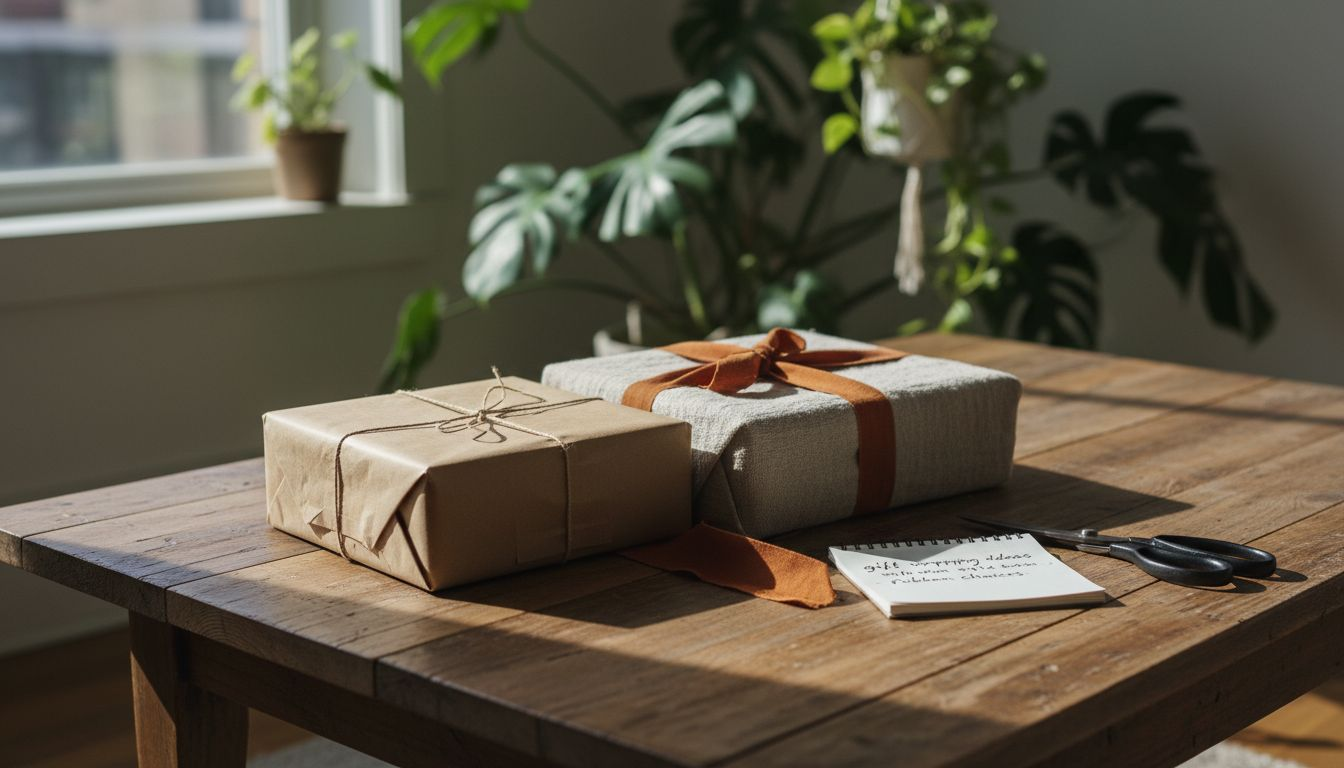
Step 3: Select Personalisation and Embroidery Options
Elevating your eco-friendly gift wrap from ordinary to extraordinary requires thoughtful personalisation that reflects both style and sustainability. The key is selecting embroidery techniques and design elements that transform your wrap into a meaningful, memorable presentation.
Explore these personalisation strategies for your luxury eco gift wrap:
-
Sustainable Thread Selection: Choose embroidery threads with environmental integrity such as recycled polyester or organic cotton threads that minimise ecological impact.
-
Design Considerations: Select embroidery styles that complement the fabric’s texture and your gift’s aesthetic. Options include:
- Tonal stitching for subtle elegance
- Contrasting thread colours for bold statements
- Minimalist monograms or intricate patterns
-
Personal Touches: Consider adding meaningful elements like recipient’s initials, significant dates, or small symbolic designs that create emotional connection.
Modern embroidery techniques allow unprecedented precision and creativity, enabling you to craft a truly unique gift presentation that speaks volumes about your thoughtfulness.
Personalisation transforms a simple wrap into a cherished memento, combining luxury with sustainability.
Expert Advice: Request digital proofs of your embroidery design before final production to ensure perfect alignment and aesthetic harmony.
Step 4: Assess Sustainability and Reusability
Choosing an eco-friendly gift wrap involves more than just selecting a material - it requires a comprehensive understanding of its true environmental impact. Reusable packaging systems demand careful evaluation to ensure they genuinely contribute to sustainability rather than creating additional environmental burden.
Consider these critical assessment criteria:
-
Lifecycle Analysis: Evaluate the wrap’s total environmental footprint, including:
- Material production emissions
- Manufacturing processes
- Transportation impacts
- Potential for multiple reuse cycles
-
Durability Factors: Assess material qualities that support long-term use:
- Fabric strength and tear resistance
- Ease of cleaning
- Colour and design retention after multiple uses
- Ability to maintain structural integrity
-
Reuse Potential: Determine the wrap’s versatility by considering:
- Adaptability to different gift sizes
- Aesthetic appeal across multiple occasions
- Storage requirements
- Ease of folding and preservation
Modern sustainable practices recognise that true environmental responsibility extends beyond single-use considerations, requiring a holistic approach to packaging design.
Sustainability is not just about materials, but about creating systems that support ongoing, meaningful use.
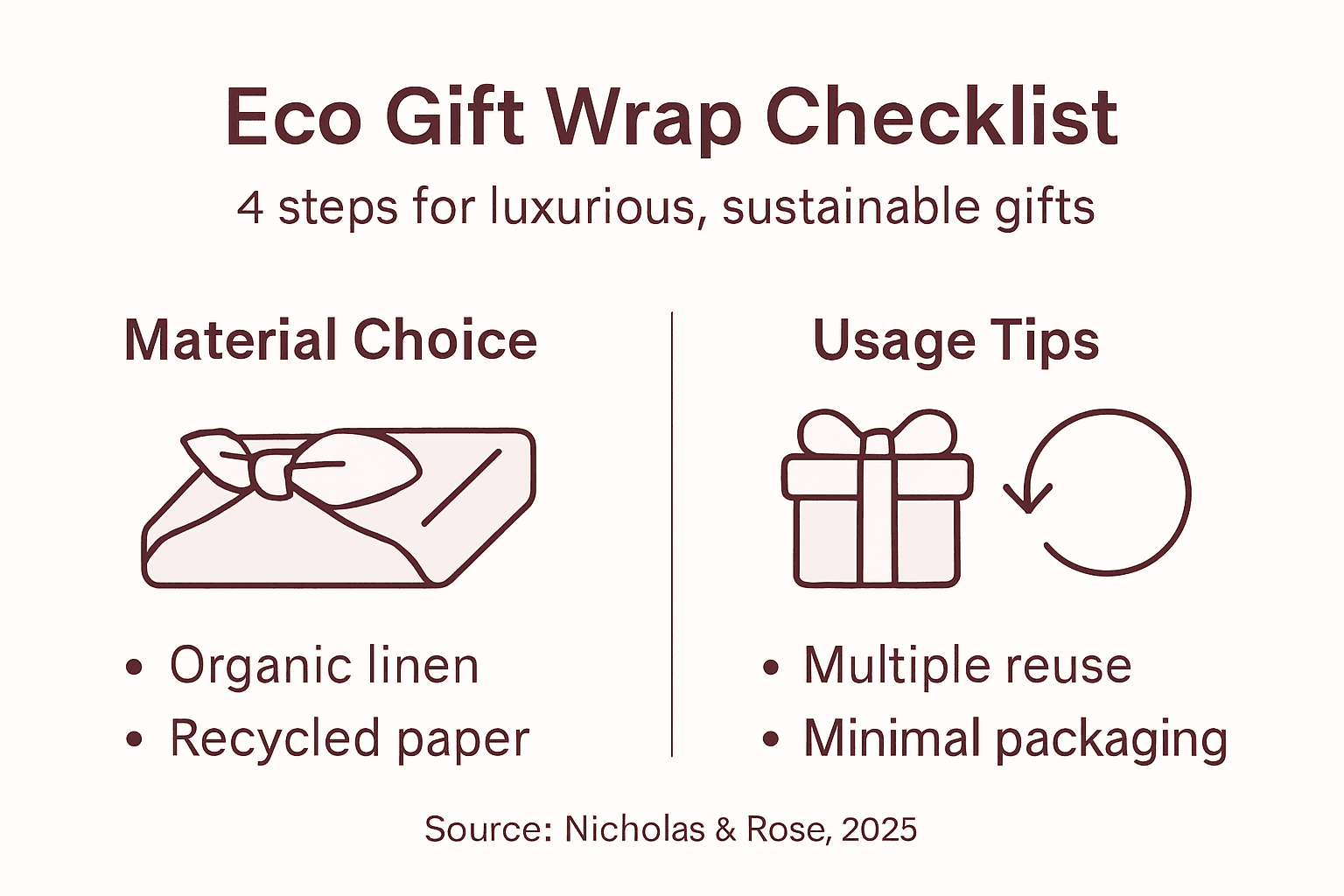
Expert Advice: Invest in high-quality wraps that can be used at least 10-15 times to maximise their environmental benefits.
Step 5: Confirm Your Eco Friendly Wrap Choice
The final step in selecting your sustainable gift wrap involves a comprehensive validation process to ensure your choice genuinely supports environmental responsibility. Sustainable packaging frameworks demand rigorous assessment beyond surface-level appearances.
Critical confirmation criteria include:
-
Material Verification:
- Check for legitimate sustainability certifications
- Confirm absence of toxic materials like PVC or PFAS
- Verify recyclability or compostability credentials
-
Environmental Impact Indicators:
- Carbon footprint of production
- Manufacturing transparency
- End-of-life disposal pathways
- Local recycling infrastructure compatibility
-
Performance Validation:
- Durability across multiple uses
- Aesthetic preservation after repeated application
- Ease of cleaning and maintenance
- Storage efficiency
Your selection represents more than a gift wrap - it’s a statement of environmental commitment that extends beyond a single celebratory moment.
Below is a quick guide to key sustainability certifications to consider when verifying eco wraps:
| Certification Name | Indicates | Commonly Found On |
|---|---|---|
| FSC (Forest Stewardship Council) | Responsible forestry | Paper and cardboard wraps |
| GOTS (Global Organic Textile Standard) | Organic textile process | Fabric and thread materials |
| TUV OK Compost | Compostable product | Bioplastic and paper wraps |
Choosing sustainable gift wrap is an investment in our planet’s future, not just a packaging decision.
Expert Advice: Request manufacturer’s complete sustainability documentation to validate environmental claims comprehensively.
Discover Luxurious Reusable Gift Wrap That Truly Respects the Planet
Choosing the perfect eco-friendly wrap can feel overwhelming when balancing sustainability, personalisation, and lasting beauty**. This article highlights the challenge of finding gift wraps that not only look elegant but also offer durability, reusability, and a genuine commitment to reducing waste through sustainable materials and thoughtful embroidery options.
At Nicholas & Rose, we understand the importance of making a statement that reflects your environmental values while delighting your loved ones with luxury. Our Reusable Fabric Wrap - Luxurious Christmas Collection addresses these exact needs offering meticulously crafted wraps that are made to be reused and personalised through embroidery. This ensures your gift presentation is not only striking but also contributes to a circular gifting experience.
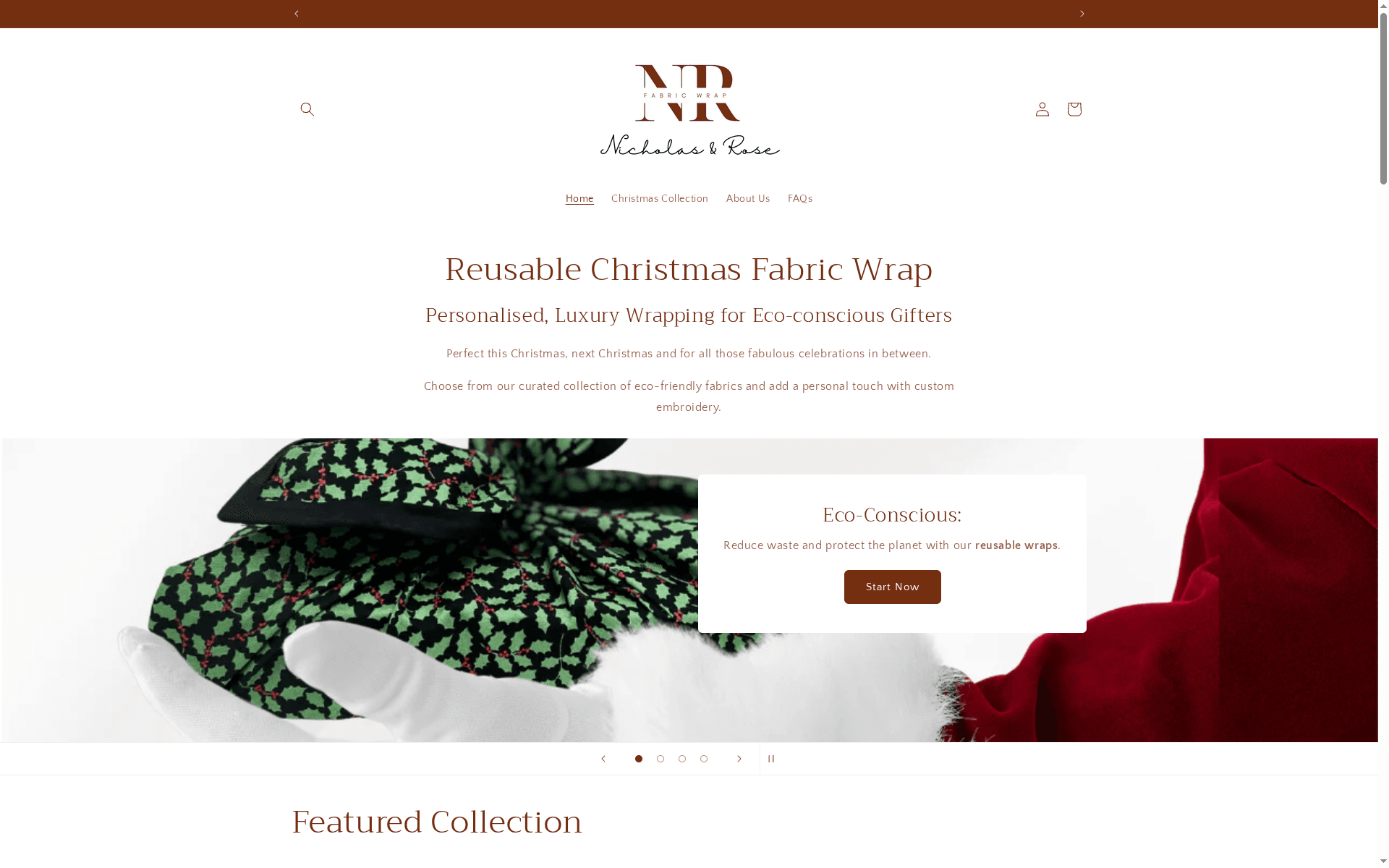
Elevate your gift-giving with a wrap that combines sustainability with style today. Explore our Favourite Four bestsellers and discover how your next gift can make a meaningful environmental impact. Start your journey towards eco-conscious luxury at Nicholas & Rose and choose a gift wrap that echoes your values now.
Frequently Asked Questions
How do I determine my gifting requirements for eco-friendly wrap?
Understanding your gifting requirements starts with considering the gift’s size, shape, occasion, and the recipient’s preferences. Identify these factors to select a sustainable wrapping method that aligns with your environmental values and enhances the gift’s presentation.
What eco-friendly wrap materials should I consider for luxurious gifts?
Focus on natural fabrics, biodegradable papers, and advanced bioplastics when selecting eco-friendly wrap materials. Evaluate the reusability and compostability of these options to ensure they meet both your aesthetic and sustainability criteria.
How can I personalise my eco-friendly gift wrap?
You can personalise your wrap by using sustainable threads and choosing embroidery styles that resonate with the gift’s recipient. Consider adding initials or symbolic designs to create a more meaningful presentation that stands out.
What should I assess regarding the sustainability of my wrap choice?
Assess the lifecycle of the wrapping material, including production emissions and reuse potential. Aim to select wraps that can be used multiple times (10–15 uses) to truly minimise environmental impact and support sustainability.
How can I confirm the eco-friendliness of my wrap?
To confirm your eco-friendly wrap choice, verify material certifications and check for toxic substances. Ensure that the material’s environmental impact is clear and that it aligns with your commitment to sustainability in gift-giving.
Recommended
- Eco Aware Wrapping: Defining Sustainable Luxury – Nicholas & Rose Limited
- 7 Luxury Wrapping Materials List for Eco-Friendly Gifting – Nicholas & Rose Limited
- Master the Sustainable Gift Wrapping Process for Luxury Gifts – Nicholas & Rose Limited
- Sustainable Gift Wrap Choices: Eco-Luxury for 2025 – Nicholas & Rose Limited