

Complete Guide to Furoshiki Wrapping in the UK
Wrapping with fabric is making a comeback among british gift-givers, with more than 40 percent of shoppers seeking sustainable alternatives to disposable paper. Furoshiki, an ancient Japanese textile tradition, has found fresh appeal in the UK for those looking to blend elegance with eco-friendly practices. This unique art form offers creative, reusable wrapping techniques that stand out, transforming any gift into a statement of mindful giving and cultural appreciation.
Table of Contents
- Defining Furoshiki Wrapping and Its Origins
- Distinct Furoshiki Styles and Techniques
- Sustainable and Luxury Applications Today
- Personalisation and Embroidery Options
- Comparing Furoshiki to Other Gift Wraps
Key Takeaways
| Point | Details |
|---|---|
| Furoshiki Origins | Furoshiki is a traditional Japanese art of wrapping that dates back to the Nara period, originally used for protecting temple objects. |
| Sustainable Gift Wrap | Today, furoshiki is embraced in Britain as an eco-friendly alternative to disposable gift wrapping, reducing environmental waste. |
| Personalisation as Meaning | Customisation, including embroidery, transforms furoshiki into unique, cherished presentations that reflect thoughtfulness and care. |
| Cultural Statement | Choosing furoshiki demonstrates a commitment to mindful consumption, enhancing the gift-giving experience beyond mere transactions. |
Defining Furoshiki Wrapping and Its Origins
Furoshiki represents a centuries-old Japanese textile art of wrapping and transporting goods using elegantly folded fabric squares. According to jef.org, these versatile cloths trace their origins back to the Nara period (710-794 AD), where they were initially employed to protect valuable temple objects and sacred artefacts.
The terminology itself reveals fascinating cultural nuances. As Wikipedia explains, the term ‘furoshiki’ emerged during the Muromachi period (1336-1573), derived from two Japanese words: ‘furo’ meaning bath and ‘shiki’ meaning spread. Historically, bathhouse visitors would use these multi-purpose cloths to bundle their personal belongings, often personalising them with distinctive family crests.
In the contemporary British context, furoshiki has evolved from a traditional Japanese practice to an eco-conscious gift wrapping technique. Modern practitioners appreciate these fabric wraps not just for their aesthetic beauty, but as a sustainable alternative to disposable paper gift wrapping. The technique allows for creative folding methods that can transform a simple cloth into an elegant packaging solution, reusing gift wrap in a way that reduces environmental waste.
Today, furoshiki represents more than a wrapping method - it’s a statement of mindful consumption. By embracing this technique, individuals can create beautifully presented gifts while simultaneously reducing single-use packaging waste. The art of furoshiki transforms gift-giving from a mere transactional exchange into a thoughtful, environmentally responsible experience.
Distinct Furoshiki Styles and Techniques
Furoshiki wrapping is an intricate art form with multiple sophisticated techniques designed to suit different items and purposes. According to Zenplus, there are several distinctive wrapping styles that demonstrate the versatility of this traditional Japanese textile method.
The core techniques include Otsukai Tsutsumi (Basic Carry Wrap), which provides a simple yet elegant method for wrapping rectangular or square objects. Yotsu Musubi (Four Tie Wrap) offers a more complex approach, creating beautiful knots that secure gifts with intricate precision. For those looking to transport bottles or cylindrical items, the Katakake Fukuro (Shoulder Carry Wrap) and Bin Tsutsumi (Bottle Carry Wrap) provide specialized solutions that combine functionality with aesthetic appeal.
In the context of luxury British gift-giving, these techniques can be beautifully adapted to personalise gift wrap with embroidered fabric, transforming each wrapped item into a unique, sustainable presentation. The art of furoshiki goes beyond mere wrapping - it’s about creating an experience, where the packaging becomes as meaningful as the gift itself.
Mastering these techniques requires practice and patience. Each fold tells a story, each knot represents a connection. Whether you’re wrapping a delicate piece of china, a vintage wine bottle, or a cherished book, furoshiki offers a method that respects both the item and the environment.
 It’s a testament to mindful consumption, turning the act of gift-giving into an art form that celebrates creativity, sustainability, and cultural appreciation.
Sustainable and Luxury Applications Today
As global sustainability concerns intensify, furoshiki has emerged as an elegant solution to single-use packaging waste. According to JEF, these traditional wrapping cloths are experiencing a remarkable resurgence as eco-friendly alternatives to disposable wrapping materials, perfectly aligning with worldwide environmental conservation efforts.
KEER highlights how contemporary designers are reimagining furoshiki through innovative approaches, transforming these textiles from traditional wrapping methods into sophisticated fashion accessories and high-end gift presentations. The luxury market has embraced these techniques, recognising that sustainability need not compromise aesthetic elegance. Luxury fabric wraps now represent more than just an environmentally conscious choice - they’re a statement of refined taste and cultural appreciation.
In the British context, these sustainable wrapping techniques perfectly complement the growing demand for luxury reusable gift wrap solutions. By selecting high-quality fabrics, intricate folding techniques, and personalised embellishments, individuals can create gift presentations that are both environmentally responsible and exquisitely beautiful.
The evolution of furoshiki represents a profound shift in consumption patterns. No longer are we satisfied with disposable, wasteful packaging - instead, we seek meaningful, reusable alternatives that reflect our values. Each carefully wrapped gift becomes a testament to mindful consumption, transforming the simple act of gift-giving into an art form that celebrates creativity, cultural heritage, and environmental stewardship.
Personalisation and Embroidery Options
Personalisation transforms furoshiki from a simple wrapping technique into a deeply meaningful art form. According to KEER, modern furoshiki designs now incorporate personalised elements such as custom embroidery and monograms, offering a bespoke touch that elevates traditional wrapping cloths into unique, treasured accessories.
The art of personalisation allows individuals to create truly unique gift presentations. Embroidery techniques range from delicate, minimalist monograms to elaborate, hand-stitched designs that tell a personal story. Luxury fabrics can be adorned with family crests, special dates, coordinates of meaningful locations, or intricate patterns that reflect the recipient’s personality. Each stitch becomes a deliberate expression of thoughtfulness, transforming the wrapping into a keepsake that extends the emotional value of the gift itself.
In the British luxury market, personalised gift wrapping has become a sophisticated way to demonstrate care and creativity. Embroidery options might include classic script monogramming, contemporary geometric patterns, or even hand-drawn botanical illustrations that capture the essence of the occasion. The choice of thread colour, stitch style, and placement allows for infinite customisation, making each furoshiki wrap a unique work of art.
Ultimately, personalised furoshiki represents more than just an alternative to disposable gift wrap. It’s a statement of intentionality, a celebration of craftsmanship, and a commitment to creating meaningful moments. By investing time and creativity into the presentation, we acknowledge that the act of giving is just as important as the gift itself.
Comparing Furoshiki to Other Gift Wraps
Traditional gift wrapping methods pale in comparison to the elegance and sustainability of furoshiki. According to Wikipedia, unlike single-use paper wrapping, furoshiki are reusable and versatile, offering an environmentally friendly and aesthetically pleasing alternative for gift presentation that transcends conventional packaging approaches.
JEF highlights how furoshiki wrapping emphasises the giver’s thoughtfulness and the art of presentation, contrasting sharply with the often impersonal nature of conventional gift wraps. Where paper wrapping is discarded moments after unwrapping, furoshiki becomes an integral part of the gifting experience - a keepsake that extends the emotional connection between giver and recipient.
In the context of reusable gift wrap solutions, furoshiki stands out as a superior alternative. Traditional wrapping papers are typically manufactured from non-recyclable materials, create significant waste, and offer minimal aesthetic flexibility.
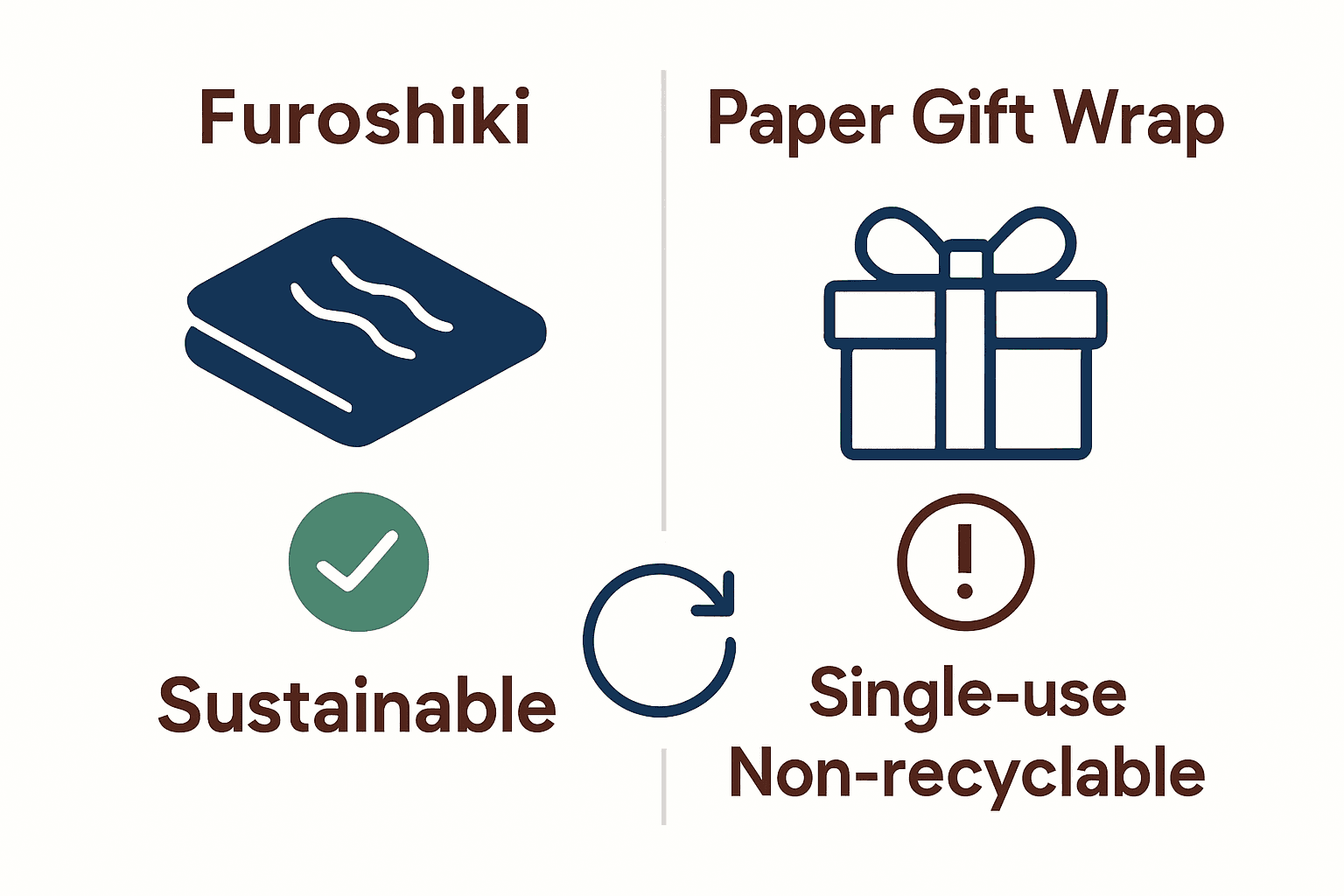 Fabric wrapping, by contrast, provides multiple advantages: environmental sustainability, adaptable design possibilities, and the potential for repeated use across numerous occasions.
Ultimately, furoshiki represents more than just an alternative to conventional wrapping - it’s a statement of intentional, mindful gifting. By choosing fabric over disposable materials, individuals demonstrate a commitment to reducing waste, celebrating craftsmanship, and elevating the entire gift-giving experience from a momentary transaction to a meaningful, sustainable ritual.
Elevate Your Gift-Giving with Sustainable Furoshiki Wrapping
The challenge many face today is finding a gift wrap solution that marries beauty, cultural depth and environmental responsibility without compromise. This guide to furoshiki wrapping highlights the desire for elegant, reusable wrapping that respects tradition and sustainability. If you are inspired by the art of fabric folding and personalisation, you will appreciate the luxurious options we offer. Our bespoke collection addresses the need for eco-friendly, personalised fabric wraps that transform every gift into a meaningful experience.
Discover the artistry of personalised embroidery and high-quality fabrics in our Reusable Fabric Wrap - Luxurious Christmas Collection designed to captivate the senses and honour mindful gifting.
Ready to make every gift exceptional and sustainable this year Explore a collection that elevates your wrapping to an art form with timeless style and thoughtful craftsmanship only at Nicholas & Rose. Start your journey towards beautiful, reusable gifts with detailed personalisation options and embrace the future of gift presentation today.
Frequently Asked Questions
What is furoshiki wrapping?
Furoshiki wrapping is a traditional Japanese textile art of wrapping and transporting goods using elegantly folded fabric squares. It has evolved into a sustainable gift wrapping technique in modern times.
How did furoshiki originate?
Furoshiki originated in Japan during the Nara period (710-794 AD) and was initially used to protect valuable temple objects. The term ‘furoshiki’ itself emerged during the Muromachi period (1336-1573) and refers to its use by bathhouse visitors for bundling personal belongings.
What are the main techniques of furoshiki wrapping?
Key techniques of furoshiki wrapping include Otsukai Tsutsumi (Basic Carry Wrap), Yotsu Musubi (Four Tie Wrap), Katakake Fukuro (Shoulder Carry Wrap), and Bin Tsutsumi (Bottle Carry Wrap), each designed for different shapes and purposes.
How can I personalise my furoshiki wrapping?
You can personalise furoshiki wrapping through custom embroidery, monograms, and unique designs that reflect individual stories or preferences. This adds a bespoke touch, making the wrapping a meaningful keepsake beyond just a packaging solution.