

Luxury gifting options 2025: the eco-conscious UK guide
The finest luxury gifting option for a newborn or baby shower in 2025 is a personalised, embroidered reusable cotton wrap — a single object that serves as presentation, keepsake, and second gift all at once. Three qualities set it apart from everything else on the market this year:
- Heirloom potential: a name and birth date stitched in thread outlasts any printed label, growing more meaningful with every passing year.
- Sustainability credentials: GOTS-certified organic cotton and low-impact dyes meet the expectations of eco-conscious UK parents without compromise.
- Immediate presentation impact: the wrap is the wrapping, arriving gift-ready with no tissue paper, no single-use ribbon, and nothing destined for the recycling bin before the baby has drawn a first breath.
Nicholasandrose offers exactly this: personalised reusable wraps in sizes and patterns suited to newborns and toddlers, with custom embroidery ordered directly online.
Pro Tip: Order with the name and birth date already chosen — even if the baby has not yet arrived, many parents share their chosen name in advance, and having the embroidery ready makes the gift feel considered rather than last-minute.
Table of Contents
- What does ‘luxury’ really mean for newborn gifts in 2026?
- How to choose a personalised reusable luxury wrap: your buying checklist
- What materials and certifications should you look for in the UK?
- Which personalisation choices create lasting heirloom value?
- What size wrap should you choose for newborns and toddlers?
- How do you keep a fabric wrap heirloom-ready for years?
- When should you order, and what should you expect to pay in the UK?
- How do you present a reusable wrap so the recipient will treasure it?
- Which UK makers specialise in personalised reusable fabric gift-wraps for children?
- How do you verify ethical sourcing and fair labour practices?
- Why restraint is the most radical luxury gift choice in 2026
- Nicholasandrose: personalised reusable wraps for newborns and toddlers
- Sources
What does ‘luxury’ really mean for newborn gifts in 2026?
Luxury, in the context of premium gift ideas for new parents, has shifted decisively away from abundance. The most thoughtful gift in 2025 is not a hamper of ten disposable items but one beautifully made, genuinely useful object that will still be in the family five years from now. Sustainable baby experts frame this as restraint: a single well-crafted essential reads as more considered than a collection of novelties that clutter a nursery and end in landfill.
The market reflects this shift. The UK personalised gifts market is projected to grow by USD 1.26 billion between 2025 and 2029, driven in part by rising demand for eco-friendly bespoke textiles. Personalisation is no longer a premium add-on; it is the expectation.
Three qualities define the 2025 luxury frame for newborn gifting:
- Utility that lasts — the gift must serve a real purpose beyond the occasion, whether as a swaddle, a play mat, or a keepsake cloth.
- Heirloom potential — names, birth dates, and subtle motifs transform a textile into a family object that ages with the child.
- Ethical provenance — parents want to know where the fabric was grown, how it was dyed, and who stitched it.
An eco-friendly baby shower editorial puts it plainly: one premium, practical item chosen with care outweighs many low-quality pieces every time.
How to choose a personalised reusable luxury wrap: your buying checklist
The must-have specifications, distilled: GOTS or OEKO-TEX certified fabric, machine-washable construction, embroidery (not print) personalisation, and a size appropriate for the gift inside.
Before you order, ask the seller:
- Which certification does the fabric carry — GOTS, OEKO-TEX Standard 100, or both?
- Is the embroidery thread colourfast and wash-tested?
- What is the current production lead time for personalised orders?
- Are bespoke colour or font options available, and do they affect lead time?
- Does the wrap arrive gift-ready, or does it need additional packaging?
Must-have specifications at a glance:
- Organic cotton or linen base fabric, certified to GOTS or OEKO-TEX Standard 100
- Embroidered personalisation (name, date, or motif) rather than heat-transfer print
- Machine-washable at 30°C on a gentle cycle
- Minimum 70cm square for a newborn gift; 90cm or 110cm for toddler items
- UK-based or UK-shipping supplier with transparent lead times
Pro Tip: If the occasion is a baby shower before the birth, choose a wrap in a neutral pattern and leave the birth-date field blank — many makers will embroider the date as a complimentary update once the baby arrives.
What materials and certifications should you look for in the UK?
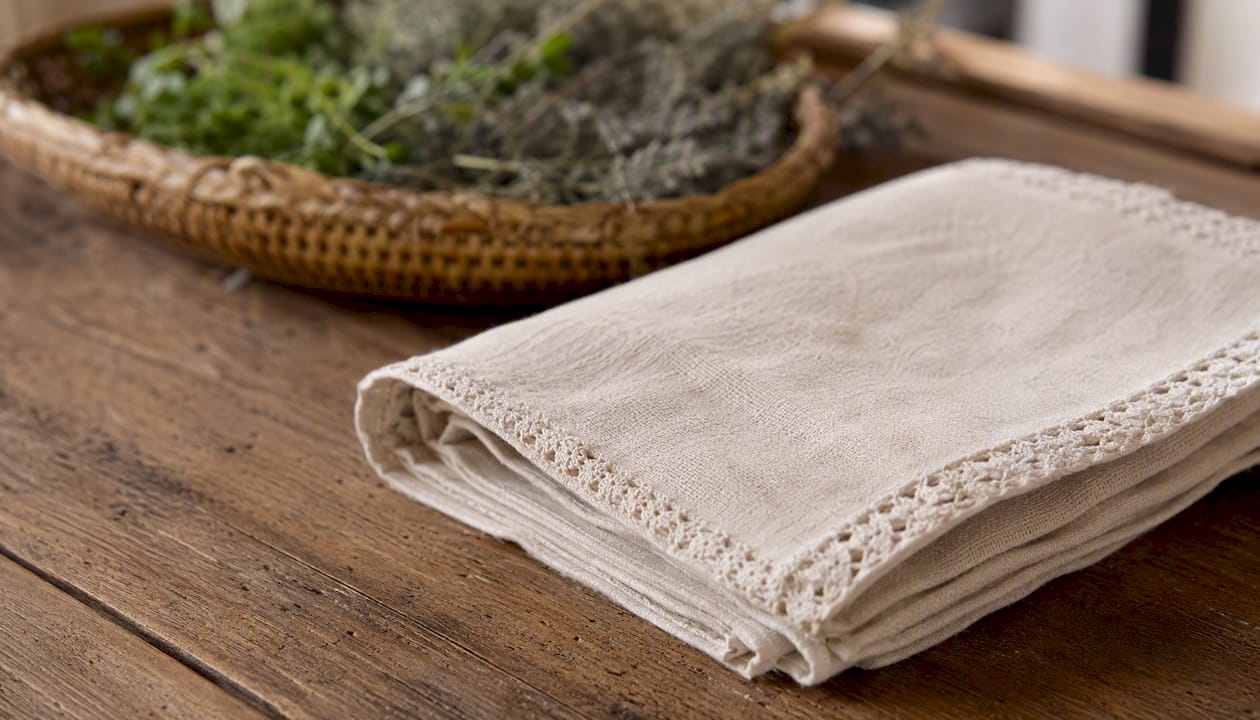
Organic cotton is the preferred base for a luxury reusable wrap, and the certification that matters most is GOTS (Global Organic Textile Standard). GOTS covers both the fibre’s organic origin and the social and environmental conditions of processing, making it the most rigorous single certificate available for textiles. OEKO-TEX Standard 100 is a complementary mark, confirming that every component — fabric, thread, dye — has been tested against a list of harmful substances.
Certificates worth requesting:
- GOTS — organic fibre origin plus ethical processing conditions
- OEKO-TEX Standard 100 — harmful-substance testing across all components
- B Corp — whole-company ethical and environmental accountability (less common in small UK makers, but worth noting when present)
Linen is a worthy alternative to cotton: it is naturally biodegradable, requires less water to grow, and develops a softer drape with each wash. Low-impact, azo-free dyes are the standard to request for any coloured fabric.
On end-of-life: a GOTS organic cotton wrap is fully biodegradable when unembellished, and even an embroidered piece can be composted once the thread is removed. Fabric wrapping, in the furoshiki tradition, becomes a second gift — kept, reused, and never discarded after the occasion.
Which personalisation choices create lasting heirloom value?
Embroidery is the answer, without qualification. Embroidered personalised baby items are the most searched personalised baby gift in the UK, and embroidery consistently outlasts printed personalisation through years of washing and handling. Thread stitched into fabric becomes part of the weave; a heat-transfer print sits on the surface and lifts with time.
Comparing personalisation methods:
- Embroidery — most durable; colourfast through repeated washing; adds tactile texture; suits heirloom storage.
- Screen or digital print — lower cost; wider colour range; fades and cracks with washing; unsuitable for keepsake use.
- Woven labels — durable but limited to small text; best as a complement to embroidery, not a replacement.
For newborn and baby-shower gifts, the most tasteful embroidery layouts are restrained: a first name in a classic serif or script font, a birth date beneath it, and optionally a single small motif — a star, a leaf, a simple bloom. Placement on the corner of the wrap keeps the design visible when the cloth is folded or tied, without dominating the fabric’s own pattern.
| Personalisation | Durability | Care complexity | Heirloom suitability |
|---|---|---|---|
| Embroidery | High | Low | Excellent |
| Digital print | Low | Medium | Poor |
| Woven label | High | Low | Good (as accent) |
What size wrap should you choose for newborns and toddlers?
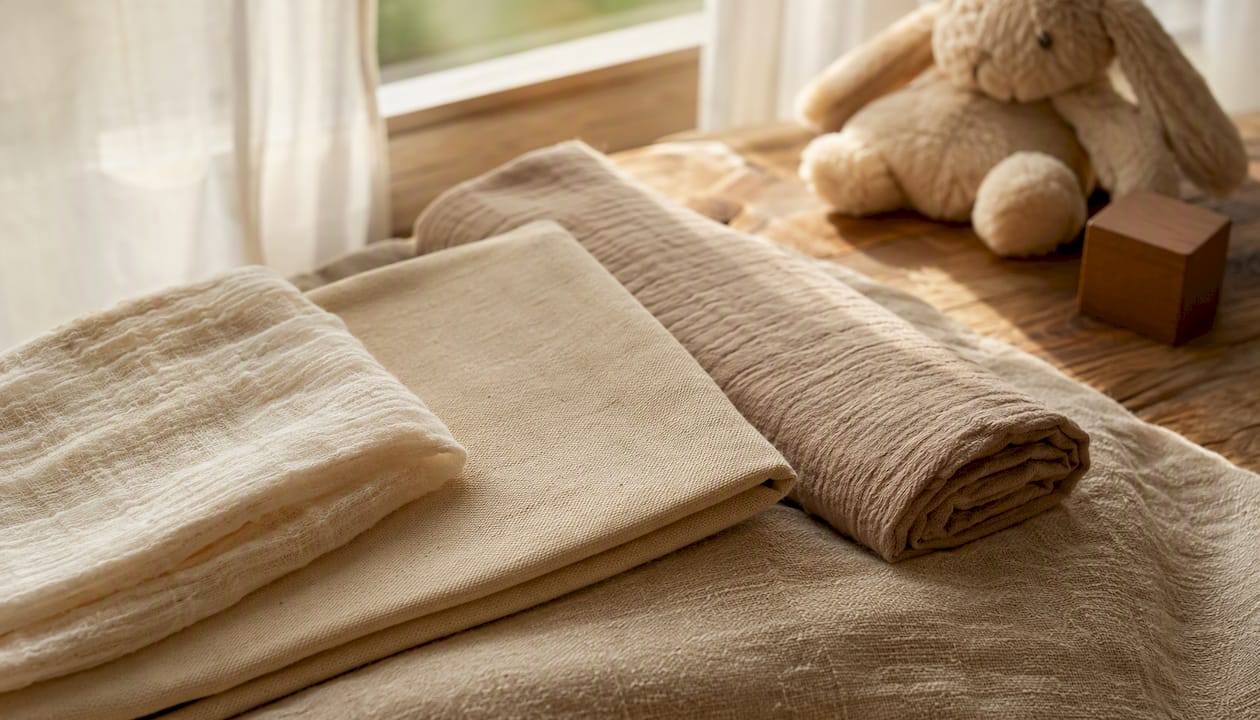
The direct answer: a 70cm square suits most newborn gifts and small baby-shower presents; a 90cm square covers standard gift sets and toddler items; a 110cm square wraps larger milestone gifts and doubles as a play mat or light blanket.
| Gift type | Recommended wrap size |
|---|---|
| Small newborn gift (single item) | 70cm square |
| Baby shower gift set (2–3 items) | 90cm square |
| Toddler birthday gift or book set | 90–110cm square |
| Large milestone gift or hamper | 110cm square |
For fabric weight: a lighter muslin weave (around 120–140gsm) is ideal for newborn wraps — soft against new skin, quick-drying, and easy to fold into knots. A slightly heavier cotton canvas or double-gauze (160–180gsm) suits toddler gifts, offering more structure and durability for repeated reuse.
How do you keep a fabric wrap heirloom-ready for years?
Cold wash, gentle cycle, air dry. Those four words cover the essential care for any embroidered cotton wrap, and following them faithfully is what separates a cloth that lasts a decade from one that pills and fades within a year.
Care by personalisation type:
- Embroidered wraps — wash at 30°C, gentle cycle, inside out to protect thread. Air dry flat or on a rack; avoid tumble drying on high heat, which can distort stitching.
- Printed wraps — wash cold, inside out, and never iron directly over the print.
For long-term storage, fold the wrap in acid-free tissue paper and keep it in a cotton bag rather than a sealed plastic box. Plastic traps moisture; acid-free tissue prevents yellowing. Mend any loose threads promptly with a matching colour — a single pulled stitch left unattended can unravel a motif over time.
Pro Tip: Tuck a small card inside the fold when gifting, noting the wash temperature and the story behind the embroidery. Recipients who understand the care instructions are far more likely to keep and reuse the wrap rather than set it aside.
When should you order, and what should you expect to pay in the UK?
For a standard personalised embroidered wrap, allow 7–14 days from order to delivery in the UK. Bespoke colour-matching, complex multi-line embroidery, or peak-season ordering (November through January) can extend that to 3–4 weeks. Order early for baby showers, where the gift date is fixed.
Price drivers for embroidered luxury wraps:
- Fabric certification (GOTS-certified cotton commands a premium over uncertified alternatives)
- Stitch count and complexity (a name and date costs less than a detailed motif)
- Bespoke colour dyeing (standard colourways are more affordable than custom-dyed fabric)
- Delivery speed (standard UK shipping vs. expedited options)
As a general guide, a quality personalised embroidered reusable wrap from a UK maker typically sits in the £35–£75 range, depending on size and embroidery complexity. That price point reflects the material quality and the labour of hand-finished embroidery — and it compares favourably with the cumulative cost of single-use wrapping paper, tissue, ribbon, and a gift bag across the same occasion.
How do you present a reusable wrap so the recipient will treasure it?
Simple, fabric-first presentation is the most eloquent choice. Fold the wrap into a neat square, tie it with a length of natural cotton ribbon or a reusable fabric tie, and tuck the gift inside using a classic furoshiki knot. No cellophane, no single-use bow, no plastic tag.
Styling notes:
- Use a square knot or a two-handle carry knot for a clean, architectural finish.
- Include a small handwritten card explaining that the wrap is designed to be kept and reused.
- Suggest second-life uses on the card: a light scarf, a pram blanket, a table runner for a first birthday, or a play mat.
Fabric wraps kept after the occasion become part of the household — draped over a chair, folded in a drawer, or brought out again for the next gift-giving moment. That continuity is the point.
Which UK makers specialise in personalised reusable fabric gift-wraps for children?
The UK market for personalised reusable fabric gift-wraps for children is small but growing, shaped by independent makers and a handful of specialist e-commerce brands. When comparing options, the meaningful distinctions are fabric certification, embroidery quality, sizing range, and transparency about production.
Nicholasandrose sits at the considered end of this market: a specialist in personalised, embroidered reusable cotton wraps for newborns, baby showers, and toddler milestones, with a focus on sustainable materials and gift-ready presentation. The brand’s Baby & Beyond collection is designed specifically for this gifting moment, with sizes and patterns chosen for the earliest years of a child’s life.
Beyond specialist brands, some independent craft sellers on platforms such as Etsy offer embroidered fabric wraps, though certification transparency and consistent sizing can vary. When evaluating any maker, ask for the fabric’s certification documentation and a sample of the embroidery thread’s wash-fastness rating before ordering.
How do you verify ethical sourcing and fair labour practices?
Certification is the most reliable starting point. A GOTS certificate covers not only the organic origin of the fibre but also the social conditions of every processing stage — fair wages, safe working conditions, and no child labour. Request the certificate number and verify it directly on the GOTS public database.
Practical verification steps:
- Ask the maker for their GOTS or OEKO-TEX certificate number and check it against the issuing body’s public database.
- Look for named production partners or a published supply-chain statement on the brand’s website.
- Prefer UK-based or European production where possible — shorter supply chains are easier to audit and typically carry lower transport emissions.
- Check whether the brand publishes a living-wage commitment or a named ethical-trade policy.
A maker who cannot answer basic questions about where their fabric was woven or who stitched the embroidery is a maker whose supply chain has not been examined. Transparency is not a luxury feature; it is the baseline for any brand positioning itself as ethical.
Why restraint is the most radical luxury gift choice in 2026
The conventional wisdom in gifting is that more is more — a fuller basket, a heavier box, a wider selection. That instinct is understandable, but for newborn and baby-shower gifts it is almost always wrong. New parents receive an abundance of things in the first weeks; what they rarely receive is one object chosen with such care that it stays in the family for years.
A personalised, embroidered reusable wrap is a quiet argument against that abundance. It says: I chose one thing, and I chose it to last. The embroidery carries the child’s name; the fabric carries the occasion; the knot carries the intention. Nothing about it is disposable, and that is precisely what makes it feel luxurious in 2025.
The heirloom potential of personalised newborn gifts is not a marketing phrase. It is what happens when a well-made object outlives the moment it was given for, and becomes part of a family’s texture instead.
Nicholasandrose: personalised reusable wraps for newborns and toddlers
Nicholasandrose offers the personalised, embroidered reusable cotton wrap described throughout this guide — available in sizes from 70cm to 110cm, in patterns chosen for the earliest years of a child’s life. Each wrap arrives gift-ready, with embroidery options covering names, birth dates, and subtle motifs in a range of thread colours. Fabric is sourced with sustainability at the centre, and every order ships within the UK with clear lead-time guidance at checkout.
The Baby & Beyond milestone collection is the natural starting point for newborn and baby-shower gifts. Browse the collection, choose your size and pattern, and add the embroidery details that will make this wrap a keepsake worth keeping.
Key takeaways
A personalised, embroidered reusable cotton wrap is the single most considered luxury gifting option for newborns and baby showers in 2025 — combining heirloom potential, sustainability credentials, and gift-ready presentation in one object.
| Point | Details |
|---|---|
| Choose embroidery over print | Embroidery outlasts printed personalisation through years of washing and remains heirloom-quality. |
| Verify fabric certification | Look for GOTS or OEKO-TEX Standard 100 to confirm organic fibre and safe dye standards. |
| Match size to the gift | 70cm for newborn items, 90cm for gift sets, 110cm for toddler or larger milestone gifts. |
| Allow 7–14 days to order | Personalised embroidery needs production time; add a week for peak seasons or bespoke requests. |
| Nicholasandrose Baby & Beyond | Specialist personalised reusable wraps for newborns and toddlers, shipped within the UK. |
Sources
- Personalised Baby Gifts UK — The Complete Guide (2026) | BabyMade
- 15 Eco Friendly Baby Shower Gifts to Love