

Sustainable gift wrap UK: Eco-friendly tips for parents
TL;DR:
- Sustainable gift wrapping options include recycled kraft paper, fabric wraps, and tote bags.
- Reusability and responsible sourcing are key factors in eco-friendly wrapping choices.
- Creative personalisation with natural materials enhances sustainable wrapping’s beauty and meaning.
There is something quietly heartbreaking about watching a beautifully wrapped gift torn open in seconds, its carefully chosen paper destined for the bin before the celebration has even settled. For eco-conscious parents in the UK, this moment carries a particular sting, because the wrapping itself often represents a values conflict: you care deeply about the planet, yet you also want your gift to feel special, personal, and joyful. This guide is here to dissolve that tension entirely. From understanding which materials are truly sustainable to mastering the art of personalised, reusable wrapping for baby showers and children’s birthdays, every practical step you need is gathered here.
Table of Contents
- Understanding sustainable gift wrapping in the UK
- Sustainable materials and creative personalisation
- Step-by-step: Eco-friendly wrapping for all occasions
- Tricky shapes and how to wrap them sustainably
- Why embracing reusable wrap beats traditional paper
- Discover luxury sustainable wrap solutions
- Frequently asked questions
Key Takeaways
| Point | Details |
|---|---|
| Do the scrunch test | If the wrapping paper stays scrunched, it is recyclable in most UK councils. |
| Personal touch, low impact | Decorate with natural items, stamps, or children’s art to combine sustainability and creativity. |
| Reusable wraps last longer | Fabric wraps and tote bags reduce waste and become part of the gift itself. |
| Eco-wrapping works for all shapes | Use simple maths or flexible materials like cloth to wrap even tricky gifts sustainably. |
Understanding sustainable gift wrapping in the UK
The word sustainable is used so freely that it has begun to lose its edges. When it comes to gift wrapping, it is worth pausing to understand exactly what each term means, because the differences matter enormously at the recycling bin.
Recycled paper is made from post-consumer waste, reducing the demand for virgin wood pulp. Recyclable paper can be processed again after use, but only if it is free from foil, glitter, and laminate coatings. Reusable wrapping, such as fabric or tote bags, sidesteps the single-use cycle altogether. And FSC-certified paper carries the Forest Stewardship Council label, which assures UK parents that the wood fibre originates from responsibly managed forests where biodiversity and workers’ rights are protected.
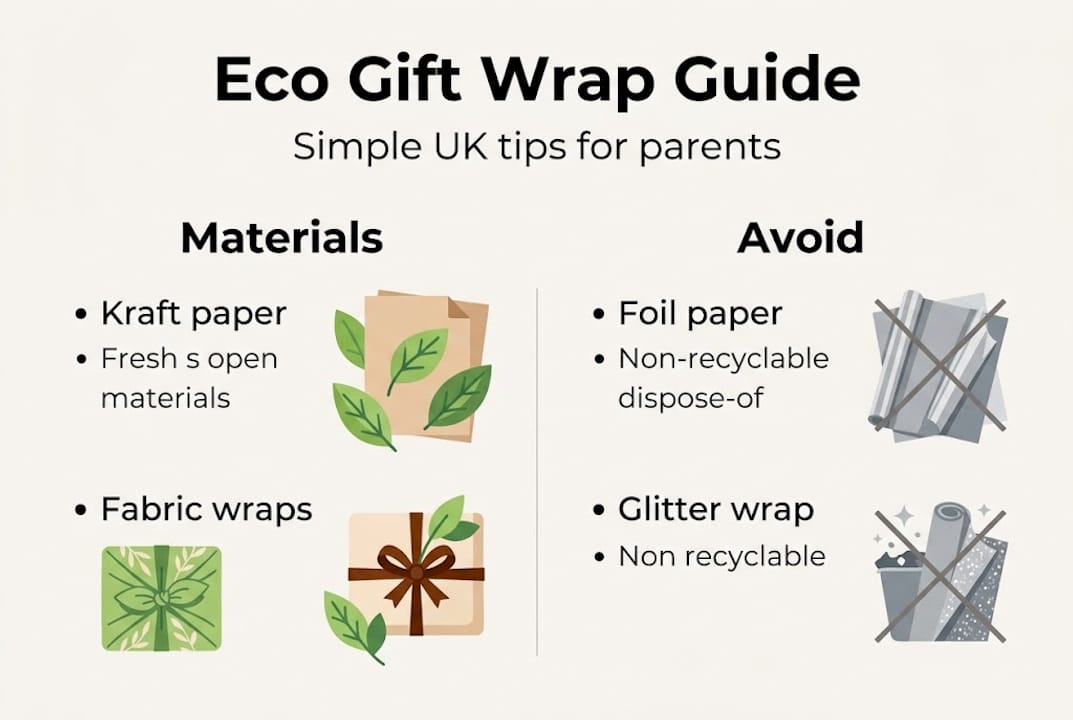
One of the most persistent misconceptions is that all paper wrapping is recyclable. In reality, a significant portion of what fills UK recycling bins at Christmas and birthday season cannot be processed at all. The scrunch test is your simplest guide: scrunch the paper into a ball, and if it holds its shape, it is likely recyclable. If it springs back, it contains foil or plastic coating and belongs in general waste. Glittery, laminated, or metallic papers fail this test almost universally.
Here is a quick comparison of the most common wrapping options available to UK parents:
| Material | Recyclable? | Reusable? | Eco impact |
|---|---|---|---|
| Standard foil/glitter paper | No | No | High waste |
| Plain recycled kraft paper | Yes | Limited | Low |
| FSC-certified paper | Yes | Limited | Low to medium |
| Fabric wrap (cotton, linen) | N/A | Yes, many times | Very low |
| Reusable tote bag | N/A | Yes | Very low |
For parents seeking sustainable gift wrap solutions that genuinely reduce environmental impact, the table above makes the case clearly: reusable fabric wrapping sits in a category of its own. Keep this eco wrapping checklist close when planning your next celebration, and you will never reach for the glittery roll again.
Sustainable materials and creative personalisation
Once you understand what makes a wrap truly eco-friendly, the next pleasure is choosing materials that feel as beautiful as they look. The good news is that sustainable wrapping has never been more accessible or more elegant.
Recycled kraft paper is perhaps the most versatile starting point. Its warm, honeyed tone provides a natural canvas that feels artisanal rather than austere. FSC-certified brown paper, available at most major UK supermarkets including Waitrose, John Lewis, and Marks and Spencer, offers the same aesthetic with the added assurance of responsible sourcing. Plain brown paper rolls are also stocked widely in Hobbycraft and online retailers.
The real artistry, however, lies in personalisation. Consider these ideas to make your wrapping as memorable as the gift inside:
- Press dried flowers or lavender sprigs beneath natural jute twine for a botanical, garden-inspired finish
- Use rubber stamps with ink in earthy tones to print names, stars, or small animals across the surface
- Let your child paint or draw directly onto plain paper, transforming their artwork into the wrap itself
- Tie bundles with raw cotton ribbon or raffia rather than plastic-coated curling ribbon
Here is a practical overview of materials, their approximate costs, and where to find them across the UK:
| Material | Approx. cost | Eco credentials | Where to buy in the UK |
|---|---|---|---|
| Recycled kraft paper roll | £3 to £8 | Recyclable, often recycled content | Hobbycraft, Amazon, supermarkets |
| FSC-certified brown paper | £4 to £10 | Responsibly sourced | John Lewis, Waitrose, Paperchase |
| Natural jute twine | £2 to £5 | Biodegradable | Garden centres, Hobbycraft |
| Dried flowers | £3 to £9 | Compostable | Florists, Etsy UK sellers |
| Fabric wrap (reusable) | £12 to £30 | Reusable for years | Nicholas and Rose, specialist eco shops |
As Guardian sustainable wrapping ideas suggest, recycled kraft paper decorated with natural twine and dried flowers strikes the perfect balance between eco-responsibility and visual warmth. For even more inspiration, explore these eco wrapping ideas for gifts tailored specifically to newborn and toddler celebrations.
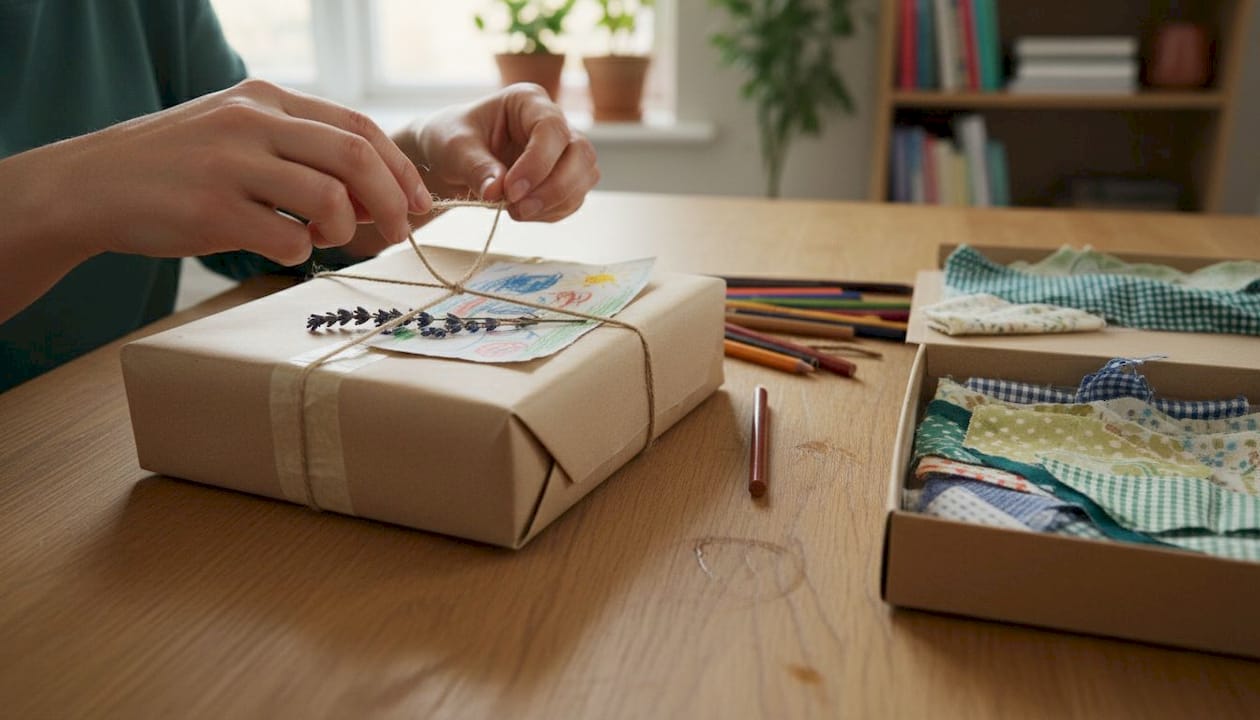
Pro Tip: Save your child’s paintings throughout the year in a dedicated folder. When a birthday arrives, roll out a large sheet of their artwork as wrapping paper. It is free, entirely personal, and the recipient will treasure it as much as the gift itself.
Step-by-step: Eco-friendly wrapping for all occasions
With your materials gathered and your personalisation ideas in mind, here is how to wrap beautifully and sustainably, whatever the occasion.
- Measure before you cut. Lay your gift face-down on the paper and allow roughly 5 cm of overlap on each side. Cutting only what you need eliminates waste from the very first step.
- Secure with paper tape. Conventional sticky tape is plastic-based and non-recyclable. Switch to paper-based or gummed tape, which bonds just as firmly and can go straight into the recycling with the wrap.
- Fold cleanly at the corners. Neat, precise folds mean you use less paper and create a more refined finish. A bone folder tool, available inexpensively at craft shops, makes this effortless.
- Choose your finish thoughtfully. Tie with natural twine, tuck in a sprig of dried rosemary or eucalyptus, and attach a handwritten tag on recycled card.
- Consider the alternative entirely. For baby showers and children’s birthdays, reusable gift wrap options such as fabric wraps or tote bags remove the wrapping dilemma altogether. The wrap becomes part of the gift.
For fabric wrapping, the Japanese Furoshiki method is both simple and stunning. Lay your fabric flat, place the gift in the centre, bring opposite corners together, and tie in a graceful knot. Reusable cloth wrapping in soft cotton or linen drapes beautifully and can be used again and again by the recipient.
Pro Tip: When gifting for a baby shower, use a muslin square or a soft cotton wrap as the outer layer. It doubles as a practical keepsake and means the wrapping itself is a gift.
A note on adhesives: even the most thoughtfully chosen paper loses its recyclability if sealed with plastic tape. Your sustainable wrap is only as eco-friendly as the materials holding it together.
As reusable alternatives such as tote bags, fabric, and children’s artwork demonstrate, the most creative wrapping solutions are often the most sustainable ones too.
Tricky shapes and how to wrap them sustainably
Some presents simply refuse to cooperate. A round ball, a toy with protruding wheels, an oddly proportioned book set: these are the gifts that send most parents reaching for excessive amounts of paper and frustration in equal measure.
The good news is that awkward shapes are where sustainable wrapping truly shines. Here is a quick guide to common challenges:
- Spheres and round toys: Gather fabric or recycled paper up around the item like a gathered pouch, secure with twine at the top, and finish with a ribbon of dried grass or raffia. The result looks intentional and charming.
- Cylinders: Roll the item in fabric, twist the ends tightly, and tie each end with natural cord. This Furoshiki-inspired technique works beautifully for water bottles or rolled-up art prints.
- Flat but irregular shapes: Use a child’s painting as wrap. The irregular edges of artwork become a feature rather than a flaw.
- Very large gifts: Bundle items together in a reusable tote bag or a fabric drawstring sack, which the child can then use for swimming kit or library books.
For sizing fabric or paper precisely, basic maths helps enormously: measure the item’s length, width, and height, then calculate the surface area to determine the minimum fabric or paper required. This eliminates guesswork and waste.
| Gift shape | Traditional method | Eco alternative |
|---|---|---|
| Sphere | Multiple sheets, excess waste | Gathered fabric pouch with twine |
| Cylinder | Awkward folding, tears easily | Furoshiki fabric twist |
| Large toy | Oversized box with filler | Reusable tote bag or fabric sack |
| Irregular shape | Excessive paper layering | Children’s artwork or fabric bundle |
For a complete sustainability checklist for parents covering every shape and occasion, you will find a thoughtful resource that takes the guesswork out of eco-wrapping entirely.
Pro Tip: For children’s birthday gifts, wrap odd-shaped toys in a pillowcase or small fabric bag in the child’s favourite colour. It is endlessly reusable and far more exciting to unwrap than a taped-up paper parcel.
Why embracing reusable wrap beats traditional paper
There is a quiet nostalgia attached to the rustle of paper wrapping, the tearing sound of a gift being opened, the bright ribbons curling across the floor. We understand that pull entirely. But the data asks us to look more honestly at where that paper ends up.
The landfill reality is that a large proportion of wrapping paper cannot be recycled at all, meaning it travels directly from the celebration to general waste. Fabric wrapping, by contrast, lasts for years, reduces the need for repeat production, and carries a tactile warmth that paper simply cannot replicate.
For baby showers in particular, wrapping paper is often discarded before the baby even arrives home. A personalised fabric wrap, embroidered with the baby’s name and birth details, becomes an heirloom rather than waste. It is held, washed, folded, and remembered. That is the genuine difference between a sustainable choice and a merely well-intentioned one. Explore sustainable gift wrap choices that honour both your values and the moment you are celebrating.
Discover luxury sustainable wrap solutions
If you are ready to move beyond the paper roll and discover wrapping that feels as considered as the gift itself, Nicholas and Rose offers an exquisite collection designed precisely for these moments.
Our luxury sustainable gift wrap range for 2026 includes a beautiful newborn and toddler collection, each piece crafted from reusable fabric and available with bespoke embroidery. Imagine a wrap bearing the baby’s name, stitched in soft thread, becoming a keepsake long after the celebration has passed. Browse our full sustainable gift wrap range and find the piece that speaks to your values and your heart.
Frequently asked questions
How can I tell if wrapping paper is recyclable in the UK?
Use the scrunch test: scrunch the paper into a ball, and if it holds its shape, it is recyclable. Avoid foil, glitter, or laminated papers, which cannot be recycled and must go into general waste.
What’s the most eco-friendly way to gift wrap for kids’ parties?
Opt for reusable alternatives such as fabric wraps, tote bags, or let children decorate recycled brown paper themselves for a zero-waste, joyful experience that doubles as a creative activity.
Are there sustainable options for awkwardly shaped gifts?
Absolutely. Fabric wraps, gathered pouches, and old magazines all work beautifully for unusual shapes, and applying basic sizing maths helps you choose the right amount of material without excess waste.
Why choose FSC-certified paper for wrapping?
FSC-certified paper is sourced from responsibly managed forests, offering a meaningfully lower environmental impact than standard paper and ensuring that biodiversity and forest communities are protected in the process.
Recommended
- 7 Steps to a Gift Wrap Sustainability Checklist for Parents – Nicholas & Rose Limited
- Eco gift wrapping workflow: Sustainable steps for parents – Nicholas & Rose Limited
- UK eco wrapping checklist for sustainable celebrations – Nicholas & Rose Limited
- Luxurious eco wrapping ideas for UK newborn gifts – Nicholas & Rose Limited
- Fenntartható Parti Dekoráció: Zöld ünneplés Otthon