

Personalised wrap tutorials for eco-luxury baby gifts 2026
This combination, documented in Nicholasandrose’s personalised gift wrap guide, balances softness, washability, and the kind of lasting beauty that earns a place in a memory box rather than a recycling bin.
The three tutorials below cover the styles most suited to newborn and baby-shower gifting in 2025:
- Minimal monogram wrap — gender-neutral, quick to order, timeless.
- Monthly milestone blanket — designed for photo sessions, then archiving.
- Keepsake gift bundle wrap — doubles as presentation wrap and later becomes a play or memory cloth.
Pro Tip: For newborn wraps, keep total stitch count below 5,000 per design element. Dense stitching creates a stiff, raised surface that can irritate delicate skin, even through a fusible backing.
Key takeaways
Reusable embroidered fabric wraps are the only gifting format that serves as both presentation and heirloom — choose organic cotton, a fusible mesh backing, and a simple name motif for a keepsake that outlasts any paper alternative.
| Point | Details |
|---|---|
| Choose the right tutorial | Minimal monogram for baby showers; milestone blanket for photo gifting; bundle wrap for presentation. |
| Fabric and backing matter | 100% organic cotton with a fusible mesh reverse protects newborn skin and survives repeated washing. |
| Request a full proof | Insist on a digital placement mock-up, thread colour reference, and stabiliser confirmation before approving production. |
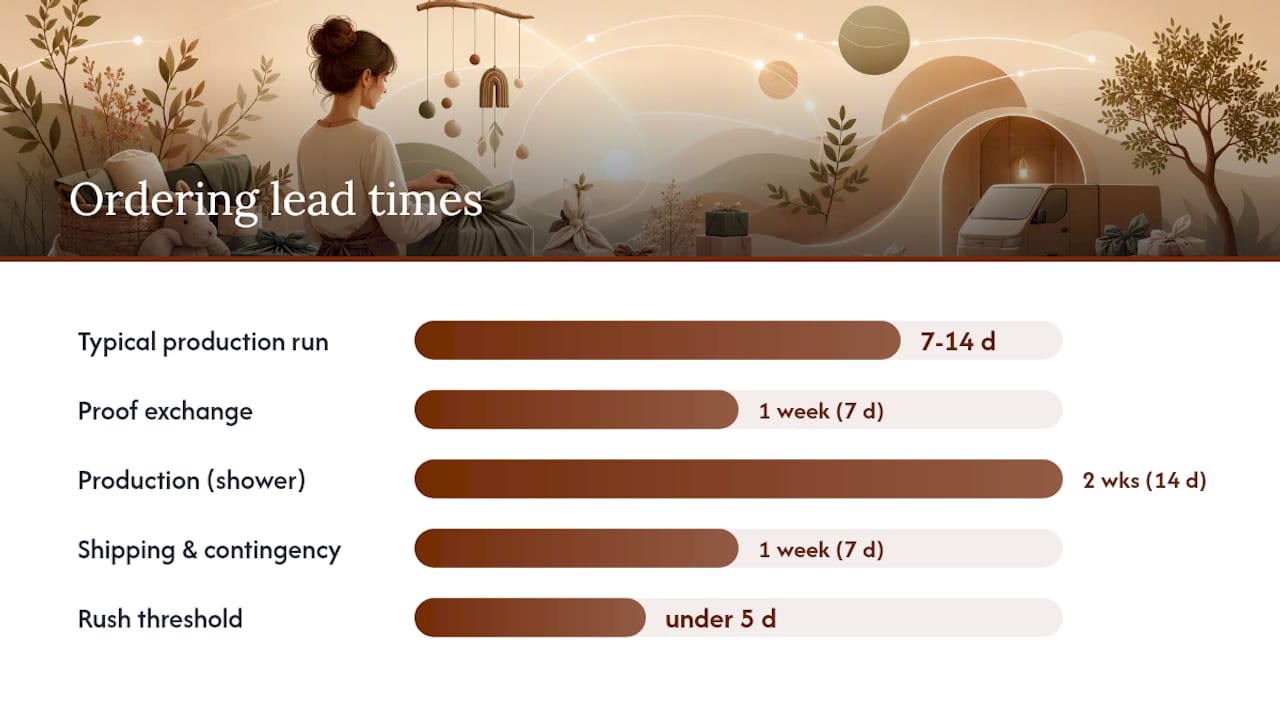
| Order four weeks ahead | Allow one week for proofing, two for production, and one for shipping when gifting for a baby shower. |
| Nicholasandrose | Offers personalised reusable embroidered wraps with a guided proofing process; order at nicholasandrose.co.uk. |
Table of Contents
- Three 2025 personalised wrap tutorials for newborns and baby showers
- What to embroider and exactly where to place it
- How to order: sizes, lead times, proofs and pricing
- Which fabrics and threads keep an embroidered wrap soft and lasting?
- How can you tell true embroidery from a printed design?
- Why reusable embroidered wraps are greener, and six ways to use them again
- How to photograph and preserve the embroidered keepsake
- Gifting personalised wraps beautifully: presentation and packaging
- Why embroidered reusable wraps deserve more than a trend moment
- Nicholasandrose: ready-made eco-luxury personalised wraps
- Sources and further reading
Three 2025 personalised wrap tutorials for newborns and baby showers
Tutorial A: Minimal monogram wrap
Best for: gender-neutral baby showers, quick bespoke orders.
- Choose your base. Cut or order a 70 cm × 70 cm square of 100% organic cotton muslin, pre-washed at 40°C.
- Prepare the stitch file. Use a monogram of two or three initials in a clean serif or block font; minimum letter height 15 mm for legibility. Keep fill-stitch density low (around 40% coverage).
- Hoop and stabilise. Float the fabric on a medium-weight cut-away stabiliser; use a 15 cm round hoop for a corner placement.
- Stitch and trim. Run the file, trim jump threads, and press gently from the reverse with a pressing cloth.
- Apply fusible mesh backing. Iron a soft fusible mesh (sometimes called cloud cover or tender touch) over the embroidery reverse to protect newborn skin.
- Finish. Serge or hem edges with a narrow rolled hem; fold into a square and tie with a natural cotton ribbon.
Illustration suggestion: close-up of the monogram corner against a linen flat-lay, with a second image showing the mesh backing before pressing.
Tutorial B: Monthly milestone blanket
Best for: photo-session gifts that transition into archive keepsakes.
- Select a larger base. A 90 cm × 90 cm organic cotton or bamboo-blend muslin gives room for monthly number overlays during photo sessions.
- Place the motif deliberately. Embroider the baby’s name and birth date in the lower-right corner, leaving the centre entirely clear for photo props and number cards.
- Font size matters. Use a minimum 18 mm cap height for names that read clearly in photographs taken from above.
- Stabilise for repeated washing. Use a soft cut-away stabiliser and the fusible mesh reverse finish; this combination, recommended by Newborn Baby Embroidery specialists, is tested for 50-plus wash cycles.
- Proof the placement. Ask your maker for a digital placement mock-up before production; confirm the motif does not intrude on the central photo zone.
- Archive after the milestone year. Fold acid-free tissue inside, roll loosely, and store flat.
Illustration suggestion: overhead flat-lay showing the clear centre zone with a small “1 month” card, and the embroidered corner visible at the edge.
Tutorial C: Keepsake gift bundle wrap
Best for: presentation gifting where the wrap itself becomes a lasting cloth.
- Choose a 50 cm × 50 cm square of organic cotton for smaller gifts (soft toys, clothing sets) or 70 cm × 70 cm for boxed gifts.
- Embroider the name in the centre stripe so it reads naturally when the cloth is laid flat as a play mat later.
- Fold furoshiki-style. Place the gift in the centre, bring two opposite corners up and knot; tuck the remaining corners neatly underneath.
- Proof stitch placement before folding. The motif should remain visible on the top face of the finished bundle.
- Present in a natural cotton drawstring bag to protect the wrap in transit and signal its reusable nature to the recipient.
Fabric size guide
| Use | Finished dimensions | Fabric weight |
|---|---|---|
| Newborn swaddle / wrap | 70 cm × 70 cm | Lightweight muslin |
| Gift box wrap | 50 cm × 50 cm | Medium cotton |
| Soft toy bundle | 40 cm × 40 cm | Medium cotton |
| Toddler play mat | 90 cm × 90 cm | Bamboo-cotton blend |
Pro Tip: Each tutorial takes roughly 20–30 minutes of active making time once the stitch file is approved. The proof stage — not the stitching — is where most delays occur, so build it into your timeline.
What to embroider and exactly where to place it
Names age better than phrases. A first name or set of initials remains meaningful across decades; a sentimental phrase tied to a specific moment can feel dated. A birth date is a considered addition — day and month only tends to read more elegantly than a full year, which can feel clinical on a soft textile.
For small embroidered areas, a clean serif or a geometric sans-serif outperforms script fonts at sizes below 20 mm. Script carries a risk of thread bridges between letters that fray with washing; if you love a flowing style, ask your maker to confirm the minimum safe size for that specific font file.
Placement by wrap size and fold method:
- Corner placement suits the minimal monogram wrap and remains visible after furoshiki folding.
- Lower-edge placement works well for milestone blankets, keeping the centre clear.
- Centre stripe reads best on play mats and bundle wraps laid flat.
Proof approval checklist:
- Contrast between thread colour and base fabric is legible in low light.
- Motif scale is proportionate — no larger than one-fifth of the total wrap area.
- Negative space around the design is at least equal to the design’s own width.
- Placement does not land on a fold line where repeated creasing could stress stitches.
How to order: sizes, lead times, proofs and pricing
Measure the gift first, then choose the wrap. Add 15 cm to each dimension of the gift for a comfortable fold; a boxed newborn clothing set measuring 25 cm × 20 cm needs at least a 40 cm × 35 cm wrap, so the 50 cm × 50 cm square is the practical minimum.
Typical bespoke embroidery production runs 7–14 working days from proof approval, with personalised baby blankets sometimes requiring longer lead times during peak gifting seasons (October through December and late spring). For a baby shower, order at least four weeks before the event: one week for proof exchange, two weeks for production, and one week for shipping and contingency.
What a thorough proof includes:
- Digital overlay showing motif position on the actual wrap dimensions.
- Thread colour reference (Madeira, Isacord, or equivalent brand number).
- Stabiliser type confirmed in writing (cut-away, tear-away, or fusible mesh).
- Estimated stitch count so you can assess density before the item is made.
Pricing for luxury personalised embroidered wraps reflects stitch density, number of thread colours, motif complexity, and fabric quality. Rush fees typically apply when production is needed in under five working days. The Nicholasandrose ordering guide sets out what to expect at each stage of the process.
Which fabrics and threads keep an embroidered wrap soft and lasting?
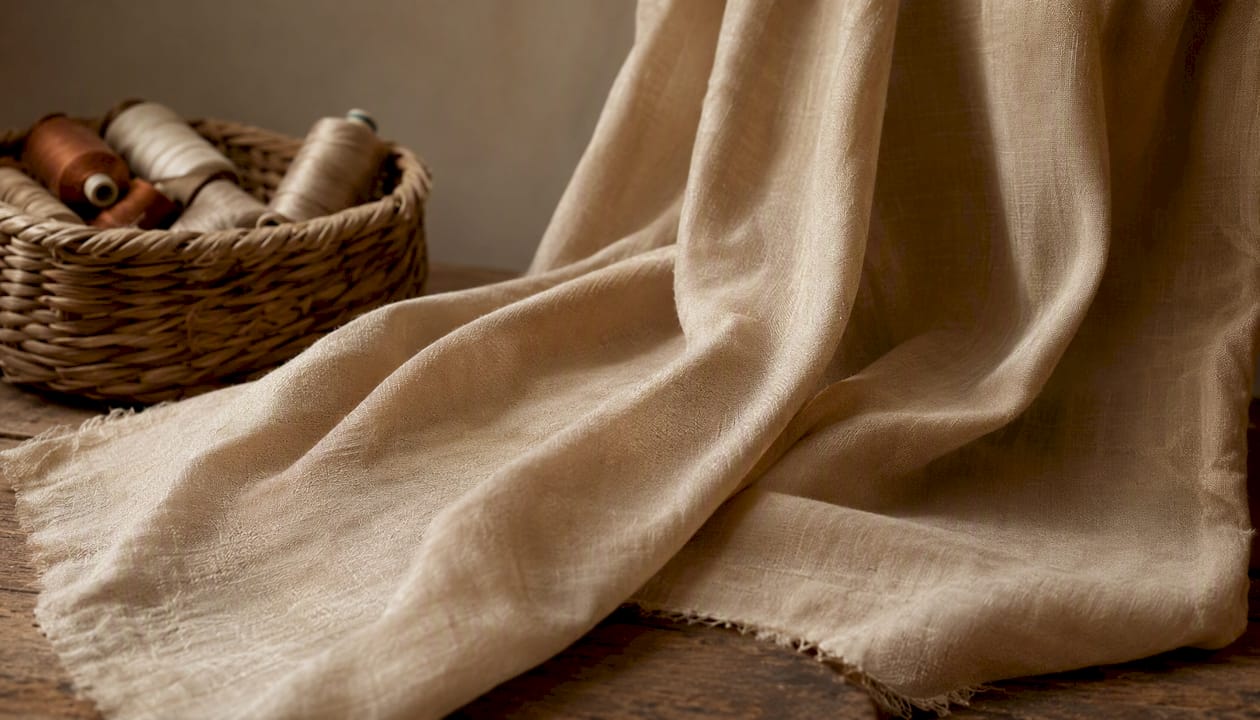
Bamboo-cotton blends add a natural sheen and extra softness for toddler pieces. Avoid minky and fleece for any wrap intended for direct newborn skin contact; their pile makes stabilisation difficult and the surface can trap heat.
Thread choices — polyester thread offers superior wash durability and colour fastness, making it the practical choice for a keepsake washed repeatedly across years. Rayon thread produces a luminous, silk-like finish that photographs beautifully but is marginally less resistant to repeated high-temperature washing. For a newborn wrap, polyester is the considered choice; rayon suits display or occasional-use pieces.
Stabiliser and backing — a soft cut-away stabiliser beneath the fabric during stitching prevents distortion; a fusible mesh ironed over the embroidery reverse after stitching protects skin from thread ends. Together, they are what experienced newborn embroidery makers use to achieve professional results that hold across many wash cycles.
Care guide
| Step | Guidance |
|---|---|
| Washing | 30–40°C gentle cycle, inside-out, mesh laundry bag |
| Drying | Air-dry flat; avoid tumble drying embroidered areas |
| Ironing | Press reverse only, pressing cloth over embroidery |
| Storage | Clean before storing; acid-free tissue; avoid plastic bags |
Pro Tip: Add a drop of white wine vinegar to the first wash to set thread colours and prevent any initial bleeding onto the base fabric.
How can you tell true embroidery from a printed design?
Buyers often mistake heat-transfer prints for genuine thread embroidery in product listings. The distinction matters: embroidered personalisation outlasts printed alternatives across many wash cycles, making it the only credible choice for a long-term keepsake.
Photo checks to run before buying:
- Zoom to 200% on the product image and look for individual thread texture, slight raised edges, and tiny stitch shadows. Flat, uniform colour with no texture variation is a print.
- Look for a macro shot of the design’s reverse; genuine machine embroidery shows bobbin thread in a consistent pattern on the back.
- A slight puckering of the base fabric around the design is normal and desirable — it confirms the stitches are structurally integrated into the cloth.
Listing language to trust: “machine embroidery,” “stitch-integrated personalisation,” specific stabiliser names, and a request for your stitch file or font approval before production.
Listing language to question: “personalised,” “printed name,” “heat-transfer vinyl,” or any description that does not mention thread, stitch count, or stabiliser.
Verification message to send a maker:
- “Could you share a close-up photo of the embroidery texture and the reverse of the design?”
- “Which stabiliser and backing do you use for newborn-contact items?”
- “Have you wash-tested this combination, and at what temperature?”
Why reusable embroidered wraps are greener, and six ways to use them again
Single-use wrapping paper — even the recycled variety — is typically discarded within minutes of a gift being opened. For baby showers, that moment often arrives before the baby is born, meaning the paper serves no purpose beyond a brief reveal. A reusable embroidered fabric wrap, by contrast, carries the child’s name and continues to serve long after the gift inside is forgotten.
The sustainability case for embroidered reusable wraps rests on longevity: one wrap, used and reused across years, replaces dozens of single-use sheets. Paired with newborn gift alternatives that themselves prioritise longevity, the total environmental footprint of a baby gift drops considerably.
Six ways to reuse the wrap after gifting:
- Memory quilt panel — cut and incorporate into a patchwork quilt alongside other milestone fabrics.
- Milestone photo backdrop — lay flat as a named backdrop for monthly progress photographs.
- Play mat — a 90 cm square becomes a clean, soft surface for tummy time.
- Soft toy wrap — fold around a beloved toy as a travel companion cloth.
- Heirloom display cloth — frame behind glass as a textile artwork in the nursery.
- Gift bag conversion — gather corners and tie with ribbon to wrap the next small gift.
“Embroidery is an act of deliberate attention — each stitch placed with intention. That quality of care is what recipients feel when they hold a personalised piece, and it is what separates a keepsake from a commodity.” — Kits Threads
For presentation, fold the wrap neatly, secure with a natural cotton ribbon, and tuck a small card inside explaining the wrap’s reuse possibilities. The gesture signals intention and elevates the entire gifting experience without adding waste.
How to photograph and preserve the embroidered keepsake
Photography:
- Shoot in natural, diffused daylight — direct sun bleaches thread colour and flattens texture.
- Place the wrap on a neutral linen or stone surface; avoid busy backgrounds that compete with the embroidery.
- Use a macro setting or move close to capture thread depth; this is the shot that reads most beautifully in birth announcements.
- Minimal props: a single dried flower stem or a small wooden letter alongside the wrap keeps the focus on the textile.
Storage checklist:
- Wash and dry the wrap completely before long-term storage.
- Fold with acid-free tissue between layers to prevent crease lines becoming permanent.
- Store flat in a cotton pillowcase or linen bag; avoid sealed plastic, which traps moisture and can yellow natural fibres.
- Roll rather than fold if space allows — rolling eliminates fold-line stress on embroidery threads.
- Label the inside with a small sewn-in fabric tag noting the child’s name, birth date, and the year the wrap was made.
- Keep a small swatch of the base fabric separately as a colour reference for future repairs.
Gifting personalised wraps beautifully: presentation and packaging
The wrap is the packaging, and that shift in thinking is what makes it so quietly radical. Present it folded into a neat square, the embroidered motif face-up, and secured with a length of undyed cotton ribbon. Tuck a handwritten card beneath the ribbon explaining that the wrap is reusable and naming two or three of the reuse ideas above — this transforms the gift from a pretty object into a considered, lasting one.
For postal gifting, place the folded wrap inside a natural cotton drawstring bag, then into a recycled card box. The drawstring bag itself becomes a useful storage pouch for the recipient. Avoid tissue paper inside the box if the wrap is already folded in the bag; layering unnecessary materials undermines the eco intention the wrap embodies.
A gift tag printed on seed paper — plantable after reading — completes the presentation without contradiction.
Why embroidered reusable wraps deserve more than a trend moment
The most honest thing to say about personalised embroidered wraps in 2025 is that they are not a trend. Trends arrive with noise and depart with the season. What Nicholasandrose offers is closer to a quiet correction: a return to the idea that the wrapping of a gift should be as considered as the gift itself, and that a child’s name stitched into cloth is worth infinitely more than a name printed on paper destined for the bin.
What I find genuinely moving about this category is the way embroidery slows the gifting process down. Choosing a font, approving a proof, waiting for production — each step asks the giver to be deliberate. Personalised embroidered gifts often become the items children carry into adulthood precisely because they were made with that quality of attention. The tutorials in this article are short by design, but the intention behind each one is not.
Nicholasandrose supports safe, heirloom stitching through a proofing process that lets you see placement, thread colour, and scale before a single stitch is made.
Nicholasandrose: ready-made eco-luxury personalised wraps
Choosing the right wrap matters, and so does choosing the right maker. Nicholasandrose specialises in reusable personalised fabric gift wraps with custom embroidery, crafted for baby showers, newborn arrivals, and children’s birthdays. Each wrap is made from luxury cotton, personalised to your specification, and presented ready to gift.
When you order, you receive a digital proof for approval before production begins — covering motif placement, thread colour, and scale. Lead times and sizing options are set out clearly at the point of order, so there are no surprises before a special occasion. Every wrap arrives gift-ready, with care instructions included, and is designed to be kept and reused long after the occasion has passed.
Browse the full collection and begin your order at Nicholasandrose.
Sources and further reading
- How to Personalise Gift Wrap with Embroidered Fabric
- Personalised Gift Wrap: Complete Guide 2025
- How embroidery elevates sustainable gift wrap for eco-parents
- Personalised wrap trends for eco-conscious luxury gifts
- Newborn Baby Embroidery — EnS — technical guidance on stitch density and stabilisers for newborn projects.
- Best Personalised Baby Blankets UK — BabyMade — ordering advice and lead-time guidance for bespoke embroidered blankets.
- Top 6 Best Newborn Clothes Alternatives — My Wren — complementary styling and gifting ideas for newborn recipients.
For specialist maker guidance, always request proof photographs of thread texture and the embroidery reverse before placing a bespoke order.
Recommended
- Personalised wrap trends for eco-conscious luxury gifts – Nicholas & Rose Limited
- Why personalise fabric wraps for eco-conscious gifting – Nicholas & Rose Limited
- Luxurious eco wrapping ideas for UK newborn gifts – Nicholas & Rose Limited
- DIY decorative wrap process for newborn and baby gifts – Nicholas & Rose Limited