

Reusable gift bags step by step: your complete guide
TL;DR:
- Reusable fabric gift bags are washable pouches designed to replace single-use wrapping paper for various occasions. They can be personalized with embroidery, appliqué, or fabric markers, increasing their chances of being reused. Proper sizing, pre-washing, and reinforcement of stress points ensure durability and sustainability.
Reusable fabric gift bags are defined as washable, sewn pouches designed to replace single-use wrapping paper across multiple gifting occasions. They are particularly well suited to newborn gifts, baby showers, and children’s presents, where the wrapping so often ends up in the bin before the celebration is even over. Traditional wrapping materials often contain foil, glitter, and plastic laminates that cannot be recycled, contributing significant landfill waste each year in the UK. A fabric bag, by contrast, carries a gift with quiet elegance and then lives on, folded neatly in a drawer, waiting to be used again.
How to make reusable gift bags step by step
Making a reusable drawstring bag is a 7-step process that takes between 15 and 30 minutes from start to finish. That is a small investment of time for something that can be used 50–100 or more times, dramatically reducing waste compared to a single sheet of paper destined for the recycling bin. The technique is accessible to beginners and requires no specialist equipment beyond a basic sewing machine and a few simple tools.
Before you cut a single piece of fabric, gather everything you need. Working with a complete set of materials prevents interruptions and keeps the process calm and pleasurable.
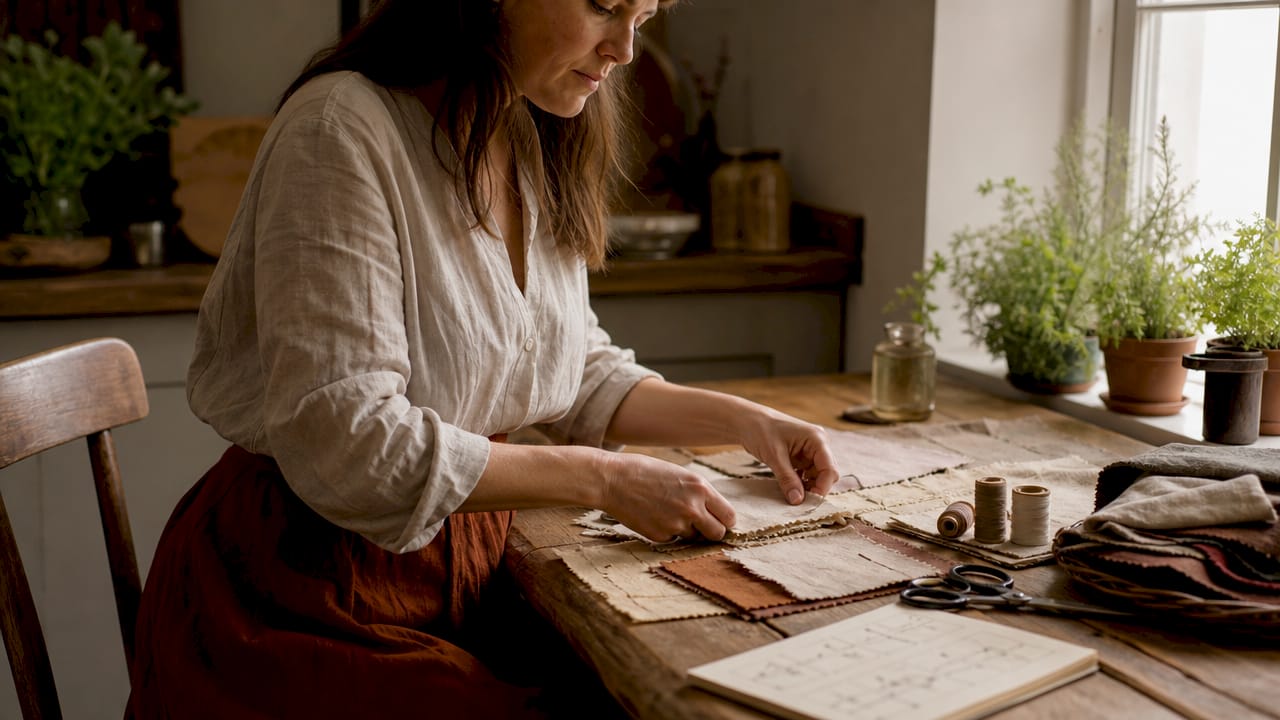
What you need before you begin
Fabric choices:
- Cotton lawn or quilting cotton: lightweight, with a crisp hand-feel that folds beautifully around soft toys or clothing gifts
- Linen: slightly heavier with a natural drape, ideal for larger bags holding books or boxed gifts
- Recycled or upcycled textiles: offcuts from previous projects, old pillowcases, or vintage fabric lengths all carry their own quiet history and reduce waste further
Tools and notions:
- Sewing machine with a standard straight-stitch foot
- Sharp fabric scissors or a rotary cutter and cutting mat
- Pins or fabric clips
- Iron and ironing board
- Safety pin (for threading the drawstring)
- Ribbon, cotton twine, or a fabric drawstring cut to length
Pro Tip: Pre-wash and iron your fabric before cutting. Cotton and linen can shrink by 3–5% after the first wash, which distorts seams and alters the finished size of the bag.
Sourcing sustainable materials adds an extra layer of intention to your gift. Look for GOTS-certified organic cotton at UK independent fabric shops, or explore the best eco gift wrap materials for guidance on fabrics that combine environmental credentials with a luxurious finish.
Step-by-step: sewing your drawstring bag
Follow these steps in order. Each one builds on the last, and skipping ahead creates problems that are harder to fix than to prevent.
-
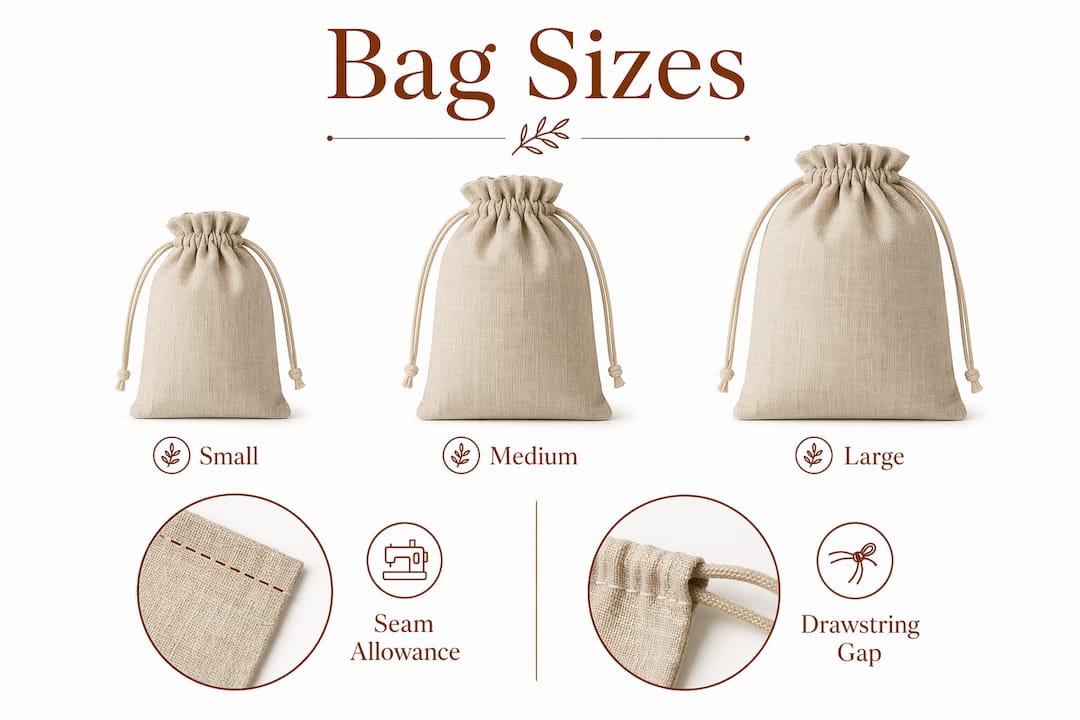
Cut your fabric to size. For a small bag suited to baby gifts and newborn keepsakes, cut a rectangle measuring 12 x 20 inches (30 x 51 cm). For a medium bag holding children’s books or boxed toys, cut at 18 x 24 inches (46 x 61 cm). These dimensions account for seam allowances and the top casing fold.
-
Finish the raw edges. Run a zigzag stitch or overlocker along both long sides and the bottom short edge. This prevents fraying through repeated washing and keeps the bag looking refined over time.
-
Fold and press the top casing. Fold the top edge down by 1 inch (2.5 cm) toward the wrong side of the fabric. Press firmly with an iron to set a clean, crisp fold. This fold will become the channel through which your drawstring runs.
-
Fold the fabric in half. Place right sides together so the two long edges align. Pin along both sides and across the bottom.
-
Sew the side seams, leaving a gap. Stitch down each side using a ½ inch (1.25 cm) seam allowance. Stop your stitching 2 inches (5 cm) from the top edge on each side. Leaving this gap is the single most important step. Sewing the seam completely closed disables the drawstring channel entirely.
-
Stitch the casing. Unfold the bag and stitch along the pressed casing fold, keeping close to the lower folded edge. This creates a neat tunnel around the top of the bag.
-
Thread the drawstring. Attach a safety pin to one end of your ribbon or twine. Feed it through the gap in one side seam, around the full casing channel, and out through the gap on the other side. Knot both ends together or tie them separately for a decorative finish.
Pro Tip: Backstitch at the start and end of every seam, and particularly where the casing meets the side seams. This is the highest-stress point on the bag and the most common place for early seam failure.
Key measurements at a glance
| Bag size | Cut dimensions | Seam allowance | Casing fold | Gap for drawstring |
|---|---|---|---|---|
| Small | 12 x 20 inches | ½ inch (1.25 cm) | 1 inch (2.5 cm) | 2 inches (5 cm) |
| Medium | 18 x 24 inches | ½ inch (1.25 cm) | 1 inch (2.5 cm) | 2 inches (5 cm) |
How do you personalise a reusable gift bag for a special occasion?
Personalisation is what transforms a simple fabric pouch into a keepsake. Personalised fabric bags are significantly more likely to be kept and reused, which directly extends their environmental benefit and their emotional life. For newborn gifts and baby shower presents in particular, a name or birth date stitched in thread becomes a memento that outlasts any paper tag.
Consider the occasion carefully before choosing your approach. A bag for a newborn gift calls for softness and sentiment. A bag for a child’s birthday can carry bold colour and playful pattern.
Creative personalisation ideas for every skill level:
- Hand embroidery: stitch a name, initial, or simple motif such as a star or flower directly onto the fabric before sewing the bag. No hoop is needed for small designs.
- Iron-on appliqué: cut shapes from contrasting fabric and bond them with fusible webbing for a clean, graphic finish that requires no sewing skill.
- Fabric markers: draw directly onto natural cotton or linen with permanent fabric pens. Simple illustrations or handwritten names have a warmth that printed alternatives cannot replicate.
- Fabric paint and stamping: use a carved eraser or a bought stamp to repeat a motif across the bag’s surface, creating a pattern that feels considered and bespoke.
- Thematic fabric selection: choose a print that speaks to the occasion. Soft animal prints suit newborn gifts. Bright geometric patterns delight older children. Botanical linens carry an understated elegance for adult celebrations.
- Personalised tags: attach a small card or a hand-stamped fabric label with the recipient’s name and the date. These details cost almost nothing and add a layer of thoughtfulness that recipients notice.
Lining the bag with a contrasting fabric adds structure and a pleasing surprise when the recipient opens it. An interior pocket, sewn from a small rectangle of fabric before the bag is assembled, is a practical touch for gifts that include small items like jewellery or folded notes.
If you are new to embroidery and want to explore personalised fabric gift wrap before committing to a full DIY project, Nicholasandrose offers beautifully embroidered reusable fabric wrap as a ready-made alternative.
Troubleshooting and caring for your reusable bags
Even experienced sewers encounter small problems. Knowing how to fix them quickly keeps the process enjoyable rather than frustrating.
Puckered seams are almost always caused by sewing too fast or using the wrong tension setting. Reduce your machine’s speed and test your tension on a scrap of the same fabric before sewing the bag itself. If puckering appears after washing, it usually means the fabric was not pre-washed before cutting.
A casing that is too tight to thread happens when the fold is pressed too narrow. Unpick the casing stitch, re-press with a slightly deeper fold, and re-stitch. A casing of at least 1 inch (2.5 cm) accommodates most ribbons and twine comfortably.
Washing and care for your finished bags is straightforward. Machine wash on a cool cycle (30°C) with a gentle detergent to preserve colour and fabric integrity. Reshape while damp and hang to dry rather than tumble drying, which can distort the casing.
Store your finished bags folded flat inside a dedicated box or fabric pouch. A reusable gift wrap kit containing several bag sizes, a selection of ribbons, and a few personalised tags means you are always ready to wrap a gift beautifully without reaching for a roll of paper.
Pro Tip: Label each bag with a small sewn-in tag noting the fabric content and wash temperature. Recipients who want to care for the bag properly will appreciate the guidance, and it reinforces the message that this is a lasting gift, not disposable packaging.
Building a small collection of bags in different sizes is the most practical way to support sustainable gifting habits over the long term. When the bag is already made and waiting, the choice to wrap sustainably requires no extra effort at all.
Key takeaways
Reusable fabric gift bags, made from pre-washed cotton or linen with a proper drawstring casing, can replace single-use wrapping for newborn gifts, baby showers, and children’s presents across dozens of occasions.
| Point | Details |
|---|---|
| Pre-wash your fabric | Cotton and linen shrink 3–5% after the first wash, so always wash before cutting. |
| Leave a 2-inch gap in seams | Stopping stitching 2 inches from the top edge creates the drawstring channel. |
| Backstitch stress points | Reinforce where the casing meets the side seams to prevent early seam failure. |
| Personalise for longevity | Embroidery, appliqué, or fabric markers make bags more likely to be kept and reused. |
| Build a gift wrap kit | Storing bags with ribbons and tags makes sustainable wrapping the easiest option. |
Why I believe imperfection is the whole point
People often tell me they would love to make reusable gift bags but worry their sewing is not good enough. I understand that hesitation. The first bag I ever made had a slightly wonky casing and one seam that puckered at the corner. I gave it to a friend for her newborn daughter’s gift, and she kept it for years. She told me later that the slight imperfection was what made it feel handmade rather than bought.
The misconception that fabric bags must be perfect is one of the biggest barriers to people actually making them. A machine-straight seam is lovely. A hand-guided seam with a gentle curve is equally lovely, in a different way. Both are infinitely more considered than a sheet of foil-laminated paper that goes straight into the bin.
What I have found, after making dozens of these bags for newborn gifts and children’s birthdays, is that the recipients almost always comment on the bag before they comment on the gift inside. There is something about receiving a present wrapped in fabric, with a name stitched carefully into the cloth, that communicates care in a way that no paper wrap can match. The bag becomes part of the gift. It is used again, perhaps for a different occasion, and each time it carries a small thread of the original moment with it.
Sustainable gifting is not about sacrifice or compromise. It is about choosing materials that carry meaning and last. A fabric bag made from organic cotton, personalised with a child’s name, is not a lesser version of a wrapped present. It is a more thoughtful one.
— Helen
Fabric gift wrap and personalisation at Nicholasandrose
If you love the idea of reusable fabric gift wrap but want a beautifully finished, professionally made option alongside your DIY creations, Nicholasandrose offers a considered range of personalised fabric gift wrap designed specifically for newborn gifts, baby showers, and children’s presents.
The 2026 newborn and toddler range from Nicholasandrose features soft, high-quality fabrics with personalised embroidery, creating a keepsake that lasts long after the gift has been unwrapped. Each piece is made to be used again and again, carrying a name or date stitched in thread as a quiet, lasting memento. For those moments when a gift deserves something more than paper, Nicholasandrose brings together sustainable fabric choices and bespoke personalisation in one elegant solution.
FAQ
What fabric is best for making reusable gift bags?
Cotton and linen are the most practical choices. Both are washable, widely available in the UK, and hold their shape well after repeated use.
How long does it take to sew a reusable gift bag?
A standard drawstring bag takes between 15 and 30 minutes from cutting to finishing. Beginners may take slightly longer on their first attempt.
Can I make reusable bags without a sewing machine?
Hand sewing is possible but slower. A sewing machine produces stronger, more consistent seams that hold up better over many washes and uses.
How do I size a bag for a newborn or baby shower gift?
A small bag cut at 12 x 20 inches suits most newborn clothing gifts and soft toys. For sizing children’s gifts as they grow, guidance on kids’ gift sizing can help you choose the right dimensions.
How do I add a name or personalisation to a fabric gift bag?
Hand embroidery, fabric markers, and iron-on appliqué are all suitable methods. Stitch or apply the personalisation before assembling the bag for the cleanest result.
Recommended
- Step by Step Reusable Gift Wrap Guide for Luxury Gifts – Nicholas & Rose Limited
- Step by Step Eco Gift Wrapping for Personalised Gifts – Nicholas & Rose Limited
- Premium Gift Wrapping Instructions for Reusable Fabric – Nicholas & Rose Limited
- Easy Reusable Gift Wrap Steps for Luxurious Gifts – Nicholas & Rose Limited