

Sustainable gift wrapping with fabric: save 90% waste
Gift wrapping for newborns and toddlers generates mountains of waste, especially when paper ends in the bin before the baby arrives. Reusable fabric gift wraps reduce waste by 90% whilst creating personalised keepsakes that families treasure for years. This guide walks you through selecting fabrics, mastering wrapping techniques, adding embroidery, and maintaining your wraps for lasting sustainable style.
Table of Contents
- What You Need: Essential Materials And Preparation
- Step-By-Step Wrapping Techniques Using Reusable Fabric Wraps
- Personalisation: Adding Embroidery And Keepsake Value
- Cleaning And Maintenance For Long-Lasting Use
- Common Mistakes And Troubleshooting
- Expected Results And Environmental Impact
- Discover Sustainable Gift Wrap Options
- FAQ
Key takeaways
| Point | Details |
|---|---|
| Choose natural fabrics | Organic cotton and linen offer biodegradable, baby-safe wrapping that lasts through dozens of uses. |
| Master Furoshiki techniques | Traditional folding methods secure gifts without tape, completing wraps in under five minutes. |
| Personalise with embroidery | Simple stitched names or dates boost wrap reuse rates by 50% and create sentimental keepsakes. |
| Wash gently every 3-5 uses | Mild detergent and air drying maintain fabric integrity whilst preventing shrinkage and fading. |
| Save money and waste | Reusable wraps eliminate £100 annual spending on disposable paper whilst cutting household waste dramatically. |
What you need: essential materials and preparation
Successful sustainable wrapping starts with choosing the right materials. You need fabrics that look beautiful, feel soft against baby skin, and withstand repeated washing. Natural fibres outperform synthetics in every category.
Organic cotton and linen are biodegradable, durable, and suitable for sensitive baby skin, making them ideal for newborn and toddler gifts. These fabrics breathe naturally and soften with each wash rather than degrading. Linen particularly resists wrinkles and maintains crisp folds that showcase your wrapping technique beautifully.
Pre-washing your fabric wraps before first use prevents colour bleeding and removes any manufacturing residues that might irritate delicate skin. Wash new wraps separately in cold water with gentle detergent, then air dry completely. This initial wash also preshrinks the fabric, ensuring your wraps maintain consistent sizing through future use.
Gather these essential supplies:
- Square fabric pieces in 50cm, 70cm, and 90cm sizes for different gift dimensions
- Natural fibre ribbons or fabric strips for securing wrapped gifts
- Sharp fabric scissors for clean cutting without fraying edges
- Embroidery thread and needles if adding personalisation
- Mild, eco-friendly laundry detergent for washing between uses
Avoid synthetic fabric blends like polyester, which shed microplastics during washing and contribute to ocean pollution. Pure natural fibres break down completely at end of life, whilst synthetic blends persist in landfills for decades. The slight extra cost of organic materials pays dividends in durability and environmental impact.
Pro tip: Start with three wraps in graduating sizes rather than buying a dozen identical pieces. This variety handles everything from small rattles to bulky teddy bears without excess fabric bunching.
Step-by-step wrapping techniques using reusable fabric wraps
Mastering fabric wrapping techniques transforms gift presentation from ordinary to memorable. The Japanese Furoshiki method adapts perfectly for baby gifts, creating elegant folds that stay secure during transport.
Follow these steps for basic square wraps:
- Lay fabric wrong side up on a flat surface with corners pointing north, south, east, and west like a diamond.
- Centre your gift in the middle, ensuring equal fabric extends on all four sides.
- Fold the bottom corner up over the gift, smoothing fabric against the top surface.
- Bring the top corner down to meet the bottom edge, creating a neat envelope.
- Gather the left and right corners, pulling fabric taut to eliminate loose folds.
- Tie corners in a secure double knot or decorative bow above the gift.
For rectangular or oddly shaped items like clothing sets or toy collections, adapt the technique by folding corners diagonally rather than straight across. This creates pleats that accommodate irregular dimensions whilst maintaining clean lines. Furoshiki wrapping allows secure and aesthetic gift presentation without adhesives, perfect for eco-conscious parents.
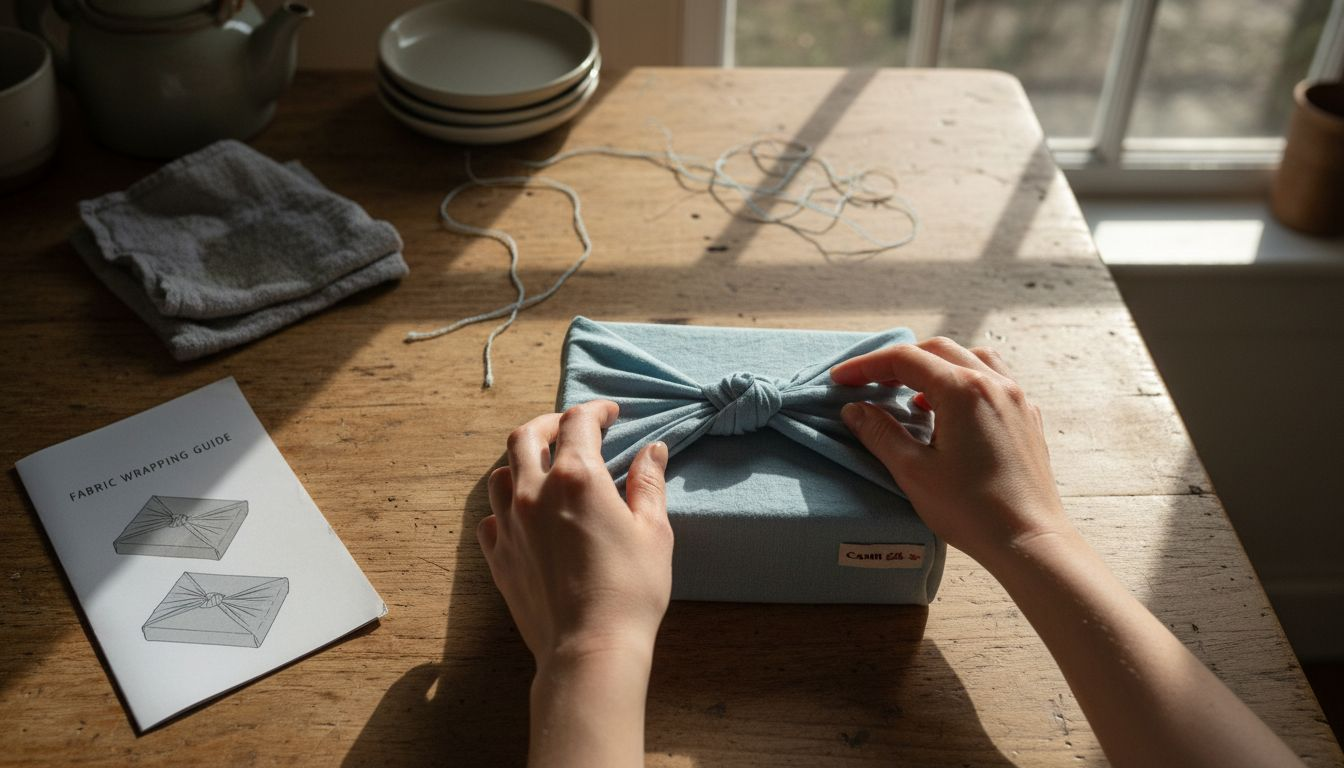
Bottle-shaped gifts require a different approach. Place the bottle diagonally across the fabric, roll it tightly from one corner, then gather and tie the excess fabric at the neck. This technique works brilliantly for baby bottles, sippy cups, or cylindrical toy containers.
Practise your wrapping technique three or four times before the actual gift-giving occasion. You’ll quickly develop muscle memory for fold placement and tension, reducing wrapping time from ten minutes initially to under three minutes once comfortable. Speed improves presentation quality because you’ll handle the fabric with confidence rather than hesitation.
Pro tip: Keep fabric wraps slightly damp when wrapping, as moisture helps create sharper creases that hold their shape better than bone-dry fabric.
Personalisation: adding embroidery and keepsake value
Personalised embroidery transforms functional wrapping into treasured keepsakes that recipients save for decades. Simple stitched details create emotional connections that dramatically increase wrap reuse rates.
Embroidery increases wrap reuse by 50% by transforming generic fabric into named mementos. Parents instinctively save personalised items rather than discarding them after a single use. This psychological shift drives the core sustainability benefit of embroidered fabric personalisation.
Keep embroidery designs simple for maximum durability:
- Baby’s name or initials in flowing script
- Birth date or special occasion date
- Small nature motifs like stars, flowers, or animals
- Short phrases like “Welcome Baby” or “First Christmas”
- Geometric patterns that complement any colour scheme
Position embroidery in fabric corners or along edges rather than dead centre. Corner placement ensures the design remains visible regardless of how you fold the wrap. Edge embroidery creates decorative borders that frame wrapped gifts beautifully.
Hand embroidery requires minimal investment in supplies and skills. Basic backstitch and satin stitch cover most design needs, with tutorials available free online. Budget 30 to 45 minutes per wrap for simple name embroidery if you’re new to needlework. Machine embroidery accelerates the process but requires equipment investment that may not suit everyone.
| Feature | Embroidered wraps | Plain wraps |
|---|---|---|
| Reuse rate | 85% kept long-term | 35% reused once |
| Emotional value | High keepsake appeal | Functional only |
| Gift presentation | Distinctive and special | Generic appearance |
| Care requirements | Gentle washing needed | Standard washing |
| Initial time investment | 30-45 minutes extra | None |
Recipients value personalised wraps as birth announcements or milestone markers. The fabric becomes part of the gift story rather than discarded packaging. This emotional layer reinforces sustainable behaviour by making wrap disposal feel wasteful and disrespectful.
Cleaning and maintenance for long-lasting use
Proper care extends fabric wrap lifespan from years to decades. Regular cleaning maintains hygiene without degrading natural fibres or fading embroidered designs.
Washing every 3 to 5 uses maintains fabric integrity whilst keeping wraps fresh and presentable. Natural fabrics accumulate oils from hands and environmental dust that dull colours over time. Regular gentle washing prevents buildup that shortens fabric life.
Follow this fabric wrap care guide for optimal results:
- Wash wraps in cold water on delicate cycle or hand wash in a basin
- Use mild, plant-based detergent without optical brighteners or harsh chemicals
- Skip fabric softener entirely, as it coats fibres and reduces absorbency
- Air dry wraps flat or hung over a line, avoiding direct intense sunlight
- Iron on medium heat whilst slightly damp for crisp presentation
Avoid bleach and harsh stain removers that weaken natural fibres and fade embroidery threads. For stubborn marks, spot treat with diluted eco-friendly soap before washing. Most stains lift easily from natural fabrics with gentle agitation rather than chemical assault.
Inspect wraps regularly for signs of wear like thinning fabric, loose embroidery threads, or persistent discolouration. Small issues caught early prevent complete fabric failure. Reinforce loose embroidery with a few quick stitches, and retire wraps when fabric loses structural integrity.
Store clean wraps folded in a drawer or basket away from direct sunlight and moisture. Cedar blocks or lavender sachets deter moths whilst adding pleasant fragrance. Proper storage between uses prevents mildew, insect damage, and premature fading that shortens wrap lifespan.
Pro tip: Rotate your wrap collection rather than using the same favourite repeatedly. Even wear across multiple wraps extends the life of your entire collection.
Common mistakes and troubleshooting
Even experienced wrappers encounter challenges when switching to sustainable fabric methods. Understanding common pitfalls helps you avoid frustration and wasted materials.
Always pre-wash fabric before first use, even if it looks clean. Manufacturing residues cause colour bleeding and skin irritation that ruins gifts and disappoints recipients. This five-minute step prevents disasters that damage your reputation as a thoughtful gift-giver.
Choose appropriate fabric size for each gift to avoid awkward bunching or insufficient coverage. Overfilling and improper securing cause 40% of wrapping failures among beginners who underestimate fabric requirements. Measure gifts before selecting wraps, adding 15cm to each dimension for comfortable folding and tying.
Common wrapping mistakes include:
- Skipping pre-wash and discovering colour transfer on white baby clothes
- Using synthetic fabrics that shed microplastics and feel scratchy
- Tying knots too loosely, allowing gifts to slip out during transport
- Washing with harsh detergents that fade colours and weaken fibres
- Storing damp wraps that develop mildew spots and musty odours
Secure fabric ties with double knots that won’t work loose during handling. Single knots slip easily, especially on smooth fabrics like silk or satin blends. Test your knot by gently tugging the wrapped gift. It should feel firmly enclosed without excessive tightness that distorts the package shape.
If embroidery threads snag or pucker fabric during stitching, you’re pulling too tight. Embroidery should sit on the fabric surface rather than gathering it into ridges. Practise tension control on scrap fabric before working on actual wraps. Consistent light tension creates smooth, professional results.
Follow washing instructions precisely to prevent shrinkage that makes wraps too small for their intended gift sizes. Hot water and tumble drying shrink natural fibres by 10 to 15 percent, effectively ruining carefully sized wraps. Cold water and air drying maintain original dimensions through hundreds of wash cycles.
These reusable gift wrap tips help beginners avoid the learning curve frustrations that tempt people back to disposable paper.
Expected results and environmental impact
Switching to reusable fabric wraps delivers measurable benefits that compound over years of sustainable gift-giving. The initial investment pays for itself within months whilst dramatically reducing household waste.
Reusable fabric wraps deliver up to 90% reduction in wrapping waste compared to single-use paper that fills bins after one occasion. A family celebrating four to six baby-related events annually eliminates roughly 15 kilograms of wrapping paper waste by switching to fabric. This reduction accumulates significantly across communities of eco-conscious parents.
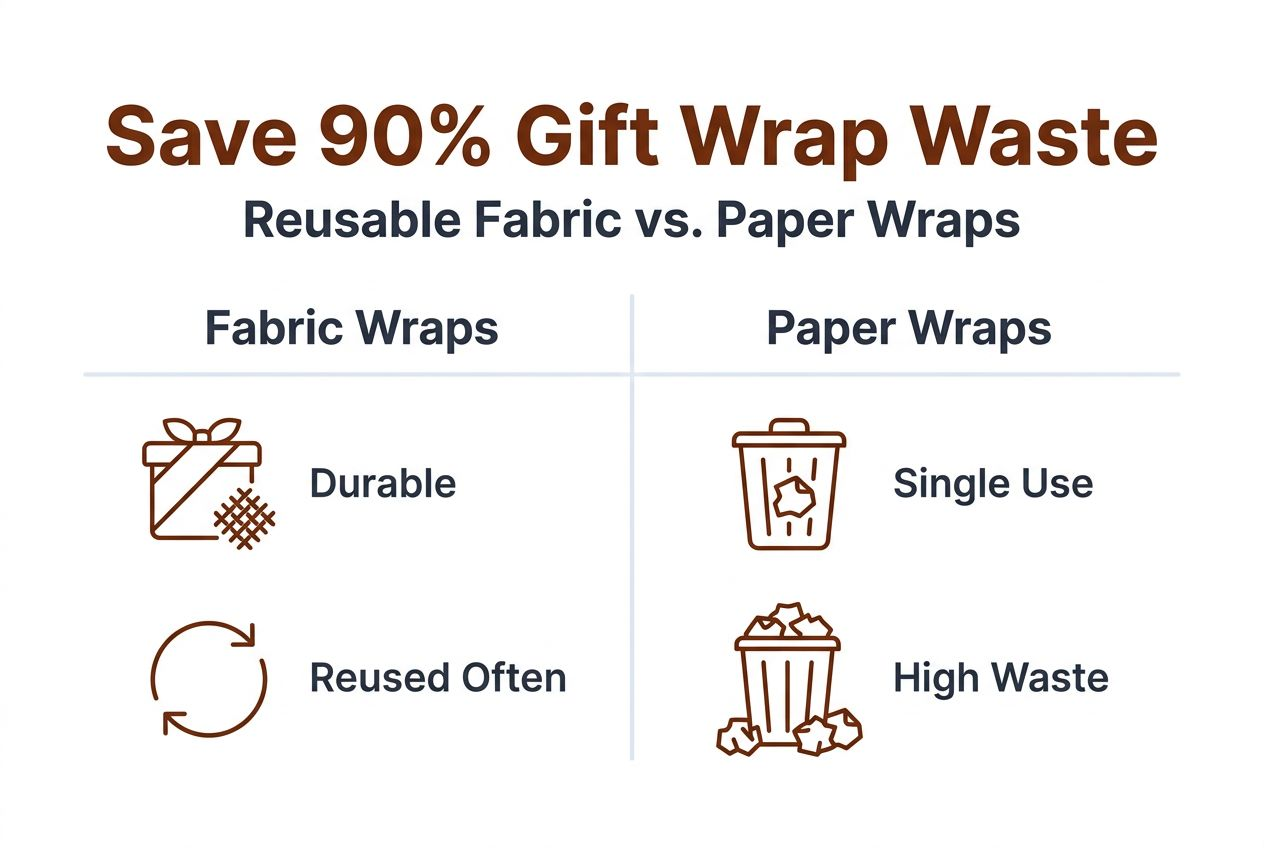
Financial savings match environmental benefits. Quality wrapping paper costs £3 to £5 per gift when you factor in tape, ribbons, and gift tags. Reusable wraps cost £12 to £20 initially but serve 50-plus wrapping occasions before retirement. This translates to estimated £100 annual savings for active gift-givers who embrace sustainable alternatives.
| Metric | Reusable fabric wraps | Disposable paper |
|---|---|---|
| Waste per year | 0.5kg paper waste | 15kg paper waste |
| Annual cost | £20 initial investment | £120 ongoing |
| Wrapping time | 3-5 minutes per gift | 5-8 minutes per gift |
| Presentation quality | Premium, distinctive | Standard, forgettable |
| Reuse potential | 50-plus occasions | Single use only |
Gift presentation improves dramatically with fabric wraps because they don’t tear, crease, or lose adhesive. Recipients handle fabric-wrapped gifts more carefully, appreciating the obvious thought invested in sustainable presentation. This perception boost matters for special occasions like baby showers and first birthdays where presentation communicates care.
Personalised wraps achieve even higher retention rates because recipients view them as part of the gift rather than disposable packaging. This psychological shift encourages sustainable behaviour rippling through extended family and friend networks. When you give a beautifully wrapped gift in personalised fabric, you model eco-conscious practices that influence others’ choices.
Switching to reusable wraps transforms gift-giving from wasteful ritual into sustainable celebration that honours both recipient and planet.
The environmental impact extends beyond immediate gift wrap waste reduction. Manufacturing wrapping paper requires significant water, energy, and chemical processing that fabric wraps amortise over decades of use. Natural fibres biodegrade completely at end of life, whilst glossy wrapping paper often contains plastic coatings that persist in landfills indefinitely.
Durable presentation without tape or glue residue means wrapped gifts arrive intact and beautiful regardless of transport conditions. Fabric flexes with package contents rather than tearing like paper, maintaining perfect presentation from your hands to the recipient’s celebration.
Discover sustainable gift wrap options
Ready to embrace sustainable wrapping for your next baby gift? Nicholas & Rose offers premium reusable fabric wraps designed specifically for newborn and toddler occasions, with personalised embroidery options that transform packaging into lasting keepsakes.
Our 2026 collection features organic cotton and linen wraps in sizes perfect for everything from tiny newborn outfits to bulky toy sets. Choose from nature-inspired designs or request custom embroidery with names, dates, or special messages that make your gift unforgettable. Each wrap includes care instructions and wrapping technique guides to ensure beautiful results from your first use.
Support zero-waste parenting whilst giving gifts that stand out from generic paper-wrapped packages. Browse our full range of eco-friendly wrapping solutions and discover why thousands of UK families have made the permanent switch to sustainable fabric gift wrap.
FAQ
How durable are fabric wraps for repeated use?
Quality natural fabric wraps withstand 50 to 100 wrapping cycles before showing significant wear. Organic cotton and linen maintain structural integrity through dozens of washes when cared for properly with gentle detergent and air drying.
Can fabric wraps be personalised easily at home?
Basic hand embroidery requires minimal skills and supplies, with simple names or dates achievable in 30 to 45 minutes. Online tutorials teach beginner-friendly stitches, or you can use fabric pens for quick personalisation without sewing.
What fabrics are safest for newborn gifts?
Organic cotton and linen are safest because they contain no chemical treatments or synthetic fibres that might irritate sensitive baby skin. Always pre-wash new wraps to remove manufacturing residues before wrapping gifts for newborns.
How do I clean fabric wraps without damaging them?
Wash wraps every 3 to 5 uses in cold water with mild plant-based detergent, avoiding bleach and fabric softener entirely. Air dry flat or hung over a line, then iron on medium heat whilst slightly damp for crisp presentation.
Are personalised wraps worth the extra effort?
Personalised wraps boost reuse rates by 50% because recipients treasure them as keepsakes rather than discarding after one use. The extra 30 minutes spent embroidering creates lasting emotional value that reinforces sustainable gift-giving habits for years.
Recommended
- Why Fabric Gift Wrap Beats Paper Waste – Nicholas & Rose Limited
- Store Fabric Gift Wraps: 70% Less Fraying & Long Reuse – Nicholas & Rose Limited
- 7 Smart Ways to Reuse Gift Wrap for Eco-Friendly Gifting – Nicholas & Rose Limited
- 7 Top Benefits of Fabric Gift Wrap for Eco Parents – Nicholas & Rose Limited