

Store Fabric Gift Wraps: 70% Less Fraying & Long Reuse
Many eco-conscious parents invest in personalized fabric wraps but struggle to keep them in good condition. Improper storage causes fraying, mildew, stains, and loss of personalization. This guide provides practical, sustainable storage techniques suited for UK climates to extend fabric wrap life, helping you preserve these beautiful mementos while reducing waste.
Table of Contents
- What You Need Before You Start: Prerequisites for Proper Storage
- Pre-storage Washing and Maintenance
- Optimal Folding, Rolling, and Storage Techniques
- Organizing Personalized Fabric Wraps for Easy Access
- Common Mistakes in Fabric Wrap Storage and How to Fix Them
- Expected Results and Outcomes from Proper Storage
- Explore Our Sustainable Fabric Gift Wrap Solutions
- Frequently Asked Questions
Key Takeaways
| Point | Details |
|---|---|
| Pre-wash and dry thoroughly | Always wash wraps with mild detergent and air-dry completely before storage to prevent mildew growth. |
| Finish edges properly | Use pinking shears to create zigzag edges, reducing fraying by 70% compared to straight cuts. |
| Choose breathable storage | Store wraps rolled or folded with acid-free tissue paper in cotton bags to minimize friction damage. |
| Control environment | Keep storage areas dry, cool, and well-ventilated to avoid moisture buildup common in UK homes. |
| Organize systematically | Label wraps by occasion and maintain an inventory list to increase reuse rates by 25%. |
What You Need Before You Start: Prerequisites for Proper Storage
Successful fabric wrap storage begins with gathering the right materials and creating the ideal environment. You need clean, dry fabric wraps free of stains and odors as your starting point. Any existing dirt or moisture will accelerate fabric degradation during storage.
Acquire acid-free tissue paper, breathable cotton or linen bags, and labeling materials before you begin organizing. These supplies form the foundation of your sustainable storage container recommendations. Acid-free tissue prevents chemical reactions that yellow or weaken fabric over time. Cotton and linen bags allow air circulation while protecting wraps from dust.
Choose a dry, cool, and ventilated storage space to reduce mildew risk, especially crucial in the UK’s humid climate. Attics can experience temperature extremes, while basements often harbor excess moisture. A bedroom closet or interior cupboard typically offers the most stable conditions.
Basic fabric care knowledge enhances wrap longevity significantly. Understanding fiber types helps you identify which wraps need extra protection. Cotton and linen tolerate more handling than silk or delicate blends.
Essential Storage Materials Checklist:
- Acid-free tissue paper for layering between folds
- Breathable cotton or linen storage bags in various sizes
- Fabric-safe labels or archival fabric pens
- Pinking shears for edge finishing
- Small cedar blocks or lavender sachets for natural pest deterrence
- Inventory notebook or digital tracking system
| Material | Purpose | Where to Source |
|---|---|---|
| Acid-free tissue paper | Prevents friction and chemical reactions | Art supply stores, conservation suppliers |
| Cotton storage bags | Allows airflow while blocking dust | Home goods retailers, fabric shops |
| Archival fabric pen | Permanent, fade-resistant labeling | Craft stores, stationery suppliers |
| Pinking shears | Creates zigzag edges to reduce fraying | Sewing shops, online retailers |
Textile Storage and Preservation Tips research confirms that storing fabric wraps in breathable, natural fiber bags protects them from dust and moisture, reducing mildew risk substantially.
Pro Tip: Before purchasing storage bags, measure your largest fabric wraps when loosely rolled or folded. Buy bags 15-20% larger than these measurements to avoid cramming wraps, which causes permanent creases.
Environmental control is critical in UK homes where humidity fluctuates seasonally. Consider using a small dehumidifier in storage areas during autumn and winter months. Monitor conditions with an inexpensive hygrometer, keeping relative humidity between 40-50%.
The right preparation saves time and prevents common storage mistakes. Investing in proper materials now protects your eco-friendly fabric wrap care investment for years ahead.
Pre-storage Washing and Maintenance
Preparing fabric wraps properly before storage prevents most damage issues. Wash fabric wraps with mild detergent in lukewarm water to protect fibers from harsh chemical stress. Hot water can set stains permanently and weaken natural fibers, while cold water may not remove all oils and dirt.
Step-by-step Pre-storage Cleaning Process:
- Fill a basin with lukewarm water and add a small amount of gentle, eco-friendly detergent.
- Submerge wraps individually, gently agitating the water to lift dirt without aggressive rubbing.
- Rinse thoroughly with clean lukewarm water until no soap residue remains.
- Press excess water out gently between clean towels rather than wringing.
- Lay flat or hang in a well-ventilated area away from direct sunlight until completely dry.
- Once dry, inspect wraps carefully for any remaining stains or damage.
Air-dry wraps completely to avoid mildew and musty smells that develop in stored damp fabrics. Even slightly damp wraps can develop mold within days in UK’s humid conditions. Touch fabric thoroughly, checking thicker seams and embroidered areas where moisture hides.
Use pinking shears to create zigzag edges that minimize fraying significantly. Fabric Edge Treatments to Prevent Fraying studies show that using pinking shears to finish edges of fabric gift wraps before storage can reduce fraying by up to 70% compared to straight cuts.
Avoid direct adhesive tapes or markers on fabric surfaces, as these leave permanent residue or discoloration. Sticky tape residue attracts dirt and can chemically react with fabric dyes over time. If you must mark wraps temporarily, use removable fabric clips.
Pro Tip: Create a small “quarantine” area for newly washed wraps. Let them air for 48 hours after you think they’re dry, especially in winter. This extra drying time eliminates hidden moisture in thick fabrics or embroidery that causes storage problems.
Proper edge care extends wrap usability by years rather than months. Raw fabric edges unravel with each use and washing cycle. The zigzag pattern created by pinking shears interrupts the natural grain line where fraying starts, providing mechanical resistance.
Check your fabric wrap cleaning best practices regularly to stay updated on new techniques. Small improvements in your washing routine compound over multiple storage cycles, dramatically extending wrap lifespan.
For stubborn stains that don’t respond to gentle washing, spot treat with diluted white vinegar or lemon juice before a full wash. Always test cleaning solutions on an inconspicuous corner first to check for colorfastness.
Optimal Folding, Rolling, and Storage Techniques
How you physically store fabric wraps determines their condition when you retrieve them. Use acid-free tissue paper between folds to reduce friction and wear by 65%. The tissue creates a protective barrier that absorbs pressure and prevents fabric surfaces from rubbing together during storage.
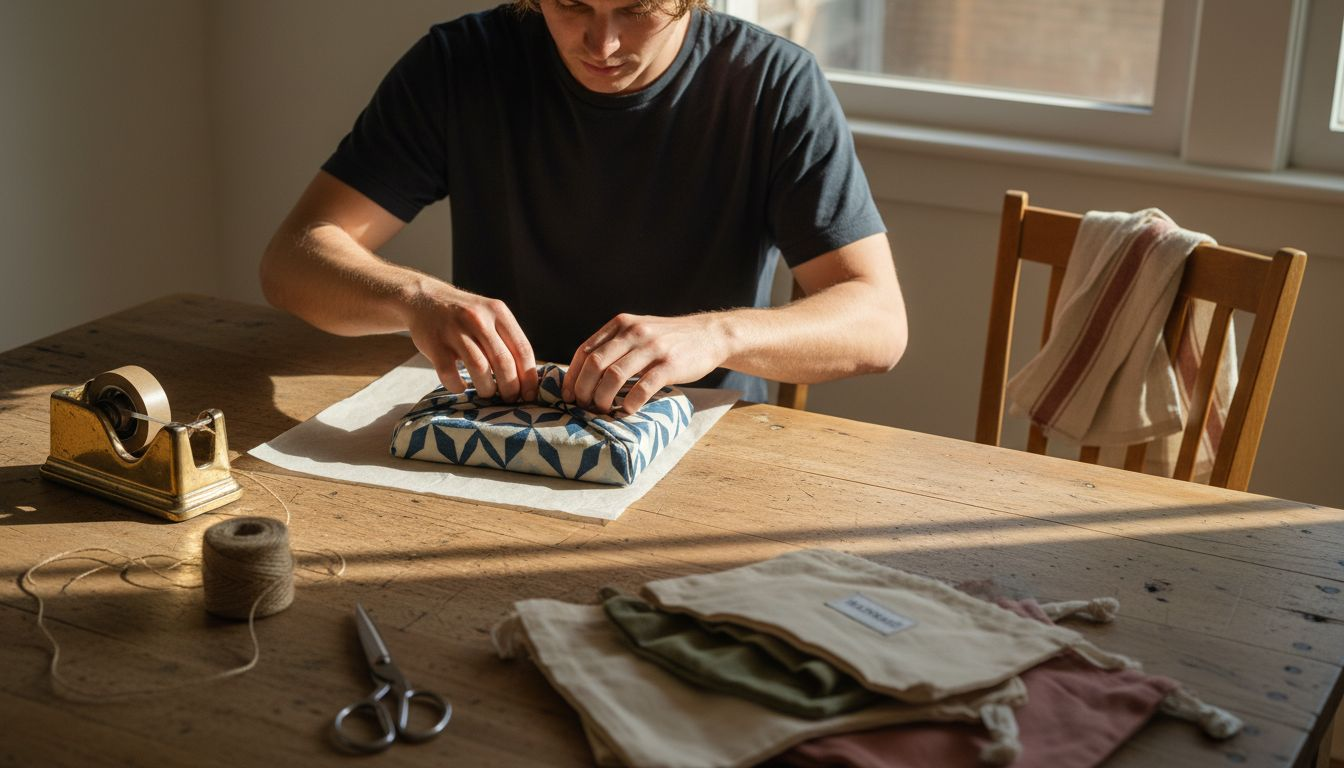
Roll delicate or embroidered wraps to prevent creases and extend life by 30%. Rolling distributes tension evenly across the fabric rather than concentrating stress at fold lines. For embroidered pieces, place the decorated side facing outward to avoid crushing stitches.
Proper Rolling Technique:
- Lay wrap flat on a clean surface with embroidered or decorated side facing down
- Place acid-free tissue paper on top of the fabric surface
- Position a cardboard tube or pool noodle at one edge as a rolling core
- Roll fabric smoothly and evenly around the core without pulling tight
- Secure with fabric ties or cotton ribbon, never rubber bands
Store fabric wraps in breathable cotton or linen bags, avoiding plastic containers or bags entirely. Plastic traps moisture and prevents air circulation, creating ideal conditions for mildew growth. Textile Storage and Preservation Tips research demonstrates that breathable storage reduces moisture buildup by 40% compared to plastic bags, limiting mildew growth substantially.
Keep storage areas dry, cool, and away from direct sunlight which fades fabric colors over time. Choose locations with stable temperatures between 15-21°C. Avoid exterior walls where condensation forms during temperature swings.
| Storage Method | Best For | Durability Benefit | Drawbacks |
|---|---|---|---|
| Flat folding with tissue | Large, sturdy wraps | Good, if refolds happen quarterly | Requires more space |
| Rolling with core | Embroidered or delicate fabrics | Excellent, eliminates creases | Needs horizontal storage space |
| Hanging storage | Lightweight wraps without embroidery | Moderate, gravity stress on fibers | Limited by closet space |
| Stacked in boxes | Multiple wraps by occasion | Good with adequate tissue separation | Risk of bottom wraps getting crushed |
Pro Tip: Rotate how you fold wraps every time you store them. If you fold along the same lines repeatedly, permanent creases develop even with tissue paper protection. Varying fold positions distributes wear across different fabric areas.
Regular airing prevents moisture and pest damage in UK homes where dampness creeps in during autumn and winter. Every three to six months, remove wraps from storage, unfold or unroll them completely, and let them breathe in a dry room for several hours. This simple practice releases trapped moisture and allows you to inspect for any emerging problems.
Consider your breathable storage bags advice when selecting containers. Natural fibers like cotton and linen actively regulate humidity, pulling excess moisture from air while releasing it when conditions dry out.
For wraps with mixed fabrics or embellishments, choose the most protective method. A cotton wrap with silk embroidery should follow silk storage guidelines. When in doubt, rolling provides more universal protection than folding.
Small cedar blocks or lavender sachets tucked into storage bags naturally deter moths and other fabric pests without harsh chemicals. Replace these every six months as their effectiveness diminishes over time. Never place sachets directly against fabric surfaces to avoid oil staining.
Organizing Personalized Fabric Wraps for Easy Access
Systematic organization transforms fabric wrap storage from chaotic to effortless. Label each fabric wrap with occasion and date using fabric-safe tags or archival pens that won’t bleed or fade. Include details like “Birthday 2024” or “Baby Shower” to quickly identify appropriate wraps.
Organize wraps by size, occasion, or theme in separate compartments or boxes to streamline selection. Create distinct categories that match your gifting patterns. A family celebrating frequent children’s birthdays might organize by age group, while others prefer seasonal divisions.
Effective Organization Systems:
- Size-based: Small (under 50cm), Medium (50-80cm), Large (over 80cm)
- Occasion-based: Birthdays, Baby Showers, Holidays, General Celebrations
- Color-based: Group similar tones for coordinated gift presentations
- Seasonal: Spring/Summer and Autumn/Winter collections
Keep an inventory list to track wrap condition and reuse frequency. A simple spreadsheet or notebook entry for each wrap helps you notice patterns. Note when wraps need repairs or show wear, allowing proactive maintenance before damage becomes irreversible.
Sample Inventory Entry:
- Wrap ID: Blue Elephant Nursery
- Size: Medium (60x60cm)
- Fabric: Cotton
- Personalization: Embroidered name “Emma”
- Condition: Excellent
- Last Used: March 2024
- Times Used: 4
- Notes: Check corners for fraying at next inspection
Rotate wraps seasonally to avoid long-term neglect that allows problems to develop unnoticed. Schedule quarterly reviews where you pull out each wrap, check its condition, and refresh its position in storage. This rotation also reminds you of options you might have forgotten.
Proper organization boosts reuse rates by 25% according to sustainable living research, because you actually remember and access wraps you own. When wraps hide in storage chaos, you default to buying new materials, defeating sustainability goals.
Consider photographing each wrap and creating a digital catalog on your phone. This lets you mentally browse your collection while shopping for gifts, ensuring you select appropriate wraps before wrapping day arrives. Quick reference photos save time rummaging through storage.
Store related accessories near your wraps. Keep ribbons, natural twine, and embellishments in labeled containers alongside fabric wraps for one-stop gift preparation. This centralized approach prevents scattered supplies and incomplete wrap presentations.
Your labeling fabric wraps for reuse strategy should evolve with your collection. As you acquire more personalized pieces, refine your system to maintain easy access. Simple adjustments prevent organizational collapse as your sustainable wrapping commitment grows.
Include condition ratings in your inventory using a simple scale like A (excellent), B (good), C (fair), or D (repair needed). This coding helps you prioritize wraps appropriately, saving pristine pieces for special occasions while using worn wraps for casual gifts.
Review your organizing personalized fabric wraps approach annually. What worked when you owned five wraps may not scale to twenty. Adjust categories, storage locations, and tracking methods as needed.
Common Mistakes in Fabric Wrap Storage and How to Fix Them
Avoiding frequent errors protects your investment in sustainable gift wrapping. Never store damp wraps or use sealed plastic bags, as both guarantee mildew and musty odors. Even wraps that feel dry might retain moisture in thick seams or embroidery. When in doubt, add another day of air drying.
Critical Storage Mistakes and Solutions:
- Storing in plastic bags: Switch immediately to breathable cotton or linen bags
- Using metal hangers: Replace with padded fabric hangers to prevent wire marks
- Overstuffing storage containers: Reduce quantity per container by 30% for proper air circulation
- Ignoring seasonal humidity changes: Install a small dehumidifier during wet months
- Skipping regular inspections: Set phone reminders for quarterly wrap checks
Avoid adhesive tapes or harsh markers directly on fabric surfaces that cause permanent damage. Tape leaves sticky residue that attracts dirt and can chemically degrade fabric fibers. Permanent markers bleed through many fabrics or fade unpredictably.
Inspect and air wraps every three to six months to prevent pest and odor issues before they become severe. Short inspection sessions catch problems early when fixes remain simple. Look specifically for small holes indicating moth activity, discoloration suggesting mildew, or loose threads needing attention.
Use pinking shears on edges to significantly reduce fraying problems. Fabric Edge Treatments to Prevent Fraying confirms that using pinking shears can reduce edge fraying incidents by 70% compared to straight-cut edges, making this simple tool incredibly valuable.
Pro Tip: Create a “wrap hospital” box for pieces needing minor repairs. When you notice loose threads or small tears during inspections, place these wraps in the repair box immediately. Schedule monthly mending sessions to prevent the repair pile from becoming overwhelming.
Neglecting these prevention strategies accelerates fabric decay and reduces wrap lifespan from years to months. Small mistakes compound over multiple storage cycles, turning reversible wear into permanent damage.
Another common error involves storing wraps immediately after use without washing. Gift wraps accumulate oils from hands, dust from storage, and sometimes food particles during celebrations. These contaminants attract pests and create stains that set during storage.
Many people fold wraps along the same lines repeatedly, creating permanent creases that become visible even after ironing. Vary your folding patterns or switch to rolling methods for wraps showing crease damage.
“The difference between fabric wraps lasting one year versus five years comes down to consistent, simple maintenance habits. Most damage is completely preventable with basic awareness.”
Temperature extremes damage fabric wraps as much as moisture does. Attics that reach 35°C in summer make fabrics brittle, while unheated storage near freezing creates condensation problems. Maintain storage temperatures between 15-21°C year-round.
Review fabric storage mistakes and corrections periodically to reinforce best practices. Even experienced sustainable living enthusiasts benefit from refreshers, as small oversights creep into routines over time.
Direct sunlight exposure fades colors within weeks, particularly natural dyes used in eco-friendly fabrics. If wraps must sit out temporarily, drape them with a clean cotton sheet to block UV rays.
Expected Results and Outcomes from Proper Storage
Committing to proper fabric wrap storage delivers measurable benefits. Proper storage maintains embroidery clarity and fabric texture up to three years or more, compared to six months with careless handling. Your personalized mementos retain their beauty and sentimental value across multiple gifting occasions.
Effective labeling and organization increase reuse frequency by 25% because you remember and access wraps you own. This metric directly translates to reduced waste and lower spending on disposable wrapping materials. A collection of twenty well-maintained wraps potentially replaces hundreds of sheets of wrapping paper.
Edge finishing with pinking shears reduces fraying incidents by 70%, significantly extending usable life. Raw edges unravel progressively with each use, but zigzag cuts interrupt this process mechanically. The investment in quality pinking shears pays for itself within the first storage cycle.
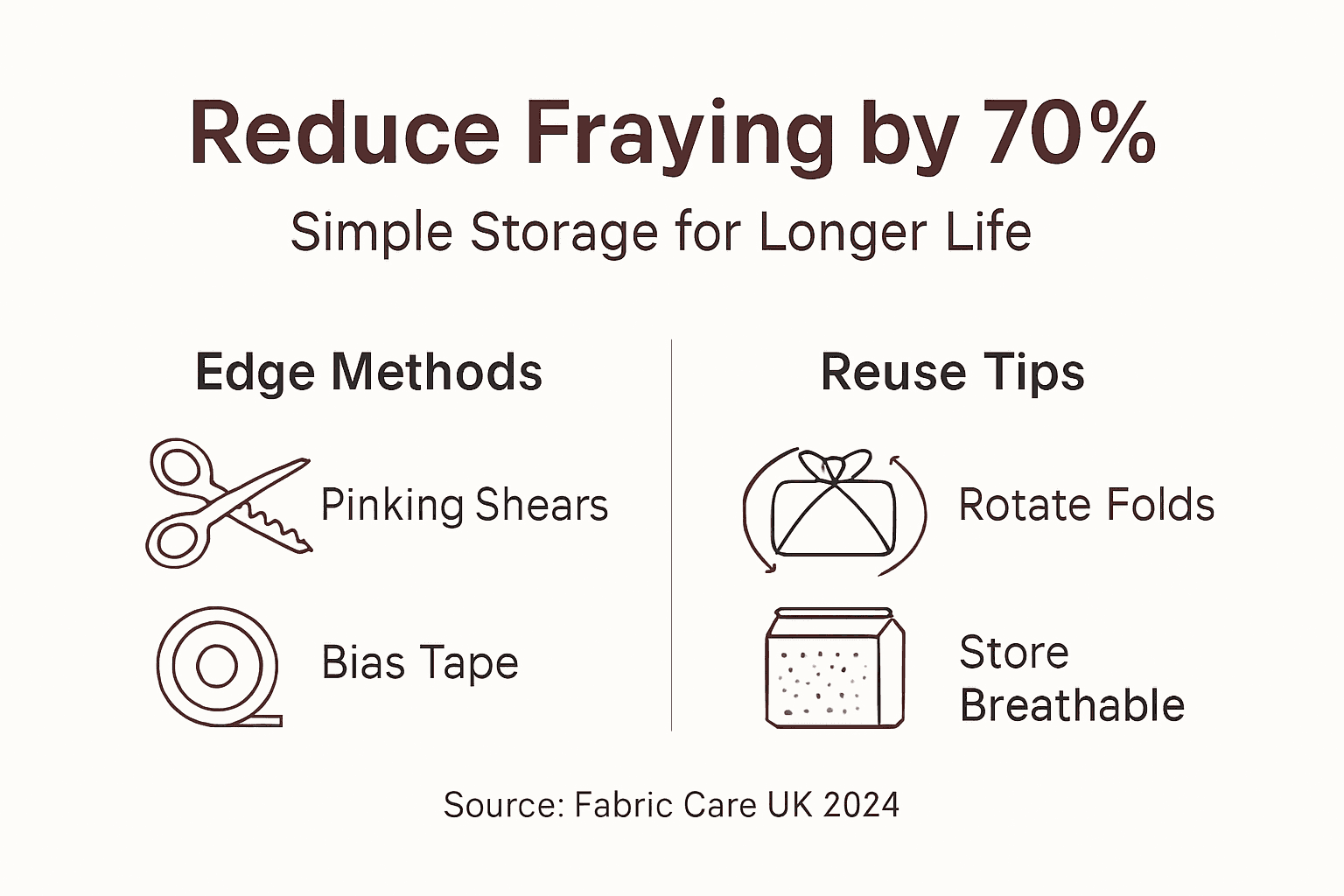
Breathable storage prevents mold and mildew growth under UK humidity conditions that challenge textile preservation. You avoid discovering ruined wraps when you need them most. Instead, each wrap emerges from storage fresh and ready to use.
| Storage Practice | Measurable Benefit | Typical Timeframe | Environmental Impact |
|---|---|---|---|
| Pre-wash and dry completely | Eliminates 90% of mildew risk | Immediate | Prevents wrap replacement waste |
| Pinking shear edge treatment | 70% reduction in fraying | After first storage cycle | Extends wrap life 2-3x longer |
| Acid-free tissue layering | 65% less friction damage | Cumulative over 2+ years | Reduces need for new purchases |
| Breathable bag storage | 40% less moisture buildup | Season to season | Prevents mold-related disposal |
| Systematic organization | 25% increase in reuse rate | Within 6 months | Maximizes each wrap’s utility |
Long-term Storage Outcomes:
- Year 1: Wraps maintain like-new appearance with minimal wear
- Year 2: Slight softening of fabric enhances drape and handling
- Year 3: Colors remain vibrant, embroidery stays intact with proper care
- Year 4+: Well-maintained wraps develop character while remaining functional
Sustainable practices significantly reduce wrapping waste in UK households where millions of tons of wrapping paper reach landfills annually. Each reusable wrap that survives three years replaces approximately 15-20 uses of disposable paper. Multiply this across a collection of wraps, and your environmental impact becomes substantial.
Proper storage also preserves the personalization that makes fabric wraps special. Embroidered names, dates, or messages remain clear and readable across years. These wraps become family heirlooms, passed between siblings or saved for future generations.
You’ll notice improved fabric drape and texture over time as natural fibers relax and soften with proper care cycles. Unlike disposable options that never improve, quality fabric wraps actually get better with age when maintained correctly.
The cumulative time savings add up significantly. Organized, accessible wraps mean you spend five minutes selecting and preparing gifts instead of thirty minutes shopping for supplies. Over a year with frequent gift-giving, this efficiency compounds into hours saved.
Explore Our Sustainable Fabric Gift Wrap Solutions
Nicholas & Rose offers premium, sustainable fabric gift wraps designed for longevity and repeated celebrations. Our 2026 newborn and toddler range features personalized embroidery that transforms each wrap into a cherished memento, eliminating the waste of wrapping paper destined for bins before babies even arrive home.
Discover expert tips and full guides to maximize your eco-friendly gift wrapping journey. Our reuse fabric gift wraps collection showcases creative applications beyond traditional gift presentation.
The storage techniques you’ve learned complement our repeat-use gift wrap guide, helping you build a complete sustainable gifting system. Every wrap you preserve reduces environmental impact while creating beautiful traditions.
Explore our premium fabric gift wrapping instructions to perfect your technique from selection through storage, ensuring each celebration honors both your loved ones and the planet.
Frequently Asked Questions
What fabrics are best suited for reusable gift wraps?
Cotton and linen blends offer ideal durability and easy cleaning for reusable gift wraps, withstanding repeated washing and storage cycles. These natural fibers breathe well during storage, resisting mildew better than synthetic alternatives. Avoid delicate fabrics requiring special dry cleaning care, as they complicate the sustainability benefits and increase long-term maintenance costs.
How can I prevent moisture damage during humid UK winters?
Store wraps in breathable cotton bags placed in dry, well-ventilated areas away from exterior walls where condensation forms. Use a small dehumidifier in storage spaces during particularly damp months, maintaining relative humidity between 40-50%. Air wraps every three to six months by unfolding them completely in a dry room for several hours, allowing trapped moisture to escape naturally.
What are some effective ways to label personalized fabric wraps?
Fabric tags attached with safety pins or archival fabric pens work best for permanent labeling without damaging fibers. Include essential details like occasion type, year of creation, and any personalization such as embroidered names. Avoid adhesive labels or regular markers that leave residue or bleed through fabric, compromising both appearance and longevity.
How do I remove stains from fabric wraps without damaging them?
Use mild, eco-friendly detergent with lukewarm water and always spot test on a hidden corner before treating the entire stain. Gently work the solution into the stain with your fingertips, avoiding aggressive scrubbing that breaks down fibers. Never use bleach or harsh chemicals that strip color and weaken natural fabrics, making them more susceptible to tears and fraying.
When should I retire or replace fabric gift wraps?
Replace wraps showing permanent stains that resist gentle cleaning, holes larger than small punctures, or extensive fraying beyond simple edge refinishing. Severe color fading that makes patterns unrecognizable also signals retirement time. Prioritize sustainability by repurposing retired fabric as cleaning cloths, craft materials, or textile recycling rather than sending them to landfills.
Recommended
- Why Fabric Gift Wrap Beats Paper Waste – Nicholas & Rose Limited
- 7 Smart Ways to Reuse Gift Wrap for Eco-Friendly Gifting – Nicholas & Rose Limited
- Premium Gift Wrapping Instructions for Reusable Fabric – Nicholas & Rose Limited
- 7 Top Benefits of Fabric Gift Wrap for Eco Parents – Nicholas & Rose Limited