

Sustainable Christmas Wrapping: A Luxurious Eco Choice
Over 108 million rolls of wrapping paper are used by British households every Christmas, making festive waste a real concern for eco-minded families. While gift wrapping is a cherished part of holiday tradition, its environmental toll often gets overlooked in the excitement. This guide explores practical, stylish ways to make British Christmas celebrations more sustainable without sacrificing joy or beauty.
Table of Contents
- Sustainable Christmas Wrapping Defined Clearly
- Types of Eco-Friendly Gift Wrap Materials
- Personalised Fabric Wrapping Explained
- Environmental Impact of Traditional Wrapping
- Choosing Sustainable Options for UK Festivities
Key Takeaways
| Point | Details |
|---|---|
| Sustainable Wrapping | Embrace materials that are reusable, recyclable, or biodegradable to minimise environmental impact during Christmas. |
| Eco-Friendly Materials | Opt for fabric wraps, recycled papers, or biodegradable options to celebrate sustainability in gift-giving. |
| Personalised Fabric Wrapping | Enhance creativity with personalised fabric wraps, allowing for unique and reusable gift presentations. |
| Awareness of Waste | Recognise the significant waste generated by traditional wrapping and choose alternatives that prioritise environmental responsibility. |
Sustainable Christmas Wrapping Defined Clearly
Sustainable Christmas wrapping transcends traditional paper packaging, representing a thoughtful approach to reducing environmental impact during the festive season. Sustainable practices from the University of Minnesota emphasise minimising waste through innovative materials and creative alternatives that preserve our planet’s precious resources.
At its core, sustainable Christmas wrapping involves selecting materials that can be reused, recycled, or naturally decompose. This might include fabric wraps, recycled papers, natural twines, or decorative elements that can be repurposed after gift-giving. The goal is not just aesthetic beauty, but environmental responsibility. Research from San Diego State University’s Library highlights how simple choices like fabric wraps or newspaper can dramatically reduce our carbon footprint during holiday celebrations.
Key characteristics of sustainable Christmas wrapping include:
- Minimal single-use materials
- Preference for reusable fabrics
- Natural or biodegradable decorative elements
- Zero-waste gifting approaches
- High-quality, durable packaging solutions
Pro Tip for Eco-Conscious Gifting: Select wrapping materials that can be easily repurposed or composted, transforming your gift presentation into an environmentally responsible statement that delights both recipient and planet.
Types of Eco-Friendly Gift Wrap Materials
Discovering innovative and sustainable gift wrap materials has become an essential part of environmentally responsible holiday celebrations. The Guardian highlights several eco-conscious wrapping options that transform the traditional gift-giving experience into a more mindful practice. Modern sustainable wrapping goes far beyond conventional paper, offering creative and luxurious alternatives that minimise environmental impact.
The world of eco-friendly gift wrapping encompasses a diverse range of materials designed to reduce waste and celebrate sustainability. Key options include:
- Reusable fabric wraps: Elegant cotton or silk cloths that can be used multiple times
- Recycled paper bags: Sophisticated and easily recyclable packaging
- Furoshiki cloth wraps: Traditional Japanese textile wrapping technique
- Biodegradable papers: Made from sustainable plant fibres
- Natural twine and organic ribbons: Replacing plastic decorative elements
These materials not only provide an environmentally responsible approach to gift presentation but also add a unique, personalised touch to your festive gifting. Sustainable gift wrap choices can elevate the entire gift-giving experience, transforming a simple package into a statement of environmental consciousness.
Pro Tip for Sustainable Styling: Select wrapping materials that can be elegantly reused, repurposed, or composted, turning each gift into a beautiful gesture of environmental responsibility that delights both the recipient and our planet.
Personalised Fabric Wrapping Explained
Personalised fabric wrapping transforms the traditional gift-giving experience into an elegant, sustainable art form that celebrates creativity and environmental consciousness. Originating from the Japanese tradition of Furoshiki, fabric wrapping offers a sophisticated alternative to disposable paper, allowing individuals to craft unique, reusable gift presentations that reflect personal style and ecological values.
The beauty of personalised fabric wrapping lies in its versatility and potential for customisation. Personalised wrapping techniques enable gift-givers to create bespoke presentations that are as individual as the gifts themselves. Options for personalisation include:
- Embroidered initials or names
- Custom fabric selections matching recipient’s preferences
- Handcrafted fabric wrapping techniques
- Seasonal or themed fabric designs
- Monogrammed fabric wraps
Beyond aesthetics, personalised fabric wrapping represents a profound commitment to sustainability. Each fabric wrap can be used multiple times, reducing waste and creating a memorable, environmentally responsible gifting experience. The practice transforms gift-giving from a momentary exchange into a lasting, cherished interaction that respects both the recipient and the planet.
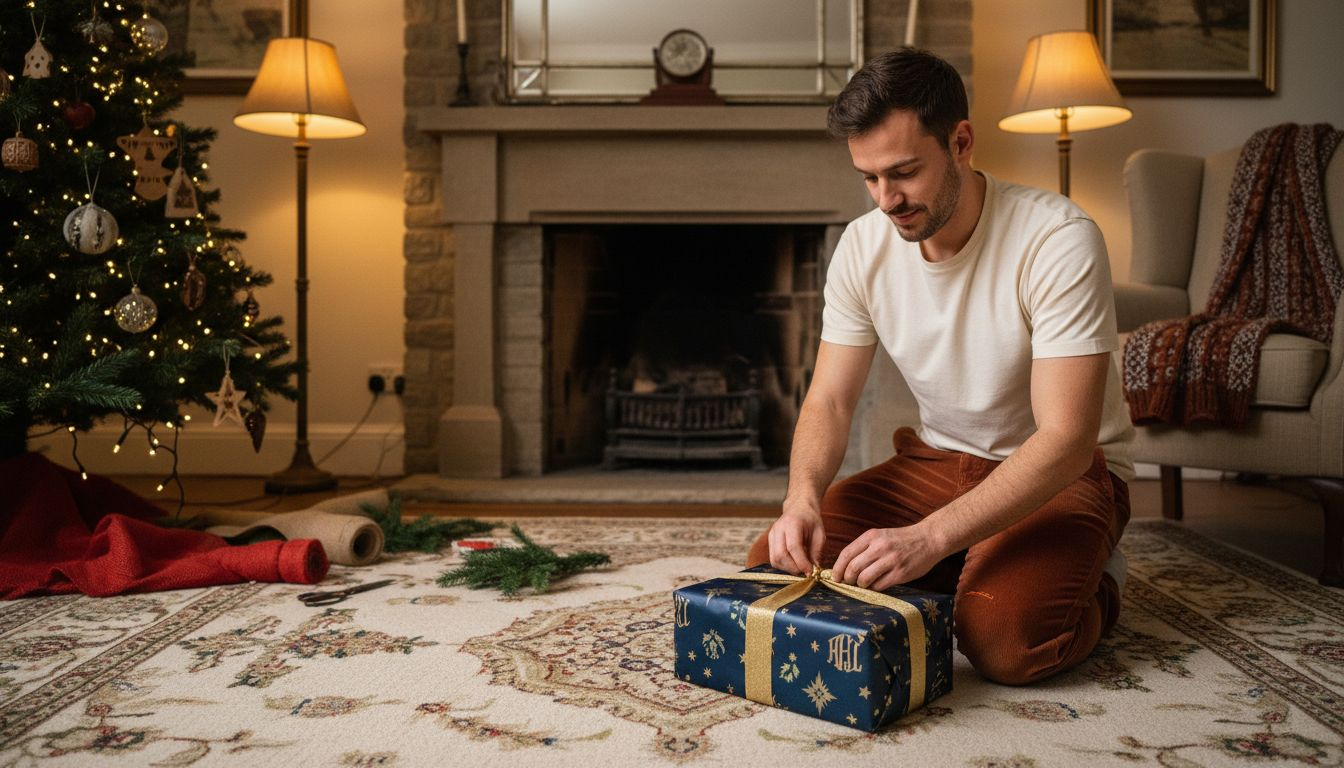
Pro Tip for Fabric Wrapping Artistry: Select high-quality, versatile fabrics that can be creatively folded, tied, and reused, turning each gift wrap into a beautiful, sustainable work of art that tells a story beyond the present itself.
Environmental Impact of Traditional Wrapping
Traditional Christmas wrapping represents a significant environmental challenge that often goes unnoticed during the festive season. Research from the Open University reveals the hidden ecological consequences of seemingly innocent holiday packaging, exposing the complex waste issues created by conventional wrapping materials.
The scale of waste generated by traditional wrapping is staggering. San Diego State University’s Library reports that approximately 2.6 billion pounds of wrapping paper are discarded annually in the United States alone, with most materials being non-recyclable due to problematic components. These non-recyclable elements include:

Here is a comparison of common Christmas wrapping materials and their environmental impact:
| Wrapping Material | Environmental Impact | Typical Reusability |
|---|---|---|
| Conventional wrapping paper | High waste, rarely recycled | Single use, disposable |
| Fabric wraps | Low impact, biodegradable | Highly reusable |
| Laminated/metallic paper | Non-recyclable, landfill | Not reusable |
| Biodegradable paper | Compostable, low waste | Sometimes reusable |
- Glitter-embedded papers
- Metallic decorative coatings
- Plastic-infused wrapping materials
- Laminated gift wrap surfaces
- Complex multi-material packaging
Beyond the immediate waste concerns, traditional wrapping contributes to broader environmental challenges. The production of disposable wrapping paper requires significant resources, including trees, water, and energy, creating a substantial carbon footprint that extends far beyond the brief moment of gift-giving. The environmental cost of these single-use materials represents a stark contrast to more sustainable wrapping alternatives that prioritise reuse and ecological responsibility.
Pro Tip for Waste Reduction: Choose wrapping materials that can be reused, recycled, or composted, transforming your gift presentation from a disposable moment into a sustainable statement that respects our planet’s finite resources.
Choosing Sustainable Options for UK Festivities
The Guardian’s comprehensive guide to eco-friendly wrapping highlights the growing importance of sustainable choices for British consumers during the festive season. Selecting environmentally responsible wrapping materials has become more than a trend – it’s a conscious decision that reflects individual commitment to reducing ecological impact.
British consumers now have multiple sustainable wrapping alternatives that combine luxury with environmental responsibility. Options include:
- Reusable cotton gift bags
- Recyclable paper alternatives
- Organic fabric wraps
- Biodegradable packaging materials
- Natural fibre-based wrapping solutions
Insights from the Open University underscore the critical role of sustainable practices in British holiday celebrations. The shift towards eco-conscious gifting goes beyond mere packaging, representing a broader cultural movement that values environmental stewardship. British consumers are increasingly selecting wrapping materials that minimise waste, support local producers, and demonstrate a sophisticated understanding of sustainability.
Pro Tip for Festive Sustainability: Curate a collection of high-quality, reusable fabric wraps that can be beautifully personalised, transforming your gift presentation into an elegant, environmentally responsible tradition that delights both recipients and our shared planet.
The following table summarises strategies for making festive gift wrapping more sustainable:
| Strategy | Practical Example | Environmental Benefit |
|---|---|---|
| Choose reusable materials | Use cotton or silk wraps | Reduces single-use waste |
| Opt for biodegradable wrap | Select plant fibre papers | Enables composting after use |
| Avoid plastic decorations | Use organic twine and tags | Lowers plastic pollution |
| Personalise and keep wraps | Add names, reuse each year | Builds lasting, eco habits |
Elevate Your Sustainable Christmas Wrapping with Luxurious Fabric Wraps
Transform your festive gift-giving by embracing the elegant and eco-conscious solution of personalised reusable fabric wraps. This article highlights the challenges of traditional single-use wrapping that leads to excessive waste and environmental harm. With increasing awareness around zero-waste gifting and biodegradable decorative elements, your choice of wrapping can make a profound difference in reducing your carbon footprint while delighting your loved ones.
Explore our exclusive Reusable Fabric Wrap - Luxurious Christmas Collection – Nicholas & Rose Limited where each wrap can be embroidered to add a bespoke touch that reflects your thoughtfulness and respect for sustainability.
Make a meaningful change this festive season by choosing durable, stylish fabric wraps that celebrate both the giver and the planet. Discover our curated Christmas collection and start creating lasting, environmentally responsible gift presentations today at nicholasandrose.co.uk. Also, find inspiration through our Favourite Four – Nicholas & Rose Limited selection to complement your sustainable gifting journey.
Frequently Asked Questions
What is sustainable Christmas wrapping?
Sustainable Christmas wrapping involves using materials that can be reused, recycled, or naturally decompose, minimising environmental impact during the festive season.
What are some eco-friendly gift wrap materials?
Eco-friendly gift wrap materials include reusable fabric wraps, recycled papers, biodegradable papers, and natural twine, all designed to reduce waste and promote sustainability.
How can I personalise fabric wrapping for my gifts?
You can personalise fabric wrapping by using embroidered initials, choosing fabric that matches the recipient’s preferences, or incorporating themed designs that reflect the occasion.
What is the environmental impact of traditional wrapping paper?
Traditional wrapping paper contributes significantly to landfill waste, often containing non-recyclable components such as glitter or plastic, and requires substantial resources for production, increasing its carbon footprint.
Recommended
- Sustainable Gift Wrap Choices: Eco-Luxury for 2025 – Nicholas & Rose Limited
- Luxury Eco Christmas Wrapping Tutorial with Fabric Gifts – Nicholas & Rose Limited
- Luxury Christmas Wrapping Tutorial for Eco-Conscious Gifts – Nicholas & Rose Limited
- 7 Personalised Gift Wrap Ideas for Eco-Conscious Gifting – Nicholas & Rose Limited