

Custom Festive Wrap: Sustainable Luxury for Gifting
Choosing festive gift wrap is often about more than how a present looks. For eco-conscious luxury consumers in the United Kingdom, the search for personalised, reusable fabric wraps reflects a desire for elegance that also honours the planet. Reusable fabric wrapping blends sustainability and craftsmanship, turning every gift into a thoughtful gesture. This article explores how custom festive wraps redefine tradition, elevate emotional connections, and reduce waste with style.
Table of Contents
- Defining Custom Festive Wrap And Its Misconceptions
- Types Of Reusable Fabric Festive Wraps
- Personalisation Through Embroidery And Design
- Sustainability And Environmental Benefits
- Comparisons With Single-Use Wrapping Options
- Costs, Care Tips And Common Mistakes
Key Takeaways
| Point | Details |
|---|---|
| Custom Festive Wrap | Custom festive wrap combines cultural storytelling with sustainability, enhancing the gift-giving experience. |
| Environmental Benefits | Reusable fabric wraps significantly reduce waste and support eco-friendly practices, demonstrating a commitment to responsible consumption. |
| Personalisation Impact | Embroidery personalises wraps, transforming them into cherished keepsakes that enhance the emotional value of gifts. |
| Cost-Effectiveness | Although the initial investment in fabric wraps is higher, their durability and reusability lead to long-term savings compared to disposable options. |
Defining custom festive wrap and its misconceptions
Custom festive wrap represents far more than simple decorative packaging—it’s a sophisticated approach to gift presentation that blends cultural storytelling, sustainability, and emotional significance. Reusable fabric wrapping transforms the traditional gift-giving experience by offering an eco-conscious alternative to disposable paper wraps.
Contrary to popular misconceptions, custom festive wrap isn’t just about aesthetics. Cultural packaging traditions reveal a deeper narrative about gifting practices that extend well beyond surface-level decoration. These wraps communicate thoughtfulness through several key characteristics:
- Sustainable material selection
- Personal customisation options
- Cultural and emotional significance
- Reduced environmental waste
- Potential for multiple gift presentations
Many people mistakenly view custom festive wrap as an unnecessary luxury. However, these specialised wrapping solutions represent a meaningful intersection of design, sustainability, and cultural expression. By investing in high-quality, reusable wrapping materials, consumers can dramatically reduce single-use packaging waste while elevating their gift-giving experience.
Here is a summary of how key custom festive wrap features contribute to meaningful gifting:
| Feature | Business Impact | Emotional Value |
|---|---|---|
| Sustainable materials | Reduces waste and cost | Shows eco-conscious intent |
| Personalised embroidery | Enhances brand distinction | Creates lasting memories |
| Reusable design | Cuts long-term expenses | Adds perceived thoughtfulness |
| Cultural storytelling | Connects with diverse markets | Celebrates traditions |
Pro tip: Select fabric wraps that complement the recipient’s personal style and can be repurposed multiple times to maximise both aesthetic and environmental value.
Types of reusable fabric festive wraps
Reusable fabric festive wraps represent an innovative approach to gift presentation, offering a sustainable and elegant alternative to traditional disposable wrapping paper. Fabric wrapping techniques encompass a diverse range of styles, materials, and cultural traditions that transform the gift-giving experience.
The most popular types of reusable fabric wraps include:
- Cotton wraps: Soft, versatile, and easy to clean
- Linen wraps: Durable and naturally textured
- Furoshiki: Traditional Japanese square cloth wraps
- Drawstring fabric bags: Convenient and reusable
- Petal pouches: Decorative and unique gift packaging
Each fabric type offers unique advantages in terms of sustainability and aesthetic appeal. Sustainable fabric alternatives like jute, recycled polyester, and upcycled materials provide environmentally conscious consumers with multiple options for reducing single-use packaging waste.

Traditional techniques like Furoshiki demonstrate the artistic potential of fabric wrapping. These methods not only reduce environmental impact but also add a personal, thoughtful touch to gift-giving, transforming the act of wrapping into a creative and meaningful experience.
Below is a comparison of popular reusable fabric wrap types and their distinct qualities:
| Fabric Type | Unique Attribute | Best Use Case |
|---|---|---|
| Cotton Wraps | Lightweight, washable | Everyday occasions |
| Linen Wraps | Textured, durable | Formal or luxury gifting |
| Furoshiki | Artistic folding method | Cultural or creative gifts |
| Drawstring Bags | Easy to reuse | Odd-shaped items |
| Petal Pouches | Decorative appeal | Small, precious gifts |
Pro tip: Invest in multipurpose fabric wraps that can be creatively folded and styled to suit different gift sizes and occasions.
Personalisation through embroidery and design
Personalisation transforms fabric gift wraps from simple packaging into cherished keepsakes that tell a unique story. Embroidery techniques offer an extraordinary way to elevate gift presentation, turning each wrap into a memorable and intimate expression of thoughtfulness.
The most compelling personalisation options include:
- Monogrammed initials: Classic and sophisticated
- Special dates: Commemorating significant moments
- Custom motifs: Reflecting recipient’s interests
- Hand-embroidered messages: Deeply personal touches
- Family crests or symbols: Celebrating heritage
Embroidery methods range from traditional hand-stitching to sophisticated machine techniques, each offering distinct advantages. Hand embroidery provides an artisanal, time-honoured approach with intricate detailing, while machine embroidery enables precise, consistent designs that can be replicated across multiple wraps.
The true magic of personalised fabric wraps lies in their ability to transcend mere packaging. By incorporating meaningful embroidered elements, these wraps become treasured mementos that extend the emotional significance of the gift itself, creating a lasting memory far beyond the initial unwrapping moment.
Pro tip: Choose embroidery designs that reflect the recipient’s personality and create a lasting connection between the giver and receiver.
Sustainability and environmental benefits
Sustainable gift wrapping practices represent a crucial evolution in environmentally conscious consumer behaviour, transforming traditional gift-giving into a more responsible and eco-friendly experience. Reusable fabric wraps offer a compelling alternative to single-use wrapping materials, dramatically reducing waste and environmental impact.
Key environmental benefits of sustainable fabric wraps include:
- Waste reduction: Eliminating single-use paper waste
- Resource conservation: Minimising manufacturing demands
- Long-term durability: Multiple uses per wrap
- Low carbon footprint: Reduced packaging production emissions
- Circular economy support: Promoting reusable product lifecycles
Fabric wraps made from natural materials like organic cotton, linen, and recycled textiles provide multiple layers of environmental advantage. These materials require significantly less energy to produce compared to traditional paper wrapping, and their ability to be reused multiple times compounds their sustainability credentials.
Beyond environmental benefits, sustainable gift wrapping represents a powerful statement about personal values. By choosing reusable fabric wraps, consumers demonstrate a commitment to reducing unnecessary waste and supporting more thoughtful, responsible consumption practices.
Pro tip: Invest in high-quality, versatile fabric wraps that can be used across multiple occasions to maximise their environmental impact.
Comparisons with single-use wrapping options
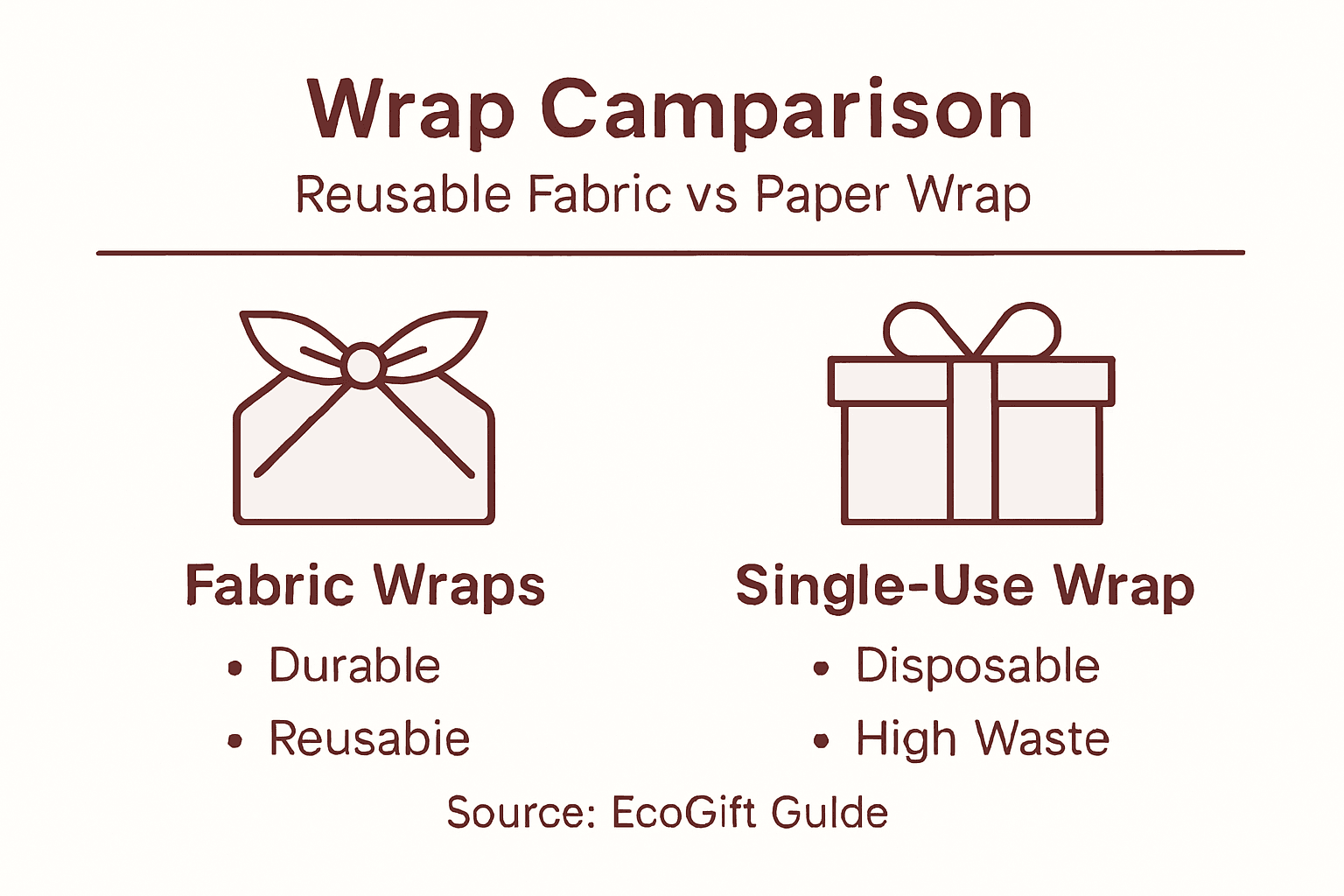
Life Cycle Assessment studies reveal profound differences between reusable fabric wraps and traditional single-use wrapping materials. While disposable paper and plastic wrappings offer momentary convenience, they create substantial environmental consequences that extend far beyond the brief moment of gift presentation.
Key comparative factors between reusable and single-use wrapping include:
- Material lifecycle: Fabric wraps endure multiple uses
- Waste generation: Single-use options create immediate landfill waste
- Carbon footprint: Reusable wraps significantly reduce emissions
- Resource consumption: Fabric wraps minimise raw material demands
- Economic impact: Long-term cost savings with reusable alternatives
Disposable wrapping materials typically involve complex manufacturing processes that consume significant energy and produce considerable waste. In contrast, high-quality fabric wraps represent a sustainable investment, with their environmental impact diminishing through repeated use. One fabric wrap can potentially replace hundreds of single-use paper or plastic alternatives over its lifetime.
The economic and environmental mathematics are compelling. Each reusable fabric wrap prevents multiple disposable wrappings from entering waste streams, creating a meaningful reduction in overall packaging waste and supporting more responsible consumption patterns.
Pro tip: Calculate your potential waste reduction by tracking how many single-use wrappings a single fabric wrap replaces throughout its lifecycle.
Costs, care tips and common mistakes
Fabric wrap maintenance strategies require careful consideration to maximise both longevity and aesthetic appeal. While initial investment costs are higher than disposable alternatives, reusable fabric wraps offer significant long-term economic and environmental advantages when properly maintained.
Key care and cost considerations include:
- Fabric selection: Choose durable, washable materials
- Initial investment: Higher upfront costs with long-term savings
- Washing techniques: Gentle cleaning preserves fabric quality
- Storage methods: Prevent creasing and damage
- Repair considerations: Mending extends wrap lifecycle
Common mistakes often compromise the functionality and appearance of fabric wraps. Improper washing techniques, such as using harsh detergents or high-temperature cycles, can cause shrinkage, colour fading, and structural degradation. Sustainable fabric care emphasises using mild detergents, avoiding bleach, and air-drying to maintain fabric integrity.
Economically, a single high-quality fabric wrap represents an investment that can replace hundreds of disposable wrappings. Consumers should prioritise reinforced seams, versatile designs, and materials that withstand multiple wash cycles to maximise their long-term value.
Pro tip: Create a dedicated storage system for your fabric wraps, using acid-free tissue paper to prevent creasing and maintain their pristine condition.
Elevate Your Gift-Giving with Sustainable Luxury Fabric Wraps
Discover how to transform your gift presentation with eco-conscious and personalised reusable fabric wraps that capture the true spirit of festive giving. If you are passionate about reducing waste and creating meaningful memories, our Reusable Fabric Wrap - Luxurious Christmas Collection offers the perfect blend of sustainability and bespoke design, including elegant embroidery options that add a lasting emotional touch.
Explore our curated Christmas collection today and experience the joy of gifting with conscience and style. Start your journey to sustainable luxury by visiting Nicholas & Rose now and choose thoughtfully crafted wraps that celebrate tradition while protecting the planet. For versatile gifting solutions beyond Christmas, browse our specially selected Favourite Four to find timeless fabric wraps for every occasion.
Frequently Asked Questions
What are the benefits of using custom festive wrap?
Custom festive wrap provides numerous benefits, including sustainability through reduced waste, personalised designs that enhance the gifting experience, and cultural significance that adds emotional value to gifts.
How can I maintain my reusable fabric wraps?
To maintain your reusable fabric wraps, select durable, washable materials, use mild detergents when cleaning, and store them properly to prevent creasing. This ensures they last longer and retain their aesthetic appeal.
What types of fabric are commonly used for custom festive wraps?
Common fabrics for custom festive wraps include cotton, linen, and traditional Furoshiki cloth. These materials offer various textures and durability, making them suitable for different gifting occasions.
How does custom festive wrap compare to traditional single-use wrapping paper?
Custom festive wraps significantly outperform traditional wrapping paper as they are reusable, generate less waste, and have a lower carbon footprint. One fabric wrap can replace multiple single-use wraps over its lifetime, making it an eco-friendly choice.
Recommended
- Innovative Gift Wrapping: Sustainable Luxury for Christmas – Nicholas & Rose Limited
- Eco Aware Wrapping: Defining Sustainable Luxury – Nicholas & Rose Limited
- Why Sustainable Gift Wrapping Matters for Conscious Gifting – Nicholas & Rose Limited
- Curated Christmas Wrapping: Sustainable Luxury Unwrapped – Nicholas & Rose Limited