

Innovative Gift Wrapping: Sustainable Luxury for Christmas
Finding luxury Christmas wrapping that truly reflects your values can feel impossible when mainstream options seem wasteful and uninspired. Many British shoppers now seek gift presentation that combines stunning aesthetics with genuine sustainability, turning each package into more than just a seasonal gesture. This article explores how innovative techniques such as reusable fabric wraps and biodegradable materials create a unique gifting experience, allowing eco-conscious consumers to express creativity while minimising their environmental impact.
Table of Contents
- Innovative Gift Wrapping Defined And Debunked
- Types Of Sustainable Gift Wrapping Solutions
- How Personalised Fabric Wraps Work
- Luxury And Eco-Conscious Christmas Trends 2025
- Comparing Reusable Wraps With Traditional Paper
- Key Mistakes To Avoid This Festive Season
Key Takeaways
| Point | Details |
|---|---|
| Innovative Gift Wrapping | Transform conventional wrapping into a sustainable and artistic expression that communicates personal values and creativity. |
| Sustainable Materials | Opt for reusable and eco-friendly options such as fabric wraps and biodegradable papers to minimise environmental impact. |
| Avoid Common Mistakes | Steer clear of non-recyclable materials and excessive decorations to promote responsible gift-giving practices. |
| Personalisation | Incorporate unique design elements in wraps to enhance emotional connection and make each gift memorable. |
Innovative Gift Wrapping Defined and Debunked
Innovative gift wrapping transcends traditional paper and ribbons, transforming a simple packaging practice into an expressive art form that communicates values, creativity, and environmental consciousness. Emerging packaging industry trends reveal a profound shift from disposable wrapping towards sustainable, meaningful presentations.
At its core, innovative gift wrapping integrates multiple sophisticated dimensions:
- Aesthetic Expression: Beyond mere covering, wrapping becomes a canvas for personal storytelling
- Environmental Responsibility: Prioritising materials and techniques with minimal ecological impact
- Technological Integration: Incorporating digital elements like augmented reality experiences
- Cultural Communication: Using packaging design to convey deeper emotional messages
Traditionally, gift wrapping was perceived as a superficial, disposable practice. However, contemporary research reveals gift wrapping’s complex cultural significance, demonstrating it as a nuanced form of non-verbal communication that extends far beyond simple product concealment.
The contemporary approach to gift wrapping embraces several revolutionary principles. Designers and environmentally conscious consumers now seek solutions that are:
- Reusable and multipurpose
- Made from biodegradable materials
- Personalised and emotionally resonant
- Minimally processed
By challenging traditional perceptions, innovative gift wrapping transforms a mundane task into an opportunity for creativity, sustainability, and meaningful connection.
Pro tip: Select gift wrap that tells a story, communicates your values, and can be repurposed or composted, turning each present into a statement of environmental mindfulness.
Types of Sustainable Gift Wrapping Solutions
Sustainable gift wrapping has evolved dramatically, transforming from a simple packaging task into an environmentally conscious art form. Emerging packaging industry trends demonstrate a remarkable shift towards eco-friendly, aesthetically pleasing alternatives that minimise waste and maximise creativity.
The landscape of sustainable gift wrapping now encompasses a diverse range of innovative solutions:
- Fabric Wraps: Reusable furoshiki techniques from Japan
- Biodegradable Papers: Kraft paper with natural decorations
- Seed-Embedded Wrapping: Plantable paper that grows into flowers or herbs
- Upcycled Materials: Repurposed newspapers, magazines, and vintage fabrics
- Textile Pouches: Reusable cotton or linen gift bags
Biodegradable Options represent a particularly exciting development in sustainable wrapping. Sustainable gift wrapping research reveals multiple approaches that blend environmental responsibility with aesthetic elegance. These solutions prioritise materials that can be composted, recycled, or completely repurposed, addressing the significant waste generated during festive seasons.
Designers and environmentally conscious consumers are now embracing wrapping techniques that offer multiple benefits:
- Zero waste potential
- Aesthetic versatility
- Potential for personal customisation
- Reduced environmental impact
- Extended usability beyond single-use scenarios
By reimagining gift presentation, these sustainable solutions transform a traditional practice into a statement of environmental stewardship and creative expression.
Here is a concise comparison of sustainable gift wrapping types and their main characteristics:
| Wrapping Solution | Material Example | Main Environmental Benefit | Typical Reuse Potential |
|---|---|---|---|
| Fabric Wraps | Organic cotton, linen | Reduces single-use waste | About 50 uses per wrap |
| Biodegradable Papers | Unbleached kraft paper | Compostable and recyclable | Usually single use |
| Seed-Embedded Wrapping | Plantable paper | Grows into plants after use | Single use, then new plants |
| Upcycled Materials | Newspaper, old textiles | Minimises landfill waste | Varies, often reusable |
| Textile Pouches | Cotton, linen pouches | Multi-year lifespan | 25–100 uses per pouch |
Pro tip: Select wrapping materials that can be reused, composted, or transformed, turning each gift into an eco-friendly experience that extends well beyond the moment of unwrapping.
How Personalised Fabric Wraps Work
Personalised fabric wraps represent a revolutionary approach to sustainable gift presentation, transforming traditional packaging into a meaningful, reusable experience. Sustainable gift wrapping techniques reveal a sophisticated process that goes far beyond simple covering, turning each wrap into a storytelling medium.
The core of personalised fabric wrapping involves several key elements:
- Material Selection: Choosing durable fabrics like organic cotton or linen
- Size Customisation: Cutting wraps to accommodate different gift dimensions
- Design Personalisation: Adding unique embellishments or embroidered details
- Wrapping Techniques: Mastering versatile folding methods
- Preservation: Maintaining wrap quality for multiple uses
The practical implementation of fabric wraps requires careful consideration of multiple factors. These sustainable alternatives are designed to be used approximately 50 times, dramatically reducing waste compared to traditional single-use wrapping papers. Crafting these wraps involves precise techniques that elevate gift-giving from a momentary exchange to a thoughtful, environmentally conscious ritual.
Successful personalised fabric wraps typically follow these essential steps:
- Select high-quality, washable fabric
- Determine appropriate wrap sizes
- Finish edges to prevent fraying
- Add personalised decorative elements
- Learn versatile wrapping techniques
By reimagining gift presentation, personalised fabric wraps create a deeply meaningful alternative to disposable packaging, transforming each gift into a sustainable statement of creativity and care.

Pro tip: Invest in versatile, neutral-toned fabrics that can be beautifully personalised for multiple occasions, maximising both aesthetic appeal and environmental responsibility.
Luxury and Eco-Conscious Christmas Trends 2025
The landscape of festive gift presentation is undergoing a remarkable transformation, with luxury Christmas wrapping trends redefining sustainability and aesthetic elegance. Consumers are increasingly seeking wrapping solutions that transcend traditional disposable packaging, demanding experiences that are both environmentally responsible and visually stunning.
Emerging trends in eco-conscious gift presentation showcase several key characteristics:
- Archival-Inspired Design: Museum-worthy wrapping aesthetics
- Sustainable Materials: Water-free digital printing technologies
- Ethical Production: Vegan inks and zero-waste manufacturing
- Cultural Heritage: Revival of traditional cloth-wrapping techniques
- Technological Integration: Smart packaging with interactive elements
The sophisticated consumer of 2025 expects gift wrapping to tell a story. These innovations represent more than mere packaging; they are statements of personal values, environmental commitment, and cultural awareness. Sustainable gifting strategies now seamlessly blend technological innovation with time-honoured traditions.
Key developments in luxury eco-conscious wrapping include:
- Handcrafted, personalised decorative elements
- Biodegradable and reusable materials
- QR codes linking to gift narratives
- Minimalist design with maximum emotional impact
- Culturally inspired wrapping techniques
These trends reflect a profound shift from disposable consumption to meaningful, responsible gift-giving experiences that honour both aesthetic excellence and environmental stewardship.
Pro tip: Invest in versatile, multi-purpose wrapping materials that can be beautifully personalised, transforming each gift into a sustainable work of art.
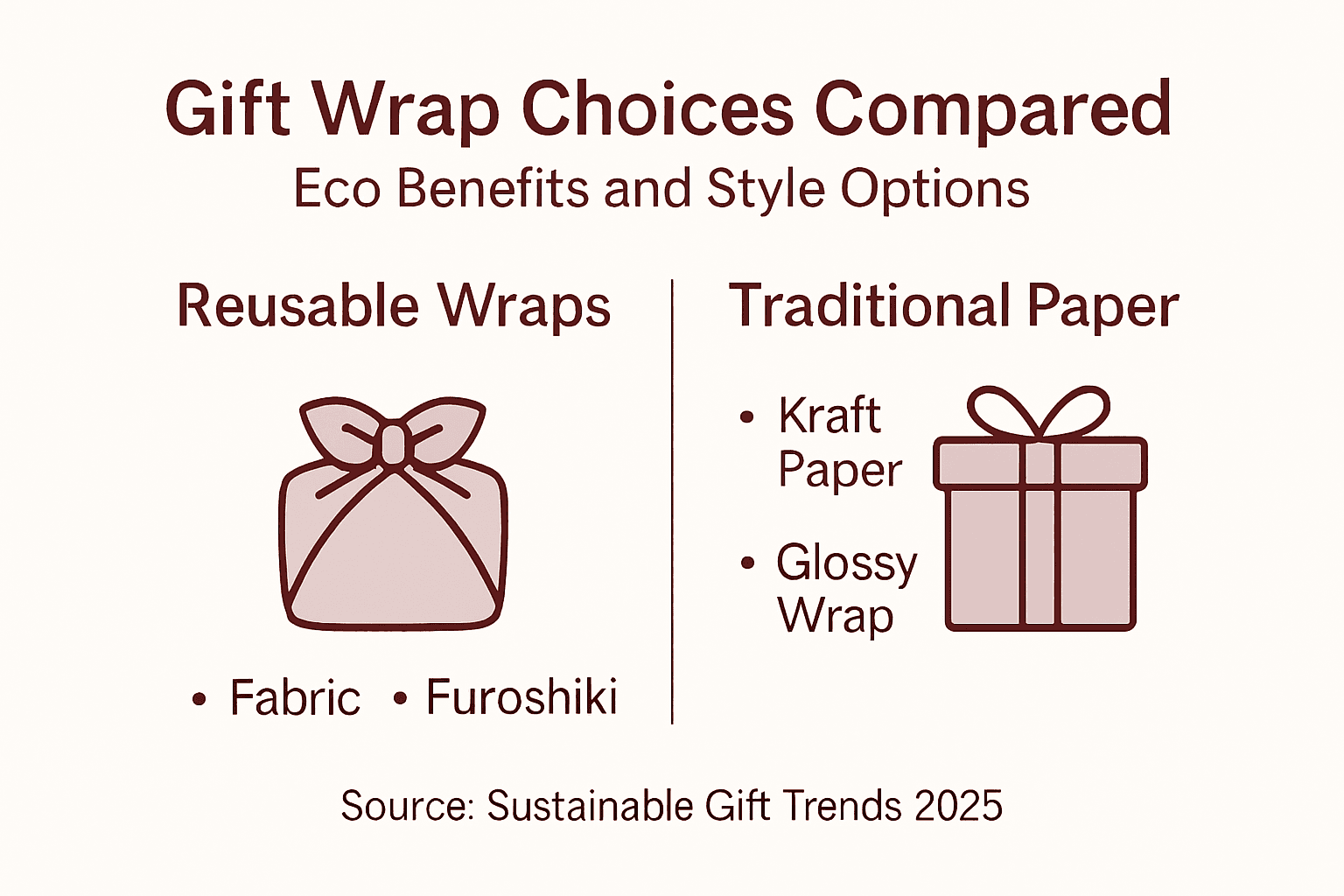
Comparing Reusable Wraps with Traditional Paper
The environmental impact of gift wrapping has sparked a significant conversation about sustainability, with contemporary wrapping solutions challenging traditional disposable practices. Consumers are increasingly scrutinising the ecological consequences of their festive packaging choices, driving a profound shift towards more responsible alternatives.
Key comparative aspects between reusable wraps and traditional paper include:
- Environmental Footprint: Fabric wraps dramatically reduce waste
- Cost Efficiency: Long-term savings with reusable options
- Aesthetic Flexibility: Personalisation and design potential
- Durability: Multiple uses versus single-use limitations
- Material Quality: Natural fabrics versus processed paper products
Traditional paper wrapping presents significant challenges, often contributing to substantial waste streams. Most commercial wrapping papers contain non-recyclable elements like plastic coatings, glitter, or metallic treatments that render them environmentally problematic. In contrast, reusable fabric wraps offer a sophisticated, eco-conscious alternative that can be used multiple times, reducing overall environmental impact.
A comprehensive evaluation reveals distinct advantages for each approach:
- Reusable wraps minimise annual waste generation
- Traditional paper remains cheaper for one-time use
- Fabric wraps provide superior aesthetic customisation
- Paper offers more immediate convenience
- Sustainable materials represent long-term investment
Ultimately, the choice between reusable wraps and traditional paper represents a nuanced decision balancing environmental responsibility, personal preference, and practical considerations.
Pro tip: Invest in versatile, neutral-toned fabric wraps that can be creatively styled for multiple occasions, transforming your gift presentation while reducing environmental waste.
Key Mistakes to Avoid This Festive Season
The festive season presents numerous environmental challenges, with gift wrapping representing a significant area of potential waste and ecological impact. Sustainable wrapping strategies reveal critical mistakes that conscientious consumers must carefully navigate to ensure a truly responsible celebration.
Common pitfalls in festive gift presentation include:
- Material Ignorance: Selecting non-recyclable wrapping materials
- Decoration Overload: Using environmentally harmful glitter and plastic embellishments
- Single-Use Mindset: Treating wrapping as disposable rather than reusable
- Adhesive Negligence: Overlooking the environmental impact of traditional tapes and glues
- Recycling Confusion: Improper preparation of wrapping materials for disposal
Discerning consumers must understand that seemingly innocuous decorative choices can have profound environmental consequences. Many commercial wrapping papers contain plastic coatings, metallic treatments, or non-biodegradable elements that completely undermine recycling efforts. The key is to approach gift presentation as an opportunity for environmental stewardship, not just aesthetic expression.
To ensure a sustainable festive season, consider these critical avoidance strategies:
- Reject wrapping materials with non-recyclable components
- Opt for natural, biodegradable decorative elements
- Invest in reusable fabric wrapping techniques
- Select adhesives that support ecological recycling
- Learn proper material separation and disposal methods
Every seemingly small choice contributes to a larger environmental narrative, transforming gift-giving from a potentially wasteful practice to a conscious act of environmental responsibility.
The following table summarises classic pitfalls and effective solutions for sustainable festive wrapping:
| Common Mistake | Impact on Sustainability | Recommended Solution |
|---|---|---|
| Using plastic-based decorations | Blocks recycling, adds waste | Opt for dried flowers or cotton string |
| Ignoring adhesive choice | Residue prevents recycling | Use compostable paper tape |
| Choosing glossy metallic papers | Not recyclable or compostable | Select plain kraft or fabric wraps |
| Treating wrap as single-use | Increases landfill content | Invest in high-quality reusable wraps |
Pro tip: Develop a personal wrapping kit with versatile, eco-friendly materials that can be creatively repurposed across multiple gift-giving occasions.
Elevate Your Christmas with Sustainable Luxury Wrapping
Innovative gift wrapping calls for solutions that combine sustainability with elegance. If you aim to transform your festive presents into lasting memories while reducing environmental impact, discover how our Reusable Fabric Wrap - Luxurious Christmas Collection offers the perfect answer. Crafted from premium materials and personalised through delicate embroidery, these wraps embrace the article’s key themes of reusability, personalisation, and environmental responsibility.
Challenge yourself this Christmas to choose wrapping that reflects your values and creativity. Explore our curated Christmas collection at Nicholas & Rose Limited and experience gift presentation that brings together sustainability and luxury. For more inspiration on thoughtful gifting, visit our Favourite Four collection and begin your journey towards meaningful festive celebrations today.
Frequently Asked Questions
What is innovative gift wrapping?
Innovative gift wrapping refers to modern packaging techniques that go beyond traditional paper and ribbons, incorporating sustainability, creativity, and personal storytelling to enhance the presentation of gifts.
How can I make my gift wrapping more sustainable?
To make your gift wrapping more sustainable, choose reusable and biodegradable materials, such as fabric wraps, kraft paper, or upcycled materials, and opt for natural decorations instead of synthetic embellishments.
What are some eco-friendly gift wrapping options?
Eco-friendly gift wrapping options include reusable fabric wraps like furoshiki, biodegradable papers, seed-embedded wrapping that grows into plants, upcycled materials, and textile pouches made from organic cotton or linen.
Why is personalisation important in gift wrapping?
Personalisation in gift wrapping adds a unique touch that communicates thoughtfulness and emotional resonance, making the gift more meaningful. It also allows for creative expression through custom designs and decorative elements.
Recommended
- Eco Aware Wrapping: Defining Sustainable Luxury – Nicholas & Rose Limited
- Curated Christmas Wrapping: Sustainable Luxury Unwrapped – Nicholas & Rose Limited
- Why Sustainable Gift Wrapping Matters for Conscious Gifting – Nicholas & Rose Limited
- Sustainable Christmas Wrapping: A Luxurious Eco Choice – Nicholas & Rose Limited