

What Is Non-Disposable Wrapping? Luxury, Eco Impact
Wrapping presents during the festive season can bring both joy and guilt when piles of discarded paper fill the bin. For eco-conscious luxury shoppers in the United Kingdom, the search for beautiful yet sustainable solutions leads naturally to non-disposable wrapping. Unlike single-use paper, fabric wraps can be used year after year, providing enduring elegance and the chance to add a personal touch through embroidery. This approach offers lasting value and craftsmanship for those who want their holiday gifts to stand out whilst caring for the planet.
Table of Contents
- Defining Non-Disposable Wrapping And Myths
- Types Of Non-Disposable Gift Wraps
- How Reusable Wrapping Works In Practice
- Eco And Social Benefits Over Single-Use
- Personalisation And Common Mistakes To Avoid
Key Takeaways
| Point | Details |
|---|---|
| Non-Disposable Wrapping Defined | It involves fabric-based gift wraps that can be reused multiple times, adding both elegance and sustainability to gifting practices. |
| Common Myths | Many believe reusable wraps are less elegant, inconvenient, or not environmentally beneficial; however, they can actually enhance the gifting experience while reducing waste. |
| Types of Non-Disposable Wraps | Options include cotton, linen, silk, and furoshiki, each offering unique benefits, longevity, and luxury presentation, making them more suitable than single-use wraps. |
| Personalisation Importance | Thoughtful personalisation enhances the value of reusable wraps, but it should accommodate future use and not be overly specific to ensure longevity. |
Defining Non-Disposable Wrapping And Myths
Non-disposable wrapping isn’t some obscure concept. It’s straightforward: fabric-based gift wrap that you use year after year, season after season. Unlike traditional paper that gets torn open and tossed in the bin, non-disposable materials remain functional after their initial use, providing genuine value beyond a single occasion. Think of it like the difference between borrowing someone’s coat at a party and buying a cheap disposable poncho you’ll never wear again. One serves you repeatedly; the other becomes landfill within minutes.
The confusion around non-disposable wrapping typically centres on three persistent myths. First, many people assume reusable wrapping must be less elegant or look cheaper than traditional paper alternatives. That couldn’t be further from the truth, especially when you consider luxury fabric wraps that can be personalised through embroidery. A beautifully embroidered cloth wrap becomes a keepsake in itself, far more thoughtful than a crumpled scrap of paper. Second, there’s the belief that reusable options are inconvenient or complicated to use. Reality suggests otherwise; a well-designed fabric wrap requires no more effort than standard wrapping, and after a few uses, you’ll find it faster and easier. Third, some assume reusable packaging doesn’t actually deliver better environmental outcomes compared to disposable alternatives. This overlooks a crucial detail: the environmental impact depends entirely on how many times you reuse the material. Use a fabric wrap thirty times, and it dramatically outperforms single-use paper across virtually every sustainability metric.
What makes non-disposable wrapping particularly appealing for eco-conscious luxury shoppers is how it merges environmental responsibility with genuine luxury. You’re not compromising on presentation or sentiment. You’re simply choosing a solution that works harder, lasts longer, and reflects your values. A reusable wrap doesn’t fade after one use; it improves with age, developing character and patina much like quality textiles should. This means each gift becomes wrapped in something that carries history and intention rather than disposable guilt.
Pro tip: When selecting non-disposable wrapping, think of it as an investment piece for your gifting ritual. Choose colours and fabrics that complement multiple occasions throughout the year, and you’ll maximise the value of your purchase whilst reducing the mental load of finding wrapping solutions each season.
Types Of Non-Disposable Gift Wraps
When you start exploring non-disposable gift wraps, you’ll quickly discover there’s far more variety than most people realise. The range extends well beyond a single option, offering different materials, aesthetics, and practical benefits depending on your needs. Fabric wraps form the cornerstone of non-disposable wrapping solutions. Cotton, linen, silk, and polyester blends each bring distinct qualities to the table. Cotton offers durability and an understated elegance, linen provides a textured, natural appearance that improves with age, whilst silk delivers a luxurious feel perfect for premium gifts. Many eco-conscious luxury shoppers find that personalised embroidered fabric wraps elevate gifting entirely, transforming the wrapping itself into a keepsake that recipients treasure long after unwrapping. These aren’t merely functional; they become part of the gift’s story.

Beyond traditional fabric, you’ll find several other compelling options worth considering. The Japanese furoshiki represents an ancient non-disposable wrapping tradition that’s gaining momentum among sustainable gift-givers. This method uses a single cloth tied in specific ways to wrap gifts of various sizes, embodying both practicality and artistic elegance. For those seeking more contemporary approaches, reusable fabric wraps inspired by furoshiki traditions combine the principle of reusability with modern design sensibilities. Recycled kraft paper offers another avenue, though it sits somewhere between traditional disposable wrapping and truly reusable solutions. Whilst not infinitely reusable like fabric, quality kraft paper can be carefully opened and reused several times before eventually composting. There’s also organic cotton canvas wraps, which handle heavier items brilliantly and develop a beautiful patina with repeated use.
The choice between these options ultimately depends on your priorities. If you value maximum longevity and luxury presentation, embroidered fabric wraps or silk blends serve you beautifully across decades. If you prefer versatility and ease of storage, furoshiki or cotton canvas wraps require minimal space. If budget consciousness matters alongside sustainability, recycled kraft paper bridges economy and environmental responsibility effectively. What ties them all together is this fundamental truth: each option transcends the single-use mindset. You’re investing in wrapping solutions that improve your gifting experience year after year whilst dramatically reducing your household waste footprint.
Pro tip: Store your fabric wraps in a small dedicated box or drawer, organised by colour or size. This takes seconds to access when gift-giving season arrives, eliminating the frantic search through cupboards that disposable wrapping creates.
Here’s a concise comparison of popular non-disposable gift wrap materials and their standout qualities:
| Material Type | Durability Level | Luxury Impression | Care Requirements |
|---|---|---|---|
| Cotton | High | Subtle, refined | Machine washable |
| Linen | Very high | Natural, sophisticated | Gentle wash recommended |
| Silk | Moderate | Exceptionally luxurious | Delicate hand wash only |
| Polyester blends | High | Versatile, modern finish | Easy to clean |
| Organic cotton canvas | Extremely high | Casual, robust elegance | Simple spot cleaning |
How Reusable Wrapping Works In Practice
Reusable wrapping operates on a deceptively simple principle, yet the mechanics behind it ensure genuine sustainability. When you use a fabric wrap to gift a present, you’re participating in a closed-loop system that fundamentally differs from traditional disposable wrapping. Unlike paper that deteriorates after a single use, your fabric wrap gets carefully unwrapped, folded, and stored for its next journey. The collection and redistribution cycle forms the backbone of how reusable systems maintain their environmental credentials. For personal use, this means you’re the collector and redistributor. You wrap a gift, the recipient enjoys it and returns the wrap (or you retrieve it), and after a quick check for any wear, it’s ready for the next occasion. This cycle repeats indefinitely across years and sometimes decades, dramatically multiplying the environmental benefit of a single piece of fabric compared to single-use paper.
The practical reality of using reusable wrapping at home involves three straightforward steps. First, preparation means selecting an appropriate wrap size for your gift and mastering basic folding techniques. A well-designed fabric wrap typically includes tie elements or corners that secure naturally, requiring no tape or additional materials. Second, presentation is where reusable wrapping shines for luxury-conscious shoppers. An embroidered fabric wrap creates an immediate impression of thoughtfulness and care. Recipients see not just wrapping but a keepsake they can reuse or display. Third, recovery and care ensures your wrap remains functional for years. After gifting, gently remove the wrap, check for any damage, and store it in a clean, dry space. With quality fabrics, occasional light washing keeps them fresh without compromising their integrity. Durable material selection and proper maintenance practices prove essential for maximising the lifespan of reusable wrapping systems.
What makes this system work brilliantly for eco-conscious luxury consumers is how it aligns convenience with values. You’re not adding complexity to your gifting routine; you’re simplifying it. No hunting through cupboards for matching paper and tape. No wrestling with rolls that never tear straight. No guilt about landfill. Instead, you develop a personal collection of beautiful wraps that become familiar, like favourite scarves or linens. Over five to ten years, a single embroidered fabric wrap will wrap perhaps fifty to one hundred gifts, whilst a single roll of paper wraps perhaps ten. The mathematics of sustainability favour reusable wrapping overwhelmingly.
Pro tip: Label your fabric wraps subtly with a small embroidered initial or tag if you gift them to friends. This transforms your wrap into something they’ll recognise and treasure, encouraging them to return it and share the reusable system with others.
Eco And Social Benefits Over Single-Use
The environmental case for reusable wrapping reads like a stark contrast when you set it alongside single-use paper. Consider what happens with traditional wrapping paper: you purchase a roll, use perhaps ten metres of it across a season, and the remainder either gets stored in a cupboard for years or discarded. Even the paper you do use gets unwrapped once and binned within seconds. That single roll creates waste, depletes forest resources, and requires transportation, manufacturing, and storage energy before it ever reaches your hands. Now contrast that with a fabric wrap used consistently over a decade. Reusable packaging systems substantially reduce environmental footprints including waste generation, resource depletion, and pollution compared to single-use alternatives. One embroidered fabric wrap wraps perhaps sixty to one hundred gifts across its lifetime, eliminating the need for sixty to one hundred rolls of paper. The mathematics of environmental impact shift dramatically in favour of reusable solutions.
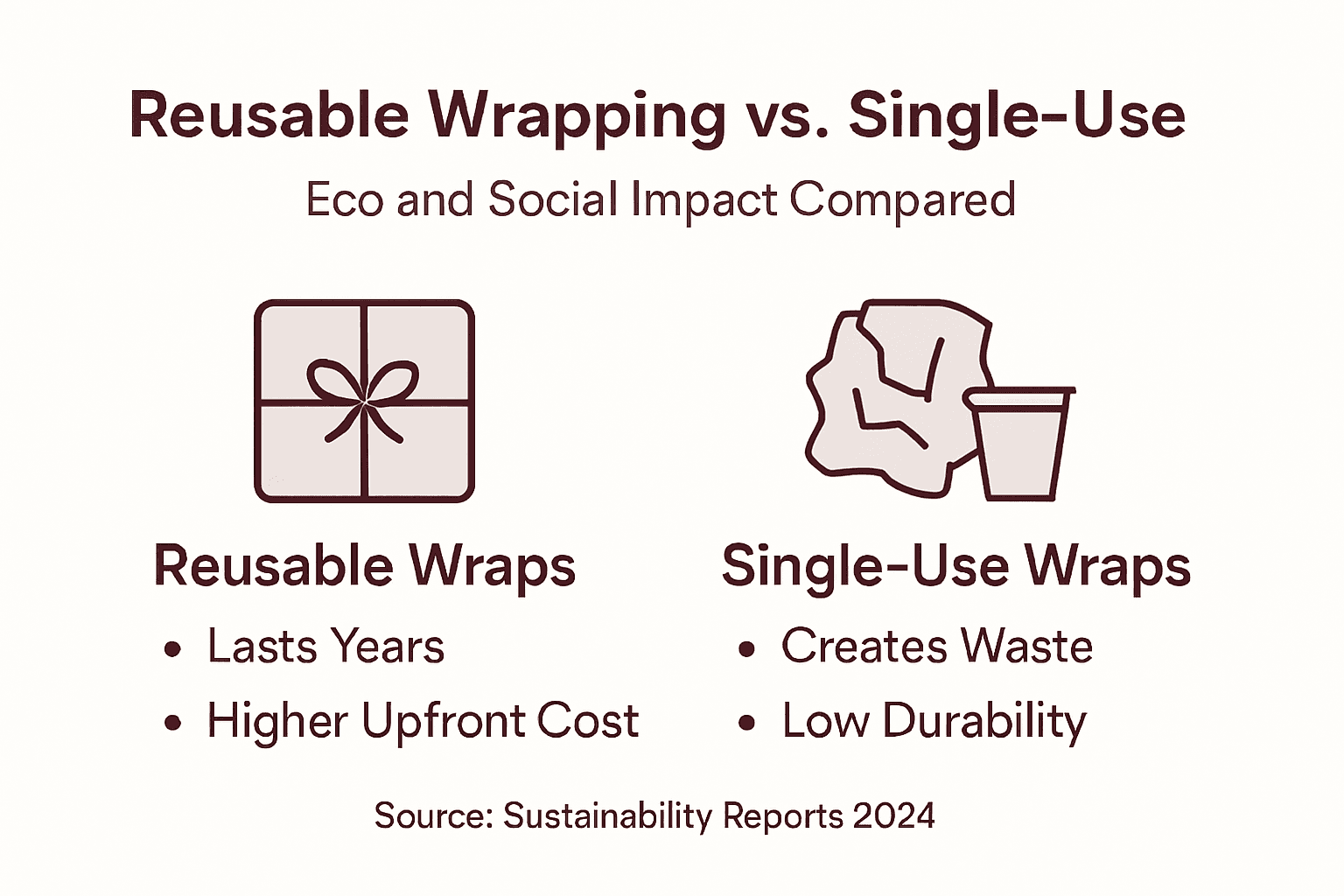
Beyond the headline environmental benefits, reusable wrapping generates genuine social and economic advantages that often go unrecognised. When you purchase a personalised embroidered fabric wrap, you’re supporting skilled artisans and small-scale manufacturers rather than feeding large-scale industrial paper production. Reusable packaging creates social benefits including job creation and community engagement around circular economy practices. You’re also fostering a cultural shift in how your circle thinks about gifting. Recipients who receive beautifully wrapped gifts in fabric wraps often ask about the wrap itself, creating conversations about sustainability. Over time, this ripples outward. Friends gift their own reusable wraps. Family members request embroidered versions as keepsakes. What starts as a personal choice becomes a shared practice that normalises thoughtfulness around waste reduction.
The economic argument rounds out the picture compellingly. Whilst a quality embroidered fabric wrap represents a higher upfront investment than a pack of disposable paper, the cost-per-use quickly becomes negligible. A wrap costing thirty pounds that wraps one hundred gifts costs thirty pence per gift. A single roll of premium wrapping paper costing five pounds wraps approximately ten gifts, costing fifty pence per gift. Over time, reusable wrapping saves money whilst delivering superior presentation and eliminating the repetitive purchase cycle entirely. You’re no longer buying wrapping supplies constantly; you’re investing once in pieces that become part of your gifting infrastructure.
To showcase the economic and sustainability impact, here is a summary of reusable vs. disposable wrapping over ten years:
| Wrap Type | Gifts Wrapped Over 10 Years | Total Cost Estimate | Waste Generated |
|---|---|---|---|
| Embroidered fabric wrap | 100 | £30 | Minimal |
| Single-use paper | 100 | £50 | 8-10 kg |
Pro tip: Track how many times you use each wrap throughout the year. You’ll likely be surprised by the number, which reinforces the environmental and economic logic of your choice and provides satisfying proof that sustainability doesn’t require sacrifice.
Personalisation And Common Mistakes To Avoid
Personalisation transforms a functional reusable wrap into something genuinely precious. An embroidered fabric wrap bearing someone’s initials, a meaningful date, or a cherished symbol becomes a gift within the gift. This is where non-disposable wrapping diverges most dramatically from disposable alternatives. Yet personalisation requires thoughtful consideration. Personalisation increases engagement and impact when designed with the recipient’s genuine preferences and future reuse in mind, rather than purely aesthetic impulses. The mistake many make is personalising wraps too narrowly. An embroidered name sounds personal, but what happens when that wrap passes to someone else? Or when the recipient’s life circumstances change? Instead, consider personalisation that remains relevant across multiple users and occasions: initials rather than full names, symbolic designs rather than trend-dependent imagery, and colour choices that complement various settings. A wrap embroidered with a recipient’s initials in a timeless serif font becomes a versatile keepsake they’ll proudly display or gift forward. A wrap embroidered with a dated reference or ultra-specific motif risks becoming awkwardly specific.
Common practical mistakes undermine the longevity of reusable wrapping systems. First, sizing mismatches occur when people select wraps that don’t accommodate their typical gift dimensions. You can’t wrap larger boxes adequately, or you’re using oversized wraps for small gifts, creating bulk and frustration. Measure your most frequently gifted item sizes before selecting wraps. Second, improper wrapping techniques and material care compromise functionality and durability. Harsh creasing, aggressive tying, or careless washing degrades even quality fabrics. Learn basic folding techniques that distribute stress evenly. Third, many people overlook fabric choices entirely. A beautiful silk wrap sounds luxurious but demands delicate handling that most daily gifting doesn’t accommodate. Cotton or linen blends offer durability without excessive fussiness. Fourth, neglecting reuse planning undermines the entire sustainability proposition. If you personalise a wrap so specifically that only one person could use it, or fail to create systems for wrap recovery and storage, you’ve defeated the purpose.
The most overlooked mistake involves design for dissemination and reuse potential. Think beyond the initial gifting. Will the recipient want to keep and reuse this wrap? Will they feel comfortable gifting it forward? Can it transition between seasons and occasions? A beautifully embroidered wrap in neutral tones with timeless design choices invites ongoing use. A wrap with niche appeal or overly specific personalisation sits in a drawer after one use, negating all environmental benefits. The goal is creating wrapping that improves with age and use, becoming more treasured rather than more obsolete.
Pro tip: Before ordering personalisation, ask yourself: “Would I gift this forward if circumstances changed?” If the honest answer is no, reconsider the personalisation design and opt for something more universally appealing instead.
Elevate Your Gifting With Sustainable Luxury Wrapping
Struggling to find a beautiful yet eco-friendly gift wrap that reflects your values and style? This article highlights the power of non-disposable wrapping to transform gift-giving into a meaningful and sustainable ritual. If you want to replace single-use paper with elegant, reusable fabric that lasts for years, explore our Reusable Fabric Wrap - Luxurious Christmas Collection. These wraps can be personalised by embroidery, turning every gift into a treasured keepsake that tells a story of care and responsibility.
Discover how choosing our embroidered fabric wraps not only reduces waste but also supports artisans and creates timeless presentation. Start building your sustainable gifting tradition today by visiting Nicholas & Rose Limited and browse our curated selection, including our Favourite Four luxurious gift wrap styles. Make this Christmas unforgettable with wrapping that embraces luxury, environmental impact, and lasting beauty.
Frequently Asked Questions
What is non-disposable wrapping?
Non-disposable wrapping refers to fabric-based gift wrap that can be used multiple times, season after season, instead of traditional single-use paper that is discarded after one use.
How does reusable wrapping benefit the environment compared to single-use options?
Reusable wrapping greatly reduces waste, resource depletion, and pollution. A fabric wrap can replace many rolls of disposable paper, significantly lowering your environmental footprint over time.
What are the most popular materials for non-disposable wrapping?
The most popular materials include cotton, linen, silk, polyester blends, recycled kraft paper, and organic cotton canvas. Each offers unique qualities in terms of durability, luxury impression, and care requirements.
How can I maintain and care for my fabric wraps?
To maintain your fabric wraps, gently wash them as needed, store them in a clean, dry place, and ensure proper folding techniques during use to prevent wear and damage.
Recommended
- Eco Aware Wrapping: Defining Sustainable Luxury – Nicholas & Rose Limited
- Complete Guide to Luxury Gift Wrap UK – Nicholas & Rose Limited
- Eco Conscious Gift Wrapping Explained: Sustainable Luxury – Nicholas & Rose Limited
- What Makes Wrap Environmentally Friendly: Key Benefits Explained – Nicholas & Rose Limited