

Personalised Wrap Benefits: Sustainable Luxury Gifting
Over 100 million rolls of wrapping paper are discarded each Christmas in British homes, contributing to a mountain of unnecessary waste. For eco-conscious gift buyers who value luxury and personal touches, this has sparked a growing appreciation for sustainable alternatives. Discover how personalised fabric wraps combine sustainability with impeccable British design, turning each present into a thoughtful, reusable work of art that captures the spirit of conscious giving for Christmas 2025.
Table of Contents
- What Are Personalised Fabric Wraps?
- Types Of Personalised Eco-Friendly Wraps
- How Embroidery Adds Unique Value
- Environmental Impact Versus Traditional Packaging
- Cost, Care, And Common Pitfalls
Key Takeaways
| Point | Details |
|---|---|
| Personalised Fabric Wraps are Sustainable | They offer a stylish, eco-friendly alternative to single-use wrapping paper, designed for multiple uses and reduced waste. |
| Customisation Enhances Value | Personalisation through embroidery transforms each wrap into a unique keepsake, adding emotional and aesthetic significance to gift-giving. |
| Long-Term Economic Benefits | Although initial costs may be higher, fabric wraps provide significant savings over time by replacing disposable options. |
| Proper Care Extends Usability | Maintaining fabric wraps involves gentle cleaning and appropriate storage to ensure longevity for multiple occasions. |
What Are Personalised Fabric Wraps?
Personalised fabric wraps represent a sophisticated and sustainable alternative to traditional single-use gift wrapping paper, offering a stylish solution for environmentally conscious gift-givers. These bespoke textile wraps are crafted from high-quality, reusable fabrics that can be customised through intricate embroidery techniques, transforming each gift presentation into a unique, memorable experience.
Unlike disposable paper wrapping that typically ends up in landfill within moments of gift opening, personalised fabric wraps serve multiple purposes. They are meticulously designed to be beautiful, durable, and adaptable. Gifters can select from various luxurious textiles such as organic cotton, linen, or silk, each offering different textures and aesthetic qualities. The personalisation process allows for meaningful embellishments like names, special dates, or decorative motifs that make each wrap a keepsake in its own right.
The concept of fabric gift wrapping draws inspiration from traditional Japanese furoshiki techniques, where cloth is artfully folded and tied to create elegant gift presentations. Modern personalised wraps build upon this heritage, integrating contemporary design principles with sustainability. These wraps can be reused multiple times, creating a circular gifting economy that reduces waste and adds sentimental value to the act of gift-giving.
Pro tip: When selecting a personalised fabric wrap, consider the recipient’s personal style and choose a design that reflects their taste, transforming the wrapping itself into an extension of the gift’s thoughtfulness.
Types Of Personalised Eco-Friendly Wraps
Personalised eco-friendly wraps represent a diverse range of sustainable textile solutions that transform gift presentation into an environmentally conscious art form. Multiple innovative fabric materials offer unique opportunities for customisation, allowing gift-givers to select wrapping options that align with their ecological values and aesthetic preferences.
The primary categories of personalised eco-friendly wraps include organic textiles, recycled fabrics, and heritage-inspired materials. Organic cotton wraps provide a soft, natural base for embroidery and personalisation, while recycled polyester options offer durability and reduced environmental impact. Hemp and bamboo fabric wraps emerge as particularly sustainable alternatives, featuring exceptional strength and minimal ecological footprint. Each material brings distinct characteristics: organic cotton feels luxurious, recycled polyester ensures longevity, and plant-based fabrics like hemp demonstrate remarkable environmental credentials.
Beyond material selection, personalisation techniques elevate these eco-friendly wraps from simple coverings to meaningful gift experiences. Embroidery allows for intricate name stitching, special date commemorations, or decorative motifs that transform the wrap into a cherished keepsake. Some advanced eco-wrap designs even incorporate seed-embedded fabrics, which can be planted after use, creating a beautiful circular lifecycle that extends the gift’s impact far beyond the initial unwrapping moment.
Here is a comparison of common fabrics used for personalised eco-friendly wraps:
| Fabric Type | Distinctive Qualities | Environmental Advantage |
|---|---|---|
| Organic Cotton | Soft, natural, easy to embroider | Lower pesticide usage |
| Recycled Polyester | Durable, robust, colourfast | Reduces plastic waste |
| Hemp | Strong, textured, hypoallergenic | Minimal water required |
| Bamboo | Silky, lightweight, antimicrobial | Rapidly renewable resource |
| Linen | Crisp, elegant, breathable | Biodegradable and durable |
Pro tip: Select a personalised eco-wrap material that matches the recipient’s lifestyle and values, considering factors like texture, durability, and potential for future reuse.
How Embroidery Adds Unique Value
Embroidery transforms personalised fabric wraps from simple coverings into meaningful storytelling objects, elevating the entire gift-giving experience. Traditional embroidery techniques offer profound cultural significance and individual expression, allowing gift-givers to create truly memorable textile presentations that transcend ordinary wrapping.
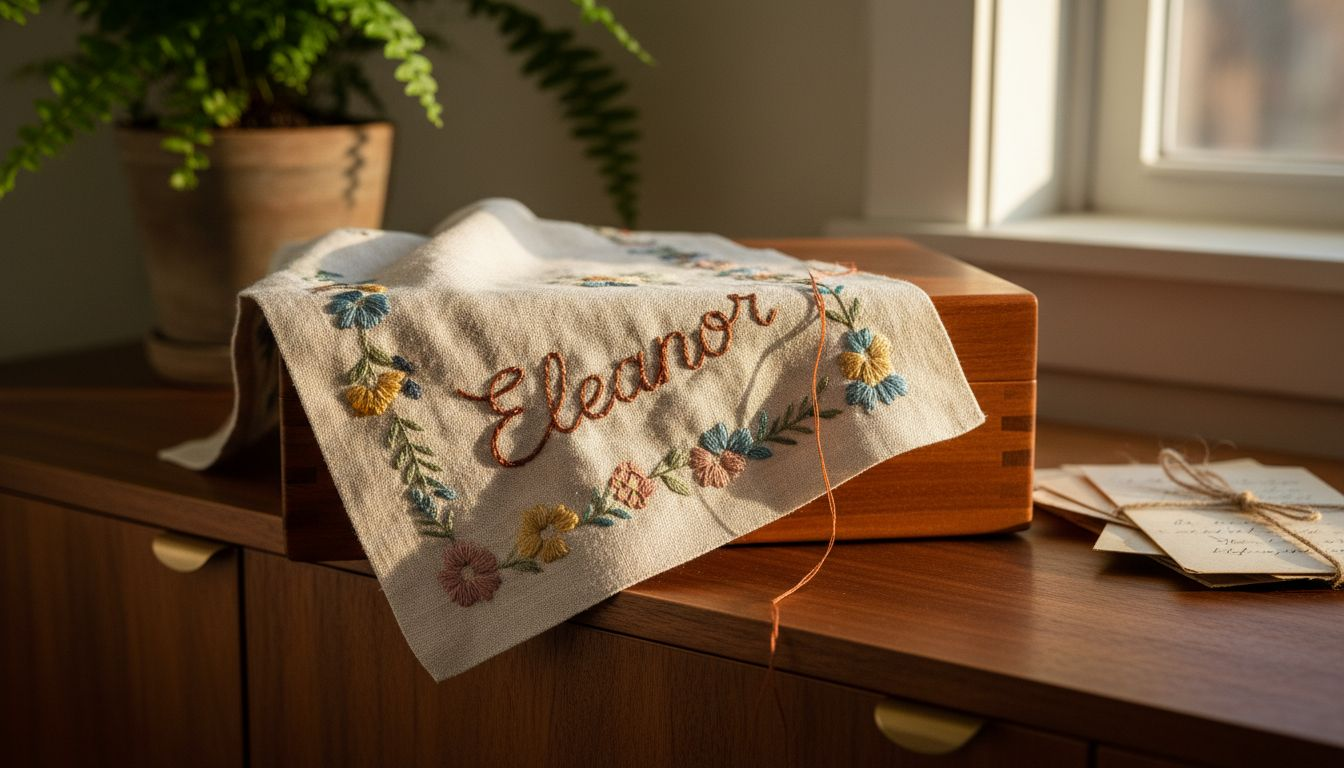
The aesthetic and emotional value of embroidery extends far beyond mere decoration. Intricate stitched designs can commemorate special moments, represent personal connections, or showcase exquisite craftsmanship. Embroidered elements such as names, significant dates, meaningful symbols, or personalised motifs turn each wrap into a keepsake that recipients are likely to treasure long after the gift has been unwrapped. This technique adds layers of emotional resonance, transforming the wrapping itself into a cherished memento that carries deeper meaning.
Moreover, embroidery contributes significant practical and artistic value to sustainable fabric wraps. The additional stitching reinforces fabric integrity, potentially extending the wrap’s usable lifecycle. Techniques ranging from delicate hand embroidery to precision machine stitching allow for incredible versatility in design, enabling everything from minimalist monograms to elaborate artistic representations. Each embroidered detail increases the wrap’s perceived value, making it a luxury item that reflects thoughtfulness and sophisticated personal style.
Pro tip: Choose embroidery designs that reflect the recipient’s personality, considering their colour preferences, personal symbolism, and aesthetic sensibilities to create a truly meaningful gift presentation.
Environmental Impact Versus Traditional Packaging
Traditional single-use gift wrapping materials represent a significant environmental challenge, generating substantial waste and consuming extensive resources. Comprehensive eco-impact assessments reveal dramatic differences between conventional packaging and reusable textile alternatives, highlighting the critical importance of sustainable gifting choices for environmentally conscious consumers.
The environmental footprint of traditional paper and plastic gift wrappings is substantially more harmful compared to personalised fabric wraps. Single-use packaging typically involves one-time consumption, with approximately 227,000 miles of wrapping paper discarded annually in the United Kingdom alone. In stark contrast, reusable fabric wraps can be utilised multiple times, dramatically reducing waste generation, carbon emissions, and overall resource consumption. Each fabric wrap represents a potential alternative that prevents dozens of single-use paper or plastic wrappings from entering landfill systems.
Furthermore, the production processes for traditional wrapping materials involve significantly higher environmental costs. Paper wrappings require extensive tree harvesting and chemical processing, while plastic-based options derive from non-renewable petroleum resources. Personalised fabric wraps, especially those crafted from organic or recycled materials, offer a markedly more sustainable approach. These textile alternatives not only minimise waste but also provide an opportunity for consumers to make meaningful environmental choices that align with principles of circular economy and responsible consumption.
Pro tip: Calculate the potential waste reduction by switching to reusable fabric wraps, considering how many gifts you typically wrap each year and the long-term environmental impact of your packaging choices.
Cost, Care, And Common Pitfalls
Personalised fabric wraps represent an investment in sustainable gifting, with initial costs balanced by significant long-term savings and environmental benefits. Understanding the economic and maintenance considerations is crucial for making informed purchasing decisions, ensuring these luxury textile wraps deliver both aesthetic and practical value.
The financial landscape of personalised fabric wraps differs markedly from disposable packaging. While the upfront cost might seem higher, a single high-quality fabric wrap can replace dozens of single-use wrapping papers over its lifetime. Organic cotton, recycled polyester, and other premium materials might require a more substantial initial investment, but they offer superior durability, multiple reuse opportunities, and a substantially reduced environmental footprint. Consumers can expect to recoup their initial expenditure within two to three gift-giving seasons through avoided paper wrap purchases.
The following table summarises the long-term economic and environmental benefits of choosing reusable fabric wraps over traditional paper wrapping:
| Aspect | Fabric Wraps (Reusable) | Paper Wrapping (Single-Use) |
|---|---|---|
| Initial Cost | Higher upfront investment | Low single-purchase cost |
| Waste Production | Minimal over time | Substantial year-on-year |
| Usable Lifespan | Several years, multiple uses | One use, then discarded |
| Financial Savings | Recouped after few uses | Ongoing expense |
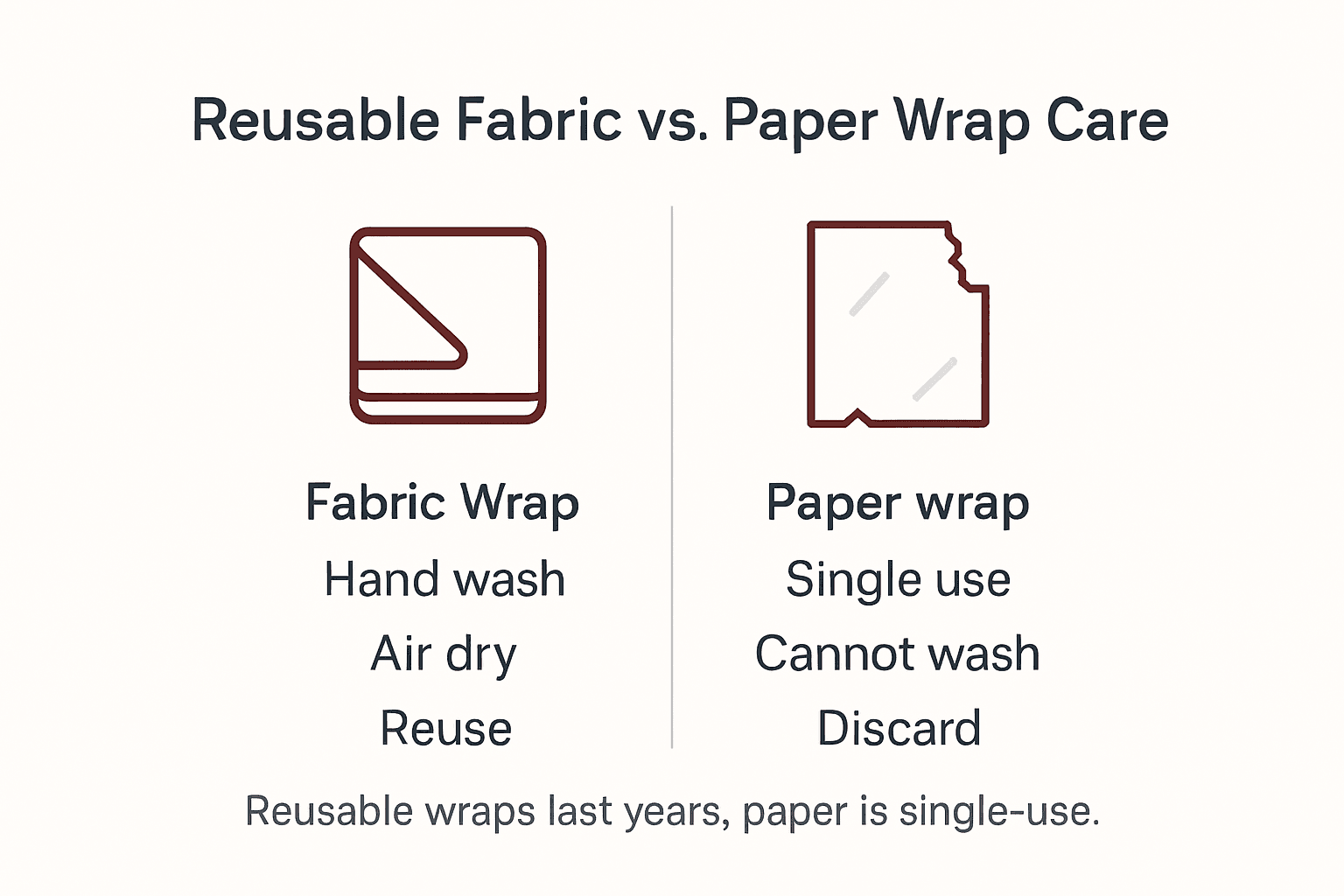
Maintaining fabric wraps requires thoughtful care to preserve their quality and extend their usable lifecycle. Gentle machine washing on cool settings, avoiding harsh detergents, and storing in breathable environments are essential practices. Common pitfalls include exposing delicate fabrics to high temperatures, using aggressive cleaning chemicals, or storing wraps in humid conditions that can promote mildew growth. Proper storage involves keeping wraps folded in a cool, dry space, preferably in fabric bags that allow air circulation and protect them from dust and potential fabric-damaging elements.
Pro tip: Invest in a dedicated fabric storage solution with breathable properties to protect your personalised wraps and extend their longevity, ensuring they remain pristine for multiple gift-giving occasions.
Elevate Your Gift-Giving with Personalised Sustainable Luxury
The challenge many face today is balancing environmental responsibility with expressing heartfelt thoughtfulness. Traditional wrapping methods generate excessive waste and lack lasting emotional value. Personalised fabric wraps, as highlighted in the article, offer a solution that combines sustainability, unique embroidery craftsmanship, and reusable luxury. By choosing these bespoke wraps, you reduce your environmental footprint while creating memorable keepsakes that truly honour the recipient.
Discover the curated selection of Reusable Fabric Wrap - Luxurious Christmas Collection for 2025, where every piece is designed for durability and personalisation.
Transform your gift-giving ritual today and create lasting impressions with eco-conscious elegance. Visit Nicholas & Rose Limited now and explore how personalised embroidery enhances the beauty and meaning behind every wrap. Embrace luxurious sustainability by selecting from our thoughtfully designed collections including favourites like Favourite Four and start making an environmentally wise yet deeply personal statement with your gifts.
Frequently Asked Questions
What are personalised fabric wraps?
Personalised fabric wraps are sustainable, reusable alternatives to traditional gift wrapping paper, made from high-quality textiles that can be customised with embroidery, transforming them into unique, memorable pieces.
How does embroidery enhance personalised wraps?
Embroidery adds significant aesthetic and emotional value to fabric wraps by commemorating special moments and personal connections, making each wrap a cherished keepsake that can be treasured long after the gift is opened.
What are the environmental benefits of using fabric wraps compared to traditional paper wrapping?
Fabric wraps dramatically reduce waste and resource consumption, as they can be reused multiple times, unlike single-use paper wraps that contribute to landfill pollution and require extensive resources for production.
How should I care for personalised fabric wraps to ensure their longevity?
To maintain fabric wraps, wash them gently on cool settings, avoid harsh detergents, and store them in breathable environments, keeping them folded in a cool, dry space to protect them from dust and mildew.
Recommended
- Why Personalise Gift Wrap: Complete Luxury Guide – Nicholas & Rose Limited
- 7 Types of Personalised Gift Wrap for Eco-Conscious Luxury – Nicholas & Rose Limited
- Why Reusable Gift Wrap Matters for Eco-Luxury – Nicholas & Rose Limited
- Personalised Gift Wrap: Complete Guide for 2025 – Nicholas & Rose Limited
- Best 7 Hair Extensions UK – Expert Comparison 2025