

Sustainable Christmas 2025: your guide to a greener festive season
TL;DR:
- A sustainable Christmas involves environmentally conscious choices such as reusable decorations, ethical gifts, and seasonal food. It prioritizes reducing waste and energy use while fostering meaningful family traditions and caring consumption. Reusing existing items and opting for natural, locally sourced products significantly lower the holiday’s environmental impact.
A sustainable Christmas is defined as a festive season celebrated with deliberate, environmentally conscious choices that reduce waste, lower energy consumption, and support ethical gifting. What is sustainable Christmas 2025? It is the growing movement among UK families to celebrate with intention, choosing reusable, locally sourced, and long-lasting alternatives to the throwaway habits that have long defined the season. Household waste increases by more than 25% during Christmas compared to the rest of the year. That single figure reveals just how much the festive season costs the planet, and why so many families are choosing a different path.
What is sustainable Christmas 2025, and why does it matter?
A sustainable Christmas is not about austerity. It is about replacing habits that harm with choices that endure. The environmental cost of a traditional Christmas is significant: disposable decorations, non-recyclable packaging, food waste, and energy-hungry lighting all contribute to a carbon footprint that accumulates quietly beneath the tinsel.
“The most sustainable decoration is the one you already own. Reusing or upcycling reduces carbon cost more than buying new green products, however well-intentioned.”
Community matters here too. When you choose gifts from ethical UK makers, you support local livelihoods and reduce the transport emissions tied to mass-produced imports. Sustainable choices also build something less tangible but deeply valuable: family traditions rooted in care, craft, and meaning rather than consumption. A child who grows up unwrapping a gift in a beautifully embroidered fabric wrap remembers the ritual, not the receipt.
How to choose sustainable Christmas decorations and lighting
The most effective place to begin is with what you already have. Reusing existing decorations reduces carbon cost more than purchasing new products labelled as eco-friendly. Before buying anything new, spend an afternoon with your family sorting through stored decorations and deciding what can be refreshed, repaired, or reimagined.
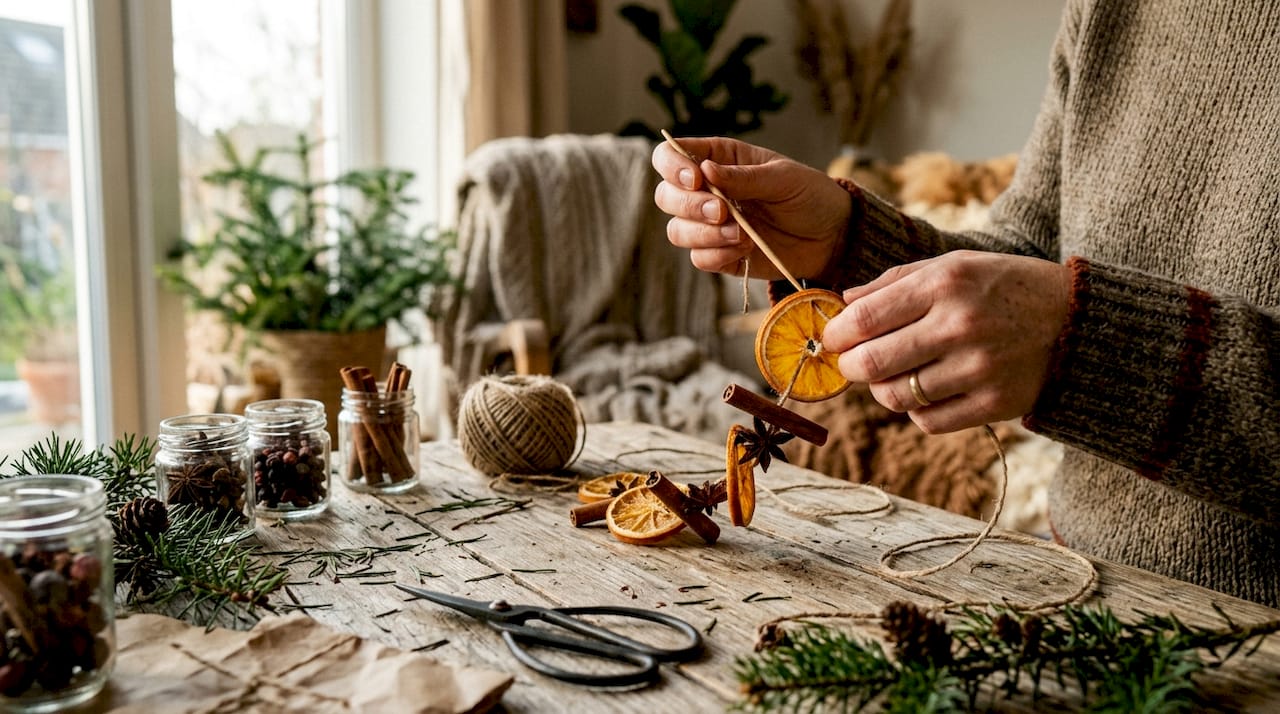
When you do need to add to your collection, choose natural, recycled, or ethically sourced materials. Dried orange slices, cinnamon sticks, and pinecones create a warm, winter-garden aesthetic with no environmental cost at all. Handmade fabric decorations, wooden ornaments, and beeswax candles all biodegrade or last for decades.
Lighting deserves particular attention. LED Christmas lights use up to 80% less energy than traditional incandescent bulbs and last significantly longer. That is not a marginal saving. Across a full festive season, the difference in energy use is substantial, and the bulbs themselves rarely need replacing year on year.
For your Christmas tree, consider these options:
- Potted or rental trees: Rental tree programmes offer a circular approach, with trees returned after Christmas for replanting, eliminating landfill waste entirely.
- Locally grown cut trees: Far lower in transport emissions than imported artificial trees, and fully compostable after use.
- Upcycled alternatives: A branch from a garden tree, decorated with heirloom ornaments, can be just as beautiful and entirely waste-free.
Pro Tip: Avoid decorations containing non-recyclable glitter, plastic film, or metallic foil. These cannot be composted or recycled and contribute directly to microplastic pollution in soil and waterways.
Sustainable gifting ideas: personalised wrapping and children’s gifts
Gifting is where sustainable Christmas ideas have the greatest potential for lasting change. Experience gifts and high-quality, ethically made goods reduce waste and clutter compared to disposable alternatives. The principle is simple: choose gifts that will be used, loved, and kept.
For children especially, this means prioritising durability over novelty. A beautifully crafted wooden toy, a hand-stitched keepsake, or a personalised memento carries far more meaning than a plastic novelty that breaks before the new year. Ethical Christmas shopping in 2025 means asking not just what a child wants, but what they will treasure.
The wrapping itself is equally important. Traditional single-use wrapping paper containing foil, glitter, or plastic film cannot be recycled and goes directly to landfill. Fabric wraps, by contrast, can be reused for five years or more, saving kilogrammes of waste annually. The Furoshiki wrapping tradition, which uses cloth folded elegantly around a gift, has inspired a generation of reusable fabric wraps that are both practical and beautiful.
Nicholasandrose makes reusable fabric gift wrap that can be personalised through embroidery, transforming the wrapping into a keepsake in its own right. For newborns and toddlers, the wrap often outlasts the gift itself, becoming part of the family’s story. A name, a date, or a small motif stitched into the fabric turns a practical choice into an heirloom.
When selecting gifts for children this Christmas, consider:
- Personalised fabric wraps: Reusable, embroidered, and meaningful. The wrap becomes a memento the family keeps long after the gift is opened.
- Durable, natural-material toys: Wooden, cotton, or wool-based toys that withstand years of play and do not shed microplastics.
- Experience gifts: Theatre tickets, craft workshops, or memberships to nature reserves give children memories rather than clutter.
- Ethically sourced home gifts: For eco-conscious families, a thoughtfully chosen piece of ethical home décor can be a genuinely considered gift that lasts for years.
For more inspiration on sustainable gifting for children, the Nicholasandrose blog offers curated ideas rooted in ethical sourcing and lasting quality.
How to plan a sustainable Christmas meal
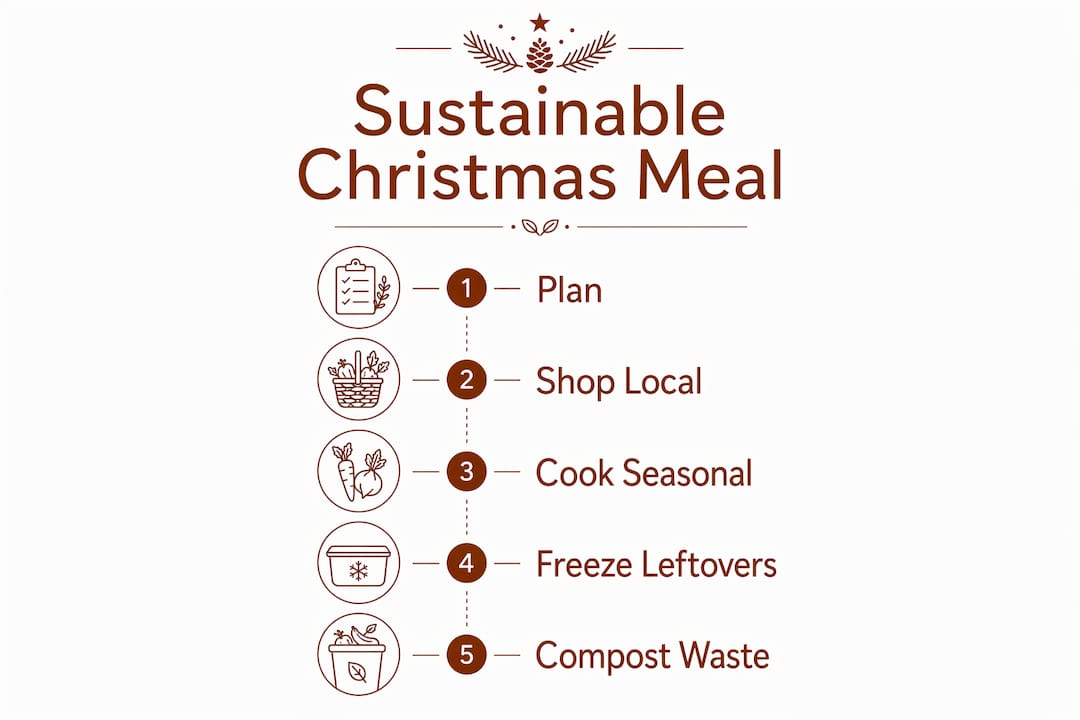
Food is one of the most overlooked areas of green Christmas gifting and celebration. Planning meals around local, seasonal produce can reduce the carbon footprint of holiday food by 30% and significantly lessen food waste. That reduction comes not from sacrifice but from intention.
A practical approach to a low-impact Christmas meal:
- Shop at local markets and farm shops. Shifting even a portion of your grocery shopping to local sources reduces food miles and supports UK producers. Buying from local markets can reduce transport-related carbon emissions by approximately 0.5 tonnes of CO₂ per household annually.
- Plan quantities carefully. Cook what you will eat. A written meal plan shared with the family before Christmas week reduces impulse buying and over-catering.
- Involve children in preparation. Children who help prepare food waste less of it. Peeling vegetables, decorating puddings, and setting the table all build a sense of care and ownership.
- Avoid single-use packaging. Choose loose produce over pre-packaged items. Bring your own bags and containers to markets.
- Use eco-friendly tableware. Linen napkins, ceramic plates, and beeswax candles replace disposable alternatives and elevate the table with a quiet, natural elegance.
Pro Tip: Freeze leftover portions on Christmas Day itself, before they deteriorate. Labelled containers of turkey, stuffing, and roasted vegetables become effortless meals through the week between Christmas and New Year.
Managing post-Christmas waste sustainably
The days after Christmas generate as much waste as the celebration itself. Non-recyclable gift wrap containing foil, plastic film, or glitter is a major contributor to post-holiday landfill. Understanding what can and cannot be recycled is the first step to managing it responsibly.
| Material | Recyclable? | Best action |
|---|---|---|
| Plain kraft paper | Yes | Recycle or compost |
| Foil or glitter wrap | No | Landfill (or avoid entirely) |
| Fabric wrap (e.g., Nicholasandrose) | Reusable | Keep and reuse next year |
| Cardboard boxes | Yes | Flatten and recycle |
| Plastic packaging | Varies | Check local council guidance |
| Natural decorations (dried fruit, pine) | Yes | Compost |
Donations extend the life of gifts and decorations that no longer serve your household. Toys in good condition, unwanted gifts, and surplus decorations all find grateful new homes through local charity shops, community groups, or online gifting platforms. Planning for next year’s celebration while the current one is fresh in your mind is the most effective sustainable Christmas tip of all. Note which wrapping choices worked, which decorations survived, and which gifts brought genuine joy.
Key takeaways
A sustainable Christmas is defined by intentional choices: reusable wrapping, ethical gifts, seasonal food, and decorations that last, all working together to reduce the festive season’s environmental cost.
| Point | Details |
|---|---|
| Waste rises sharply at Christmas | Household waste increases by more than 25% during the festive season; reusable alternatives directly reduce this. |
| LED lighting cuts energy use | Switching to LED Christmas lights reduces energy consumption by up to 80% compared to incandescent bulbs. |
| Fabric wraps replace single-use paper | Reusable fabric gift wrap, such as Nicholasandrose’s embroidered range, lasts five or more years and becomes a keepsake. |
| Local food lowers carbon footprint | Seasonal, locally sourced Christmas meals reduce holiday food carbon footprint by up to 30%. |
| Reuse before you buy | The most sustainable decoration or wrap is the one already in your possession; upcycling always outperforms new purchases. |
Why I believe the wrapping matters as much as the gift
I have watched families tear through rolls of glittering paper in under ten minutes, leaving a floor carpeted in something that cannot be recycled and will not decompose. The gift survives. The wrapping does not. And yet we spend so little thought on it.
What I have noticed, particularly among families with young children, is that the ritual of unwrapping carries as much emotional weight as the gift itself. A beautifully wrapped parcel, tied with ribbon and bearing an embroidered name, creates a moment of anticipation that a supermarket bag simply cannot. The wrap becomes part of the memory.
The practical argument for reusable fabric wrapping is clear enough: no waste, no landfill, no guilt. But the emotional argument is the one that actually changes behaviour. When a wrap is personalised, when it carries a child’s name or a meaningful date, it stops being packaging and becomes something worth keeping. Nicholasandrose understood this before most people were asking the question.
My honest observation is that sustainable Christmas habits rarely take hold through guilt. They take hold through beauty, through ritual, and through the quiet satisfaction of a choice that feels right. Start with the wrapping. It is the smallest change with the longest reach.
— Helen
Nicholasandrose: reusable wrapping for a greener Christmas
For families who want their Christmas to feel as considered as it looks, Nicholasandrose offers a collection of reusable fabric gift wraps that can be personalised through embroidery.
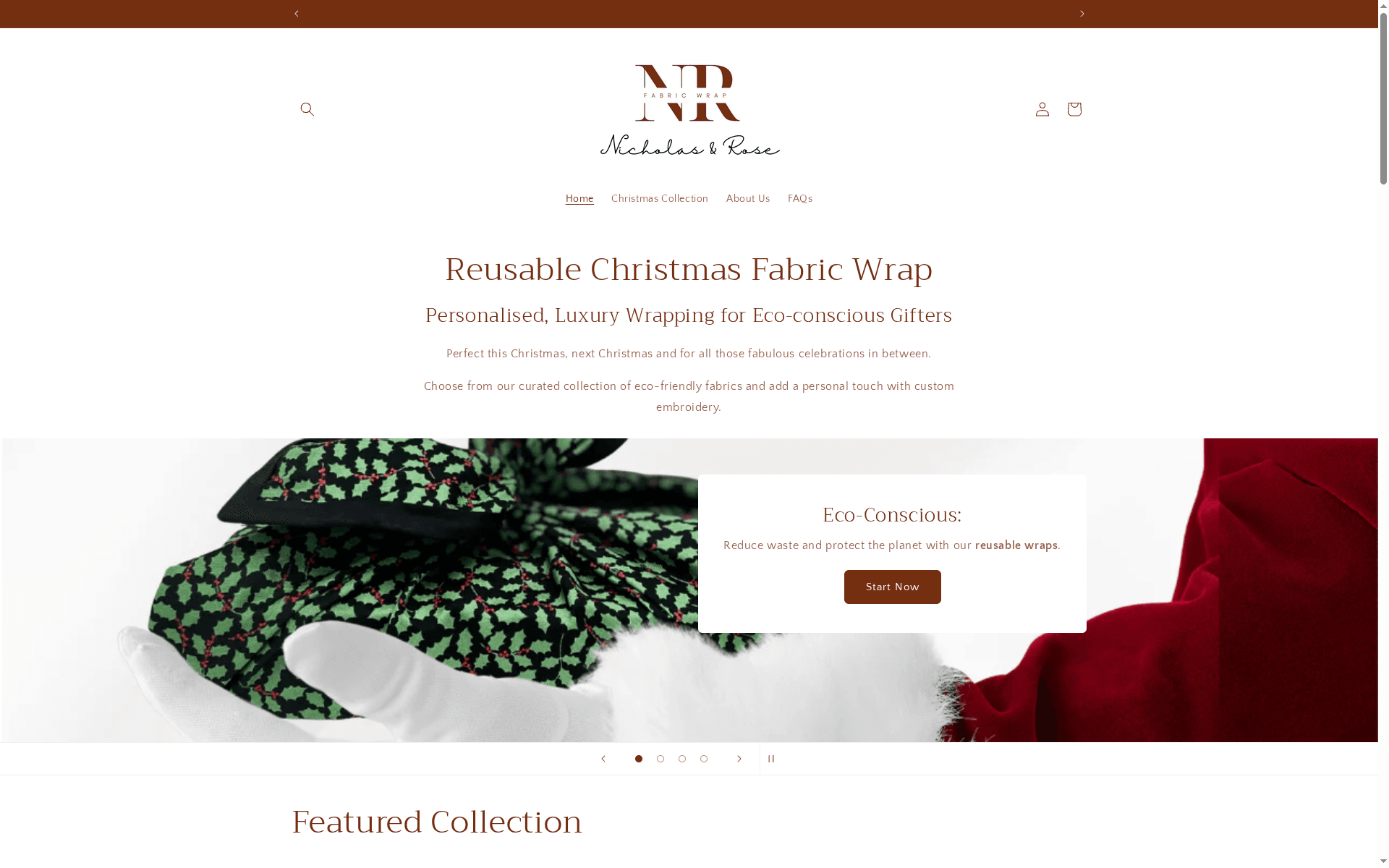
Each wrap is designed to be kept, not discarded. A name, a birth date, or a small motif stitched into the fabric transforms a practical eco-choice into a lasting memento, particularly for newborns and toddlers receiving their first Christmas gifts. The 2026 newborn and toddler range makes it possible to give a gift that is wrapped in something as meaningful as what is inside. Browse the full collection of personalised fabric wraps and find the piece that will become part of your family’s Christmas story for years to come.
FAQ
What is a sustainable Christmas?
A sustainable Christmas is a festive celebration that minimises environmental impact through reusable decorations, ethical gifting, seasonal food, and low-waste wrapping choices.
Is reusable fabric gift wrap better than recycled paper?
Fabric wraps, such as those made by Nicholasandrose, can be reused for five or more years, saving kilogrammes of waste annually and outperforming even recycled paper in long-term sustainability.
How do I reduce food waste at Christmas?
Plan meal quantities carefully before shopping, buy local and seasonal produce, and freeze leftovers on Christmas Day itself to avoid waste during the following week.
Are LED Christmas lights worth switching to?
LED Christmas lights use up to 80% less energy than traditional incandescent bulbs and last significantly longer, making the switch one of the most cost-effective sustainable Christmas tips available.
What makes a Christmas gift sustainable for children?
Sustainable children’s gifts prioritise durability, natural materials, and personalisation. Ethically made toys, experience gifts, and personalised fabric wraps from makers like Nicholasandrose all reduce clutter and create lasting memories.
Recommended
- Why choose Christmas collections 2025: sustainable gifting – Nicholas & Rose Limited
- Sustainable Christmas gift checklist for children 2026 – Nicholas & Rose Limited
- Eco-friendly Christmas wrap: Curated, reusable family solutions – Nicholas & Rose Limited
- Green gifting trends 2025: what eco-conscious gift-givers need to know – Nicholas & Rose Limited