

Eco-friendly Christmas wrap: Curated, reusable family solutions
TL;DR:
- Conventional Christmas wrapping creates significant waste and can harm sensitive baby skin.
- Sustainable options include reusable fabric wraps and FSC-certified recycled paper.
- Proper disposal depends on local council guidelines, with an emphasis on reusing and recycling wherever possible.
Picture Christmas morning in all its glittering chaos: bin bags swollen with torn, glittery paper, curls of plastic ribbon scattered across the sitting room floor, and a pile of foil-laminated sheets that no council in the land will accept at the kerbside. Now imagine something entirely different. A gift for your newborn or toddler, folded within soft, organic fabric, stitched with their name in a thread as delicate as morning frost. The wrapping itself becomes a keepsake, a tender beginning to a family tradition that wastes nothing and means everything.
Table of Contents
- Why rethink Christmas wrapping: Waste, wellness and wonder
- What you’ll need: Sustainable wrapping supplies and sources
- Step-by-step: Wrapping gifts the eco-friendly way
- Getting it right: Recycling, reusing, and council guidance
- Why curated wrap traditions matter more than ever
- Eco wrapping made easy with Nicholas & Rose
- Frequently asked questions
Key Takeaways
| Point | Details |
|---|---|
| Choose safe materials | Select GOTS-certified organic cotton and FSC-recycled papers for peace of mind when wrapping gifts for babies and toddlers. |
| Recycle and reuse expertly | Apply the scrunch test, follow council advice, and favour reusable wraps to cut Christmas waste dramatically. |
| Make gifting memorable | Curating beautiful, eco-friendly Christmas wrap turns baby gifting into a cherished, planet-friendly tradition for your family. |
| Avoid hidden plastics | Skip glitter, foil, and plastic tape, opting instead for paper tape, natural twine, and plain embellishments. |
Why rethink Christmas wrapping: Waste, wellness and wonder
The story of conventional Christmas wrap is, at its heart, a story of fleeting beauty and lasting damage. UK households generate an enormous volume of gift wrap waste each December, with estimates suggesting that enough paper is thrown away to stretch around the globe nine times over the festive period. Much of it never makes it into the recycling bin, and even when it does, contamination from glitter, plastic laminate, and metallic foil means councils frequently reject it entirely.
For parents welcoming a newborn or shopping for a toddler’s first Christmas, the stakes feel even higher. Standard wrapping paper often carries adhesive residues, synthetic dyes, and micro-particles from glitter coatings, all of which can irritate the extraordinarily sensitive skin of a new baby. You reach for that beautiful, shimmering roll at the supermarket, not realising that the very materials you’re wrapping a precious gift in could cause discomfort the moment little fingers touch them.
There is also an emotional dimension that rarely gets discussed. A gift wrapped with genuine care and intention deserves more than thirty seconds of existence before being torn away and discarded. When the wrapping vanishes into the bin, so does a part of the thoughtfulness behind it. For families with babies and toddlers, sustainable Christmas wrapping offers an entirely different story, one where the wrap is as cherished as the gift itself.
Common problems with conventional Christmas wrap:
- Plastic and foil laminates that cannot be recycled by most UK councils
- Glitter particles that contaminate paper recycling streams
- Adhesive residues and synthetic dyes that may irritate newborn skin
- Single-use nature that creates avoidable landfill waste contributing to methane emissions
- Emotional disconnect when thoughtful wrapping is immediately discarded
The scrunch test is a simple, practical guide: scrunch a piece of wrapping paper tightly in your hand. If it stays scrunched, it is likely plain paper and recyclable in many areas. If it springs back, it contains plastic or foil laminate and most councils will not accept it. Bear in mind, however, that even paper which passes this test may be rejected if your local authority does not accept wrapping paper at all due to contamination risk. Always verify with your council before placing anything in the recycling bin.
“Wrapping is not packaging. It is an act of care, a moment of intention given visible form. Choose materials that honour the gift within and the world it arrives into.”
With the need for change clear, let us look at what you will need to create a sustainable, personal wrapping tradition that serves both your family and the planet.
What you’ll need: Sustainable wrapping supplies and sources
Gathering the right materials is where your eco-friendly wrapping journey truly begins, and the good news is that the options available to UK families are richer and more beautiful than you might expect. Choosing materials that are genuinely sustainable means looking beyond the label and understanding what makes them safe, reusable, and kind to the earth.
What qualifies a material as eco-friendly in the context of baby and toddler gifting? Look for FSC-certified papers, which confirm responsible forest management, recycled content, and organic or GOTS-certified textiles. GOTS, the Global Organic Textile Standard, ensures that fabric has been produced without harmful chemicals from fibre to finish, making it the gold standard for anything that will be near a newborn.
A curated overview of sustainable wrapping supplies:
| Material | Eco credentials | Suitable for babies? | Reusable? | Where to find it |
|---|---|---|---|---|
| Brown kraft / recycled paper | Recycled content, FSC-certified | Yes (plain, no dyes) | No | Supermarkets, online |
| Organic cotton fabric wrap | GOTS-certified, chemical-free | Yes, ideal | Yes, many uses | Specialist brands |
| Compostable tissue paper | Plain, unbleached | Yes (plain) | No | Health stores |
| Reusable gift bags | Cotton or linen, washable | Yes | Yes | Department stores |
| Upcycled scarves or tea towels | Zero new resource use | Yes | Yes | Home, charity shops |
| Paper tape or natural twine | Plastic-free | Yes | No | Craft shops |
Eco-friendly gift wrapping options such as brown kraft paper with hand-stamped motifs, reusable fabric bags, and upcycled tea towels bring warmth and personality to gifts without introducing unnecessary waste. Plain, unbleached tissue paper is a gentle addition for delicate items, particularly soft toys or newborn clothing, though opt for compostable versions and keep dyes to a minimum around very young skin.
Several UK retailers now offer credible, recyclable FSC-certified wrapping paper ranges: Tesco, Sainsbury’s, John Lewis, Waitrose, Morrisons, and Asda have all introduced glitter-free options in recent years. For fabric wraps specifically suited to baby gifts, specialist brands such as Little Green Radicals and Babipur offer beautifully considered options. For something truly bespoke, the best reusable gift wrap collections offer personalised, embroidered fabric that transforms wrapping into a lifelong keepsake.
Explore a wider world of fabric gift wrap ideas to find designs that suit the occasion, from quiet florals to classic embroidered motifs that carry a name, a date, and a sense of enduring love.
Pro Tip: Choose GOTS-certified organic cotton wraps for newborn gifts wherever possible. The certification ensures freedom from harmful chemicals through every stage of production, offering genuine peace of mind alongside the beauty of natural, soft fabric.
Now that you have your supplies ready, let us explore how to use each one beautifully.
Step-by-step: Wrapping gifts the eco-friendly way
Eco-friendly wrapping is not simply a matter of swapping one roll of paper for another. It is a considered practice, a small but meaningful ritual that asks you to slow down and make deliberate choices. The approach you take can vary depending on the gift, the occasion, and the level of reusability you wish to achieve.
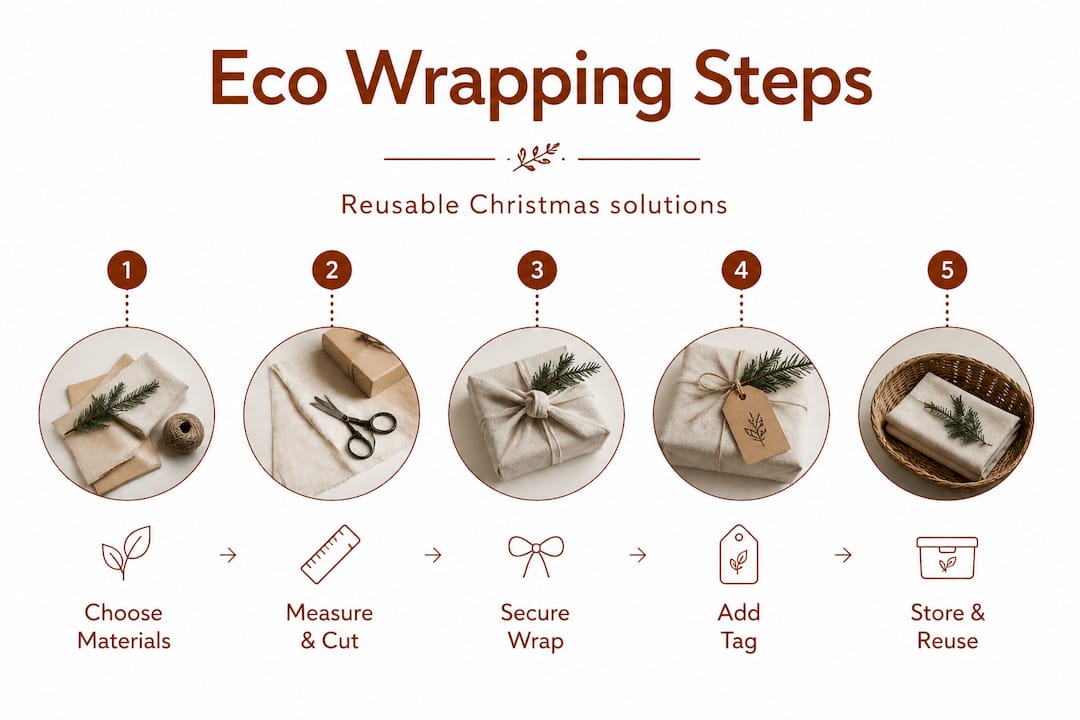
Step 1: Choose your method based on the gift Soft items such as newborn clothing, muslin blankets, or small soft toys lend themselves beautifully to fabric wrap. The gentle drape of organic cotton around a folded garment creates an instantly tactile and inviting parcel. Books and board games suit recycled kraft paper with a sprig of dried botanicals and paper twine. Rattles, small keepsakes, or milestone gifts are ideal candidates for a reusable gift box with a fabric liner.
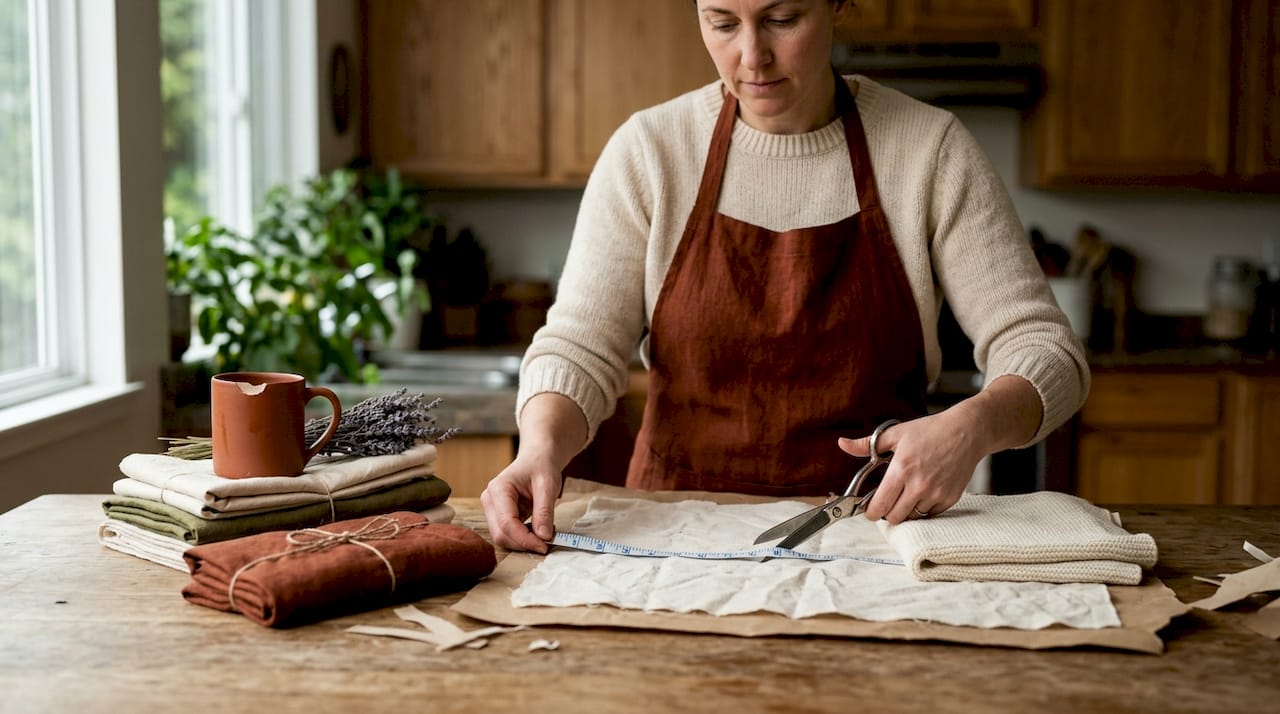
Step 2: Measure and cut mindfully If using paper, cut only what you need. Waste in wrapping often comes from generous over-cutting, so allow just enough to fold cleanly without excess. For fabric wraps, follow the furoshiki method, a Japanese art of folding cloth around objects, which requires no cutting at all and produces an elegantly wrapped parcel that can be unwrapped and refolded many times.
Step 3: Secure without plastic Set aside the sticky tape. Use paper tape, which can be recycled along with kraft paper, or loop natural twine around your parcel in a neat bow. A small sprig of dried lavender, rosemary, or a felt star tucked beneath the twine adds charm without waste. For reusable wrap, simply tie the fabric corners together or secure with a ribbon that can be saved and reused.
Step 4: Add a personal touch A handwritten tag on recycled card carries far more meaning than a printed sticker. For fabric wraps, personalised embroidery with the child’s name and birth date transforms the wrap into something that will be kept, displayed, and treasured long after the gift inside has been outgrown.
Step 5: Store and reuse Encourage recipients to fold fabric wraps neatly and store them. Tissue paper that remains clean can be reused. Boxes and bags, clearly labelled, can be returned to circulation next Christmas with barely a thought. Discovering ways to reuse gift wrap transforms festive wrapping from a single-use act into a living, evolving tradition.
Comparison of wrapping methods:
| Method | Ease | Visual appeal | Reusability | End-of-life disposal |
|---|---|---|---|---|
| Organic fabric wrap | Medium | Exceptional | High, many years | Compost or textile recycling |
| Recycled kraft paper | Easy | Warm, natural | No | Recycling bin |
| Reusable gift box | Easy | Classic, elegant | High | Reuse indefinitely |
| Upcycled scarf or cloth | Medium | Unique | High | Keep and wear |
| Compostable tissue | Easy | Gentle, soft | No | Home compost |
The lifetime value of reusable wrap far exceeds that of paper, reducing landfill contributions and the methane emissions that decomposing waste generates. When you choose GOTS-certified organic cotton, you also protect the most sensitive skin at your family gathering: the newborn nestled in their first festive outfit.
Pro Tip: Save twine, felt embellishments, and dried botanical sprigs in a small box after Christmas. Natural foliage and reusable trimmings add as much character to next year’s parcel as they did to this one, and the ritual of gathering them becomes its own quiet joy.
With gifts beautifully and responsibly wrapped, here is how to ensure your effort truly benefits the environment at the point of disposal.
Getting it right: Recycling, reusing, and council guidance
Understanding what happens to your wrap after the ribbons are undone is the final, often overlooked, chapter of responsible gifting. The scrunch test, as noted earlier, offers a useful starting point: paper that stays crumpled in your hand is likely recyclable, while paper that springs open again contains laminate or foil and belongs in general waste. Yet even this test is not universal. Many UK councils reject all wrapping paper in their kerbside collections due to contamination risk, regardless of composition, so checking your local authority’s guidance before Christmas Day is genuinely worthwhile.
For fabric wraps and reusable bags, the answer is far simpler: wash gently, fold carefully, and store until next time. A well-made organic cotton wrap can serve your family for a decade or more, becoming softer and more beautiful with each use, carrying with it the memory of every gift it has held.
Maximising the life of your eco-friendly wrapping materials:
- Wash fabric wraps at 30°C on a gentle cycle to preserve embroidery and colour
- Press with a cool iron and store in a fabric bag or drawer to prevent creasing
- Label reusable boxes by size to make finding the right one effortless next December
- Flatten and store kraft paper rolls that have remaining length for smaller parcels
- Save clean tissue paper in a stack; it can wrap delicate items many times before it fatigues
If your council does not accept wrapping paper, do not allow the guilt of bin disposal to overshadow the genuine effort you have made elsewhere. Place non-recyclable paper in the general waste rather than risking contamination of the recycling stream, which would render other materials unrecyclable too. The priority is always to reduce what you use in the first place, a principle that reusable fabric wrap fulfils entirely.
Involving children in the tidying ritual can itself become a small act of education. Toddlers delight in folding and stacking, and older children can learn to smooth and roll paper for reuse, or to fold fabric wraps alongside you. Offcuts of plain paper make excellent drawing paper, and saved ribbons can decorate crafts throughout January. Find inspiration for reuse gift wrap ideas that bring the whole family into the gentle rhythm of conscious, creative living.
“The choices we make in small moments, in how we wrap a gift, fold a cloth, save a ribbon, are the choices that shape the world our children will inherit.”
Having mastered eco-wrapping from start to finish, it is time to reflect on what makes this shift for families truly powerful.
Why curated wrap traditions matter more than ever
We believe wrapping is never truly about the paper. It is about the pause before the gift is given, the quiet decision to choose something beautiful and considered, the understanding that how you present a gift says something profound about how you feel about the person receiving it. For newborns and toddlers, that language is felt before it is understood.
There is something deeply wrong, in our view, with the convention of wrapping a gift for a baby in materials that will reach the bin before the child has opened their eyes to take in the room. Fabric over paper is not simply an environmental stance; it is an aesthetic and emotional one. A piece of soft, embroidered organic cotton, bearing a child’s name and perhaps the date of their first Christmas, becomes part of the story of that child’s life. It folds into a memory drawer, resurfaces in photographs, and one day, perhaps, wraps a gift for the next generation.
Curating a wrap tradition also draws the whole family into a shared creative practice. Choosing fabrics, selecting embroidery colours, deciding on botanicals for the bow: these small decisions build a visual language of love that is entirely your own. It fosters creativity, encourages mindfulness, and signals to everyone at the table that festive moments can be both gorgeous and genuinely green.
The shift from disposable to durable is never as difficult as it seems. It begins with one gift, wrapped with intention, offered with care.
Eco wrapping made easy with Nicholas & Rose
Ready for your most joyful, sustainable Christmas gifting?
At Nicholas & Rose, we have created a new 2026 newborn and toddler range of reusable fabric gift wraps, each one crafted from organic cotton and available to personalise through bespoke embroidery. A name, a date, a first initial stitched in thread as fine and lasting as the love behind the gift: this is wrapping that becomes a memento long before the paper would have reached the bin.
Every piece in our luxury baby and milestone wrap collection is designed to be used, washed, and treasured again and again. The fabrics are gentle against the most sensitive newborn skin, GOTS-certified and free from unnecessary chemicals. Whether you are choosing a gift for a new arrival or seeking something truly special for a toddler’s first Christmas, our collection offers an elegant, planet-conscious alternative that feels as beautiful in the hand as it looks beneath the tree.
Frequently asked questions
How do I know if my Christmas wrapping paper is recyclable?
Do the scrunch test: if the paper stays scrunched, it is usually recyclable, but always verify with your local council as guidance varies widely across the UK.
What’s the safest wrap for newborn gifts?
GOTS-certified organic cotton fabric wraps are the safest choice for newborn skin, as they are produced without harmful chemicals and can be reused for many years.
Can I still use sticky tape on sustainable Christmas wrap?
It is best to avoid plastic sticky tape entirely; use paper tape or natural twine instead, both of which are widely available and far kinder to the recycling stream.
Are supermarket Christmas wraps really eco-friendly?
Many UK supermarkets now offer FSC-certified, glitter-free paper wraps from Tesco, Sainsbury’s, John Lewis, Waitrose, Morrisons, and Asda that are widely recyclable, though checking the label and your local council’s guidance remains essential.
What if my council doesn’t accept any used Christmas wrapping paper?
Reuse as much as possible across the season, then dispose of unrecyclable paper in general waste rather than risking contamination of your kerbside recycling collection.
Recommended
- Eco gift wrapping workflow: Sustainable steps for parents – Nicholas & Rose Limited
- Personalise Christmas wraps sustainably: eco gifting 2026 – Nicholas & Rose Limited
- Sustainable Christmas Wrapping: A Luxurious Eco Choice – Nicholas & Rose Limited
- Reusable Holiday Wrap: Eco-Luxury Gifting Explained – Nicholas & Rose Limited