

Upcycled Gift Wrap: Elevating Sustainable Gifting
Choosing the right presentation for a luxury gift can be as meaningful as the present itself, especially when sustainability matters. British shoppers increasingly seek creative alternatives to single-use wrapping, embracing options that offer both beauty and a lighter environmental touch. This guide uncovers the distinct advantages of upcycled gift wrap, highlighting how innovative reuse and personalisation transform premium Christmas gifting for those who value both elegance and planet-friendly style.
Table of Contents
- What Is Upcycled Gift Wrap? Core Principles
- Types Of Upcycled And Reusable Gift Wrap
- Premium Fabrics And Personalisation Methods
- Latest Eco‑Luxury Trends For Christmas 2025
- Comparing Upcycled Wraps With Other Options
- Common Mistakes When Using Upcycled Wrap
Key Takeaways
| Point | Details |
|---|---|
| Upcycled Gift Wrap Importance | Transforms waste materials into sustainable packaging solutions, enhancing aesthetic value. |
| Diverse Material Options | Includes fabric, vintage papers, and natural items, all promoting creativity and sustainability. |
| Personalisation Elevation | Techniques like embroidery and natural dyeing add uniqueness and emotional significance. |
| Comparison to Traditional Wraps | Upcycled options are reusable, reducing long-term environmental impact and costs. |
What Is Upcycled Gift Wrap? Core Principles
Upcycled gift wrap represents an innovative approach to sustainable gifting, transforming discarded materials into meaningful, environmentally conscious packaging solutions. By reimagining waste materials as valuable resources, upcycling goes beyond traditional recycling by creating products with enhanced aesthetic and emotional significance. Upcycling principles within circular design fundamentally challenge our conventional understanding of waste management.
At its core, upcycled gift wrap involves creatively repurposing existing materials that would otherwise be discarded. This might include transforming vintage newspapers, fabric remnants, old maps, or decorative papers into unique wrapping solutions. The process requires imagination and skill, turning what might be considered rubbish into beautiful, personalised packaging that tells a story. Academic research highlights that such practices not only reduce environmental waste but also add sentimental value to the gifting experience.
The fundamental principles of upcycled gift wrap centre on three key concepts: waste reduction, creative transformation, and sustainability education. By selecting materials that can be beautifully reimagined, creators demonstrate that sustainable practices can be both environmentally responsible and aesthetically pleasing. Sustainable consumption practices emphasise that each upcycled wrap represents a deliberate choice to minimise environmental impact while maximising creative potential.
Pro tip: Start collecting interesting papers, fabrics, and textiles from your daily life that could be transformed into unique gift wrap, turning potential waste into beautiful, personalised packaging.
Types Of Upcycled And Reusable Gift Wrap
Upcycled and reusable gift wrap encompasses a diverse range of materials and techniques that transform everyday items into beautiful, sustainable packaging solutions. Sustainable gift wrapping alternatives include an impressive variety of creative options that challenge traditional single-use wrapping practices. These approaches not only reduce waste but also add unique character and personal touch to gift presentation.
Fabric-based options represent one of the most versatile categories of upcycled gift wrap. Traditional Japanese Furoshiki techniques demonstrate how scarves, tea towels, and fabric remnants can be elegantly transformed into sophisticated wrapping. These textile solutions can be reused multiple times, creating a gift experience that extends beyond the initial unwrapping. Japanese eco-friendly wrapping techniques showcase how cultural practices can inspire sustainable design.
Other innovative upcycled gift wrap types include repurposed papers like vintage maps, newspapers, sheet music, and decorative magazine pages. Natural materials such as brown kraft paper, brown bags, and even large leaves can be creatively embellished with twine, dried flowers, or handmade decorations. Each material offers a unique aesthetic, allowing gift-givers to express creativity while minimising environmental impact. The key is selecting materials that are both visually appealing and capable of multiple uses.
Pro tip: Create a dedicated storage box for collecting interesting papers, fabrics, and textiles that can be transformed into unique gift wrap, turning potential waste into beautiful, personalised packaging opportunities.
Premium Fabrics And Personalisation Methods
Premium fabric gift wraps represent the pinnacle of sustainable luxury, transforming traditional packaging into an art form that celebrates both environmental consciousness and aesthetic elegance. Premium fabric personalisation techniques offer sophisticated methods for creating truly unique gift presentations that transcend conventional wrapping approaches. These materials are carefully selected not just for their ecological benefits, but for their ability to communicate thoughtfulness and individual style.
The selection of fabric plays a crucial role in creating exceptional upcycled gift wrap. Organic cotton, silk, linen, and hemp emerge as top-tier choices, each offering distinct textures and visual characteristics. Personalisation methods elevate these fabrics from simple coverings to statement pieces. Techniques such as hand embroidery, block printing, natural dyeing, and carefully applied fabric paint transform plain textiles into bespoke wrapping that becomes an integral part of the gift-giving experience. Eco-conscious fabric personalisation allows gift-givers to express creativity while maintaining sustainability principles.
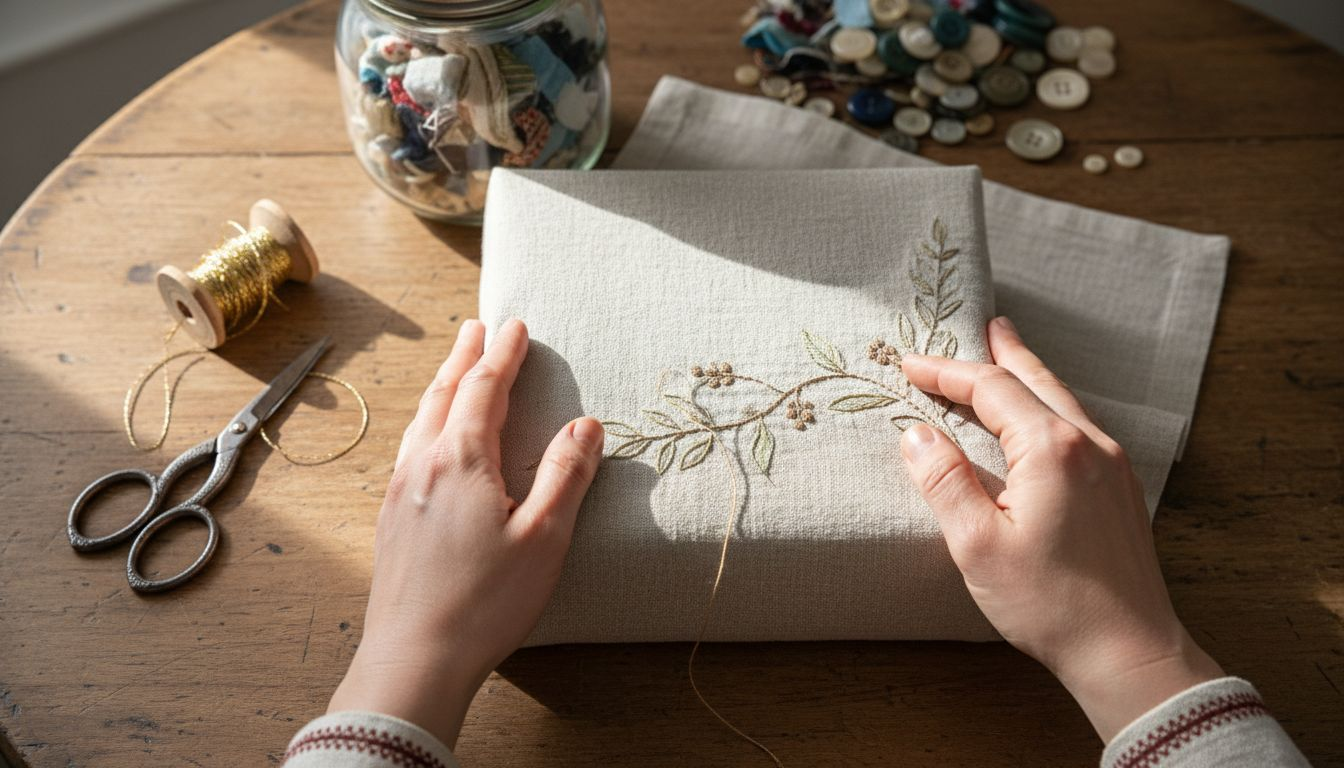
Beyond aesthetic considerations, premium fabric gift wraps represent a profound statement about environmental responsibility. These textiles can be laundered, pressed, and reused multiple times, unlike traditional paper wrapping that is discarded after a single use. Personalisation methods such as monogramming, hand-stitched details, or carefully applied natural embellishments transform these wraps into keepsakes that carry emotional significance far beyond the initial gift-giving moment.
The following table summarises the top fabric personalisation techniques and their benefits:
| Technique | Distinct Feature | Sustainability Benefit |
|---|---|---|
| Hand Embroidery | Adds tactile, bespoke details | Encourages reuse as a keepsake |
| Block Printing | Creates intricate repeat motifs | Uses non-toxic, often natural dyes |
| Natural Dyeing | Provides subtle colour variation | Avoids synthetic chemicals and waste |
| Fabric Painting | Enables precise illustration | Personalised without extra materials |
Pro tip: Invest in a small embroidery kit and practice simple personalisation techniques on fabric scraps to develop your skills in creating bespoke, sustainable gift wrap.
Latest Eco‑Luxury Trends For Christmas 2025
The landscape of sustainable gift wrapping continues to evolve, with 2025 marking a pivotal moment for eco-conscious luxury gifting. Eco-luxury gift wrapping trends showcase an extraordinary fusion of environmental responsibility and sophisticated design, challenging traditional notions of holiday packaging. Discerning gift-givers are increasingly seeking solutions that reflect both their aesthetic sensibilities and commitment to planetary well-being.
Artisanal and handcrafted approaches dominate the sustainable gifting aesthetic this season. Natural dyes derived from botanical sources, intricate hand-printed fabrics, and zero-waste wrapping techniques are transforming gift presentation into an art form. Organic materials like hemp silk, locally sourced textiles, and naturally pigmented wraps are replacing conventional disposable papers. These premium materials not only reduce environmental impact but also communicate thoughtfulness through their unique textures and artisan-crafted qualities.
Zero-waste wrapping innovations are reshaping Christmas gift-giving in 2025. Consumers are gravitating towards reusable fabric wraps with personalised embroidery, vintage textile collections, and packaging that can be repurposed or composted. The emphasis is on creating memorable experiences that extend beyond the initial unwrapping, with each gift wrap telling a story of sustainability, craftsmanship, and conscious consumption.
Pro tip: Curate a collection of versatile fabric wraps in neutral tones that can be elegantly styled for multiple occasions, maximising both sustainability and aesthetic flexibility.
Comparing Upcycled Wraps With Other Options
Navigating the landscape of sustainable gift wrapping requires a nuanced understanding of the environmental impact and practical considerations across different packaging options. Gift wrap recyclability challenges reveal significant disparities between traditional and upcycled wrapping methods, highlighting the importance of informed consumer choices.
Traditional gift wraps typically suffer from critical environmental limitations. Commercial wrapping papers are often laminated, glittered, or metallically treated, rendering them non-recyclable and destined for landfill after a single use. Conversely, upcycled wraps represent a transformative approach, converting existing materials into beautiful, functional packaging with multiple lifecycle potentials. Sustainable wrapping alternatives demonstrate how fabric, vintage papers, and repurposed textiles can replace single-use products while adding unique aesthetic value.
A comprehensive comparison reveals upcycled wraps outperform conventional options across multiple dimensions. They offer superior durability, eliminate waste, provide opportunities for personalisation, and create memorable gift-giving experiences. While traditional wraps might cost less initially, upcycled alternatives deliver long-term environmental and economic benefits through their reusability and reduced carbon footprint. The investment in a quality upcycled wrap transcends mere packaging, becoming part of the gift’s narrative and emotional significance.
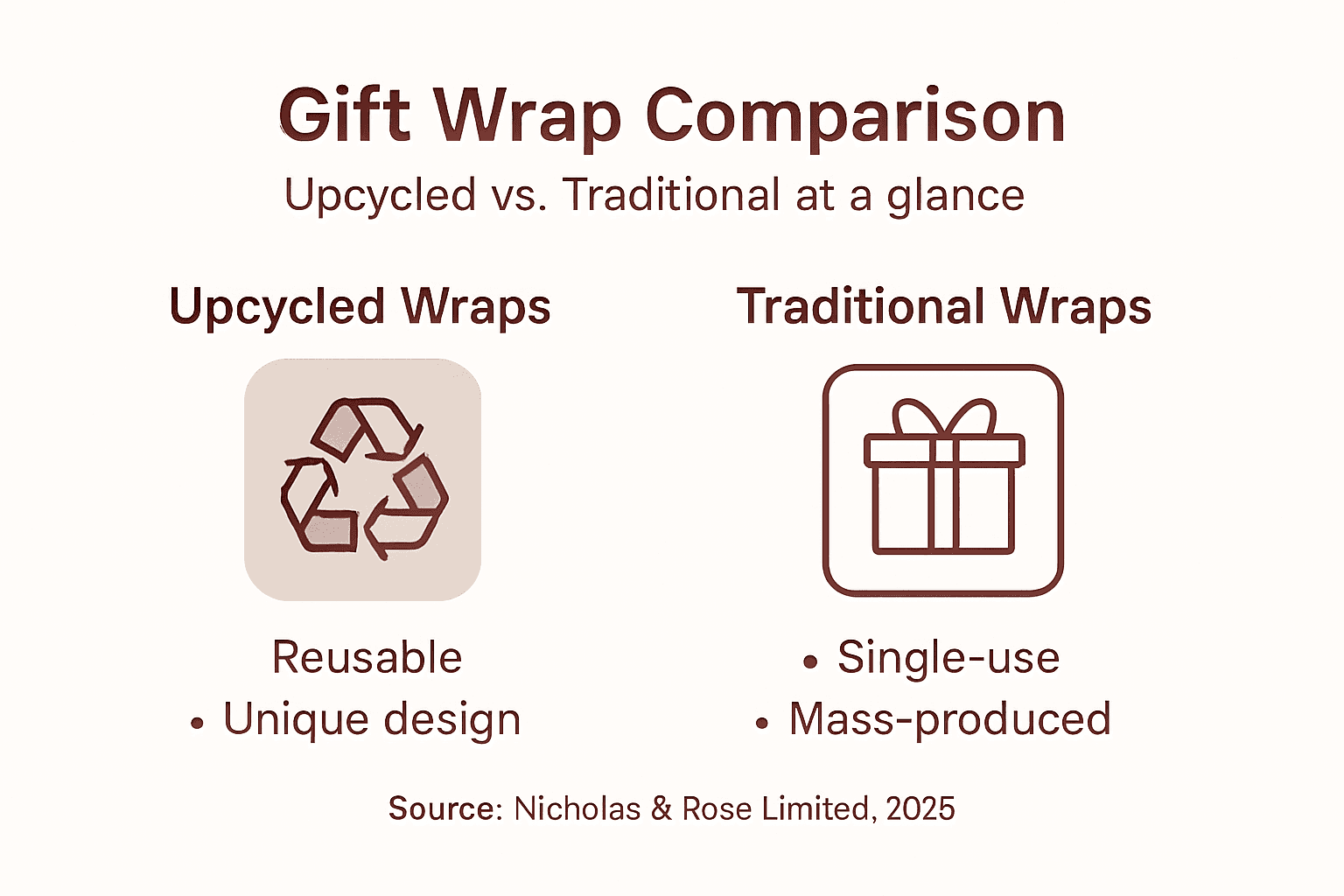
Here is a clear comparison of upcycled wraps and traditional gift wraps across key factors:
| Aspect | Upcycled Wraps | Traditional Gift Wraps |
|---|---|---|
| Environmental Impact | Reduces landfill and repurposes waste | Often single-use, non-recyclable |
| Durability | Designed for multiple reuse cycles | Typically torn and discarded once |
| Personalisation | Easily customised and decorated | Limited customisation options |
| Long-term Value | Cost-effective through reusability | Recurring cost for each occasion |
| Aesthetic Potential | Unique appearance, tells a story | Standard patterns, mass-produced |
Pro tip: Build a versatile collection of upcycled wraps in neutral, complementary tones that can be mixed and matched across different gifting occasions, maximising both sustainability and aesthetic flexibility.
Common Mistakes When Using Upcycled Wrap
Successful upcycled gift wrapping demands more nuance than traditional paper wrapping, with several critical pitfalls that can compromise both aesthetic and sustainable objectives. Sustainable gift wrapping challenges reveal that many well-intentioned individuals inadvertently undermine their eco-friendly efforts through preventable errors.
One prevalent mistake involves neglecting fabric preparation and maintenance. Upcycled wraps require careful cleaning and preservation to maintain their quality and appearance. Failing to wash fabrics appropriately before reuse can introduce stains or odours, diminishing the wrap’s aesthetic appeal. Moreover, selecting wraps that do not match the gift’s dimensions can lead to unnecessary material waste, defeating the sustainability purpose. Proper sizing and strategic folding techniques are essential for creating neat, elegant presentations that honour both the gift and the wrapping medium.
Eco-friendly wrapping best practices emphasise the importance of educating gift recipients about the wrap’s reusable nature. Many individuals mistakenly discard these carefully crafted wraps, treating them like conventional paper. Developing a culture of conscious reuse requires communicating the wrap’s value, demonstrating folding techniques, and inspiring others to continue the sustainable gifting cycle. Overcomplicating wraps with excessive embellishments can also complicate future reuse, so minimalist, versatile designs often prove most effective.
Pro tip: Create a small instruction card with each upcycled gift wrap, explaining its sustainable story and suggesting creative ways for the recipient to reuse or repurpose the fabric.
Elevate Your Gift-Giving with Stylish, Sustainable Wraps
Transform your festive rituals by embracing the challenge of sustainable gifting outlined in the article “Upcycled Gift Wrap: Elevating Sustainable Gifting.” Many face the struggle of finding gift wrap that combines eco-consciousness with beauty and personalisation. The key pain points include reducing waste, choosing reusable fabrics, and adding unique touches like embroidery to create memorable experiences.
Discover how Reusable Fabric Wrap - Luxurious Christmas Collection offers a perfect solution that aligns with upcycled principles mentioned. These exquisite wraps are made from premium fabrics designed for multiple uses and personalised through elegant embroidery to make every gift a keepsake.
Explore our curated selection now at Nicholas & Rose Limited where sustainability meets sophistication. Take action today to reduce landfill waste and enchant your loved ones with beautifully crafted, eco-friendly gift wraps. For additional inspiration, browse our Favourite Four collection and redefine your gift presentation with consciously styled solutions.
Frequently Asked Questions
What is upcycled gift wrap?
Upcycled gift wrap is an innovative sustainable gifting approach that transforms discarded materials, such as vintage newspapers, fabric remnants, and old maps, into unique packaging solutions, reducing environmental waste while adding sentimental value.
How can I create my own upcycled gift wrap at home?
You can create your own upcycled gift wrap by collecting interesting materials like fabric scraps, old maps, or decorative papers. Then, use techniques such as folding, tying with twine, or embellishing with natural decorations to personalise your wraps.
What are the benefits of using fabric for upcycled gift wrap?
Using fabric for upcycled gift wrap offers multiple benefits, including durability for repeated use, aesthetic appeal through personalised designs, and reduced environmental impact, as fabrics can be laundered and reused multiple times compared to single-use paper.
How can I educate gift recipients about reusing upcycled wraps?
Consider including a small instruction card with your upcycled gift wrap, explaining its sustainable story and suggesting creative ways for the recipient to reuse it, ensuring that the value of upcycled materials is communicated effectively.
Recommended
- Sustainable Gift Wrap Choices: Eco-Luxury for 2025 – Nicholas & Rose Limited
- Gift Wrap Etiquette: Sustainable Luxury for 2025 – Nicholas & Rose Limited
- Eco Conscious Gift Wrapping Explained: Sustainable Luxury – Nicholas & Rose Limited
- Eco Aware Wrapping: Defining Sustainable Luxury – Nicholas & Rose Limited