

What is a natural fibre wrap for eco-friendly gifting
TL;DR:
- Natural fibre wraps made from materials like cotton, linen, hemp, and wool are reusable, eco-friendly gift options that can also serve as keepsakes. They have a significantly lower carbon footprint than plastic wraps and can be repurposed as swaddles or heirlooms, reducing waste and environmental impact. These wraps are hypoallergenic, durable, and suitable for sensitive skin, making them ideal for newborn gifts and milestone celebrations.
A natural fibre wrap is a gift wrapping fabric made from renewable, biodegradable materials such as cotton, linen, hemp, or wool, offering a graceful and considered alternative to conventional wrapping paper or plastic films. Unlike single-use paper that meets the bin before the birthday cake is cut, a natural fabric wrap is designed to be reused, repurposed, and treasured. For occasions as tender as a baby shower or a newborn’s first birthday, the choice of wrapping carries its own quiet meaning. Nicholasandrose has built its 2026 Baby and Beyond collection around precisely this idea: that the wrap itself can become a keepsake, personalised through embroidery and woven into the memory of the moment.
What is a natural fibre wrap made from?
Natural fibres fall into two broad families: plant-based and animal-based. Plant-based options include organic cotton, linen spun from flax, hemp, and bamboo. Each brings its own character to a wrap. Cotton, particularly organic cotton, is the most widely used because of its softness against delicate skin, its breathability, and its forgiving drape when folded around an awkwardly shaped gift. Linen carries a crisp hand-feel and a luminous, slightly textured surface that lends a refined, artisanal quality to presentation. Hemp is exceptionally durable and becomes softer with every wash, much like a well-loved linen shirt.
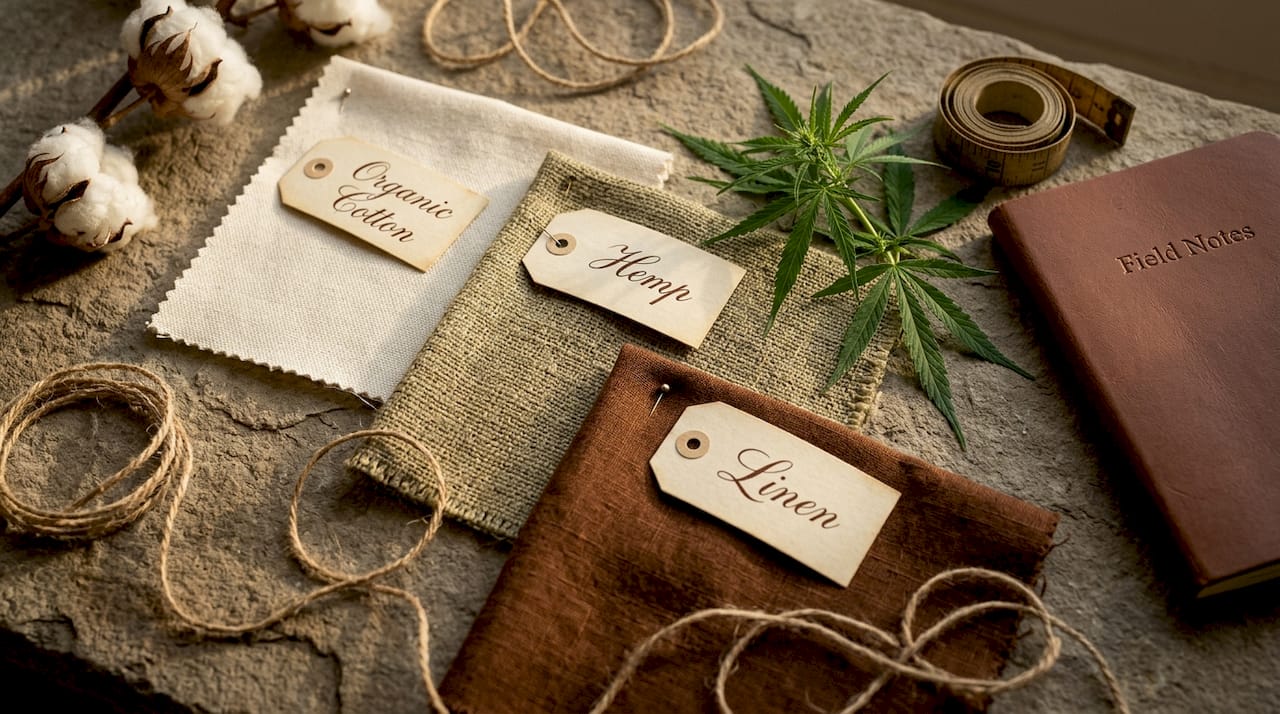
Animal-based fibres such as wool and silk bring warmth and a certain quiet luxury. Wool regulates temperature naturally, making it a thoughtful choice for wrapping newborn gifts in cooler months. Silk, with its cool, weightless drape, suits milestone gifts where presentation is as considered as the gift itself.
Intelligent blending of bamboo, cotton, and wool produces fabrics with improved moisture-wicking, durability, and thermal regulation. This matters because a wrap used to swaddle a newborn or line a pram shade needs to perform across seasons, not simply look beautiful on a shelf.
| Fibre | Key quality | Best use |
|---|---|---|
| Organic cotton | Soft, breathable, hypoallergenic | Swaddling, gift wrapping, feeding covers |
| Linen | Crisp, durable, luminous | Presentation wrapping, milestone gifts |
| Hemp | Strong, softens with washing | Reusable gift wrap, outer layers |
| Bamboo | Moisture-wicking, silky | Baby care, sensitive skin applications |
| Wool | Thermal regulation, cushioning | Winter gifting, newborn wraps |
Pro Tip: When choosing a natural fibre wrap for a newborn gift, look for GOTS-certified organic cotton or bamboo. Certification confirms the fabric is free from harmful dyes and chemical finishes that could irritate a baby’s skin.
Why are natural fibre wraps better for the environment?
The environmental case for natural fibre wraps is not merely a matter of aesthetics or sentiment. Cellulose wraps carry a product carbon footprint of -0.27 kg CO2 per kilogram, compared to conventional plastic film at 2.2 kg CO2 per kilogram. That figure is not a rounding error. It reflects the fact that plant-based fibres sequester carbon during growth, while plastic production releases it. For a gift-giver who cares about the world their newborn will inherit, this distinction is worth understanding.
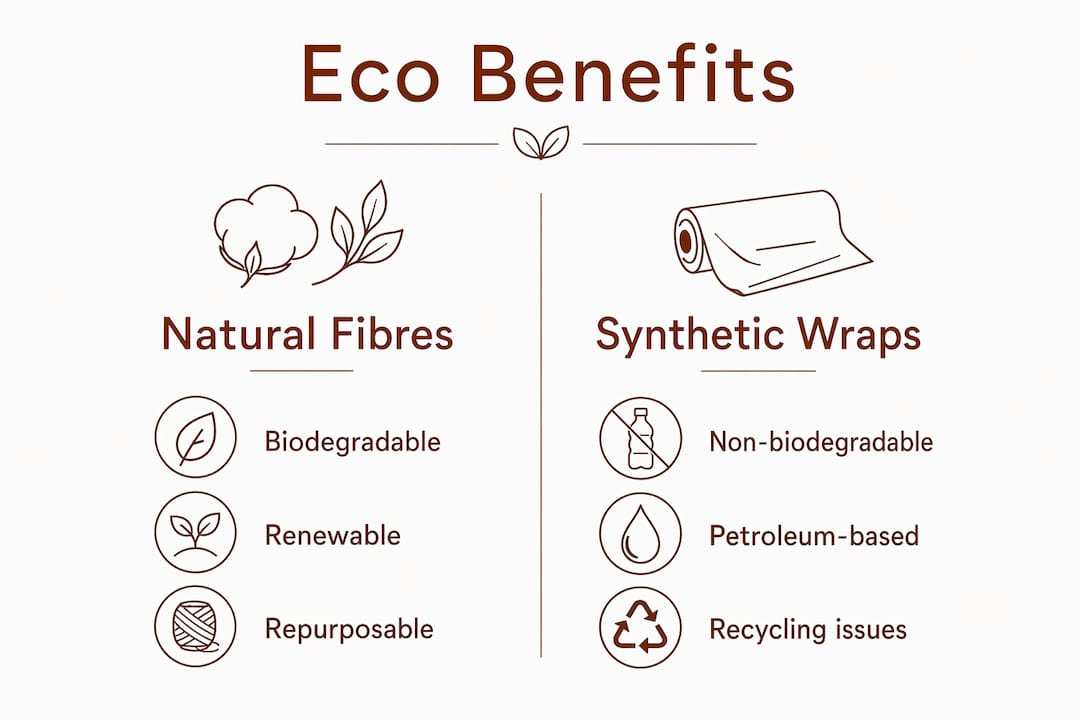
Beyond carbon, the disposal story is equally compelling. Fibre-based wraps are designed for kerbside recycling, while many soft plastics require specialist return-to-store collection that most consumers never complete. The result is that plastic wrapping paper and film bags overwhelmingly end up in landfill, where they persist for centuries. A fabric wrap, by contrast, can be composted at the end of its life, or more likely, used again for the next occasion.
The benefits for sensitive skin are equally well-documented. Organic muslin wraps breathe better and reduce skin irritation compared to synthetic fabrics, a quality that matters profoundly when the recipient is a newborn. Natural fibres are hypoallergenic, moisture-managing, and free from the microplastics that synthetic fabrics shed with every wash.
Key reasons eco-conscious gift-givers are choosing natural material wrapping options:
- Biodegradable and compostable at end of life
- No microplastic shedding during washing or use
- Lower carbon footprint across the full product lifecycle
- Kerbside recyclable in fibre-based formats, reducing consumer confusion
- Hypoallergenic and gentle against newborn skin
- Reusable across multiple occasions, reducing total waste
Pro Tip: Fabric wraps used for baby gifts can be repurposed as swaddles or muslin squares after the gift is opened. Mentioning this to the recipient doubles the gift’s value without adding a single extra item.
How to use natural fibre wraps for gifts and baby care
The uses of natural fibre wraps extend well beyond the moment a gift changes hands. For baby showers and newborn celebrations, a fabric wrap becomes part of the gift itself. Folded with care around a soft toy, a set of sleepsuits, or a personalised keepsake, it arrives as a considered, layered present rather than a disposable afterthought. Textiles used in eco wrapping cut waste by 90% compared to conventional paper, which is a meaningful reduction for families who receive dozens of gifts at a baby shower.
High-quality organic muslin wraps resist pilling and thinning and are often passed between siblings or gifted to new babies in the family. This durability transforms a wrap from a packaging material into a small heirloom. Nicholasandrose’s embroidered personalisation, with a name, a birth date, or a tender phrase stitched into the fabric, deepens that quality further. The wrap becomes a record of the occasion, folded into a drawer and rediscovered years later.
Here are the most practical ways to use a natural fibre wrap across gifting and baby care:
- Gift wrapping for baby showers. Fold the fabric around the gift using the Japanese Furoshiki technique, tying the ends in a bow. No tape, no scissors, no waste.
- Swaddling a newborn. A large organic cotton or muslin wrap provides breathable, temperature-regulating comfort for sleep and settling.
- Pram shade or sun cover. A lightweight linen or bamboo wrap draped over a pram hood filters light without trapping heat.
- Feeding cover. A soft, generous wrap offers privacy and comfort during breastfeeding in public spaces.
- Change mat liner. Placed beneath a baby during nappy changes, a natural fibre wrap is washable, gentle, and far softer than disposable paper liners.
- Birthday gift wrapping. For toddler birthdays, a personalised fabric wrap doubles as a keepsake cloth bag or play cloth after the gift is revealed.
- Milestone gift presentation. For first steps, first words, or first Christmas, a bespoke embroidered wrap frames the gift as a moment worth remembering.
Caring for a natural fibre wrap is straightforward. Wash at 30 to 40 degrees using a gentle, fragrance-free detergent. Avoid tumble drying linen and hemp, which are best air-dried to preserve their structure. Cotton and muslin, true to their nature, soften rather than degrade with each wash, growing more beautiful with use.
How do natural fibre wraps compare to synthetic alternatives?
The comparison between natural and synthetic wrapping materials resolves clearly in favour of natural fibres across almost every meaningful measure. Natural fibre wraps produce natural friction and tensile strength that allows secure wrapping without adhesives, unlike synthetic films that rely on chemical glues. This means no sticky residue on gifts, no chemical contact with baby products, and no additional material to separate before recycling.
For delicate gifts, the cushioning properties of natural fibres are notable. Coconut fibre paper provides up to six times higher impact protection than plastic bubble wrap. Natural fibres adapt to the shape of a gift, cradling it rather than compressing it, which matters when the gift inside is fragile or softly structured.
| Feature | Natural fibre wrap | Synthetic or plastic wrap |
|---|---|---|
| Biodegradability | Fully biodegradable and compostable | Persists in landfill for centuries |
| Carbon footprint | Negative to low (plant-based) | High (2.2 kg CO2/kg for plastic film) |
| Skin safety | Hypoallergenic, no microplastics | May shed microfibres, potential irritants |
| Reusability | Designed for repeated use | Single use in most formats |
| Disposal ease | Kerbside recyclable or compostable | Often requires specialist collection |
| Cushioning | Adapts to gift shape naturally | Rigid or chemically adhesive |
The confusion around recycling soft plastics is a genuine barrier for consumers who want to do the right thing. Fabric wraps remove that confusion entirely. You wash them, fold them, and use them again. For families navigating the early months of parenthood, simplicity in sustainability is not a luxury. It is a relief.
Key takeaways
Natural fibre wraps are the most considered choice for eco-conscious gift-givers, combining biodegradability, skin safety, and reusability in a single, beautiful material.
| Point | Details |
|---|---|
| Definition and materials | Natural fibre wraps use plant or animal fibres such as cotton, linen, hemp, bamboo, and wool. |
| Environmental advantage | Cellulose and plant-based wraps carry a significantly lower carbon footprint than plastic film alternatives. |
| Baby care suitability | Organic muslin and cotton wraps are hypoallergenic, breathable, and soften with each wash. |
| Practical versatility | A single wrap serves as gift packaging, swaddle, pram shade, feeding cover, and keepsake. |
| Personalisation value | Embroidered natural fibre wraps become heirloom mementos, connecting the gift to the occasion permanently. |
Why I believe natural fibre wraps are the most honest gift you can give
There is a particular kind of generosity in choosing a wrap that outlasts the occasion. I have watched parents receive beautifully wrapped baby shower gifts, tear through the paper in thirty seconds, and then spend the next hour quietly folding a soft fabric wrap that arrived with a name stitched into the corner. The paper goes in the bin. The fabric wrap goes in the memory box.
What strikes me most about natural fibres is that their value compounds over time. A cotton or linen wrap does not degrade with use. It softens. It becomes more itself. That quality mirrors something true about the best gifts: they deepen rather than diminish. Choosing organic cotton or linen over plastic film is not a sacrifice of presentation. It is an upgrade in meaning.
For those buying gifts for newborns or young children, I would encourage you to look beyond the surface of sustainability claims and consider the fabric wraps designed for newborn gifts that carry genuine certifications and honest materials. The difference between a GOTS-certified organic cotton wrap and a generic “eco” alternative is not subtle. You feel it in the hand, and the baby feels it against their skin.
— Helen
Discover Nicholasandrose’s Baby and Beyond collection
For gifts that deserve more than a moment, Nicholasandrose offers a collection of luxury sustainable gift wraps crafted specifically for newborn and toddler milestones. Each wrap is made from natural fibres and can be personalised through bespoke embroidery, transforming the presentation into a keepsake the family will return to long after the gift itself has been outgrown.
The Baby and Beyond range is designed for baby showers, first birthdays, and milestone celebrations where the wrapping is as considered as the gift within. Ordering is straightforward, and personalisation options allow you to add a name, a date, or a phrase that makes the moment permanent. For eco-conscious parents and thoughtful gift-givers, this is reusable gifting at its most refined.
FAQ
What is a natural fibre wrap?
A natural fibre wrap is a reusable fabric made from plant or animal-based materials such as organic cotton, linen, hemp, bamboo, or wool, used as an eco-friendly alternative to conventional wrapping paper or plastic film for gift presentation and baby care.
Are natural fibre wraps suitable for newborns?
Organic muslin and cotton wraps are hypoallergenic, breathable, and free from synthetic chemicals, making them safe and comfortable for newborn skin. They soften with each wash rather than degrading, which adds to their suitability for infant use.
How do you wrap a gift with a natural fabric wrap?
The Furoshiki method, a Japanese folding technique, works beautifully with natural fabric wraps. Place the gift in the centre of the fabric, bring opposite corners together, and tie them in a secure knot or bow. No tape or scissors are required.
Are natural fibre wraps better for the environment than wrapping paper?
Natural fibre wraps are significantly more sustainable. Cellulose and plant-based wraps carry a far lower carbon footprint than plastic film, and fabric wraps are reusable across multiple occasions, reducing total waste with every use.
Can a natural fibre wrap be personalised?
Nicholasandrose offers embroidered personalisation on natural fibre gift wraps, allowing a name, birth date, or meaningful phrase to be stitched into the fabric. This transforms the wrap from packaging into a lasting memento of the occasion.
Recommended
- Step by Step Eco Gift Wrapping for Personalised Gifts – Nicholas & Rose Limited
- 7 Luxury Wrapping Materials List for Eco-Friendly Gifting – Nicholas & Rose Limited
- 7 Best Eco Gift Wrap Materials for Luxury Gifting – Nicholas & Rose Limited
- 7 Personalised Gift Wrap Ideas for Eco-Conscious Gifting – Nicholas & Rose Limited