

What is hand embroidered wrapping: a gift worth keeping
TL;DR:
- Hand embroidered wrapping uses reusable textiles decorated with hand-stitched motifs, serving as meaningful keepsakes. These wraps, often in fabric envelopes, outlast paper wrapping by being kept and repurposed, reducing waste. They are crafted from natural materials and reflect cultural traditions, aligning with eco-conscious and luxury gifting trends.
Hand embroidered wrapping is the art of presenting gifts using textile fabric decorated with hand-stitched embroidery, creating a reusable, personalised alternative to conventional paper that becomes a keepsake in its own right. Where paper wrapping is torn away and discarded, often before the occasion has even properly begun, an embroidered fabric wrap lingers. It is folded carefully, admired, and kept. For baby showers, first birthdays, and milestone moments, this distinction matters profoundly. The wrapping itself carries the weight of the gesture, stitched with intention and offered with love, making it as meaningful as the gift it holds.
What is hand embroidered wrapping and how does it differ from traditional gift wrapping?
Hand embroidered wrapping, known more formally in textile craft circles as embroidered fabric gift presentation, uses cloth rather than paper as its foundation. The most popular form is the fabric envelope with embroidery: a structured pouch with a decorated flap, closed with a pearl button or a length of linen ribbon, and stitched with motifs chosen to reflect the occasion or the recipient.
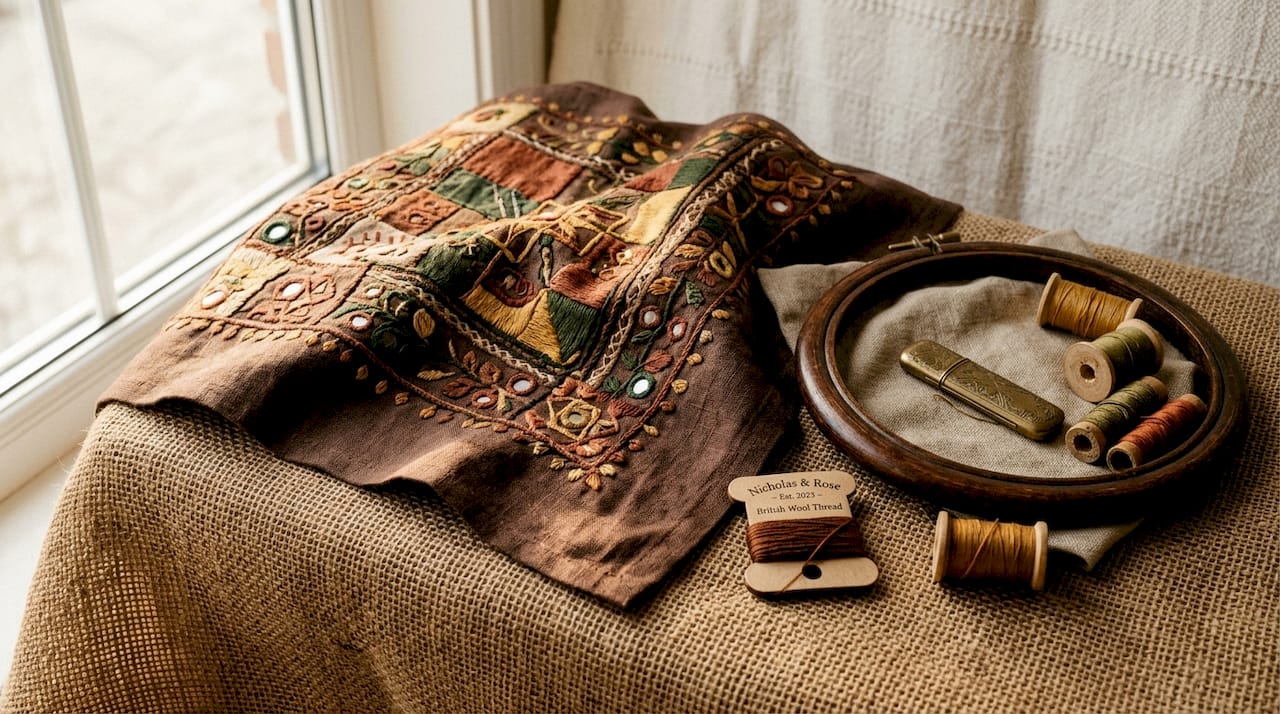
The contrast with paper wrapping is not merely aesthetic. Paper is designed to be destroyed. An embroidered fabric wrap is designed to endure. Recipients retain and reuse these wraps as pouches, bookmarks, or lasting keepsakes, reducing waste in a way that no amount of recycled paper can replicate. For a newborn gift, this longevity carries particular tenderness. The wrap that held the first soft toy or the tiny knitted cardigan can later store keepsake photographs or a lock of hair.
Materials matter here. Natural fabrics such as linen, cotton, and fine muslin are favoured for their crisp hand-feel, gentle drape, and breathability. Threads are typically cotton or silk, chosen for their luminous finish and durability through washing. Motifs range from delicate florals and sleeping animals to personalised initials and birth dates, each one stitched by hand with a patience that machine printing simply cannot replicate.
Pricing reflects the craft involved. DIY embroidered wraps cost primarily in materials and time, with fabric and threads available from haberdashery suppliers at modest expense. Ready-made options span a wide range: a handcrafted Khun fabric envelope can be found priced as low as ₹80, illustrating the global market diversity, while bespoke personalised wraps from premium makers command considerably more, reflecting the hours of skilled needlework involved.
- Fabric types: Linen, cotton, fine muslin, and silk dupion for a more luxurious finish
- Common motifs: Sleeping foxes, baby animals, botanical sprigs, initials, birth dates
- Closure styles: Pearl buttons, linen ribbon ties, fabric loops
- Reuse possibilities: Jewellery pouch, keepsake holder, small clutch, nursery storage
Pro Tip: When choosing or making an embroidered wrap for a newborn gift, select a motif that will age gracefully. A sleeping fox or a sprig of lavender will feel as beautiful when the child is five as it does on the day of the baby shower.
What traditional styles of embroidered wrapping exist, and what do they mean?
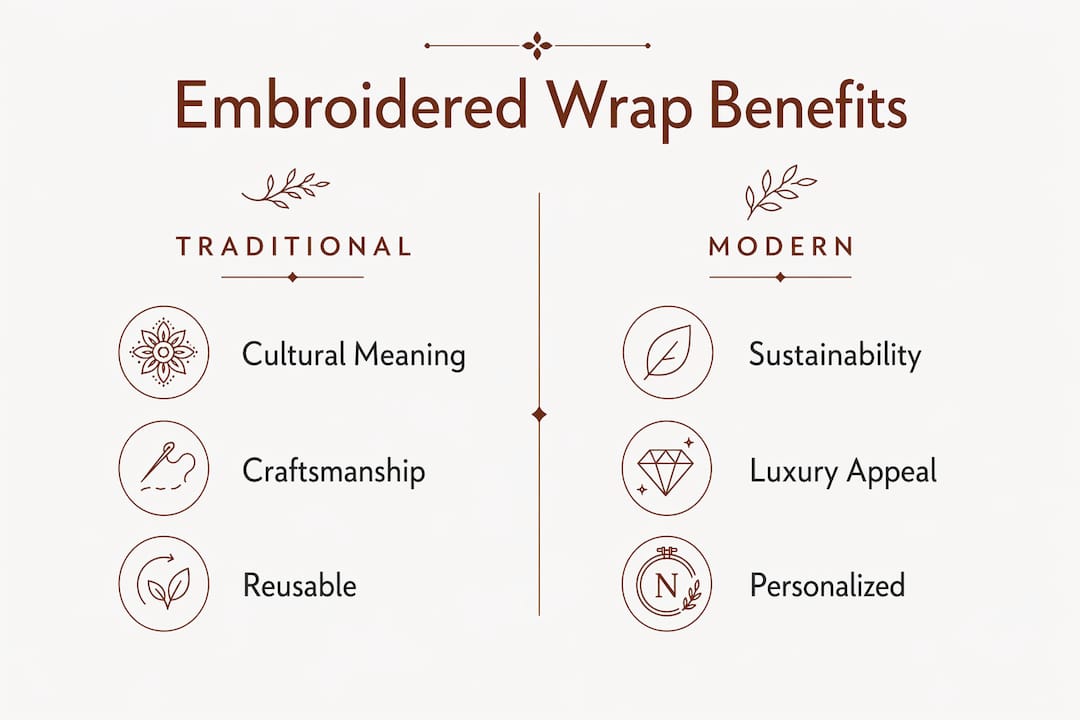
The tradition of wrapping gifts in embroidered cloth is centuries old, and no culture has refined it more beautifully than Korea. Korean bojagi is a wrapping cloth with deep cultural roots, used at weddings, celebrations, and ceremonies to carry gifts and bestow good fortune upon the recipient. The embroidered version, known as subo, is stitched with symbolic motifs believed to carry blessings, transforming the act of wrapping into a ritual of pure sophistication.
Bojagi employs specific hand embroidery techniques that contribute both decorative beauty and cultural meaning. Satin stitch fills motifs with smooth, lustrous colour. Stem stitch traces outlines with elegant precision. Couching lays heavier threads along a surface, secured with fine stitches, to create texture and dimension. These are not merely decorative choices. Each stitch carries cultural storytelling woven into the fabric itself.
A particularly resourceful tradition within bojagi is jogakbo, the patchwork technique of piecing together small fabric remnants to create a larger cloth. This practice speaks to a philosophy of beauty found in resourcefulness, a sensibility that resonates deeply with contemporary eco-conscious gifting values. The resulting cloth, with its mosaic of colour and texture, is as visually arresting as any luxury paper wrap.
| Tradition | Origin | Key stitches | Occasion |
|---|---|---|---|
| Subo (embroidered bojagi) | Korea | Satin stitch, stem stitch, couching | Weddings, celebrations, ceremonies |
| Jogakbo (patchwork bojagi) | Korea | Pieced fabric, minimal embroidery | Everyday gifting, resourceful wrapping |
| Embroidered fabric envelope | Global craft tradition | Satin stitch, cross stitch, chain stitch | Baby showers, birthdays, milestones |
| Furoshiki (embellished) | Japan | Surface embroidery, sashiko | Seasonal gifting, formal occasions |
These traditions inform modern embroidered wrapping aesthetics in ways that feel both timeless and fresh. The symbolism of stitching good fortune into a gift wrap, of choosing a motif that carries meaning beyond decoration, is a philosophy that Nicholasandrose has woven into its own approach to reusable fabric gift presentation.
How to create or choose embroidered wrapping for a baby shower or birthday
Designing or selecting an embroidered wrap for a child’s occasion begins with the motif. For baby showers, sleeping animals carry a gentle, dreaming quality. Tiny stars, crescent moons, and botanical sprigs suggest wonder and growth. For birthdays, a child’s name or birth year stitched in a flowing script transforms the wrap into a dated memento, a small archive of a particular moment in time.
For those who wish to create their own, the process follows a clear sequence. Stitch the flap area flat and fully stabilised before assembling the envelope. This prevents puckering and distortion, keeping the embroidery crisp and the fold lines precise. Hooping only the flap section, rather than the assembled envelope, is the technique that separates polished results from amateur ones.
- Choose your fabric. Select a natural material such as linen or cotton in a weight suitable for a structured envelope. Prewash to prevent shrinkage.
- Transfer your design. Use a water-soluble pen or light box to trace your chosen motif onto the flap area before stitching.
- Stabilise and hoop. Attach a tear-away stabiliser to the reverse of the flap section and hoop it flat for embroidery.
- Stitch your motif. Work from the centre outward, using satin stitch for filled areas and stem stitch for outlines. Take your time. The hours spent here are what make the wrap worth keeping.
- Assemble the envelope. Once embroidery is complete and stabiliser removed, fold and sew the envelope body, leaving the embroidered flap free.
- Attach your closure. Sew a pearl button or ribbon tie to the flap. These closures tolerate repeated opening and closing without damaging the embroidered area, which matters for a wrap intended to be reused for years.
- Press gently. Use a pressing cloth to protect the embroidery and give the finished wrap its refined, gift-ready appearance.
When buying rather than making, look for natural fabric construction, hand-stitched rather than machine-embroidered motifs, and closures that will withstand gentle daily use. Personalisation options, particularly the ability to add a name or date, transform a beautiful object into a bespoke one.
Pro Tip: For a baby shower gift, consider the wrap’s second life when choosing its size. A wrap large enough to hold a small book or a set of wooden blocks will be reused far longer than one sized only for a card.
What are the benefits and environmental impact of embroidered wrapping?
Reusable fabric gift wrap addresses one of the quieter absurdities of modern gifting: the wrapping paper that ends in the bin before the party is over. For newborn gifts in particular, this waste carries a particular poignancy. The paper is torn, discarded, and forgotten, while the embroidered fabric wrap remains, folded in a drawer, repurposed as a pouch, or displayed on a nursery shelf.
The environmental case is clear. Textile reuse over multiple occasions reduces the cumulative waste of single-use paper. A single embroidered wrap used ten times over its life displaces ten sheets of paper, ten lengths of tape, and ten ribbons destined for landfill. The personalisation element extends this further: a wrap bearing a child’s name and birth date is not casually discarded. It is kept.
- Waste reduction: Replaces single-use paper across multiple occasions and years
- Emotional longevity: Personalised motifs create attachment that prevents disposal
- Artisanal value: Hand embroidery supports slow craft traditions over mass production
- Practical reuse: Functions as a pouch, storage bag, or keepsake holder long after the gift is opened
- Natural materials: Linen and cotton decompose far more gracefully than foil-coated paper
“Embroidered wrapping transforms the act of gift presentation into a storytelling and blessing ritual, linking form, function, and emotional meaning through traditional stitch motifs.”
The slow living movement has found a natural ally in embroidered gift presentation. Choosing a wrap that took hours to create, or that was made by skilled hands in a small studio, is a deliberate act of care. It communicates something that a roll of paper from a supermarket shelf simply cannot.
How does embroidered wrapping fit into modern luxury gifting trends?
Embroidered wraps align with a growing consumer appetite for gifts that are simultaneously premium, personal, and responsible. The eco-conscious parent receiving a newborn gift wrapped in hand-stitched linen experiences something qualitatively different from unwrapping cellophane and foil. The wrap itself signals that the giver considered not only what was inside, but how it arrived.
The market for reusable, personalised gift packaging in the newborn and baby sector is expanding. Bespoke makers, small studios, and brands like Nicholasandrose are meeting demand from gift-givers who want the presentation to carry as much meaning as the gift itself. The 2026 newborn and toddler range from Nicholasandrose reflects this precisely, offering embroidered fabric wraps designed to become heirloom pieces rather than packaging waste.
| Feature | Conventional paper wrap | Hand embroidered fabric wrap |
|---|---|---|
| Reusability | Single use | Multiple uses across years |
| Personalisation | Printed text only | Hand-stitched names, dates, motifs |
| Environmental impact | Landfill after one use | Reduces waste with each reuse |
| Perceived gift value | Standard | Premium, bespoke, considered |
| Keepsake potential | None | High, especially for milestone gifts |
Embroidery elevates perceived gift value in a way that is difficult to quantify but immediately felt. A wrap bearing a sleeping fox stitched in soft grey thread, closed with a pearl button, and tied with a length of natural linen ribbon, communicates craftsmanship, care, and intention. For a first birthday or a baby shower, these qualities are precisely what a thoughtful gift-giver wishes to convey.
You can explore creative embroidered wrapping ideas to find inspiration for motifs and fabric combinations that suit your occasion perfectly.
Key takeaways
Hand embroidered wrapping is the most meaningful and sustainable gift presentation choice for milestone occasions, combining reusability, personalisation, and artisanal craft into a single object that outlasts the gift it carries.
| Point | Details |
|---|---|
| Definition and form | Embroidered fabric wraps use hand-stitched textile, typically as a fabric envelope with a decorated flap and button or ribbon closure. |
| Cultural heritage | Korean bojagi and subo traditions demonstrate centuries of embroidered wrapping as a ritual of blessing and celebration. |
| DIY technique | Stitch the flap flat and stabilised before assembling the envelope to keep embroidery crisp and fold lines precise. |
| Environmental value | A single reusable wrap displaces multiple single-use paper wraps, with personalisation ensuring it is kept rather than discarded. |
| Modern gifting appeal | Embroidered wraps meet growing demand for premium, personalised, and eco-responsible packaging, particularly for newborn and milestone gifts. |
Why embroidered wrapping changed how I think about gifting
I gave my first embroidered fabric wrap as a baby shower gift several years ago, half expecting it to be admired briefly before the recipient moved on to the contents. What happened instead surprised me. The wrap was unfolded slowly, held up to the light, and passed around the room. The sleeping fox stitched on the flap prompted a conversation about the craft, about the time it had taken, about what it meant to give something made with that kind of attention.
The gift inside was lovely. The wrap is still in use as a small pouch in the nursery.
What I have observed since, giving and receiving embroidered wraps for birthdays and newborn celebrations, is that the presentation changes the entire emotional register of the moment. There is no tearing, no crumpling, no bin bag filled with paper before the cake is cut. There is instead a careful unfolding, a recognition that the wrapping itself was chosen with thought.
The practical challenge is sourcing wraps that are genuinely hand-stitched rather than machine-embroidered. The difference is visible and tactile. Hand embroidery carries slight irregularities that are, paradoxically, what make it beautiful. If you are buying rather than making, look closely at the stitching. A perfectly uniform motif is almost certainly a machine. The slight variation in a hand-stitched piece is its signature.
For newborn gifts especially, I would not return to paper. The wrap becomes part of the story of that child’s earliest days, folded into a drawer alongside the first photographs and the hospital bracelet. That is not something a sheet of printed paper can offer.
— Helen
Discover Nicholasandrose’s embroidered gift wraps for milestone moments
For those who wish to give a gift that is remembered long after the occasion, Nicholasandrose offers a collection of luxury, reusable fabric wraps designed specifically for newborns, baby showers, and milestone celebrations.
Each wrap in the Nicholasandrose range is crafted from natural fabrics and finished with bespoke embroidery, personalised with names, dates, or motifs chosen to reflect the recipient. The 2026 newborn and toddler collection brings this philosophy to its most tender expression: wrapping that becomes a keepsake from the very first moment it is held. Explore the full Baby & Beyond collection to find a wrap as considered as the gift it will carry. You can also read more about personalising gift wrap with embroidered fabric to make your choice truly bespoke.
FAQ
What is hand embroidered wrapping?
Hand embroidered wrapping is gift presentation using textile fabric decorated with hand-stitched embroidery, typically in the form of a fabric envelope with a motif on the flap and a button or ribbon closure. The wrap is reusable and designed to become a keepsake rather than packaging waste.
What fabrics work best for embroidered gift wrapping?
Linen and cotton are the most widely used fabrics for embroidered gift wraps, valued for their crisp hand-feel, durability, and compatibility with a range of embroidery threads. Natural fabrics also align with the eco-conscious values that make reusable wrapping a meaningful choice.
How do I stitch an embroidered wrap without puckering the fabric?
Stitch the flap section flat and stabilised before assembling the envelope, using a tear-away stabiliser and hoop to keep the fabric taut. This technique, recommended for fabric envelope construction, prevents distortion and keeps the finished embroidery crisp through repeated use.
Can embroidered wrapping be used for baby shower gifts?
Embroidered fabric wraps are particularly well suited to baby shower gifts, as motifs such as sleeping animals or personalised names and birth dates create an heirloom quality that paper wrapping cannot offer. The wrap itself becomes a keepsake the family retains long after the occasion.
Is hand embroidered wrapping more sustainable than paper wrapping?
A reusable embroidered fabric wrap displaces multiple single-use paper wraps across its lifetime, reducing waste significantly. Personalisation increases the likelihood that the wrap is kept and reused rather than discarded, extending its environmental benefit with every occasion it marks.
Recommended
- Embroidered Christmas wrap: luxury, eco-friendly gifting – Nicholas & Rose Limited
- Hand-finished wraps: sustainable luxury for memorable gifts – Nicholas & Rose Limited
- How embroidery elevates sustainable gift wrap for eco-parents – Nicholas & Rose Limited
- Creative embroidered wrapping ideas for eco-friendly gifting – Nicholas & Rose Limited