

Boutique gift wrap styling for eco-conscious parents
Finding unique, sustainable gift wrap for newborn and toddler celebrations can feel impossible. Most wrapping paper ends up in the bin before the baby arrives, and generic options lack personality. You want something special that honours both the child and the planet. This guide teaches you step-by-step techniques to style boutique, eco-friendly gift wraps that serve as personalised mementoes whilst reducing waste. You’ll discover practical methods using reusable fabrics, natural embellishments, and creative personalisation that transform ordinary gifts into cherished keepsakes.
Table of Contents
- What You Need: Tools And Eco-Friendly Materials For Boutique Gift Wrap Styling
- Step-By-Step Boutique Gift Wrap Styling Techniques For Newborn And Toddler Gifts
- Common Pitfalls And How To Avoid Them In Sustainable Gift Wrap Styling
- Expected Results And Caring For Boutique Sustainable Gift Wraps
- Discover Boutique Eco-Conscious Gift Wrapping Solutions At Nicholas & Rose
- Frequently Asked Questions
Key takeaways
| Point | Details |
|---|---|
| Growing demand | Sustainable gift wrapping popularity is rising rapidly across the UK due to environmental awareness |
| Furoshiki method | This Japanese fabric wrapping technique offers versatile, reusable alternatives to disposable paper |
| Material selection | Organic fabrics, recycled papers, and natural ribbons create boutique presentations without environmental guilt |
| Personalisation power | Custom embroidery, hand-stamped tags, and natural dyes add unique charm to every wrapped gift |
| Preparation matters | Gathering quality eco-friendly materials beforehand simplifies the styling process and ensures professional results |
What you need: tools and eco-friendly materials for boutique gift wrap styling
Successful boutique gift wrap styling begins with assembling the right sustainable materials and tools. Without proper preparation, even the most creative ideas fall flat or compromise your environmental values.
Start with essential tools that support eco-friendly wrapping. Quality fabric shears cut cleanly through organic cotton and muslin without fraying edges. Sharp scissors handle recycled kraft paper and natural twine precisely. A bone folder creates crisp folds in paper whilst preserving material integrity. Wooden clothes pegs temporarily secure fabric whilst you arrange layers.
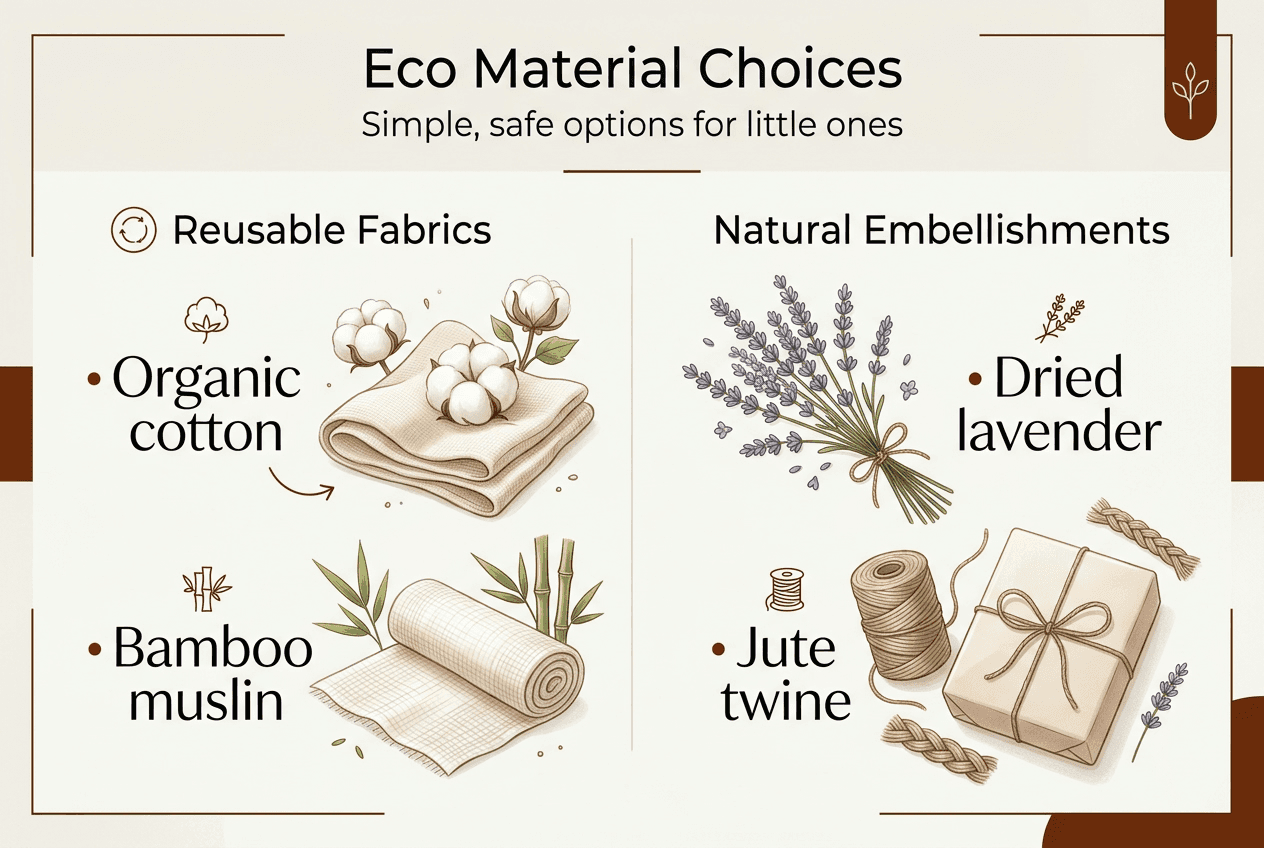
Sustainable materials form the foundation of boutique eco-wrapping. Organic cotton fabrics provide soft, reusable wraps perfect for newborn gifts. Muslin cloths offer breathable, gentle options for delicate items. Recycled kraft paper delivers rustic charm with minimal environmental impact. Hemp twine and jute ribbon add natural texture without plastic components. Biodegradable cotton ribbons in soft pastels suit toddler celebrations beautifully.
| Material | Pros | Cons | Environmental impact | | — | — | | Organic cotton fabric | Reusable, soft, machine washable | Higher initial cost | Low waste, renewable resource | | Recycled kraft paper | Affordable, versatile, compostable | Single use only | Reduces landfill, uses post-consumer waste | | Muslin cloth | Breathable, gentle, multi-purpose | Can wrinkle easily | Biodegradable, minimal processing | | Hemp twine | Strong, natural texture, durable | Limited colour options | Carbon negative crop, fully compostable | | Biodegradable ribbon | Decorative, breaks down naturally | Less variety than synthetic | Soil enriching, no microplastics |
For newborn and toddler gifts specifically, choose materials with extra softness and safety. Organic muslin squares double as burp cloths after unwrapping. Unbleached cotton bags become toy storage. Natural wool felt adds cushioned protection without synthetic fibres. These materials create practical mementoes parents genuinely appreciate.
Pro Tip: Source materials from local suppliers with recognised certifications like GOTS or FSC to verify eco-credentials whilst reducing your carbon footprint through shorter supply chains.
Colour coordination elevates boutique presentation. Soft neutrals like cream, sage, and blush suit newborn celebrations. Brighter tones in mustard, terracotta, and sky blue work beautifully for toddler birthdays. Natural dyes create unique shades whilst maintaining environmental integrity.
Consider texture variety when selecting materials. Combine smooth organic cotton with rougher jute for visual interest. Layer delicate muslin over sturdy kraft paper for dimensional depth. Mix matte and subtle sheen finishes through different fabric weaves. These contrasts create sophisticated presentations that photograph beautifully.
Quality matters more than quantity. Three premium organic cotton wraps serve you better than ten cheap synthetic alternatives. Invest in materials you’ll reuse repeatedly across multiple celebrations. Build your collection gradually, focusing on versatile neutrals that suit various occasions. Best eco gift wrap materials luxury gifting offers detailed guidance on selecting premium sustainable options.
Step-by-step boutique gift wrap styling techniques for newborn and toddler gifts
Mastering sustainable wrapping techniques transforms ordinary gifts into boutique presentations. The Furoshiki method offers particular versatility for eco-conscious parents seeking reusable solutions.
- Select fabric size appropriate to your gift dimensions. Square cloths work best, with edges measuring 1.5 times your gift’s longest dimension.
- Place the gift diagonally on the fabric centre, positioning it like a diamond shape.
- Fold the bottom corner up and over the gift, tucking it slightly underneath.
- Bring the left and right corners to meet at the gift’s centre, creating neat pleats if excess fabric bunches.
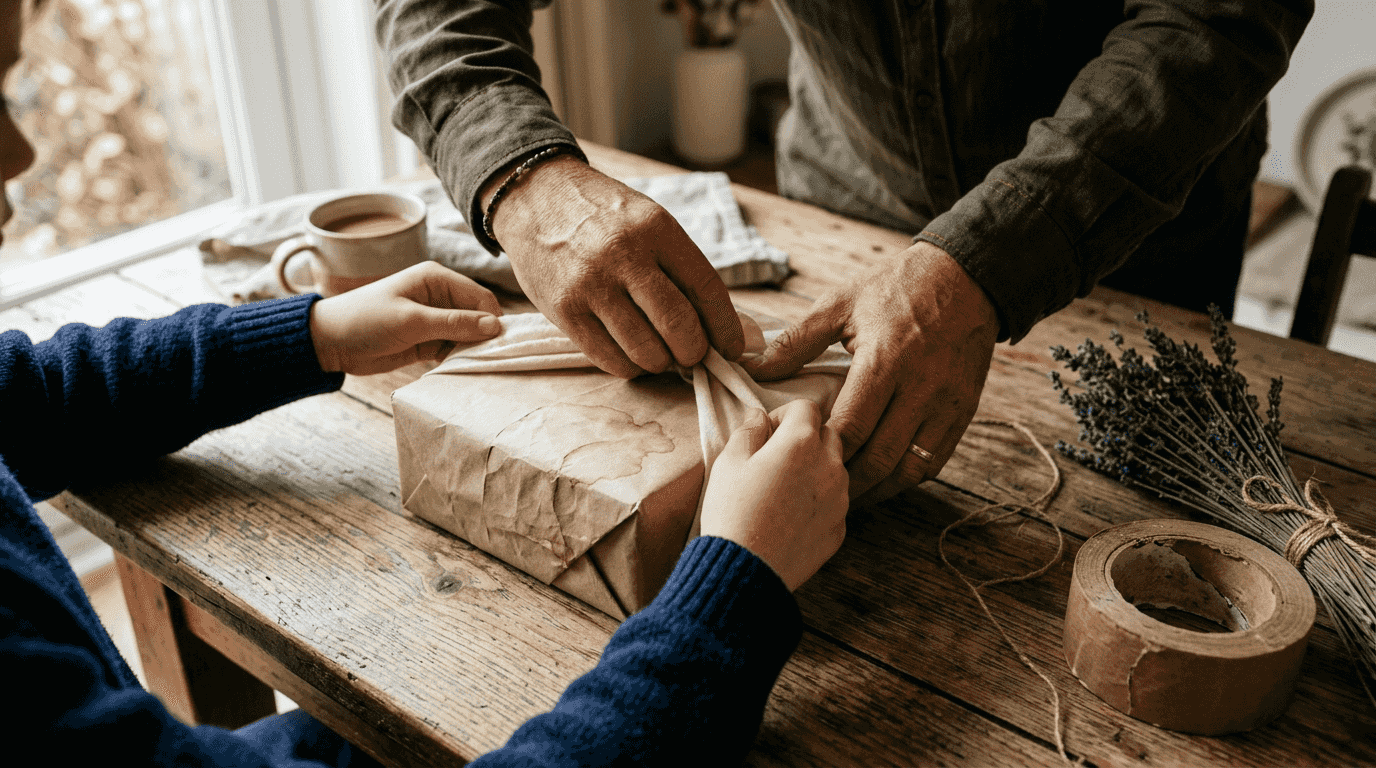
- Gather the top corner and remaining fabric, twisting gently to form a decorative knot or bow.
- Adjust folds until the presentation looks balanced and intentional, with no awkward bulges.
The beauty of Furoshiki lies in its simplicity and versatility, creating stunning presentations whilst eliminating waste entirely.
Embellishments add personalised charm without compromising sustainability. Dried lavender sprigs tucked into fabric knots release gentle fragrance. Pressed flowers from your garden create seasonal touches. Wooden gift tags engraved with the child’s name become keepsakes. Cinnamon sticks tied with hemp twine add rustic elegance to winter celebrations.
Layering techniques create luxury depth. Start with recycled kraft paper as your base layer, wrapping the gift traditionally. Wrap organic muslin over the paper, securing with natural twine. This combination provides structure whilst showcasing the beautiful fabric. The paper prevents fabric transparency whilst adding subtle texture.
Pro Tip: Personalise wraps using fabric stamps and non-toxic ink to print the child’s name or birthdate directly onto organic cotton, creating a permanent memento the family will treasure.
Match your wrapping style to celebration type and child’s age. Newborn gifts suit soft, minimal presentations in cream and white with delicate ribbon. First birthday celebrations welcome brighter colours and playful patterns. Christening gifts deserve elegant simplicity with meaningful embellishments like small wooden crosses or angel charms.
Consider the unwrapping experience. Toddlers enjoy interactive elements like fabric bows they can pull or layered wraps they unwrap gradually. Newborn gifts prioritise aesthetics for parents, as babies won’t participate. Design accordingly, balancing visual appeal with practical considerations.
Seasonal elements enhance relevance. Spring celebrations incorporate fresh herb sprigs like rosemary. Summer wraps feature dried wildflower bunches. Autumn gifts showcase preserved leaves in amber tones. Winter presentations include pine sprigs and natural berries. These touches connect gifts to their moment whilst remaining fully compostable.
Sustainable holiday wrapping guide christmas gifts provides seasonal inspiration adaptable to various celebrations throughout the year.
Common pitfalls and how to avoid them in sustainable gift wrap styling
Even well-intentioned eco-conscious parents make mistakes when styling sustainable gift wraps. Recognising these errors helps you maintain both environmental integrity and boutique aesthetics.
Using supposedly eco-friendly materials that aren’t genuinely sustainable represents the most common pitfall. Greenwashing affects gift wrap markets significantly, with products labelled natural or eco containing hidden plastics or non-biodegradable components. Always verify certifications and read full ingredient lists. Avoid anything with plastic film, synthetic dyes, or chemical treatments unless explicitly certified safe and biodegradable.
Over-embellishing defeats sustainability purposes. Excessive decorations increase material waste and complicate recycling or composting. Stick to 2-3 embellishment elements maximum. Choose quality over quantity, selecting meaningful touches rather than cluttered excess. Remember that simplicity often creates more sophisticated presentations than busy, over-decorated wraps.
Incorrect fabric sizing creates frustrating wrapping experiences. Too-small cloths won’t cover gifts properly, forcing you to use additional materials. Oversized fabrics create excessive bulk and awkward folds. Measure your gift dimensions before selecting fabric, ensuring adequate coverage with minimal waste.
Mindful styling means every element serves a purpose, creating joy whilst genuinely reducing environmental impact rather than simply appearing eco-friendly.
Balancing aesthetics with environmental responsibility requires conscious choices. Beautiful presentations shouldn’t compromise sustainability. If a decorative element isn’t reusable, compostable, or genuinely recyclable, skip it. Plenty of stunning natural alternatives exist that don’t force this compromise.
Failing to test techniques before wrapping final gifts leads to disappointing results. Practice Furoshiki folds on spare fabric with similar-sized items. Experiment with embellishment placements on sample wraps. This preparation ensures confidence and polished results when wrapping the actual gift.
Ignoring recipient preferences wastes your sustainable efforts. Some families genuinely won’t reuse fabric wraps, making paper alternatives more practical despite being single-use. Consider the recipient’s lifestyle and values when selecting materials. Gift wrap etiquette 2025 explores these considerations in depth.
Mixing non-compatible materials complicates disposal. Combining compostable paper with plastic ribbon means neither can be properly processed. Keep material categories consistent within each wrap. If using fabric, stick to natural fibres and biodegradable embellishments throughout. If choosing paper, ensure all components are recyclable or compostable together.
Expected results and caring for boutique sustainable gift wraps
Following boutique eco-friendly gift wrap styling methods delivers rewarding outcomes that benefit both recipients and the environment. Understanding what to expect helps you appreciate the full value of sustainable wrapping practices.
Aesthetically, properly styled sustainable wraps rival luxury shop presentations. Organic fabrics drape beautifully, creating soft, elegant folds impossible with stiff paper. Natural embellishments add authentic charm that synthetic decorations can’t replicate. Personalised touches like embroidered names or hand-stamped tags demonstrate thoughtfulness that recipients genuinely appreciate. These presentations photograph beautifully, creating lasting memories beyond the gift itself.
Reusable fabric wraps reduce waste dramatically whilst offering practical secondary uses that extend their value far beyond initial presentation.
Caring for reusable materials properly extends their lifespan across multiple celebrations. Different materials require specific maintenance approaches.
| Material | Washing instructions | Storage method | Expected lifespan |
|---|---|---|---|
| Organic cotton fabric | Machine wash cold, line dry | Fold flat in breathable cotton bag | 5+ years with proper care |
| Muslin cloth | Gentle cycle, air dry to prevent shrinkage | Roll loosely to avoid creases | 3-4 years regular use |
| Hemp twine | Spot clean only, air dry completely | Coil loosely in dry container | Indefinite if kept dry |
| Wooden tags | Wipe with damp cloth, never soak | Store flat in cool, dry place | 10+ years |
| Dried flowers | No washing, handle gently | Keep in sealed container away from light | 1-2 years before fading |
Environmental benefits accumulate quickly with reusable wrapping. A single organic cotton wrap used just five times prevents five sheets of wrapping paper from reaching landfills. Over a lifetime of gift-giving, this impact multiplies significantly. You’re modelling sustainable values for children from their earliest celebrations.
Creatively reusing wraps after gifting maximises their value:
- Transform fabric wraps into decorative wall hangings in nurseries
- Use muslin cloths as burp cloths, cleaning rags, or produce bags
- Repurpose wooden tags as plant markers in gardens
- Incorporate dried flower embellishments into pressed flower crafts
- Convert larger fabrics into reusable shopping bags or book covers
- Frame particularly beautiful wraps as artwork commemorating special occasions
Encourage recipients to return wraps at future gatherings, creating a circular gift-wrapping system within your family or friend group. This practice builds community whilst reinforcing sustainable values. Some families develop traditions around specific wraps, using the same beautiful fabric for all birthday celebrations.
Eco conscious gift wrapping explained offers additional perspectives on maximising the environmental and social benefits of sustainable wrapping practices.
Document your wrapping journey through photos. Capture both the wrapped gifts and their secondary uses. This visual record demonstrates the lasting value of sustainable choices whilst providing inspiration for future presentations.
Discover boutique eco-conscious gift wrapping solutions at Nicholas & Rose
Transforming your gift-wrapping approach requires both knowledge and quality materials. Nicholas & Rose specialises in personalised, eco-friendly boutique gift wrap solutions designed specifically for eco-conscious parents celebrating newborns and toddlers.
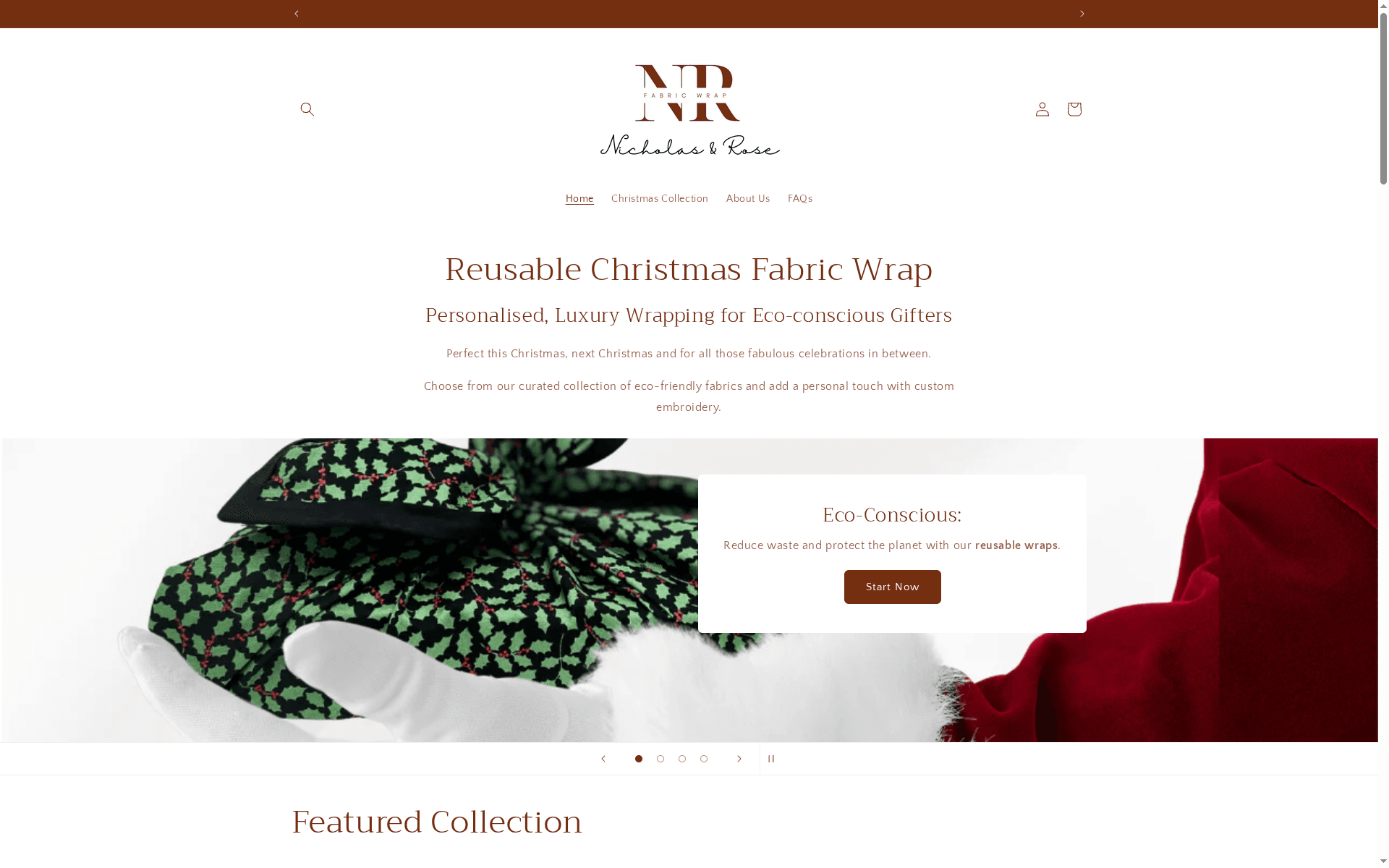
Our 2026 collection features premium reusable fabric wraps crafted from certified organic materials, designed to become cherished mementoes rather than landfill waste. Each piece can be personalised through custom embroidery, adding names, dates, or meaningful symbols that transform wrapping into permanent keepsakes. These aren’t disposable covers destined for bins before babies arrive. They’re thoughtful, sustainable alternatives that honour both your values and the special children in your life. Explore our range to discover how boutique eco-wrapping elevates your gift-giving whilst protecting the planet your children will inherit. Visit Nicholas & Rose to browse our complete sustainable gift wrap collection.
Frequently asked questions
What is boutique gift wrap styling?
Boutique gift wrap styling means creatively wrapping gifts using personalised, high-quality materials that make presentations special and memorable. Unlike standard wrapping, boutique styling emphasises unique touches like custom embroidery, natural embellishments, and artisanal techniques. For eco-conscious parents, this approach combines sustainability with sophistication, creating wraps that serve as keepsakes rather than waste.
How can I ensure my gift wrap is truly eco-friendly?
Choose materials certified organic, recycled, biodegradable, or genuinely reusable through recognised standards like GOTS or FSC. Avoid anything containing plastics, synthetic dyes, or non-compostable films regardless of eco-friendly marketing claims. Sustainable gift wrapping markets are growing rapidly, but greenwashing remains common, so verify credentials through detailed product information and trusted certifications. When uncertain, stick to obviously natural materials like untreated cotton, kraft paper, and plant-based twine. Best eco gift wrap materials luxury gifting provides comprehensive guidance on identifying genuinely sustainable options.
What are some personalisation ideas for newborn and toddler gifts?
Use hand-stamped name tags with non-toxic ink, natural fabric dyes in soft pastels, or fabric paints for custom designs. Incorporate elements like dried flowers matching birth month meanings, baby-safe wooden charms, or themed ribbons reflecting the celebration. Match colours and motifs to the event type and child’s emerging personality. For newborns, consider embroidering birth details directly onto reusable fabric wraps, creating permanent mementoes families treasure. Sustainable holiday wrapping guide christmas gifts offers seasonal personalisation inspiration adaptable to various celebrations throughout the year.
How many times can I reuse fabric gift wraps?
Quality organic cotton wraps last five years or longer with proper care, serving dozens of gift-giving occasions. Muslin cloths typically handle three to four years of regular use before showing significant wear. The actual lifespan depends on washing frequency, storage conditions, and handling care. Many families pass particularly beautiful or meaningful wraps between generations, using the same fabric for milestone celebrations across decades. Even after wrapping duty ends, fabrics transition to secondary uses like cleaning cloths or craft materials, extending their useful life indefinitely.
Recommended
- 7 Steps to a Gift Wrap Sustainability Checklist for Parents – Nicholas & Rose Limited
- 6 Benefits of Custom Gift Wrap for Eco-Conscious Parents – Nicholas & Rose Limited
- Sustainable gift wrap trends 2026: eco-luxury for parents – Nicholas & Rose Limited
- Designer Gift Wrap: Stylish, Sustainable Christmas Impact – Nicholas & Rose Limited