

Christmas Wrap Waste: Environmental Impact and Alternatives
Each Christmas, british households generate up to 30 percent more waste, much of it from traditional wrapping paper and festive packaging. For those who value both luxury and sustainability, the sheer volume of non-recyclable wrap highlights an urgent environmental challenge in the United Kingdom. This guide explores how choosing eco-friendly, beautifully personalized gift-wrapping solutions can help minimise festive waste while delivering a truly memorable holiday experience.
Table of Contents
- What Is Christmas Wrap Waste?
- Types Of Wrapping Paper And Materials
- How Christmas Wrap Waste Affects The Environment
- Disposal Challenges And UK Recycling Issues
- Sustainable Alternatives And Eco-Friendly Choices
Key Takeaways
| Point | Details |
|---|---|
| Significant Waste Generation | Households in the United Kingdom generate up to 30% more waste during Christmas, with wrapping materials making up a large portion. |
| Complex Recycling Issues | Decorative wrapping materials often contain mixed components that complicate recycling, leading to increased landfill contributions. |
| Choosing Sustainable Options | Opting for recyclable, biodegradable, or reusable wrapping materials can significantly reduce environmental impact during the festive season. |
| Need for Consumer Awareness | Awareness of recycling guidelines and the importance of selecting eco-friendly materials can enhance sustainability efforts among consumers. |
What Is Christmas Wrap Waste?
Christmas wrap waste represents a significant environmental challenge affecting households across the United Kingdom. It encompasses the vast quantities of single-use packaging, decorative materials, and wrapping products discarded during the festive season, which contribute substantially to seasonal waste streams. Global research indicates that households can generate up to 30% more waste during Christmas, with wrapping materials representing a substantial portion of this environmental burden.
The composition of Christmas wrap waste typically includes glossy wrapping paper, glittery foils, plastic ribbons, gift tags, and packaging materials that are often non-recyclable. These materials create complex waste management challenges because many traditional wrapping products contain mixed materials like metallic elements, plastic coatings, or adhesive components that prevent straightforward recycling. Unlike standard paper, these festive wrappings frequently end up in landfill sites, contributing to long-term environmental degradation.
Research from waste management organisations reveals that nearly half of the United Kingdom’s greenhouse gas emissions are connected to how consumers purchase, use, and dispose of festive products. Christmas wrap waste is not merely an aesthetic issue but a significant environmental concern that requires strategic intervention from consumers, manufacturers, and policymakers.
Pro Tip: Waste Reduction Strategy: Invest in reusable fabric wraps or choose recyclable paper options that can be easily processed after the holiday season, minimising your personal contribution to Christmas wrap waste.
Types Of Wrapping Paper And Materials
Wrapping paper encompasses a diverse range of materials, each with unique characteristics and environmental implications. An in-depth exploration of wrapping paper types reveals multiple categories designed for different purposes, from aesthetic presentation to practical protection. Traditional options include kraft paper, known for its durability and recyclability, tissue paper for delicate item protection, and glossy or matte varieties that enhance gift presentation.
The environmental impact varies significantly across different wrapping material types. Kraft paper stands out as an eco-friendly option, being sturdy and easily recyclable. Tissue papers provide lightweight protection but may have limited reuse potential. Specialty materials like metallic foils, glittery laminates, and plastic-coated wrapping papers pose substantial recycling challenges due to their complex compositions. These decorative options often contain mixed materials that prevent straightforward processing in standard recycling streams.
Beyond traditional paper, contemporary gift-wrapping materials include fabric wraps, biodegradable options, and reusable cloth alternatives. These innovative solutions address growing environmental concerns by reducing single-use waste. Sustainable materials are increasingly designed to minimise environmental footprint while maintaining aesthetic appeal, offering consumers more responsible choices for festive gift presentation.
Pro Tip: Material Selection Strategy: Choose wrapping materials that balance visual appeal with environmental responsibility, prioritising recyclable, biodegradable, or reusable options that can be easily processed after the holiday season.
Here’s a comparison of common Christmas wrapping materials and their environmental implications:
| Material Type | Environmental Impact | Recycling Challenges | Recommended Use |
|---|---|---|---|
| Kraft Paper | Low, easily recyclable | Minimal, usually accepted | Ideal for eco-friendly |
| Glossy/Metallic | High, difficult to recycle | Rejected by most councils | Avoid for sustainability |
| Tissue Paper | Moderate, limited reuse | Often not recyclable | Use with restraint |
| Fabric Wrap | Very low, reusable | None, reusable for years | Excellent sustainable option |
| Glittery/Laminate | Very high, non-recyclable | Contaminates recycling | Avoid to reduce landfill |
How Christmas Wrap Waste Affects The Environment
Comprehensive research on holiday environmental impacts reveals the staggering consequences of Christmas wrap waste. In the United Kingdom alone, holiday refuse exceeds 3 million tonnes annually, with wrapping materials contributing significantly to this environmental burden. The production and disposal of non-recyclable wrapping papers generate substantial carbon dioxide emissions, directly impacting global climate change and resource depletion.
The environmental consequences extend far beyond mere waste volume. Non-sustainable wrapping materials, particularly those containing glitter, metallic elements, or plastic coatings, create complex recycling challenges. These materials contribute to deforestation through excessive paper production, consume substantial water resources during manufacturing, and generate greenhouse gases throughout their lifecycle. Conventional wrapping papers often cannot be recycled, leading to increased landfill volumes and long-term ecological damage.
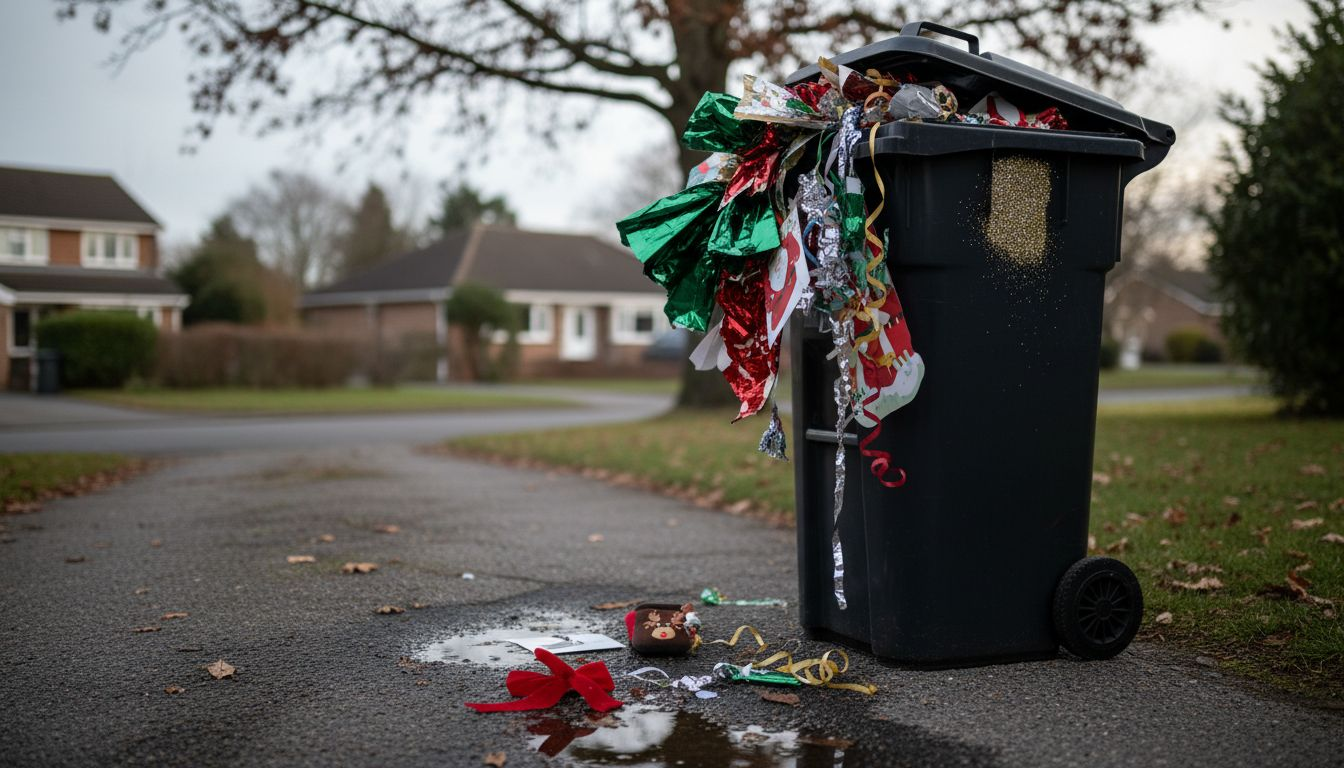
Moreover, the environmental impact of Christmas wrap waste is not limited to physical waste. The manufacturing process for these festive materials involves significant energy consumption, chemical treatments, and resource extraction. Global studies on holiday packaging demonstrate that specialised wrapping papers can generate substantial carbon emissions, with non-recyclable variants being particularly problematic. The cumulative effect of millions of households using such materials creates a compounding environmental challenge that extends well beyond the holiday season.
Pro Tip: Waste Consciousness Strategy: Select wrapping materials thoughtfully, prioritising recyclable, biodegradable options that minimise environmental impact and support sustainable manufacturing practices.
Disposal Challenges And UK Recycling Issues
Comprehensive analysis of wrapping paper disposal reveals the complex recycling landscape for Christmas wrap in the United Kingdom. Local councils enforce strict guidelines that significantly complicate the disposal of festive wrapping materials. Traditional wrapping papers with additional decorative elements like glitter, lamination, or metallic foils are systematically rejected from recycling streams, creating substantial waste management challenges.
The scale of disposal problems is staggering. Approximately 227,000 miles of wrapping paper are discarded annually in the UK, with a substantial proportion destined for landfill sites. Recycling contamination presents a critical issue, where non-compliant materials can cause entire recycling batches to be rejected. Households must navigate intricate recycling rules, including the ‘scrunch test’ to determine material recyclability and the meticulous removal of adhesives, ribbons, and decorative elements before attempting recycling.
Business waste research highlights the environmental implications of these disposal challenges. Non-paper additives render most festive wrapping materials non-recyclable, creating a significant environmental burden. Pure paper wraps offer some recyclability, but specialised decorative papers with thin, glittery, or plasticised designs are systematically excluded from recycling centre processing, perpetuating the cycle of waste generation.
Pro Tip: Recycling Readiness Strategy: Perform the ‘scrunch test’ on wrapping paper before disposal, remove all decorative elements, and choose plain, uncoated papers to maximise your chances of successful recycling.
Sustainable Alternatives And Eco-Friendly Choices
Innovative sustainable wrapping solutions are transforming traditional holiday gift presentation, offering environmentally conscious alternatives to conventional wrapping materials. The emerging landscape of eco-friendly wrapping options encompasses a diverse range of materials and techniques designed to minimise waste while maintaining aesthetic appeal. Reusable fabric wraps, such as the traditional Japanese furoshiki method, represent a sophisticated approach to sustainable gift presentation, enabling multiple uses and reducing single-use packaging waste.
The spectrum of sustainable wrapping alternatives includes recycled kraft papers, upcycled newspapers, compostable materials, and creative reuse strategies. Households can explore options like decorative tins, fabric bags, second-hand scarves, and repurposed containers that transform gift-giving into an opportunity for environmental stewardship. Local waste management authorities emphasise the importance of avoiding non-recyclable elements like glitter, foil, and complex adhesives that compromise material recyclability.
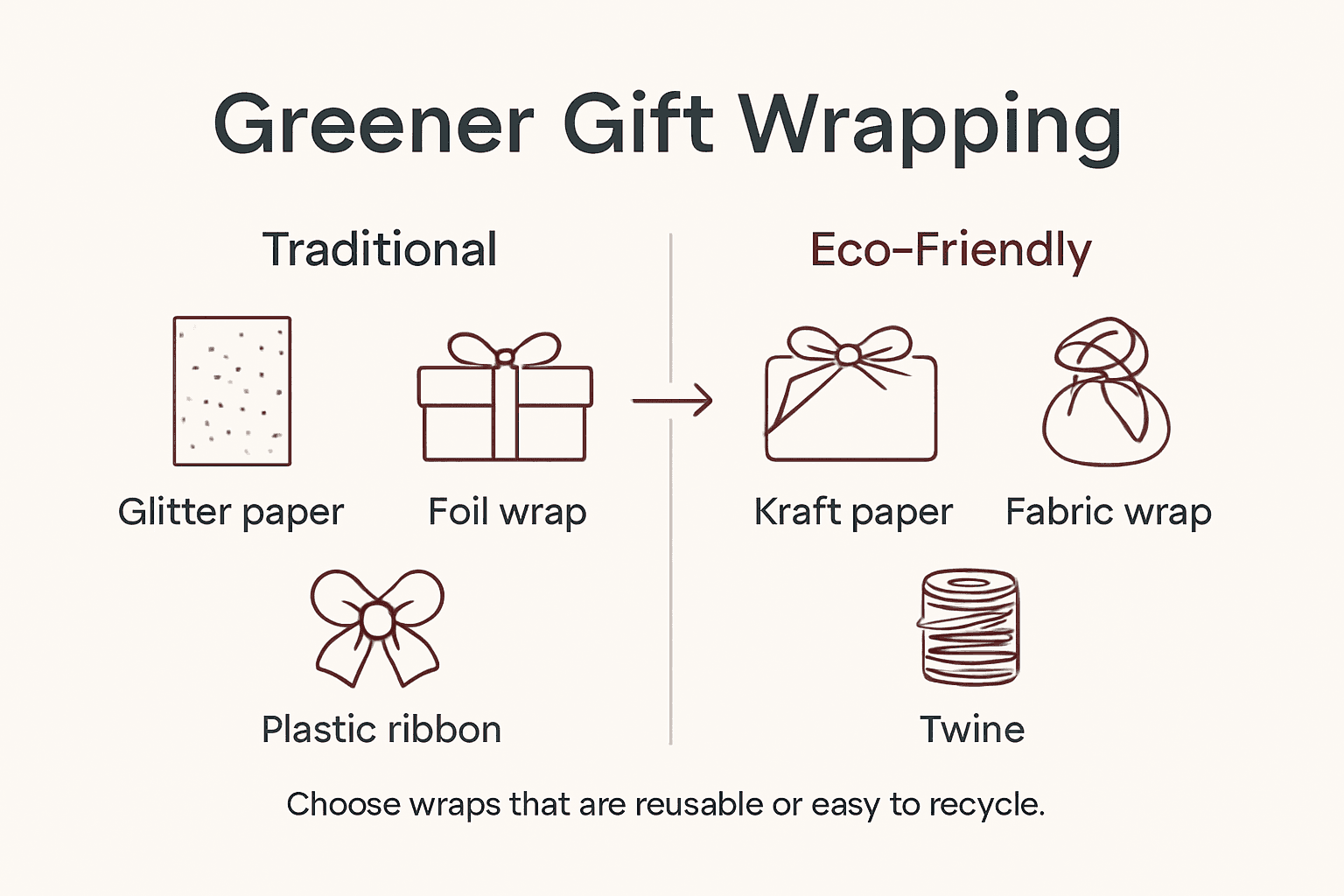
Beyond material selection, sustainable gift wrapping represents a holistic approach to reducing holiday environmental impact. Innovative techniques such as using natural decorations, selecting plain recyclable papers, and choosing reusable packaging contribute to a circular economy model. These approaches not only minimise waste but also create memorable, personalised gift-giving experiences that reflect environmental consciousness and creative thoughtfulness.
Pro Tip: Wrapping Wisdom: Invest in a collection of versatile, reusable fabric wraps and decorative elements that can be used across multiple gift-giving occasions, reducing waste and creating a more sustainable holiday tradition.
Below is a summary of sustainable wrapping alternatives and their long-term benefits:
| Eco-Friendly Option | Description | Environmental Benefit | Best Use Case |
|---|---|---|---|
| Recycled Kraft Paper | Made from post-consumer waste | Reduces demand for new paper | Everyday gifts |
| Furoshiki Cloth Wrap | Traditional Japanese wrapping | Reusable across occasions | Special, memorable gifts |
| Upcycled Containers | Tins, boxes, jars reused | Minimises single-use waste | Gift baskets, sets |
| Compostable Materials | Made to biodegrade easily | Avoids landfill accumulation | Food or natural items |
Choose Sustainable Elegance This Christmas with Reusable Fabric Wrap
The challenge of reducing Christmas wrap waste is real and urgent. Traditional wrapping papers often end up in landfills due to their non-recyclable coatings and glittery finishes, significantly increasing environmental damage during the festive season. By embracing reusable fabric wraps, you not only minimise your carbon footprint but also add a luxurious and personalised touch to your gifts. Our curated Reusable Fabric Wrap - Luxurious Christmas Collection offers beautifully crafted, embroidered wraps designed to be treasured year after year, helping you eliminate single-use waste and make environmentally conscious choices with style.
Start your journey towards waste reduction now by choosing sustainable wrapping that combines elegance with eco-friendliness. Explore the full range of options at Nicholas & Rose Limited and discover thoughtful gift ideas like those in our Favourite Four collection. Make this Christmas a memorable celebration of care for the planet and your loved ones alike.
Frequently Asked Questions
What is Christmas wrap waste?
Christmas wrap waste refers to the significant volume of single-use packaging and wrapping materials discarded during the festive season, which greatly contributes to seasonal waste and environmental issues.
Why is traditional wrapping paper often not recyclable?
Traditional wrapping papers often contain mixed materials like metallic elements, plastic coatings, or adhesive components that complicate the recycling process, leading to high rates of rejection in recycling streams.
What are some eco-friendly alternatives to traditional wrapping paper?
Eco-friendly alternatives include recycled kraft paper, reusable fabric wraps like furoshiki, upcycled containers, and compostable materials that reduce single-use waste and support environmental sustainability.
How can I recycle Christmas wrapping materials effectively?
To recycle effectively, perform the ‘scrunch test’ on wrapping paper to check recyclability, remove decorative elements like ribbons and glue, and opt for plain, uncoated papers that are acceptable in recycling streams.
Recommended
- What Makes Wrap Environmentally Friendly: Key Benefits Explained – Nicholas & Rose Limited
- Sustainable Christmas Wrapping: A Luxurious Eco Choice – Nicholas & Rose Limited
- Sustainable Gift Wrap Choices: Eco-Luxury for 2025 – Nicholas & Rose Limited
- What Is Reusable Festive Wrap? Complete Guide UK – Nicholas & Rose Limited
- 7 Practical Ways to Reduce Fashion Waste for a Greener Closet – The Cork Store