

Fabric vs. paper gift wraps: the eco-conscious comparison
TL;DR:
- Fabric gift wrap is a sustainable alternative that can be reused for years, reducing waste and costs.
- Paper wraps often contain plastic, foil, or glitter, making them difficult or impossible to recycle and environmentally harmful.
Fabric gift wrap is a reusable, sustainable alternative to paper gift wrap that transforms the act of giving into something lasting and beautiful. For eco-conscious gift givers preparing for baby showers and children’s birthdays, the choice of wrapping material carries real environmental weight. This comparison list of fabric vs. paper gift wraps covers everything you need to make a genuinely greener choice, from biodegradability and cost to personalisation and presentation. The difference between the two is not merely aesthetic. It is a question of what happens to your wrapping the moment the gift is opened.
1. What makes fabric gift wrap the most eco-friendly option?
Fabric gift wrap is the most sustainable wrapping material available because it replaces a single-use product with one that lasts for years. Reusable fabric wraps have a higher upfront cost, but the cost per use falls with every occasion, meaning families who pass wraps across birthdays and baby showers spend less over time. That long-term economy is one reason eco-conscious gift givers are choosing fabric over paper.
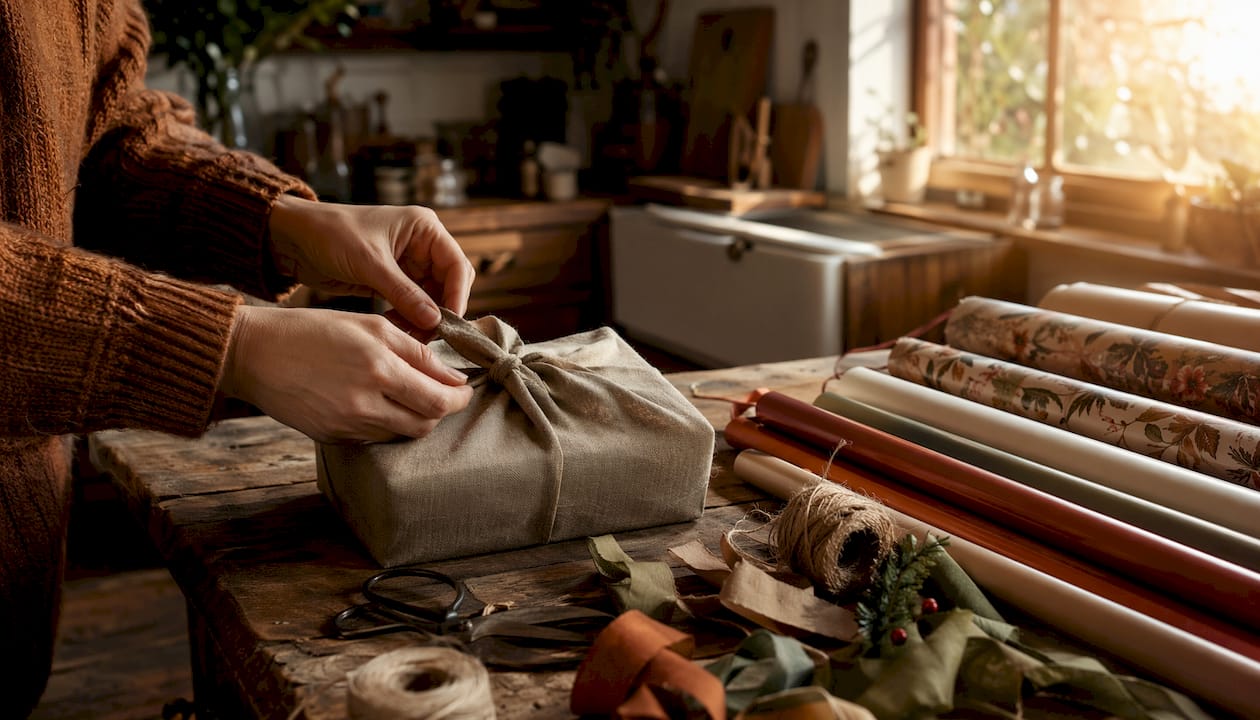
The fabric itself matters. Organic cotton and linen are the most sustainable choices because they are biodegradable, grown without synthetic pesticides, and soft enough to feel like part of the gift. Choosing the right fabric for wrapping also affects drape, hand-feel, and how elegantly the finished parcel presents. A wrap in organic cotton has a crisp, luminous quality that paper simply cannot replicate.
Fabric wraps also support a circular economy in a way paper cannot. They are washed, reused, and passed on rather than discarded. No plastic laminates, no metallic foils, and no glitter. The lifecycle of a single fabric wrap can span dozens of gifts before it shows any sign of wear.
- Reusable across multiple occasions, reducing landfill waste with every use
- Free from plastic coatings and laminates found in most decorative wrapping paper
- Biodegradable when made from natural fibres such as organic cotton or linen
- Lower cost per use over time compared to buying paper for each occasion
Pro Tip: Choose a fabric wrap in a neutral or classic pattern for baby shower gifts. It will suit the nursery aesthetic long after the wrapping is unwrapped.
2. Environmental and practical limitations of paper gift wraps
Standard wrapping paper is far less recyclable than most gift givers assume. Glittery and foiled papers are essentially plastic waste that never biodegrades, making them as harmful as single-use plastic packaging. That shimmering roll of paper you reach for at a baby shower may look festive, but it belongs in general waste, not the recycling bin.
The problem extends beyond the paper itself. Plastic tape and synthetic ribbons impair paper’s recyclability and contribute to microplastic pollution. Recycling machinery cannot process tape-covered paper cleanly, so even plain paper becomes contaminated. Wildlife ingestion of ribbon and tape fragments is a documented environmental concern.
| Paper wrap type | Recyclable? | Compostable? | Eco-credentials |
|---|---|---|---|
| Glitter or foil paper | No | No | Very poor |
| Metallic or laminated paper | No | No | Poor |
| Plain white or coloured paper | Sometimes | No | Moderate |
| Kraft or recycled paper | Yes | Yes (undecorated) | Good |
| Newspaper | Yes | Yes | Good |
The table above shows that most decorative paper wraps fail on both recyclability and compostability. Only kraft paper and recycled paper offer a genuinely greener profile, and even those require careful use.
- Avoid glitter and metallic foils, which are microplastic pollutants persisting for centuries
- Remove tape before recycling any paper wrap, though this is rarely done in practice
- Choose kraft or recycled paper if paper is your only option
- Skip synthetic ribbons in favour of natural twine or fabric ties
3. How to personalise fabric wraps for baby showers and birthdays
Fabric gift wrap becomes a gift in itself when you approach it with intention. The Japanese art of furoshiki wrapping uses a square of cloth tied in elegant knots to wrap any shape without tape or scissors. It accommodates awkwardly shaped toys, soft bundles, and even bottles with equal grace. For a baby shower or a child’s birthday, the visual impact is immediate and memorable.
Nicholasandrose takes personalisation a step further with bespoke embroidery. A newborn’s name stitched into the fabric transforms the wrap from a beautiful presentation into a keepsake. The wrap becomes part of the milestone itself, something the family keeps long after the gift inside has been outgrown.
Beyond embroidery, the creative possibilities are wide.
- Furoshiki knots create sculptural, tape-free presentations for any gift shape
- Custom prints and patterns connect the wrap to the occasion, whether a woodland nursery theme or a first birthday celebration
- Fabric as part of the gift works beautifully for newborns. A soft organic cotton wrap doubles as a muslin cloth, a pram blanket, or a keepsake square
- Natural decorations such as dried flowers, cotton twine, and handwritten tags add warmth without waste
Pro Tip: For a baby shower gift, tie the fabric wrap in a simple furoshiki knot and tuck a sprig of dried lavender into the fold. The scent is calming, the presentation is refined, and nothing goes to waste.
The benefits of fabric gift wrap for eco-conscious parents go beyond aesthetics. Parents appreciate wraps that can be repurposed into a headscarf, a picnic blanket, or a storage bag after the gift is unwrapped. That post-gift value is something paper can never offer.
4. Paper gift wraps: when and how they remain a conscious choice
Paper wrapping is not without merit when chosen and used thoughtfully. Plain kraft paper, when paired with natural twine and hand-crafted decorations, offers a minimalist presentation that is both recyclable and genuinely charming. Cotton twine, dried leaves, and paper-based tags create a considered aesthetic without synthetic waste.
The key is to strip away every element that undermines recyclability. No plastic tape, no metallic ribbon, and no glitter. Compostable tape made from plant-based materials is widely available and holds kraft paper securely without contaminating the recycling stream.
- Choose plain kraft or recycled paper for the cleanest environmental profile
- Use compostable or paper tape rather than standard plastic tape
- Decorate with natural elements such as dried flowers, cinnamon sticks, or paper ribbon
- Repurpose newspaper or brown paper bags as a zero-cost, low-waste alternative
- Avoid buying new paper when gift bags from previous occasions can be reused
Kraft paper works particularly well for children’s birthday gifts where the recipient will tear through the wrapping in seconds. The presentation is warm and natural, and the paper goes straight into the recycling bin. For more considered occasions like baby showers, fabric wrapping offers a more lasting impression.
5. Quick comparison: fabric vs. paper gift wraps at a glance
This side-by-side view covers the criteria that matter most to eco-conscious gift givers choosing between fabric and paper wrapping for baby showers and children’s birthdays.
| Criteria | Fabric wrap | Paper wrap |
|---|---|---|
| Reusability | Yes, many uses | No, single use |
| Compostability | Yes (natural fibres) | Only undecorated kraft |
| Recyclability | Washable and reusable | Limited, often contaminated |
| Upfront cost | Higher | Lower |
| Cost over time | Decreases with each use | Accumulates with each occasion |
| Personalisation | Embroidery, prints, furoshiki | Limited to surface decoration |
| Waste footprint | Very low | High for decorative papers |
| Aesthetic quality | Tactile, luminous, heirloom | Varies widely |
| Ease of wrapping | Simple with furoshiki technique | Familiar but wasteful |
The table makes the case clearly. Fabric wraps outperform paper on every sustainability measure. Paper wraps retain a role when kraft or recycled options are chosen with care, but they cannot match the long-term value of fabric. For sustainable gift wrap choices that honour both the occasion and the environment, fabric is the stronger option.
Key takeaways
Fabric gift wrap is the most sustainable and versatile choice for eco-conscious gift givers, offering reusability, personalisation, and lasting value that paper wrapping cannot match.
| Point | Details |
|---|---|
| Fabric wrap reduces waste significantly | A single fabric wrap replaces dozens of paper rolls across baby showers and birthdays. |
| Glitter and foil papers are plastic waste | These papers never biodegrade and cannot be recycled in most municipal systems. |
| Furoshiki technique needs no tape | Square fabric tied in knots wraps any gift shape elegantly without scissors or adhesive. |
| Personalisation elevates fabric wraps | Embroidery with a child’s name transforms the wrap into a keepsake memento. |
| Kraft paper is the best paper option | When fabric is not available, plain kraft with natural twine is the most eco-conscious paper choice. |
Why I always reach for fabric now
I used to think wrapping paper was a small, harmless indulgence. Then I watched a pile of foil-covered paper from a single baby shower fill an entire bin bag before the cake was even cut. That image stayed with me.
The shift to fabric wrapping felt like a revelation rather than a sacrifice. The first time I wrapped a newborn gift in a soft organic cotton square and tied it in a furoshiki knot, the recipient held the wrap for a long moment before even looking at what was inside. That pause told me everything. The wrapping had become part of the gift.
What surprised me most was the durability. A well-made fabric wrap does not fray or fade after a few uses. Nicholasandrose wraps in particular have a quality of drape and hand-feel that makes them feel genuinely luxurious, not like a compromise. The embroidery option changes everything for milestone gifts. A baby’s name stitched into the fabric is the kind of detail that gets kept in a memory box, not thrown in the bin.
Paper wrapping still has its place, and I would not pretend otherwise. For a quick children’s party gift where the child will shred the paper in three seconds, a sheet of plain kraft with cotton twine is perfectly adequate. But for the gifts that matter, the ones marking a first birthday or a new arrival, fabric wrapping is the only choice that feels worthy of the occasion.
— Helen
Luxury sustainable fabric wraps for your most special gifts
Nicholasandrose creates luxury reusable fabric gift wraps designed specifically for the gifts that deserve to be remembered. The Baby & Beyond collection brings together organic fabrics, refined prints, and bespoke embroidery options for baby showers, newborn gifts, and children’s milestone celebrations. Each wrap is crafted to be kept, not discarded, becoming a memento of the occasion as much as the gift itself. The 2026 newborn and toddler range introduces new designs that honour the tenderness of early childhood with the kind of considered beauty that eco-conscious gift givers are looking for. Explore the full collection at Nicholasandrose and give a gift that endures.
FAQ
Is fabric gift wrap better for the environment than paper?
Fabric gift wrap is significantly better for the environment because it replaces dozens of single-use paper wraps over its lifetime. Natural fibre wraps made from organic cotton or linen are also biodegradable, unlike most decorative papers.
Can you recycle standard wrapping paper?
Most decorative wrapping paper cannot be recycled because it contains plastic coatings, metallic foils, or glitter. Only plain kraft or undecorated recycled paper is suitable for most household recycling collections.
What is furoshiki wrapping?
Furoshiki is a Japanese fabric wrapping technique that uses a square of cloth tied in knots to wrap gifts without tape or scissors. It works for any gift shape and leaves a beautiful, waste-free presentation.
How do I personalise a fabric gift wrap for a baby shower?
Embroidery is the most lasting form of personalisation, adding a baby’s name or birth date directly to the fabric. Nicholasandrose offers bespoke embroidered wraps that become keepsakes rather than waste.
Is fabric gift wrap more expensive than paper?
Fabric wraps cost more upfront than a roll of paper, but the cost per use falls with every occasion. Families who reuse fabric wraps across birthdays and baby showers spend less over time than those who buy paper repeatedly.
Recommended
- Top 5 Eco-Friendly Gift Wrap Alternatives for planetwrapit.com 2026 – Nicholas & Rose Limited
- Eco Conscious Gift Wrapping Explained: Sustainable Luxury – Nicholas & Rose Limited
- Why Fabric Gift Wrap Beats Paper Waste – Nicholas & Rose Limited
- Sustainable Christmas Wrapping: A Luxurious Eco Choice – Nicholas & Rose Limited