

What is fabric wrap etiquette: guide for eco parents
Every year, British families discard thousands of tonnes of wrapping paper, most of it ending up in landfills before newborns even arrive home. Fabric wrap etiquette offers a beautiful, reusable alternative that transforms gift presentation into a sustainable practice. This ancient Japanese art, known as furoshiki, combines environmental responsibility with personalised elegance, creating keepsakes that honour both recipient and planet. For eco-conscious parents seeking meaningful ways to celebrate new arrivals and toddler milestones, fabric wrapping delivers practical benefits without compromising style or sentiment.
Table of Contents
- Understanding Fabric Wrap Etiquette: Origins And Principles
- Selecting Fabrics And Sizes For Sustainable Fabric Wrapping
- Mastering Fabric Wrapping Techniques For Different Gift Shapes
- Benefits Of Fabric Wrap Etiquette And Caring For Your Wraps
- Explore Sustainable Fabric Wraps For Newborn And Toddler Gifts
- Frequently Asked Questions
Key takeaways
| Point | Details |
|---|---|
| Reduces waste significantly | Fabric wraps eliminate single-use paper waste, supporting zero-waste family values. |
| Rooted in Japanese tradition | Furoshiki wrapping embodies centuries of cultural respect and environmental mindfulness. |
| Versatile wrapping techniques | Different folding methods suit various gift shapes, from books to bottles. |
| Natural fibres preferred | Cotton, linen, and silk offer durability and sustainable end-of-life options. |
| Wraps become part of gift | Reusable fabric adds tactile beauty and serves as a lasting memento. |
Understanding fabric wrap etiquette: origins and principles
Fabric wrap etiquette finds its roots in furoshiki, which originated in Japan’s Nara period between 710 and 794 AD. Temple priests initially used these cloths to protect sacred objects during transport and storage. The practice evolved over centuries, becoming deeply woven into Japanese daily life.
The name itself emerged during the Muromachi period (1336-1573), derived from “furo” meaning bath and “shiki” meaning spread. Bathhouse visitors would wrap their clothes in these cloths whilst bathing, then use the same fabric to carry damp items home. This practical origin story reveals the essence of furoshiki: one versatile cloth serving multiple purposes throughout its lifespan.
Modern fabric wrap etiquette extends beyond mere functionality. The practice embodies three core principles that resonate with today’s eco-conscious families:
- Minimalism through multipurpose design
- Respect demonstrated through thoughtful presentation
- Environmental mindfulness via reusability
Furoshiki wrapping represents cultural values emphasising respect for both gift and environment. The wrapping process itself becomes a meditative act, allowing the giver to infuse care and intention into each fold. This transforms packaging from disposable afterthought into meaningful gesture.
The Japanese concept of mottainai, expressing regret over waste, underpins fabric wrap philosophy. Parents adopting this approach align gift-giving with sustainable values, teaching children to appreciate resources whilst celebrating special moments. Each wrap tells a story, carrying forward traditions that honour both people and planet.
“The art of furoshiki transforms ordinary fabric into extraordinary presentation, where the wrapping becomes as treasured as the gift itself.”
For families welcoming newborns or celebrating toddler milestones, fabric wrap etiquette offers a meaningful alternative to disposable paper. The cloth can be personalised through embroidery, creating a keepsake that grows with the child. This approach particularly suits baby gifts, where traditional wrapping often reaches the bin before parents leave hospital.
Selecting fabrics and sizes for sustainable fabric wrapping
Choosing appropriate fabric determines both presentation quality and environmental impact. Natural fibres like cotton and linen offer superior durability compared to synthetic alternatives, allowing wraps to survive countless uses whilst maintaining their beauty. These materials also biodegrade naturally at end of life, closing the sustainability loop.
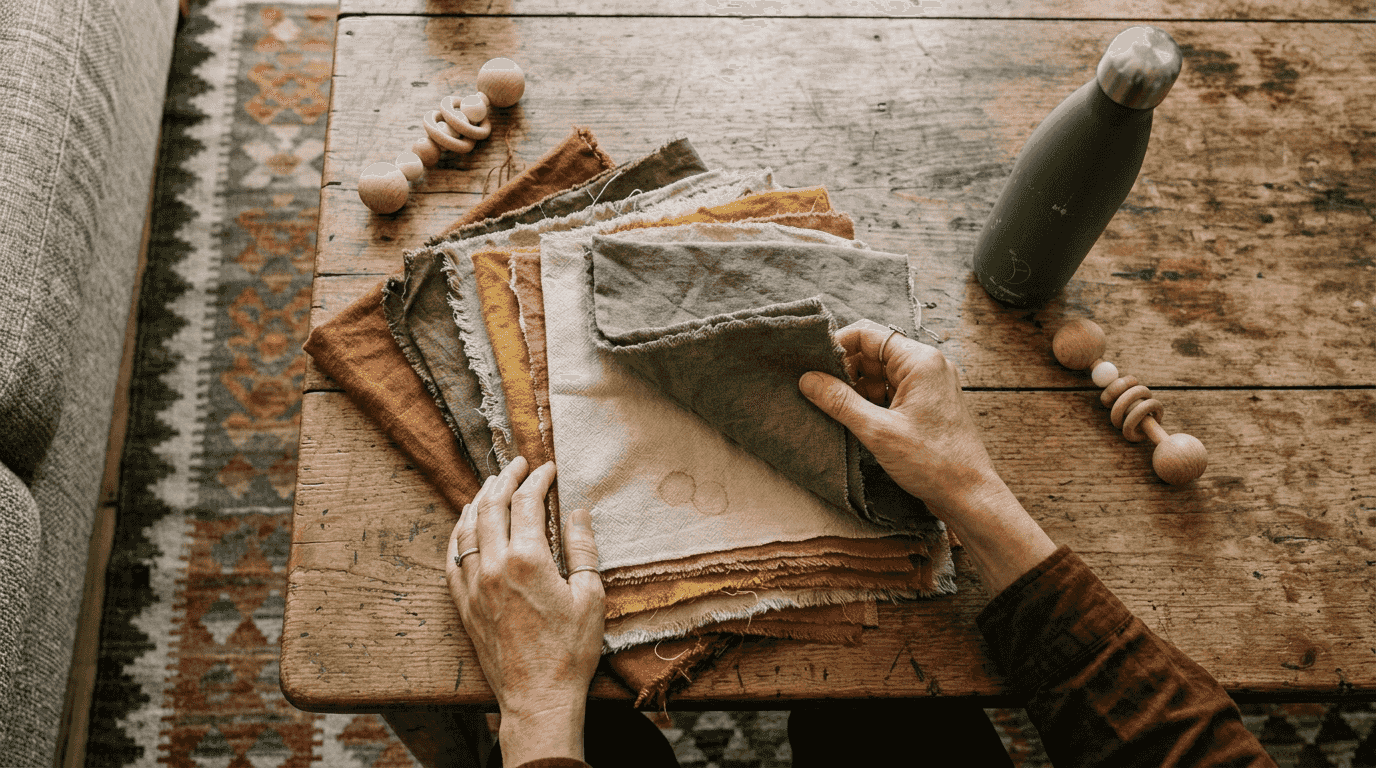
Fabric quality directly affects reusability potential. Tightly woven cotton withstands repeated washing and folding without fraying or losing shape. Linen develops a soft patina over time, becoming more supple with each use. Silk provides luxurious drape for special occasions, though requires gentler care. Parents should consider how frequently they’ll reuse wraps when selecting materials.
Organic and hand-dyed fabrics eliminate harmful chemical exposure, particularly important for items touching baby skin. Conventional cotton production relies heavily on pesticides, whilst synthetic dyes release pollutants during manufacturing. Choosing natural fibre wraps with minimal processing aligns with health-conscious parenting values.
Size selection depends on gift dimensions and desired wrapping style. Furoshiki cloths range from 45 cm squares for compact items to 120 cm for larger or irregular shapes. Newborn gifts typically require medium sizes (70-90 cm), whilst toddler presents may need larger formats. Having several sizes on hand provides flexibility across different occasions.
| Fabric Type | Durability | Eco-Impact | Typical Uses | | — | — | | Organic cotton | Excellent | Low | Daily gifts, frequent reuse | | Linen | Outstanding | Very low | Heirloom wraps, special occasions | | Silk | Good | Moderate | Luxury presentations, delicate items | | Bamboo blend | Very good | Low | Soft drape, baby-safe options |
Pro Tip: Purchase wraps slightly larger than you think necessary. Extra fabric provides more folding options and accommodates awkwardly shaped gifts without straining seams or creating tight corners that damage contents.
Pattern and colour choices add personality whilst serving practical purposes. Light colours show stains more readily but photograph beautifully. Darker hues hide wear whilst providing elegant contrast. Prints can disguise minor imperfections that develop over years of use. For selecting reusable gift wrap that suits your family’s aesthetic, consider neutral bases with accent colours matching your home décor.
Weight matters too. Lightweight gauze works wonderfully for small, delicate items but lacks structure for heavier gifts. Medium-weight cotton provides versatility across most applications. Heavier linens suit substantial presents requiring robust support. Matching fabric weight to gift characteristics ensures secure wrapping without excessive bulk.
Investment in quality fabric pays dividends through extended lifespan. Whilst premium natural fibres cost more initially, their durability means fewer replacements over time. Calculate cost per use rather than upfront price when evaluating options. A well-made wrap serving your family for years represents better value than cheap alternatives requiring frequent replacement.
Mastering fabric wrapping techniques for different gift shapes
Three fundamental techniques cover most gift shapes encountered when wrapping newborn and toddler presents. Each method offers distinct advantages for specific items, from board books to stuffed animals.
The basic wrap (Otsukai Tsutsumi) suits square and rectangular gifts perfectly:
- Place gift diagonally on fabric centre, with corners pointing toward cloth edges.
- Fold bottom corner over gift, tucking edge slightly underneath.
- Bring top corner down to meet bottom, creating smooth coverage.
- Gather left and right corners, pulling fabric taut but not tight.
- Tie corners in a secure square knot, adjusting for centred placement.
This technique works brilliantly for boxed items like clothing sets, nappy cakes, or stacking toys. The symmetrical presentation creates clean lines whilst the top knot provides decorative focal point. Parents can personalise this method by varying knot styles or adding small embellishments.
The hidden knot wrap (Kakushi Tsutsumi) creates seamless presentation:
- Centre gift on fabric with one corner pointing toward you.
- Fold nearest corner over gift, securing edge beneath item.
- Repeat with opposite corner, overlapping previous fold.
- Gather remaining corners underneath gift, twisting together.
- Tuck twisted fabric beneath gift, creating smooth top surface.
This approach suits gifts where presentation matters most, such as keepsake boxes or photo albums. The concealed fastening allows fabric pattern to shine without visual interruption. It requires slightly more fabric than basic wrap but delivers sophisticated results.
The bottle wrap (Bin Tsutsumi) secures cylindrical items:
- Lay fabric flat with one corner toward you.
- Place bottle diagonally, base near bottom corner.
- Roll bottle in fabric, keeping tension consistent.
- Gather fabric at bottle neck, twisting to secure.
- Bring remaining corners up and tie around neck.
This method adapts beautifully for baby bottles, water bottles, or rolled blankets. The wrapped base provides cushioning whilst the decorative top creates handle for easy carrying. Adjust fabric tension based on item fragility.
| Technique | Best For | Difficulty | Presentation Style | | — | — | | Basic wrap | Boxes, books | Easy | Classic, symmetrical | | Hidden knot | Flat items, albums | Moderate | Seamless, elegant | | Bottle wrap | Cylinders, rolls | Easy | Practical, decorative | | Pleated wrap | Irregular shapes | Advanced | Artistic, sculptural |
Pro Tip: Practise each technique with newspaper-wrapped boxes before attempting with actual gifts. This builds muscle memory for clean folds and proper tension without risking damage to precious presents or beautiful fabrics.
Knot security determines whether gifts stay wrapped during transport. Square knots provide reliable hold without excessive tightness. Avoid granny knots, which slip under pressure. For extra security on valuable items, tie a second knot perpendicular to the first. This creates a cross pattern that distributes tension evenly.
Fabric choice influences technique success. Stiffer materials hold crisp folds but resist draping around irregular shapes. Softer fabrics mould beautifully but may require additional securing. Match fabric characteristics to wrapping method for optimal results. The fabric wrapping instructions provided with premium wraps often include technique recommendations specific to that cloth’s properties.
Benefits of fabric wrap etiquette and caring for your wraps
Fabric wrapping delivers measurable environmental advantages over disposable alternatives. A single reusable wrap eliminates dozens of paper sheets throughout its lifespan, significantly reducing household waste. British families generate substantial packaging waste during gift-giving seasons, with much of it contaminated by tape, glitter, or foil that prevents recycling. Fabric wraps bypass this entirely.
The durability factor extends beyond environmental benefits. Quality fabric withstands years of folding, washing, and reuse without degradation. This longevity makes fabric wrapping economically sensible despite higher initial investment. Calculate the cost of buying wrapping paper repeatedly versus purchasing reusable wraps once, and the financial advantage becomes clear.
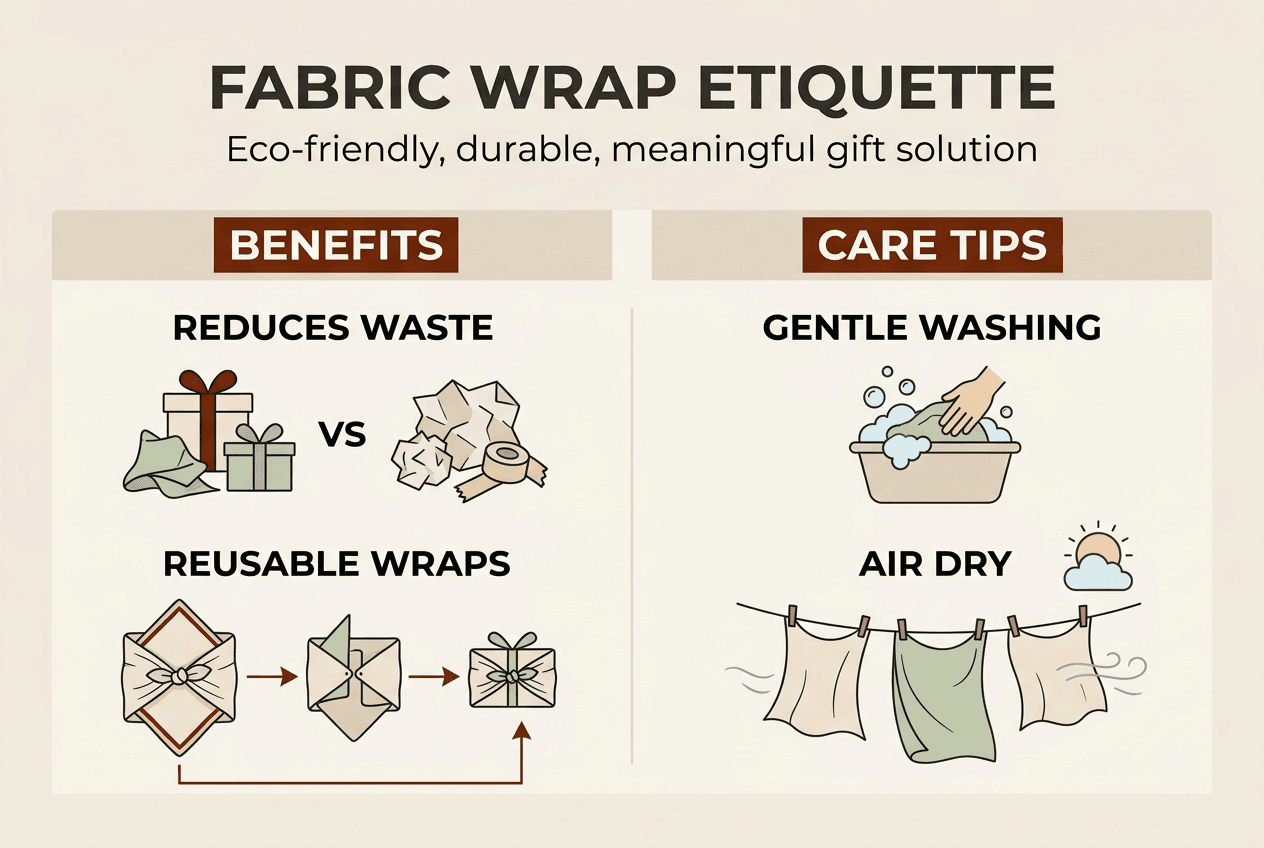
Emotional value adds another dimension to fabric wrap benefits. Recipients recognise the extra thought invested in selecting and wrapping with beautiful cloth. The tactile quality of natural fibres creates sensory experience that paper cannot match. For baby gifts especially, soft fabric wrapping provides immediate comfort and safety that parents appreciate.
Furoshiki offers advantages including reusability, durability, and aesthetic appeal that disposable options simply cannot deliver. The wrapping becomes part of the gift rather than waste to discard. Many families develop collections of favourite wraps, each carrying memories of celebrations past.
Repurposing options multiply fabric wrap utility:
- Transform into napkins for family meals
- Use as scarves or hair accessories
- Cut into craft fabric for children’s projects
- Hem edges to create handkerchiefs
- Incorporate into quilts or memory blankets
These secondary uses extend lifespan well beyond original gifting purpose, maximising resource efficiency. Parents teaching children about sustainability find fabric wraps provide tangible examples of circular economy principles.
Proper care ensures wraps maintain beauty through countless uses. Wash fabric wraps in cool water with gentle detergent, avoiding harsh chemicals that degrade natural fibres. Line drying preserves colour vibrancy and prevents shrinkage common with machine drying. Iron whilst slightly damp for crisp folds, or embrace the relaxed texture of naturally dried linen.
Storage method affects wrap condition between uses. Fold wraps neatly and store flat in drawers or on shelves, avoiding tight compression that creates permanent creases. Cedar sachets deter moths whilst adding pleasant scent. Rotate wraps regularly to distribute wear evenly across your collection.
“Caring for fabric wraps mirrors caring for the environment: gentle handling, thoughtful maintenance, and appreciation for lasting quality over disposable convenience.”
Stain treatment requires prompt attention but gentle approach. Blot spills immediately rather than rubbing, which spreads stains deeper into fibres. Natural stain removers like lemon juice or baking soda paste work effectively without harsh chemicals. For stubborn marks, professional cleaning preserves fabric integrity better than aggressive home treatments.
The choice of fabric wrap signals values to gift recipients. Selecting reusable wrapping demonstrates commitment to sustainability whilst honouring the recipient with beautiful presentation. This dual message resonates particularly with fellow eco-conscious parents who appreciate efforts to reduce waste.
Practical benefits extend to storage and organisation. Fabric wraps take up minimal space compared to bulky rolls of wrapping paper. They don’t tear, crease permanently, or require cutting and taping. This simplifies gift preparation, especially valuable for busy parents managing multiple celebrations.
Explore sustainable fabric wraps for newborn and toddler gifts
Nicholas & Rose specialises in reusable fabric gift wraps designed specifically for eco-conscious families celebrating new arrivals and childhood milestones. The baby and beyond collection features hand-dyed organic cotton in soft, child-friendly designs that complement nursery aesthetics whilst supporting sustainable gifting practices.
Each wrap can be personalised through custom embroidery, transforming functional packaging into treasured keepsake. Parents appreciate wraps sized perfectly for common baby gifts, from clothing bundles to board books. The durable construction withstands repeated washing, maintaining beauty through years of celebrations.
The luxury sustainable gift wrap milestones collection offers designs marking special moments, from first birthdays to starting school. These wraps become part of family tradition, used repeatedly as children grow. The woodland rabbit furoshiki wrap exemplifies the brand’s commitment to combining artistic design with environmental responsibility, featuring gentle motifs that delight both givers and recipients.
Frequently asked questions
What makes fabric wrap etiquette different from regular gift wrapping?
Fabric wrap etiquette emphasises reusability, cultural respect, and environmental mindfulness rather than disposable convenience. The wrapping process becomes intentional practice, with each fold demonstrating care for both recipient and planet. Recipients keep and reuse the fabric, creating ongoing cycle of sustainable gifting.
Which fabrics work best for wrapping baby gifts?
Organic cotton and linen provide ideal combinations of softness, durability, and safety for baby-related gifts. These natural fibres wash easily, resist wear, and contain no harmful chemicals. Choose medium-weight fabrics that drape smoothly whilst providing adequate structure for secure wrapping.
How do I wrap irregularly shaped gifts using fabric?
The pleated technique accommodates odd shapes by gathering fabric around the item and securing with strategic knots. Place the gift off-centre on the cloth, then pull corners together above the item, adjusting gathers for even distribution. Twist gathered fabric and tie securely, allowing pleats to create sculptural effect.
Can fabric wraps actually reduce my environmental impact?
Yes, significantly. One quality fabric wrap replaces dozens of paper sheets over its lifespan, eliminating waste whilst avoiding the resource-intensive production of disposable wrapping paper. Natural fibre wraps biodegrade at end of life, completing the sustainable cycle without landfill contribution.
How should I care for embroidered fabric wraps?
Wash embroidered wraps inside out in cool water to protect stitching. Avoid harsh detergents or bleach that might fade thread colours. Air dry flat or hang to prevent distortion, and iron on reverse side if needed. Store folded with embroidery facing inward to prevent snagging.
What size fabric wrap do I need for typical newborn gifts?
Most newborn gifts fit comfortably in 70-90 cm square wraps. This size accommodates clothing sets, small blankets, and boxed items whilst providing enough fabric for decorative knotting. Keep one larger wrap (100-120 cm) on hand for bulkier items like nappy cakes or multiple gifts bundled together.
Recommended
- Why Fabric Wraps Are Popular With Eco Parents – Nicholas & Rose Limited
- 7 Top Benefits of Fabric Gift Wrap for Eco Parents – Nicholas & Rose Limited
- 7 Steps to a Gift Wrap Sustainability Checklist for Parents – Nicholas & Rose Limited
- Fabric wraps: sustainable choice for newborn gifts in 2026 – Nicholas & Rose Limited