

How texture elevates luxury wrapping for children's gifts
TL;DR:
- Texture in gift wrapping creates emotional warmth and sensory engagement for babies and toddlers.
- Choosing soft, safe, and reusable fabrics enhances safety, sustainability, and keepsake value.
- Personalisation through embroidery and appliqué elevates luxurious, meaningful, and enduring gift presentation.
When we think of luxury gift wrapping, our minds tend to travel straight to visual beauty: the elegant sweep of a satin ribbon, the jewel-toned folds of printed paper, the shimmer of metallic foil catching the light. Yet for those choosing gifts for newborns and toddlers, this focus on sight alone misses something profoundly important. Touch is the first sense a baby truly explores, and the feel of a wrap held in small, curious hands carries an emotional weight that colour and pattern simply cannot replicate. This guide explores why texture belongs at the very heart of luxury wrapping for children’s gifts, and how to choose, personalise, and care for wraps that become cherished keepsakes long after the gift inside has been unwrapped.
Table of Contents
- Why texture is essential in luxury gift wrapping for children
- Choosing the right textures: Materials, finishes, and sustainability
- Personalising luxury wrapping: Techniques and inspiration
- Common pitfalls: Texture mistakes to avoid in luxury gifts
- The overlooked secret: Why feel matters more than looks in luxury wrapping
- Bring luxury texture to your next gift
- Frequently asked questions
Key Takeaways
| Point | Details |
|---|---|
| Texture boosts emotional impact | Soft, tactile wraps make gifts feel more special for young children and their families. |
| Choose safe and sustainable materials | Opt for gentle, reusable fabrics to ensure both comfort and eco-friendliness. |
| Personalisation enhances value | Adding names or details transforms wraps into cherished mementoes. |
| Avoid overwhelming designs | Steer clear of bulky, heavily scented, or difficult-to-use wraps for the best results. |
Why texture is essential in luxury gift wrapping for children
There is a quiet truth that experienced gift-givers come to understand over time: the wrapping is never truly separate from the gift. For little ones especially, the outer layer is the first chapter of the whole experience, and that chapter is written almost entirely in touch. A newborn’s fingers curl instinctively around softness. A toddler reaching for a parcel will pat, squeeze, and stroke the surface before the ribbon is even loosened.
Texture activates an emotional response that sight alone cannot fully produce. When parents unwrap a gift alongside their child, the sensation of something yielding and gentle, something that drapes beautifully and feels safe against delicate skin, creates a moment of warmth and reassurance. This is why luxury gift packaging for newborns specifically prioritises soft, safe materials: velvet ribbons and plush fabrics that avoid sharp edges, while multi-sensory layers of texture, subtle sound, and gentle scent create a truly immersive unboxing experience.
For children, the sensory journey of unboxing is part of the gift’s meaning. The rustling whisper of a fabric fold, the soft weight of a carefully wrapped parcel, the gentle press of an embossed name beneath small fingertips: these details accumulate into something lasting. They are not fleeting impressions but tactile memories that linger.
There are several reasons why texture matters so profoundly in this context:
- Safety and comfort: Smooth, non-abrasive fabrics protect delicate newborn skin from scratches or irritation that rough papers or rigid embellishments might cause.
- Emotional connection: Soft materials communicate tenderness, signalling care and intentionality to both the parents receiving the gift and, in time, the child who grows to associate that texture with warmth.
- Reusability and keepsake value: A beautifully textured fabric wrap, especially one that has been personalised with embroidery, is not discarded. It becomes a nursery keepsake, a comfort object, or a treasured memento that the family revisits for years.
- Sustainability: Unlike single-use papers that are torn and binned before the celebration has even properly begun, a premium fabric wrap endures. For eco-conscious families, this matters enormously.
“The most memorable gift presentations are those that engage more than one sense. Texture is the quiet luxury that transforms a parcel into an experience.”
When you choose a wrap that is genuinely tactile and considered, you are not simply dressing a present. You are composing the first sensory impression of something precious.
Choosing the right textures: Materials, finishes, and sustainability
Not every soft fabric carries the same qualities, and understanding the differences between available materials will help you select something that is both beautiful and responsibly made. Fabrics vary enormously in their hand-feel, their drape, and their durability across multiple uses, which is precisely what makes thoughtful selection so rewarding.
The most important guidance from luxury gift packaging specialists is consistent: prioritise materials that are gentle, free from sharp embellishments, and capable of withstanding reuse without losing their character. Below is a practical comparison of the most popular options:
| Material | Luxury feel | Child safety | Sustainability | Reusability |
|---|---|---|---|---|
| Organic cotton | Warm, natural | Excellent | Very high | High |
| Velvet | Rich, plush | Very good | Moderate | High |
| Felt | Soft, matte | Excellent | Good | High |
| Satin | Luminous, smooth | Good | Moderate | Moderate |
| Furoshiki-style linen | Crisp, textural | Very good | Very high | Very high |
When considering eco-friendly gift wrap materials, organic cotton and linen consistently stand apart. Both are breathable, non-irritating, and produced with significantly lower environmental impact than synthetic alternatives. Furoshiki-style wrapping, rooted in Japanese tradition, has been quietly gaining recognition as one of the most elegant and environmentally responsible approaches to gift presentation available, and its tactile variety is remarkable.
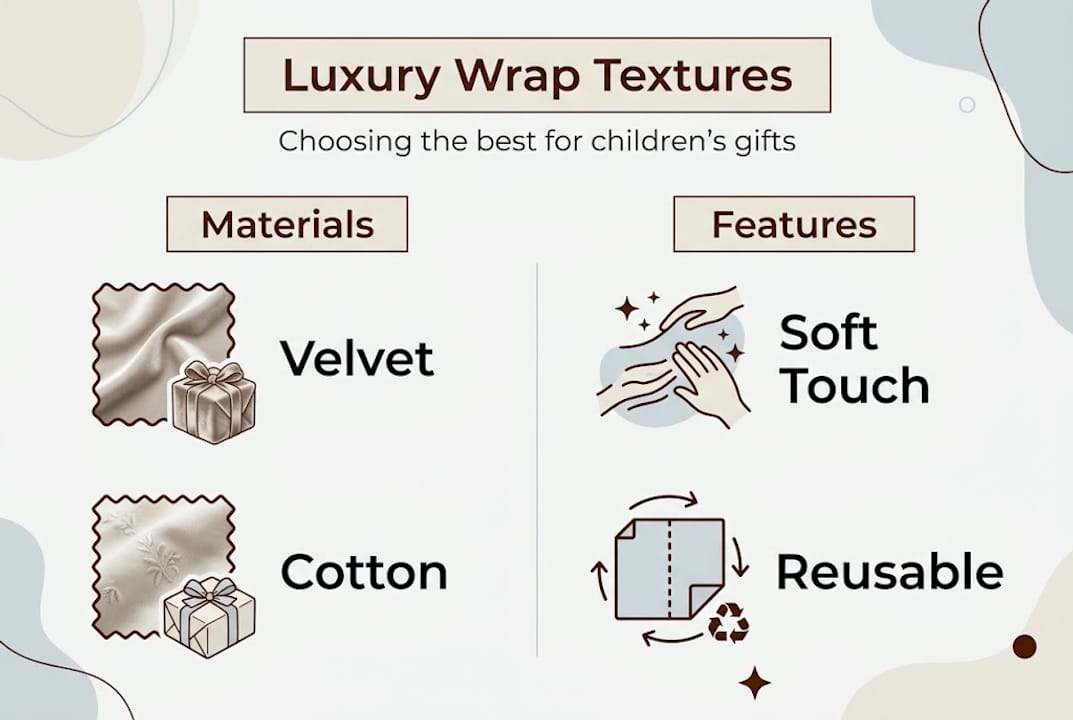
For those drawn to the luxurious depth of fabric wraps for luxury gifts, velvet occupies a singular position. Its pile creates a dimension that simply cannot be reproduced on paper, and a velvet wrap in a rich forest green or the softest dove grey speaks instantly of considered luxury.
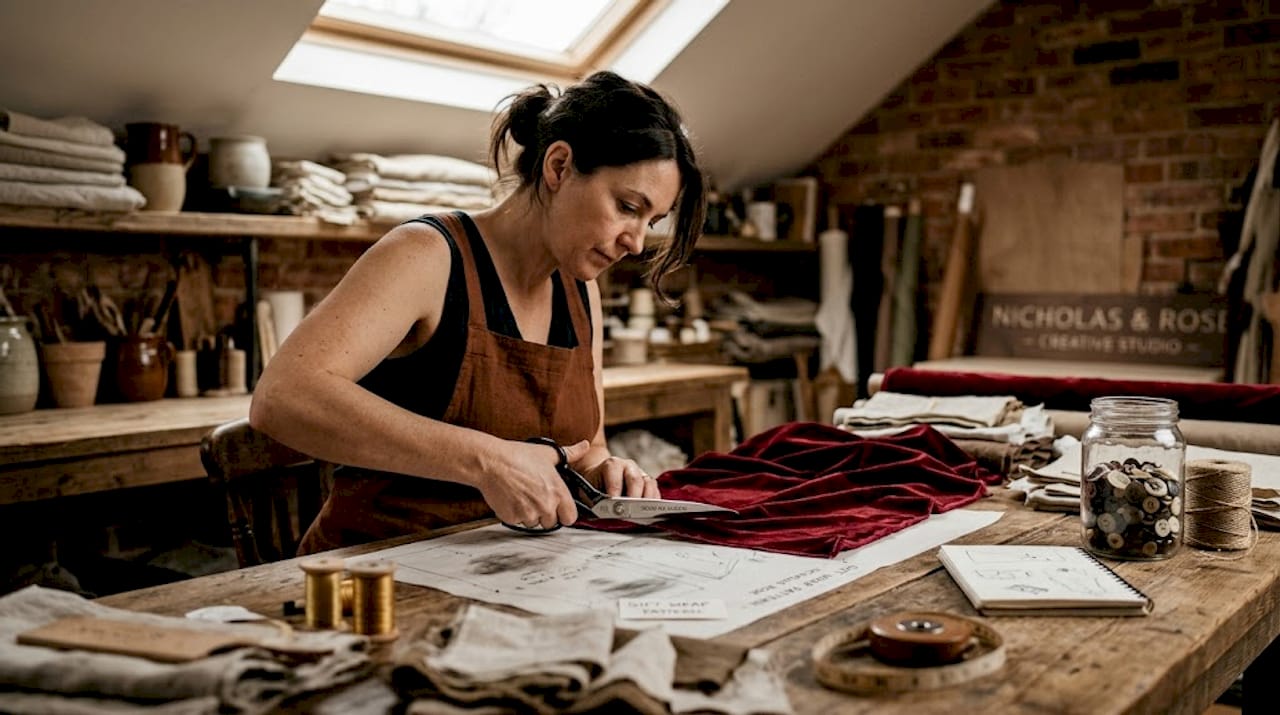
Pro Tip: When selecting a material for a newborn gift, always choose fabrics that have been washed before gifting. Pre-washed organic cotton softens beautifully and removes any residual manufacturing finishes that might irritate a baby’s skin, while also demonstrating an extra layer of care in your preparation.
There are a few essential considerations to bear in mind:
- Avoid embellishments with small, detachable parts such as buttons, beads, or wire-threaded trims that pose a choking risk.
- Steer clear of heavily scented fabrics or treatments, which can overwhelm newborns whose sense of smell is acutely sensitive.
- Opt for natural dyes or OEKO-TEX certified fabrics wherever possible, ensuring the wrap is free from harmful chemicals.
- Consider the weight of the fabric: something too heavy can be difficult for a parent to fold neatly, while something too light may not hold a graceful shape.
The sustainability advantages of a premium fabric wrap extend far beyond avoiding the recycling bin. A wrap used year after year, carrying with it the patina of family occasions, becomes a thread in the fabric of a child’s life story.
Personalising luxury wrapping: Techniques and inspiration
Personalisation is the detail that transforms a beautiful wrap into an heirloom. There is a particular kind of joy in receiving a gift that bears the child’s name or initials, rendered in fine embroidery that will outlast a dozen birthdays. This is the territory where thoughtful gift-givers find the most opportunity to create something genuinely original.
The primary methods for personalising textured luxury wraps include:
- Embroidery: The most enduring and tactile technique. Thread woven directly into fabric creates a raised, dimensional quality that complements a plush or woven base beautifully.
- Appliqué: Fabric shapes, letters, or motifs sewn onto the wrap surface, offering playful texture-on-texture combinations perfect for a toddler’s imaginative world.
- Block printing: A heritage technique using carved blocks to press natural dye patterns into linen or cotton, suited to those who appreciate a handcrafted, artisanal aesthetic.
- Digital embroidery: Modern precision applied to traditional craft, allowing fine detail in names or dates to be reproduced consistently across multiple wraps, ideal when gifting to several families at once.
The guidance on personalising with embossed names and bespoke finishes consistently emphasises one principle: restraint creates elegance. A single initial rendered in soft gold thread against organic cotton says far more than a surface crowded with competing details.
Here is a simple, step-by-step process for personalising your gift wrap with confidence:
- Choose your base material with care, considering texture, colour, and how it will interact with your chosen personalisation method.
- Select a technique suited to the material. Embroidery works beautifully on cotton and linen. Appliqué suits felt. Block printing is ideal for natural woven fabrics.
- Sketch or plan your design before committing, considering scale and placement so the personalisation enhances rather than overwhelms.
- Test on a fabric scrap if applying any technique yourself, ensuring the result is clean and the fabric is not distorted.
- Apply your personalisation, then inspect carefully for any loose threads, sharp needle ends, or elements that could catch or irritate.
- Finish the wrap by pressing gently if needed, folding along natural drape lines for a graceful presentation.
For creative inspiration beyond pure wrapping, textured artwork techniques offer a wealth of ideas about how layering texture creates depth and visual interest, principles that translate elegantly to fabric presentation. You might also explore our own gift wrap folding guidance for precise, beautiful folds that complement your chosen material, alongside detailed fabric folding techniques that transform even a simple square of fabric into something sculptural and refined.
Pro Tip: When embroidering a name for a newborn, consider positioning it near a corner rather than the centre. This allows the wrap to be reused as a muslin square or keepsake cloth, with the name visible in a gentle, unobtrusive way.
Common pitfalls: Texture mistakes to avoid in luxury gifts
Even the most well-intentioned gift wrap can fall short when certain texture-related mistakes creep in. Awareness of these pitfalls will help you sidestep choices that compromise either the beauty or the practicality of your presentation.
Research into texture choices in gift wrapping highlights several recurring issues: overly bulky textures hinder storage and opening, high costs for premium finishes do not always translate to better experience, scented textures risk hedonic overload which can actually reduce a recipient’s enjoyment, and thin paper below 105gsm curls or fails entirely under any embossing pressure.
| Texture choice | The problem | Better alternative |
|---|---|---|
| Very thick, stiff fabric | Difficult to fold, unwieldy | Medium-weight woven cotton |
| Heavily scented wrap | Overwhelming for newborns | Unscented or very lightly botanical |
| Glitter-coated paper | Environmental harm, irritation | Velvet or embroidered fabric |
| Thin single-use paper | Tears easily, ends in bin | Reusable linen or cotton |
| Rigid embellishments | Safety risk for small children | Embroidery or soft appliqué |
The most common pitfall that gift-givers encounter is the temptation to layer too many sensory elements at once. A wrap that combines strong scent, heavy texture, bold pattern, and multiple ribbons creates an experience that is more disorienting than delightful, particularly for a newborn whose sensory processing is still developing.
There are several specific mistakes worth avoiding:
- Using sharp wire-edged ribbons that may unravel into points capable of scratching delicate skin.
- Selecting fabrics with synthetic pile that generates static and clings uncomfortably.
- Choosing wrapping that is visually stunning but too precious or impractical to reuse, undermining the sustainability case.
- Ignoring the weight-to-gift-size ratio: an enormous fabric wrap around a small gift looks disproportionate and can be difficult for parents to manage whilst holding a baby.
“Texture should enhance the moment of giving, not overwhelm it. The gentlest details often carry the greatest emotional resonance.”
Understanding why reusable gift wrap matters helps to reframe these choices entirely. When you invest in a wrap that is designed to be used again and again, questions of impracticality and excess simply dissolve. The wrap earns its quality through repeated use, through the occasions it participates in, and through the memories it accumulates alongside the child who grows up knowing it.
The overlooked secret: Why feel matters more than looks in luxury wrapping
We have spent years watching the conversation around luxury gift wrapping focus almost entirely on sight. The colour palette, the ribbon styling, the precision of the fold. These things are lovely, and we would never dismiss them. But in our experience creating personalised fabric wraps for the earliest milestones in a child’s life, we have come to believe that what people remember, what truly moves them, is almost always tactile.
Consider the wrapping paper torn away before the baby has even arrived. It is binned within moments of the gift being revealed, its beauty entirely ephemeral. A soft, embroidered fabric wrap is different in kind, not just degree. It stays. It is folded and kept. It is smoothed over a small face or tucked into a memory box. The sustainable gifting choices that endure are almost always the tactile ones, because touch creates a physical memory that sight cannot.
For children, comfort and soft interaction linger far longer in memory than any visual flourish. A wrap that feels gentle and inviting creates a positive emotional association with the act of receiving, and with the person who chose it so thoughtfully. This is the quiet power of texture: it makes generosity tangible. It gives the feeling of being cared for a form that small hands can hold.
Bring luxury texture to your next gift
If this guide has stirred something in you, a desire to move beyond the beautiful but fleeting toward something lasting and meaningful, we would love to show you what is possible.
At Nicholas & Rose, our 2026 newborn and toddler collection brings together the finest reusable fabric wraps, each available with bespoke embroidery personalisation. From the gentle drape of our woodland rabbit furoshiki wrap in luminous duck egg, to the full range of designs created specifically for life’s earliest celebrations, every piece is made to be kept, reused, and treasured. Browse our collection and discover how texture, personalisation, and sustainability can come together in a single, beautiful gesture.
Frequently asked questions
Which materials are safest for baby gift wrapping?
Gentle, non-abrasive materials like velvet, organic cotton, and plush fabric are safest, as they avoid sharp edges and minimise any risk of skin irritation for newborns and toddlers.
Can scented textures be used for newborn gift wrapping?
Subtle, natural scents may gently enhance the gifting experience, but strong or complex fragrances risk hedonic overload, which can actually reduce a recipient’s enjoyment rather than increase it.
Are reusable fabric wraps more sustainable than paper?
Yes, significantly so: high-quality fabric wraps reduce waste considerably and serve beautifully across many occasions, making them a far more responsible choice than single-use paper destined for landfill.
What are common mistakes with textured luxury wrapping?
Using bulky finishes, strong scents, or thin paper under 105gsm can make wrapping impractical, unpleasant, or unsafe, particularly in the context of newborn and toddler gifts where comfort and ease of handling are essential.
Recommended
- Classy Reusable Gift Wrap Tutorial for Luxury Gifting – Nicholas & Rose Limited
- Master the Sustainable Gift Wrapping Process for Luxury Gifts – Nicholas & Rose Limited
- Fabric wrap in luxury sustainable gifting: why it matters – Nicholas & Rose Limited
- Luxury wrapping: details that create lasting impressions – Nicholas & Rose Limited