

Luxury wrapping: details that create lasting impressions
A perfectly wrapped gift speaks before it’s opened. The crisp fold of fabric, the subtle gleam of coordinated ribbon, the whisper of personalised embroidery—these seemingly minor details transform a simple gesture into an unforgettable moment. For eco-conscious parents and gift-givers seeking sustainable luxury, detail in luxury wrapping creates emotional impact through precise techniques that elevate perceived value. This guide reveals how thoughtful presentation, especially with reusable fabric wrap, turns every gift into a cherished keepsake whilst honouring the planet.
Table of Contents
- Why detail transforms luxury wrapping
- Core techniques: Crafting luxury with every fold
- Personalisation: When wrapping becomes bespoke
- Materials duel: Sustainable fabric vs. traditional wrapping
- Expert insights: Common pitfalls and advanced tips
- Your next step: Sustainable luxury wrapping with ease
- Frequently asked questions
Key Takeaways
| Point | Details |
|---|---|
| Detail drives emotional value | Precise wrapping techniques make gifts more memorable and meaningful for both giver and recipient. |
| Personalisation amplifies luxury | Bespoke elements like monograms or motifs significantly increase the perceived value of a gift. |
| Fabric wrapping is eco-friendly | Reusable fabric wraps dramatically cut waste and offer extra value as keepsakes or accessories. |
| Small touches signal expertise | Invisible seams, neat folds, and coordinated accents are the hallmark of luxury-level wrapping. |
Why detail transforms luxury wrapping
With the power of detail established, let’s examine what truly sets luxury wrapping apart from ordinary packaging. Every fold, every seam, every carefully chosen accent contributes to an experience that begins the moment your gift is seen. The difference between standard presentation and luxury lies not in extravagance, but in intentional precision.
“Detail in luxury wrapping creates emotional impact and elevates perceived value through precise techniques like crisp folds, invisible seams, and layered elements such as quality tissue and coordinated ribbons.”
This attention to craft sparks genuine emotional connections. When you present a beautifully wrapped gift, you’re communicating care, thoughtfulness, and respect for the recipient. The giver feels pride in their presentation, whilst the receiver experiences anticipation heightened by visual beauty. For parents welcoming a newborn or celebrating a toddler’s milestone, this emotional resonance becomes part of the memory itself.
Sustainability amplifies this connection. Personalisation drives 40% more revenue whilst sustainable packaging builds 34% more trust with consumers. When you choose eco-conscious gift wrapping, you’re making a statement about values that resonates deeply with modern families.
Key elements that distinguish luxury presentation:
- Invisible seams that create seamless visual flow
- Crisp, architectural folds that hold their shape
- Coordinated accents in complementary tones
- Thoughtful layering of textures and materials
- Personalised touches that speak to the recipient
Core techniques: Crafting luxury with every fold
Now that we understand why detail matters, let’s explore how to put it into practice with sharable, actionable techniques. Mastering luxury wrapping requires understanding both the mechanics and the artistry behind each movement.
-
Prepare your surface and materials. Begin with a clean, flat workspace. Select fabric that balances luxury with sustainability—silk for luxury, cotton for durability affects drape and reusability. Ensure your fabric is pressed smooth, as wrinkles undermine the refined aesthetic you’re creating.
-
Create architectural folds. Place your gift centrally on the fabric. Bring opposite corners together, ensuring edges align perfectly. The key to crisp folds lies in deliberate pressure—run your fingers along each crease to set it firmly. For irregular shapes, box the item first to establish clean lines.
-
Achieve invisible seams. Traditional tape disrupts visual harmony. Instead, use double-sided adhesive or glue dots placed strategically beneath folds. With fabric wrap, consider the Japanese furoshiki technique, which requires no adhesive at all—the fabric’s own tension holds everything beautifully in place.
-
Layer thoughtfully. Begin with quality tissue if using it as an inner layer, then add your primary fabric wrap. Coordinate ribbons and accents in tones that complement rather than compete. Each layer should enhance the overall composition whilst maintaining visual balance.
-
Finish with precision. Examine your work from all angles. Adjust any uneven edges, tighten loose areas, and ensure symmetry. The final presentation should appear effortless, as though the wrapping naturally belongs to the gift itself.
Pro Tip: For newborn gifts, choose soft cotton fabrics in gentle hues that can later serve as a keepsake blanket or nursing cover. This transforms your wrapping into a dual-purpose treasure that extends its life far beyond the initial presentation.
81% of consumers try new products based on packaging appeal alone. When your wrapping demonstrates this level of care, you’re not simply covering a gift—you’re creating an experience that lingers in memory.
Common challenges and solutions:
- Wrinkled fabric: Steam gently or press with a warm iron before wrapping
- Unusual shapes: Use a coordinating box as foundation for clean lines
- Slippery materials: Secure with fabric-safe pins hidden beneath folds
Explore more reusable luxury gift wrap tips and discover how the sustainable wrapping process elevates every occasion.
Personalisation: When wrapping becomes bespoke
Alongside professional techniques, personalising your wrap amplifies both luxury and sentiment—here’s how to make it truly bespoke. The difference between beautiful and unforgettable often lies in those personal touches that speak directly to the recipient’s heart.
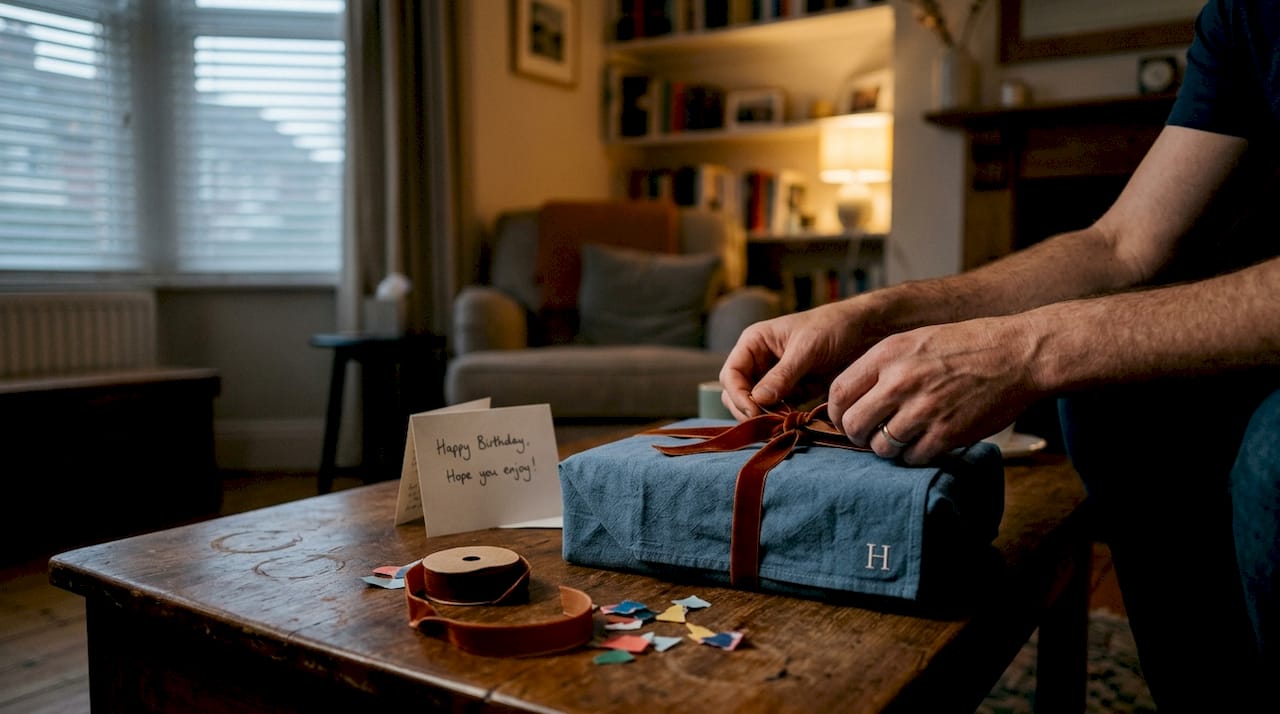
Monogramming, embroidery, or custom motifs signals unparalleled attention to detail, transforming wrapping into a bespoke experience. For a newborn, consider embroidering the baby’s name and birth date onto soft cotton fabric. For a toddler’s birthday, choose playful motifs that reflect their current fascinations—woodland creatures, celestial patterns, or garden florals.
The psychology behind personalisation is compelling. Personalisation boosts engagement 40% and significantly increases perceived premium value. When parents receive a gift wrapped in fabric bearing their child’s name, they’re holding something that transcends typical packaging—it becomes an heirloom piece worthy of preservation.
| Personalisation approach | Emotional impact | Practical benefit | Best for |
|---|---|---|---|
| Embroidered monogram | High sentiment, timeless elegance | Becomes keepsake item | Newborn welcomes, christenings |
| Custom motif or illustration | Playful, memorable | Reflects recipient’s personality | Toddler birthdays, celebrations |
| Occasion-matched ribbon colour | Thoughtful coordination | Enhances visual harmony | Any milestone event |
| Hand-written fabric tag | Personal, intimate | Adds handmade warmth | Close family gifts |
Pro Tip: When selecting embroidery thread colours, choose tones that complement rather than contrast sharply with your fabric. Soft sage on natural linen, or dusty rose on cream cotton, creates sophisticated subtlety that feels refined rather than loud.
Expert strategies for matching wrap to recipient:
- Consider the nursery palette for newborn gifts
- Reflect the child’s current favourite colours for toddlers
- Choose nature-inspired motifs for eco-conscious families
- Select classic, timeless designs for heirloom potential
Discover more about making thoughtful sustainable gift wrap choices that honour both recipient and environment.
Materials duel: Sustainable fabric vs. traditional wrapping
Choosing the right wrapping means weighing eco principles against aesthetics and ease—let’s break down the details. Understanding the true impact of your materials empowers you to make decisions aligned with your values without sacrificing beauty.
The environmental contrast is stark. 108 million rolls go to UK landfill yearly when traditional paper is used, even when FSC-certified or recycled. Fabric wraps, by contrast, can be reused as scarves, napkins, or nursery décor, extending their lifecycle indefinitely.
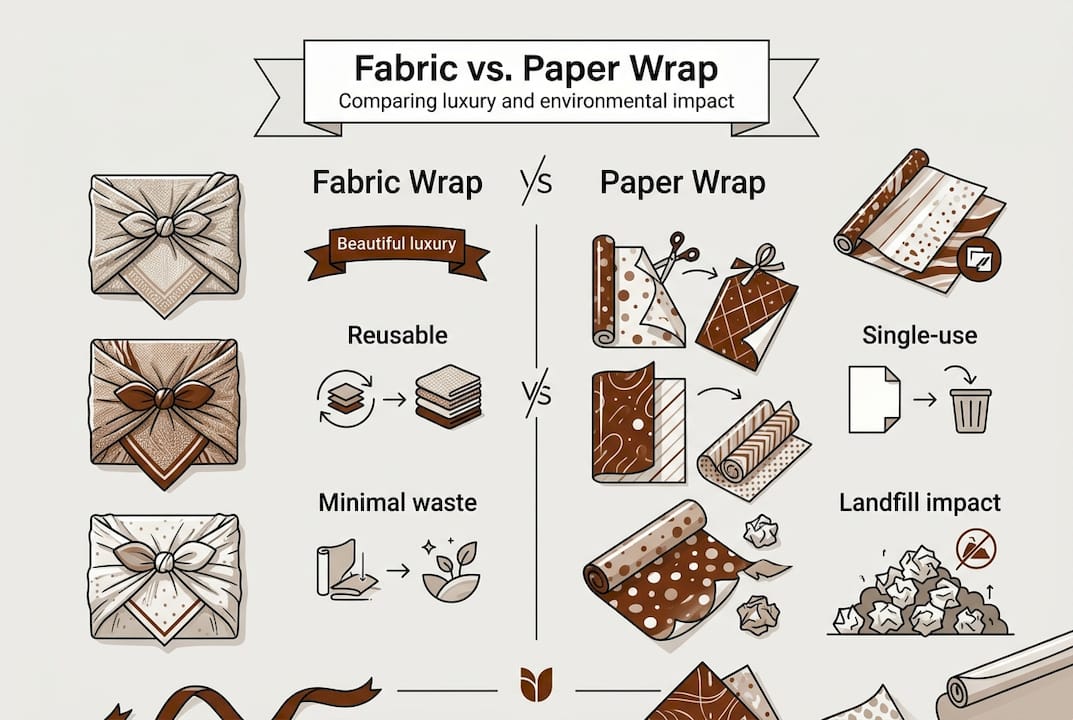
| Factor | Reusable fabric wrap | Traditional luxury paper |
|---|---|---|
| Environmental impact | Minimal waste, reusable multiple times | Single-use, contributes to landfill |
| Aesthetic appeal | Sophisticated drape, tactile luxury | Crisp finish, wide pattern variety |
| Skill required | Moderate, improves with practice | Low, familiar technique |
| Cost per use | Higher initial, lower over time | Lower initial, higher cumulative |
| Emotional value | Becomes keepsake, heirloom quality | Typically discarded after opening |
| Versatility | Can serve multiple purposes post-gift | Limited to wrapping function |
The trade-offs are honest. Traditional paper offers convenience and familiarity—most people learned to wrap with paper and find it intuitive. Fabric requires learning new techniques, particularly if you’re exploring furoshiki or other no-adhesive methods. However, the investment in skill pays dividends in both environmental impact and emotional resonance.
For eco-conscious parents, fabric wrapping aligns beautifully with broader sustainability values:
- Reduces household waste during gift-heavy seasons
- Models environmental responsibility for children
- Creates tangible connection between values and actions
- Offers practical reuse in daily family life
Learn more about selecting the best eco gift wrap materials for your gifting needs.
Expert insights: Common pitfalls and advanced tips
To wrap up your journey, here are advanced pointers and pitfalls to ensure your thoughtful intentions are always perfectly presented. Even experienced wrappers encounter challenges—knowing how to navigate them separates good presentation from exceptional.
-
Recognise professional-level detail work. Invisible precision and layering create a couture-like finish essential for luxury signalling. Examine your work critically: are seams hidden? Do folds hold their shape? Does the overall composition feel balanced and intentional?
-
Recover gracefully from mistakes. Wrinkled fabric can be steamed gently without unwrapping the entire gift. Uneven folds can often be adjusted by loosening one corner and redistributing tension. If adhesive shows, cover it strategically with ribbon or a decorative element that enhances rather than hides.
-
Master the art of proportion. Ribbon width should complement gift size—narrow satin for small items, wider grosgrain for larger packages. Embroidery placement matters: centre monograms on the visible top surface, position motifs where they’ll be seen first.
-
Understand fabric behaviour. Silk drapes beautifully but can be slippery and challenging for beginners. Cotton offers structure and forgiveness whilst maintaining elegance. Linen provides wonderful texture but wrinkles easily and requires pressing.
-
Add unexpected luxury touches. Tuck a sprig of dried lavender beneath the ribbon. Attach a small fabric tag with a handwritten message. Layer complementary fabrics for visual depth. These subtle additions signal thoughtfulness without overwhelming the presentation.
“The details are not the details. They make the design.”
This principle applies perfectly to luxury wrapping. Each small decision—thread colour, ribbon placement, fold precision—contributes to the whole. When executed with care, the result transcends mere packaging and becomes a meaningful part of the gift itself.
Pro Tip: Photograph your wrapped gifts before giving them. This creates a portfolio of techniques you’ve mastered and inspires future presentations. For parents, these photos become part of the memory archive surrounding special occasions.
Common pitfalls to avoid:
- Using too many competing patterns or colours
- Skipping the pressing step for fabric
- Choosing fabric too thick or stiff for the wrapping technique
- Placing embroidery where it will be hidden by folds
- Rushing the process instead of treating it as a mindful ritual
Find additional guidance in our sustainable Christmas wrapping tips for year-round inspiration.
Your next step: Sustainable luxury wrapping with ease
Having explored the nuances of luxury wrapping, discover how easy expert-level results become with trusted resources. The journey from understanding principles to creating beautiful presentations need not be solitary or overwhelming.
At Nicholas & Rose, we’ve curated a collection of reusable fabric wraps designed specifically for eco-conscious parents and gift-givers who refuse to compromise on elegance. Our 2026 newborn and toddler range features soft, sustainable fabrics that can be personalised through bespoke embroidery, transforming each wrap into a cherished keepsake rather than landfill waste.
Every piece in our collection balances luxury with environmental responsibility. Choose from gentle hues and timeless patterns that complement any nursery aesthetic, then personalise with the baby’s name, birth details, or meaningful motifs. The fabric you select today becomes tomorrow’s comfort blanket, nursing cover, or treasured memento—a gift that continues giving long after the initial presentation.
Explore our complete range of luxury fabric wrap solutions and discover how sustainable choices elevate every celebration. For seasonal inspiration, browse our guide to eco luxury Christmas wrapping and join a community of thoughtful givers reimagining what luxury truly means.
Frequently asked questions
What details make luxury gift wrapping stand out?
Invisible seams, crisp folds, coordinated accents, and thoughtful layering distinguish luxury presentation from standard wrapping. These precise techniques create visual harmony and elevate perceived value before the gift is even opened.
Does sustainable fabric wrapping really reduce waste?
Yes—fabric wraps can be reused many times, unlike disposable paper that contributes 108 million rolls to UK landfill yearly. Reusable fabric serves multiple purposes post-gift, from scarves to nursery textiles.
How does personalisation affect the luxury gift experience?
Personalising wrap through monogramming or embroidery transforms presentation into a bespoke experience. Personalisation boosts engagement 40% and significantly increases emotional value for both giver and recipient.
What’s the best fabric for luxury, sustainable wrapping?
Silk signals high-end luxury with beautiful drape, whilst cotton offers durability and reusability perfect for family use. Choose based on your priorities: silk for special occasions, cotton for practical elegance that endures.
Recommended
- Master the Sustainable Gift Wrapping Process for Luxury Gifts – Nicholas & Rose Limited
- Luxury Gift Wrapping: Complete Guide for 2025 UK – Nicholas & Rose Limited
- Eco Luxury Wrapping: Cut UK Gift Waste 90% with Keepsakes – Nicholas & Rose Limited
- Classy Reusable Gift Wrap Tutorial for Luxury Gifting – Nicholas & Rose Limited