

How to embellish gift wraps sustainably: 2026 guide
Gifting for newborns and toddlers should celebrate new life, not contribute to landfill waste. Traditional wrapping paper generates over 227,000 tonnes of UK waste annually, much of it non-recyclable due to glitter, foil, and plastic coatings. Eco-conscious parents increasingly seek sustainable, personalised ways to wrap gifts that honour both the recipient and the planet. This guide reveals practical techniques to embellish gift wraps using reusable fabrics, natural materials, and creative DIY touches that transform packaging into cherished keepsakes whilst eliminating single-use waste.
Table of Contents
- Key takeaways
- Preparing to embellish gift wraps sustainably
- Step-by-step techniques for eco-friendly embellishments
- Handling tricky gift shapes and finishing touches sustainably
- Verifying recyclability and reducing gift wrap waste impact
- Explore luxury sustainable gift wraps for milestones
- How to embellish gift wraps: frequently asked questions
Key Takeaways
| Point | Details |
|---|---|
| Reusable fabric wraps | Reusable fabric wraps dramatically reduce single use waste by replacing disposable paper or tape with versatile folds and knots that can be kept as keepsakes. |
| Natural embellishments | Gather biodegradable decorations such as pressed flowers dried lavender and seed paper tags to add bespoke charm without plastic coatings. |
| Family involvement | Involve the whole family in DIY touches with wooden paint sticks and embroidery to personalise the wrap. |
| Avoid non recyclable elements | Avoid plastic tape and glitter as these elements hinder recycling and undermine sustainability aims. |
Preparing to embellish gift wraps sustainably
Choosing the right foundation materials determines both the environmental impact and aesthetic success of your gift presentation. Reusable furoshiki fabric wraps made from cotton, linen, or gauze, sized 50-100cm for baby gifts, provide the ideal sustainable base. These traditional Japanese wrapping cloths eliminate paper waste entirely whilst offering superior versatility for various gift shapes and sizes.
Select fabrics appropriate to the occasion and recipient. Soft cotton gauze suits delicate newborn gifts, creating a gentle, breathable wrap that parents can repurpose as a muslin cloth. Linen offers more structure for toddler toys whilst maintaining breathability and durability. Organic cotton provides middle-ground versatility, working beautifully for both age groups. Consider the fabric’s weight: lighter materials (under 150gsm) fold more easily for intricate techniques, whilst heavier weaves (200gsm+) provide more substantial presentation for larger items.
Gather natural embellishments that complement rather than compete with your chosen fabric. Pressed flowers from your garden, dried lavender sprigs, eucalyptus leaves, and seed paper tags offer biodegradable decoration with genuine character. Natural jute twine or organic cotton cord replaces synthetic ribbons, providing secure closures that decompose harmlessly. Small wooden clothespins serve dual purposes: securing fabric folds and adding rustic charm without adhesives.
Avoid plastic tape entirely when working with fabric wraps. The combination creates recycling complications and undermines sustainability goals. For paper-based wraps, choose eco-friendly paper tape that biodegrades completely. Keep a small collection of fabric scraps for creating bows, rosettes, or decorative accents that match your wrapping cloth. These reusable embellishments build a sustainable gift-wrapping kit that serves multiple occasions.
Prepare DIY personalisation materials that engage the whole family. Wooden paint sticks, non-toxic fabric paints, and embroidery supplies allow you to add names, dates, or simple designs directly onto wraps. For paper elements, gather kraft paper sheets that children can decorate with handprints, drawings, or potato stamps. These personalised touches transform functional wrapping into meaningful keepsakes that recipients treasure long after unwrapping.
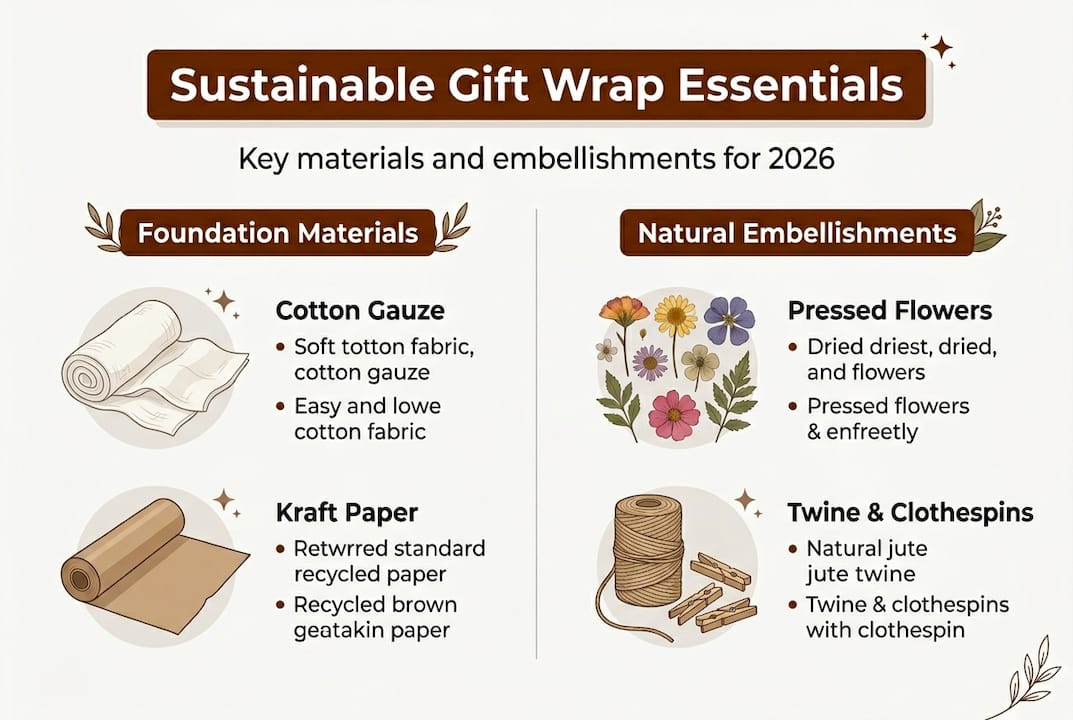
| Material type | Best uses | Sustainability rating |
|---|---|---|
| Cotton gauze (50-70cm) | Newborn clothing, soft toys | Excellent (reusable 50+ times) |
| Linen (70-100cm) | Books, wooden toys, larger gifts | Excellent (extremely durable) |
| Organic cotton (60-90cm) | General purpose, all ages | Excellent (versatile, long-lasting) |
| Kraft paper | Tags, children’s art backing | Good (recyclable, biodegradable) |
| Natural twine | Securing wraps, hanging tags | Excellent (compostable) |
Step-by-step techniques for eco-friendly embellishments
Mastering traditional furoshiki techniques including Otsukai Tsutsumi for boxes, Bin Tsutsumi for bottles, and Yotsu Musubi for pouches unlocks endless sustainable wrapping possibilities. These centuries-old methods require no tape, scissors, or waste, relying instead on strategic folding and knotting to create secure, beautiful presentations.
For rectangular gifts like board books or clothing boxes, the Otsukai Tsutsumi technique provides elegant simplicity. Place your gift diagonally on the fabric square, ensuring equal fabric extends on all sides. Bring two opposite corners together over the gift centre, then tie them in a simple knot. Take the remaining corners, pull them taut to eliminate slack, and tie them over the first knot. The resulting presentation resembles a fabric envelope with decorative knot centrepiece. Tuck a sprig of dried lavender or pressed flower beneath the top knot for natural embellishment.
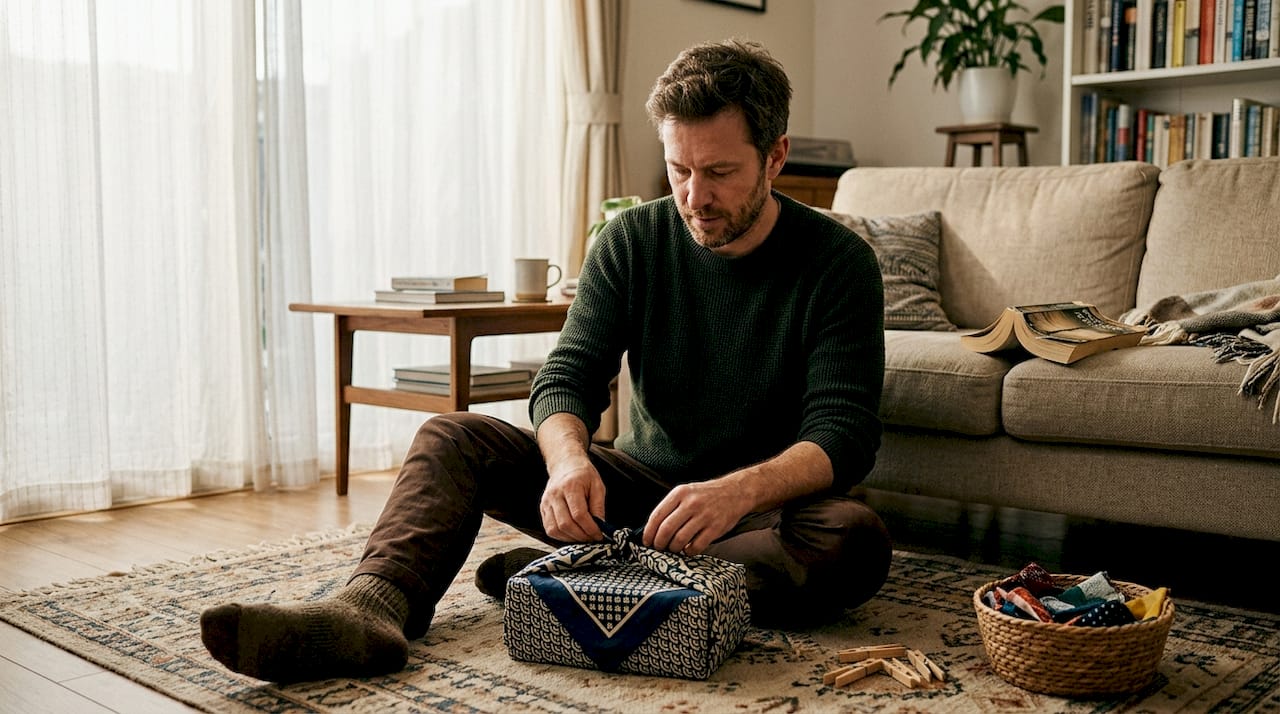
Bottle-shaped gifts, whether formula containers or water bottles for older toddlers, suit the Bin Tsutsumi method perfectly. Position the bottle horizontally near one fabric edge, leaving 15cm excess. Roll the bottle tightly in the fabric until reaching the opposite edge. Gather both ends of the fabric tube, twist them gently, then bring them together above the bottle and tie securely. This creates a wrapped presentation resembling a giant sweet. Attach a seed paper tag to the knot using natural twine, adding both decoration and a gift that grows wildflowers.
Create instant gift bags using the Yotsu Musubi pouch technique for irregularly shaped toys. Lay the fabric flat, place the gift in the centre, then gather all four corners together above the gift. Tie the corners in pairs first, creating two loops, then thread one loop through the other and pull tight. This self-securing knot requires no additional fasteners whilst creating convenient carrying handles. Weave a length of natural ribbon through the loops for added colour and texture.
Personalise kraft paper wraps by inviting children to create custom designs using non-toxic paints or stamps. Their artwork becomes part of the gift story, engaging young family members in sustainable practices whilst creating truly unique presentations. Once decorated and dried, use the paper as a base layer beneath fabric wraps or as decorative tags attached with twine.
Pro tip: Avoid plastic tape entirely on fabric wraps. Small wooden clothespins secure folds invisibly whilst adding rustic charm, and they’re endlessly reusable across multiple gifting occasions.
| Wrapping technique | Ideal gift types | Difficulty level | Embellishment ideas |
|---|---|---|---|
| Otsukai Tsutsumi | Boxes, books, flat items | Beginner | Pressed flowers under knot |
| Bin Tsutsumi | Bottles, cylindrical toys | Beginner | Seed paper tags on twine |
| Yotsu Musubi | Soft toys, irregular shapes | Intermediate | Natural ribbon through loops |
| Simple pouch | Small items, clothing | Beginner | Embroidered name on fabric |
Handling tricky gift shapes and finishing touches sustainably
Awkwardly shaped toddler gifts demand creative solutions that maintain sustainability principles without compromising presentation quality. Odd-shaped toys can be wrapped with fabric bags, whilst swaddles can be reused as wrap for baby gifts, transforming functional items into beautiful, reusable packaging. This dual-purpose approach eliminates waste entirely whilst providing recipients with practical items they’ll use long after the celebration.
Fabric pouches solve the irregular-shape challenge elegantly. Sew simple drawstring bags from organic cotton or repurposed fabric scraps in various sizes. These bags accommodate everything from plush animals to building blocks, securing contents whilst creating attractive presentation. Embroider the recipient’s name or birth date on the bag exterior, transforming packaging into a personalised storage solution parents will treasure. The drawstring closure requires no tape or additional fasteners, maintaining zero-waste principles.
Muslin swaddles, essential items for newborns, double as luxurious gift wraps that serve recipients long after unwrapping. Fold the swaddle diagonally to create a triangle, place the gift near the long edge, then roll and tie the pointed ends together. The remaining fabric drapes beautifully, showcasing the swaddle’s pattern whilst securing the gift. This method particularly suits clothing sets, blankets, or soft books, creating a cohesive gift bundle.
Finishing touches determine whether your sustainable wrap achieves visual impact comparable to conventional alternatives. Avoid glitter, plastic tape, and synthetic ribbons completely. These materials contaminate recycling streams and persist in landfills for decades. Instead, embrace natural alternatives that biodegrade harmlessly whilst offering genuine aesthetic appeal.
Seed paper tags provide decoration that literally grows into wildflowers after gifting. Write the recipient’s name and gift occasion on the tag using plant-based ink, then attach it with natural twine. Recipients can plant the tag in soil, water it regularly, and watch flowers bloom as a lasting reminder of the celebration. This transforms disposable decoration into living memory.
Eco-friendly paper tape secures any paper elements without the environmental burden of plastic alternatives. Choose unbleached varieties with natural adhesives that decompose completely. For fabric wraps, wooden clothespins offer superior alternatives to any adhesive, pinning folds invisibly whilst adding textural interest.
Pro tip: Invite older siblings to decorate kraft paper tags with drawings or handprints. This personalisation engages the whole family in sustainable gifting whilst creating artwork that recipients cherish as keepsakes documenting the giver’s age and creativity at that moment.
Verifying recyclability and reducing gift wrap waste impact
Understanding which materials genuinely support environmental goals prevents well-intentioned choices from contributing to waste streams. UK Christmas wrapping paper waste statistics reveal that much remains non-recyclable due to glitter and foil, with the scrunch test identifying recyclability. This simple verification method empowers you to make informed material selections that align with sustainability values.
The scrunch test provides instant recyclability assessment for any paper-based wrap. Crumple the paper firmly in your hand, then release. If it stays scrunched, the paper contains primarily natural fibres and likely recycles successfully. If it springs back to its original shape, the paper contains plastic coatings, foil, or other contaminants that prevent recycling. This test takes seconds but dramatically improves your material selection accuracy.
Single-use plastic tape and glitter represent the most problematic conventional wrapping elements. Plastic tape contaminates paper recycling, forcing entire sheets into landfill. Glitter, whether plastic or metallic, never biodegrades and increasingly appears in marine ecosystems where it harms wildlife. Eliminating these materials from your wrapping practice delivers disproportionate environmental benefit relative to the minimal aesthetic sacrifice.
Recycling paper and fabric wraps properly maximises their environmental benefit whilst conserving resources for future use. Paper wraps free from tape, glitter, and foil can enter standard recycling streams, where they’re processed into new paper products. This recycling saves approximately 17 trees per tonne of paper processed whilst reducing manufacturing energy consumption by 70% compared to virgin paper production.
“Producing 1kg of wrapping paper generates over 3kg of CO2 emissions. Recycling that same paper reduces emissions by 75% whilst saving 17 trees per tonne processed. Reusable fabric wraps eliminate these impacts entirely after just three uses.”
Fabric wraps deliver exponentially greater environmental benefit through repeated use. Quality cotton wraps withstand 50+ uses with basic care, eliminating paper consumption entirely. After each use, gently hand wash fabric wraps in cool water with mild detergent, then air dry completely before storing flat in a drawer. This simple maintenance preserves fabric integrity whilst preventing mildew or odours.
Consider creative reuse options that extend the lifecycle of both paper and fabric wraps beyond their initial purpose. Paper wraps become art project materials, book covers, or drawer liners. Fabric wraps transform into produce bags, picnic napkins, or doll blankets. This creative reuse mentality prevents functional materials from entering waste streams prematurely.
- Perform the scrunch test on all paper wraps before purchasing
- Remove plastic tape completely before recycling paper
- Wash fabric wraps after every 3-4 uses to maintain freshness
- Store wraps flat to prevent permanent creasing
- Repurpose worn fabric wraps as cleaning cloths rather than discarding
Explore luxury sustainable gift wraps for milestones
Transforming your gift presentation from wasteful to wonderful requires both knowledge and quality materials that honour your sustainability values. The techniques you’ve learned work beautifully with premium reusable wraps designed specifically for life’s precious moments. Nicholas & Rose offers baby and beyond milestone gift wraps that combine luxury aesthetics with genuine environmental responsibility, creating presentations worthy of newborn celebrations and toddler achievements.
These thoughtfully designed fabric wraps eliminate single-use waste whilst providing elegant presentation that recipients treasure as keepsakes. Each wrap can be personalised through embroidery, adding names, dates, or meaningful messages that transform functional packaging into cherished mementos. Unlike disposable paper that ends in bins often before babies arrive, these reusable wraps accompany families through multiple milestones, building sustainable traditions that children learn and carry forward.
Discover how sustainable gift wrapping fabric wraps complement the embellishment techniques detailed throughout this guide. Visit Nicholas & Rose to explore the complete range of luxury sustainable gift wrap solutions designed for eco-conscious families.
How to embellish gift wraps: frequently asked questions
How do I choose the best fabric for reusable wraps?
Select fabric based on gift type and recipient age. Cotton gauze suits delicate newborn items with its soft, breathable weave that doubles as a muslin cloth. Linen provides structure for heavier toddler toys whilst maintaining durability through dozens of uses. Organic cotton offers versatile middle ground, working beautifully across age ranges and gift types.
Can children help decorate sustainable gift wraps?
Absolutely. Invite children to paint kraft paper tags, create potato stamp designs, or add handprints to paper underlays. These personalised touches engage young family members in sustainable practices whilst creating artwork that recipients treasure. Older children can learn simple embroidery stitches to add names or dates directly onto fabric wraps.
What should I avoid to keep wrapping eco-friendly?
Eliminate plastic tape, glitter, foil coatings, and synthetic ribbons completely. These materials contaminate recycling streams and persist in landfills for decades. Replace them with natural twine, wooden clothespins, pressed flowers, and seed paper tags that biodegrade harmlessly whilst offering genuine aesthetic appeal.
How do I care for fabric wraps to ensure longevity?
Hand wash wraps in cool water with mild detergent after every 3-4 uses, then air dry completely before storing flat. This simple maintenance preserves fabric integrity whilst preventing mildew or odours. Quality cotton wraps withstand 50+ uses with proper care, delivering exponential environmental benefit compared to single-use alternatives.
What finishes work best for odd-shaped baby gifts?
Fabric pouches with drawstring closures accommodate irregular shapes beautifully whilst maintaining sustainability principles. Alternatively, use the Yotsu Musubi technique to create instant bags from square wraps, gathering corners above the gift and tying them securely. Both methods eliminate tape requirements whilst creating attractive, functional presentations.
Recommended
- 7 Steps to a Gift Wrap Sustainability Checklist for Parents – Nicholas & Rose Limited
- Sustainable gift wrapping with fabric: save 90% waste – Nicholas & Rose Limited
- 7 Christmas Wrapping Tips 2025 for Sustainable Luxury Gifts – Nicholas & Rose Limited
- Sustainable Gift Wrap Choices: Eco-Luxury for 2025 – Nicholas & Rose Limited
- How to customise party gifts for memorable celebrations – Personalise4uLtd