

Personalised Embroidery Gifts Reused 5x More in 2026
Each year, UK families generate mountains of discarded wrapping paper from newborn and toddler gifts, much of it binned before babies celebrate their first birthday. Over 70% of wrapping paper is discarded after a single use in the UK, creating unnecessary landfill waste. This article explores how personalised embroidery on reusable fabric wraps transforms gifting into a sustainable, emotionally rich experience that parents and children treasure for years.
Table of Contents
- The Rise Of Sustainable And Personalised Gifting
- Why Personalised Embroidery Adds Emotional And Sentimental Value
- Environmental Benefits Of Using Reusable Embroidered Fabric Wraps
- Comparison Of Embroidery With Other Personalisation And Wrapping Techniques
- Common Misconceptions About Personalised Embroidered Gifts And Sustainability
- Practical Guidance: Choosing Personalised Embroidered Gifts For Newborns And Toddlers
- Conclusion: Making Meaningful, Sustainable Gift Choices
- Explore Sustainable Personalised Embroidery Wraps At Nicholas & Rose
- Frequently Asked Questions About Personalised Embroidery Gifts
Key Takeaways
| Point | Details |
|---|---|
| Embroidery creates lasting keepsakes | Personalised embroidered wraps boost emotional connection and become cherished mementos. |
| Reusable fabric drastically cuts waste | Embroidered wraps eliminate single-use paper waste and reduce environmental footprint. |
| Lower environmental impact than alternatives | Embroidery uses natural fibres with smaller carbon footprints than plastic printing. |
| Cost misconceptions are unfounded | Long-term value and reuse offset initial investment in quality embroidered wraps. |
| Practical selection tips empower parents | Choosing organic fabrics and meaningful designs ensures sustainable, sentimental gifting. |
The Rise of Sustainable and Personalised Gifting
UK parents are shifting away from disposable wrapping toward reusable materials that carry emotional weight. Annual gift wrap waste from baby gifts alone contributes significantly to landfill, with traditional paper wrapping offering zero sentimental value once torn open. There is an increasing demand for personalised gifts with emotional value among parents seeking sustainability, reflecting a broader cultural move toward meaningful consumption.
This trend isn’t just environmental virtue signalling. Parents genuinely want gifts that matter, items their children will associate with love and care as they grow. Personalised embroidery on fabric wraps addresses both concerns simultaneously, providing a tactile, visual reminder of affection while slashing waste.
Here’s why this shift matters:
- Reusable embroidered wraps eliminate the cycle of buying, tearing, and binning paper each gift occasion.
- Personalisation transforms wrapping from packaging into a cherished part of the gift itself.
- Benefits of fabric gift wrap for eco-parents extend beyond sustainability to include durability and aesthetic appeal.
- Parents report greater satisfaction when gifts reflect thoughtfulness and environmental responsibility.
Why Personalised Embroidery Adds Emotional and Sentimental Value
Embroidery creates something unique that printed or paper wraps simply cannot match. Each stitch carries intention, transforming fabric into a tactile keepsake that parents and children treasure. Personalised gifts have a 40% higher retention rate and 25% lower replacement rate than standard gifts, demonstrating their lasting emotional impact.
The psychological benefits run deeper than aesthetics. When parents wrap a newborn gift in embroidered fabric featuring the baby’s name or birth date, they’re creating a comfort object the child may cling to for years. This tangible connection fosters bonding and provides security, especially during developmental milestones.
Consider these emotional advantages:
- Embroidered wraps become part of nursery decor, family photo albums, and memory boxes.
- Children associate the fabric with warmth and care, creating positive emotional anchors.
- Personalisation creating keepsakes strengthens family narratives and traditions.
- Parents feel pride in choosing gifts that reflect their values and love.
Pro Tip: Choose embroidery designs that celebrate specific milestones like birth dates, first words, or favourite animals to deepen personal connection.
Environmental Benefits of Using Reusable Embroidered Fabric Wraps
The environmental case for embroidered fabric wraps is compelling. High waste percentages from wrapping paper contribute massively to UK landfills, with most paper containing glitter, foil, or plastic coatings that prevent recycling. Embroidered fabric wraps made from organic or recycled fibres offer a vastly lower environmental footprint.
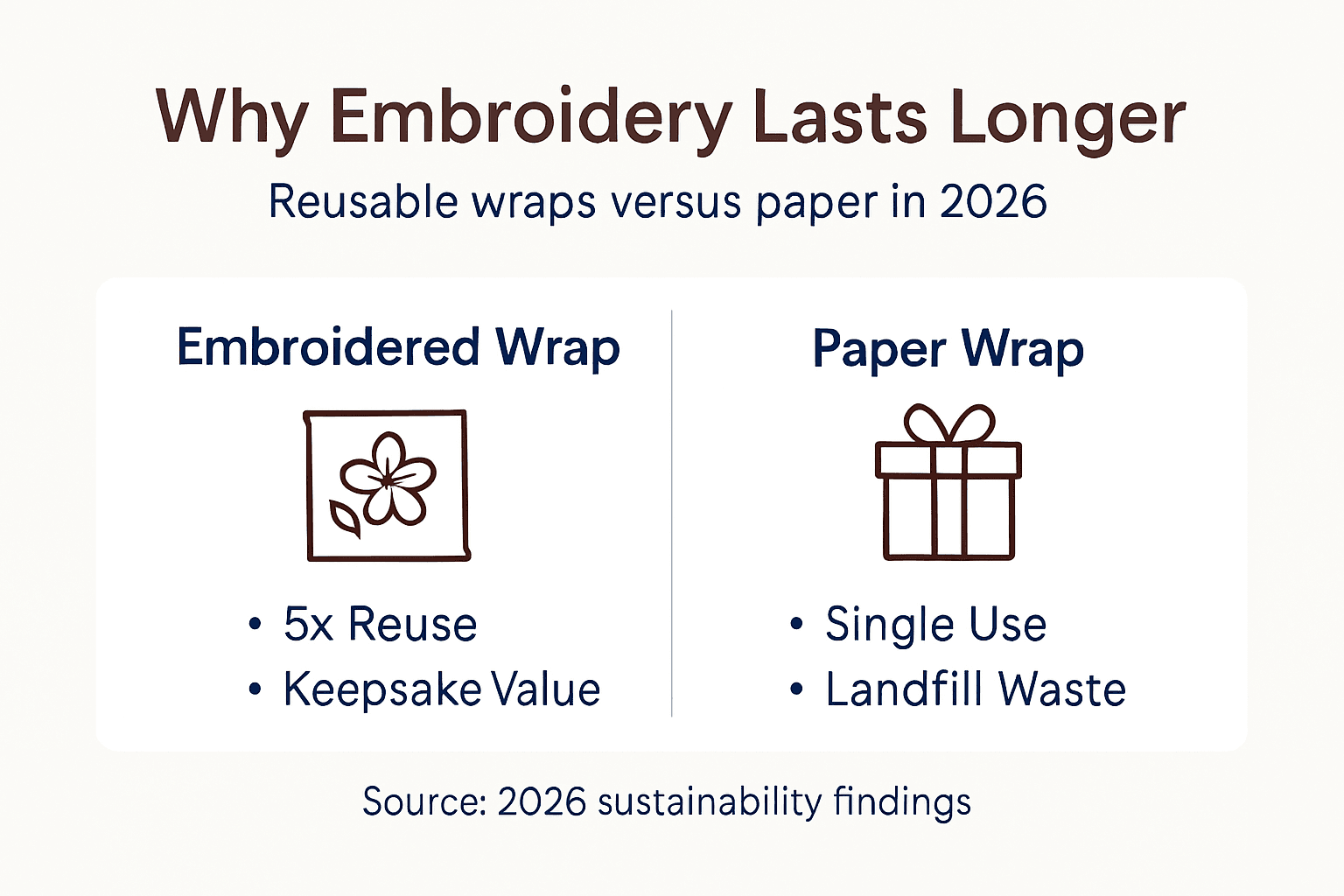
Durability statistics reveal embroidered wraps are reused five times more frequently than paper wraps, slashing waste across gift occasions. Organic cotton reduces water usage by up to 90% compared to conventional cotton, making it an ideal choice for eco-conscious parents. When you factor in the elimination of tape, ribbons, and disposal costs, the sustainability benefits multiply.
| Aspect | Embroidered Fabric Wrap | Traditional Paper Wrap |
|---|---|---|
| Average reuse | 5+ occasions | Single use |
| Water footprint (organic cotton) | 90% lower | N/A |
| Recyclability | Fully reusable, compostable at end of life | Often non-recyclable due to coatings |
| Carbon footprint | Low (natural fibres) | Moderate to high |
| Waste generation | Minimal | High (binned immediately) |
Benefits of reusable gift wrap extend to reduced manufacturing demand, as each wrap replaces multiple paper purchases. Investing in reusable wrap pays dividends both financially and environmentally over time.
Pro Tip: Verify embroidery thread and fabric source certifications like GOTS (Global Organic Textile Standard) to ensure true sustainability.
Comparison of Embroidery with Other Personalisation and Wrapping Techniques
Embroidery outperforms other personalisation methods and traditional wrapping in durability, eco-friendliness, and sentimental value. Plastic printing, while offering customisation, relies on synthetic materials that degrade slowly and leach chemicals. Embroidery uses natural fibres and has a lower carbon footprint than plastic printing, making it the superior choice for conscious parents.
Traditional wrapping paper offers zero personalisation and ends in the bin within minutes. Gift retention and reuse rates favour embroidered wraps significantly, as recipients actually keep and cherish them rather than discarding them immediately.
| Method | Durability | Environmental Impact | Personalisation | Retention Rate |
|---|---|---|---|---|
| Embroidered fabric | High (5+ uses) | Low (natural fibres, reusable) | High (custom designs) | 40% higher |
| Plastic printing | Moderate | High (synthetic materials, slow degradation) | Moderate | Standard |
| Traditional paper | Single use | Moderate to high (landfill waste, often non-recyclable) | None | Low |
Key differences include:
- Embroidery creates texture and depth that printed designs cannot replicate.
- Natural fibres in embroidered wraps biodegrade at end of life, unlike plastic.
- Reusable gift wrap alternatives comparison shows embroidery consistently ranks highest for sustainability and sentiment.
- Parents report greater satisfaction with gifts wrapped in embroidered fabric versus paper or plastic.
Common Misconceptions about Personalised Embroidered Gifts and Sustainability
Several persistent myths discourage parents from choosing personalised embroidered gifts, despite evidence proving otherwise. Misconceptions include that personalisation increases waste and costs, but evidence shows higher retention and long-term value. Let’s address the most common concerns.
Belief 1: Personalisation creates more waste. Actually, personalisation increases gift retention by 40%, meaning recipients keep items longer and replace them less frequently. This dramatically reduces consumption and waste over time.
Belief 2: Embroidery is less sustainable than printing. In reality, embroidery uses natural fibres and traditional techniques with lower carbon footprints than plastic printing processes. The durability of embroidered wraps amplifies this advantage through repeated use.
Belief 3: Personalised gifts are too expensive. While initial costs may exceed disposable options, the long-term environmental and emotional value offsets this investment. A single embroidered wrap replaces dozens of paper purchases across years of gift occasions.
Key corrections include:
- Personalisation reduces waste by creating items people actually keep and treasure.
- Natural fibre embroidery has demonstrably lower environmental impact than synthetic alternatives.
- Personalisation misconceptions often stem from comparing upfront costs without considering lifecycle value.
- Quality embroidered wraps become family heirlooms, passed between siblings and generations.
Practical Guidance: Choosing Personalised Embroidered Gifts for Newborns and Toddlers
Selecting the right embroidered gift wrap requires attention to materials, design, and craftsmanship. Follow these steps to ensure your choice aligns with sustainability and sentimental goals.
-
Choose organic cotton or recycled fabric to minimise environmental impact. Selecting organic or recycled fabrics and durable embroidery ensures sustainable, long-lasting gifts. Look for GOTS certification or verified recycled content.
-
Pick embroidery designs with personal meaning and durability. Names, birth dates, or meaningful symbols create emotional connections that endure. Avoid trendy designs that may feel dated quickly.
-
Avoid synthetic fibres and low-quality craftsmanship. Polyester blends don’t biodegrade and can irritate sensitive baby skin. Quality embroidery uses tight, secure stitching that withstands repeated washing.
-
Prefer fabrics that are easy to clean for toddler use. Organic cotton and linen wash well and soften with age, making them practical for active children who inevitably spill and stain.
-
Consider size and versatility. Larger wraps accommodate various gift shapes and can later serve as play mats, cuddle blankets, or wall hangings.
Assembling sustainable newborn gift wraps involves thoughtful curation of materials and designs that grow with the child. Creating eco-conscious keepsakes means prioritising timeless appeal over fleeting trends.
Pro Tip: Consider messages or designs that grow with the child, like “Dream Big” or constellation patterns, for lasting sentimental value.
Conclusion: Making Meaningful, Sustainable Gift Choices
Personalised embroidery transforms gift wrapping from disposable waste into cherished keepsakes that support emotional bonding between parents and children. Reusable embroidered wraps significantly reduce gifting waste in the UK, addressing environmental concerns while honouring the emotional significance of welcoming new life.
You’re now equipped to gift purposefully, balancing sustainability with sentiment. Every embroidered wrap you choose represents a conscious decision to prioritise lasting value over convenience, creating memories that endure far beyond the unwrapping moment. Your choices shape not just your family’s traditions but also the environmental legacy you leave for your children.
Explore Sustainable Personalised Embroidery Wraps at Nicholas & Rose
Ready to transform your gifting approach? Nicholas & Rose offers curated embroidered fabric wraps made from organic and recycled materials, specially designed for eco-conscious parents of newborns and toddlers.
Discover unique designs that celebrate your family’s story while protecting the planet your children will inherit. Our expert guides on reuse gift wrap techniques and fabric gift wrap benefits help you maximise both sustainability and sentimental value. Visit Nicholas & Rose to explore our 2026 newborn and toddler range, where every wrap becomes a treasured memento.
Frequently Asked Questions About Personalised Embroidery Gifts
What makes personalised embroidery more sustainable than paper wrapping?
Embroidered fabric wraps eliminate single-use waste by lasting through five or more gift occasions, while paper wrapping typically ends in the bin immediately. Natural fibre embroidery uses organic cotton or recycled materials with significantly lower carbon footprints than paper production.
Are embroidered fabric wraps safe for newborns and toddlers?
Yes, when made from certified organic cotton or other natural fibres free from harmful chemicals. Quality embroidery uses non-toxic threads and secure stitching that won’t unravel, making wraps safe for babies to touch, cuddle, and explore.
How can I ensure my embroidered gift wrap stays eco-friendly over time?
Wash embroidered wraps in cold water with eco-friendly detergent, air dry when possible, and store folded in breathable containers. This preserves both fabric quality and environmental benefits across years of reuse.
Do personalised embroidered gifts really reduce waste compared to generic options?
Absolutely. Personalised embroidered gifts have 40% higher retention rates, meaning recipients keep them longer and replace them less frequently. This dramatically cuts consumption and disposal compared to generic items that feel disposable.
Is the upfront cost of embroidered gift wraps justified by their environmental benefits?
Yes. A single quality embroidered wrap replaces dozens of paper purchases across multiple gift occasions, saving money and environmental resources long-term. The emotional value and keepsake potential add further justification beyond purely financial calculations.
Recommended
- Personalised Gift Wrap: Complete Guide for 2025 – Nicholas & Rose Limited
- How to Personalise Gift Wrap with Embroidered Fabric – Nicholas & Rose Limited
- Personalised Wrap Benefits: Sustainable Luxury Gifting – Nicholas & Rose Limited
- Custom Embroidery Gift Wrap: Luxury With Impact – Nicholas & Rose Limited
- Fashion - Embroidery Lace - Page 1 - fabric fabric
- Sustainability in aviation fashion – Innovations 2026