

Why reusable fabric wraps matter: eco gift wrap for parents
TL;DR:
- Reusable fabric wraps are eco-friendly alternatives that reduce waste and environmental impact.
- Made from natural fibers like organic cotton and linen, they are washable and highly durable.
- Personalised embroidered designs can turn fabric wraps into treasured family heirlooms.
There is something quietly heartbreaking about watching beautifully chosen gift wrap torn away and discarded before a baby has even drawn their first breath. In the UK, 70% of wrapping paper cannot be recycled due to glitter, foil, and plastic coatings, meaning most of it travels directly from the gift table to the landfill. For eco-conscious parents, this moment of waste feels deeply at odds with the tenderness of welcoming a new life. Reusable fabric gift wraps offer something richer: a sustainable choice that reduces waste, carries genuine emotional weight, and becomes a treasured keepsake long after the ribbon is untied.
Table of Contents
- What makes reusable fabric wraps a sustainable choice
- How reusable fabric wraps reduce waste and emissions
- Comparing reusable fabric wraps to traditional paper
- Investment, longevity and personalisation: what parents need to know
- Our take: what most eco guides miss about reusable fabric wraps
- Discover eco-personalised fabric wraps for your family
- Frequently asked questions
Key Takeaways
| Point | Details |
|---|---|
| Fabric wraps last years | High-quality cotton and linen wraps can be reused over 100 times, supporting eco-friendly gifting. |
| Major emissions reduction | Switching to fabric wraps slashes carbon emissions by 70-90% compared to single-use paper. |
| Versatile and personal | Fabric wraps fit any shape and can be personalised with embroidery, making gifts more memorable. |
| Better for UK recycling | Unlike most wrapping paper, fabric wraps bypass recycling limits and avoid landfill entirely. |
What makes reusable fabric wraps a sustainable choice
Conventional wrapping paper carries a deceptively heavy footprint. Glitter, metallic inks, and laminated finishes render most of it unrecyclable, and even the paper that could theoretically be recycled is often too contaminated or crumpled to be accepted at kerbside collections. When you choose eco-luxury gift wrap made from natural fabric instead, you step away from this cycle entirely.
The foundation of fabric gift wrapping lies in the ancient Japanese art of furoshiki, a practice of folding and knotting square cloth around objects without the need for tape, scissors, or adhesive. Furoshiki basics are elegantly simple: a single piece of cloth, folded with intention, creates a secure and beautiful parcel for almost any shape. Because no tape is used, the wrap can be undone and reused immediately, with no waste produced in the process.
For parents of newborns and toddlers, this versatility is particularly valuable. Toys come in irregular, sometimes baffling shapes, and furoshiki zero-waste techniques adapt gracefully to cylinders, soft toys, and strangely proportioned boxes alike, building a family tradition that reduces the need to repurchase wrap for every occasion.
The materials you choose matter enormously. The most sustainable fabric wraps are made from:
- Organic cotton: Soft, breathable, fully biodegradable, and gentle against a newborn’s skin
- Linen: Exceptionally durable with a crisp hand-feel, it softens beautifully with each wash
- Unbleached muslin: Lightweight and naturally undyed, ideal for delicate gifting moments
- Recycled cotton blends: A responsible choice that extends the life of existing fibres
Synthetic fabrics such as polyester, while sometimes marketed as eco-friendly, do not biodegrade and shed microfibres during washing. For a truly closed-loop choice, natural fibres are essential.
Fabric wraps using furoshiki techniques are washable, reusable over 100 times, and require no additional packaging materials whatsoever. A single wrap, cared for properly, can serve a family through years of birthdays, christenings, and celebrations.
Personalisation deepens the value further. When a wrap is embroidered with a child’s name, birth date, or a delicate floral motif, it transcends its practical purpose and becomes something heirloom-worthy. Rather than a fleeting moment of colour torn away in seconds, it becomes a piece of the family’s story.
Pro Tip: Choose luxury fabric wraps made from certified organic cotton or linen to ensure full biodegradability at the end of their long life. Avoid blends with polyester, even if labelled as eco-friendly.
How reusable fabric wraps reduce waste and emissions
The environmental case for fabric wraps is not merely intuitive; it is supported by measurable data. When you consider the full lifecycle of a product, from raw material extraction through manufacturing, transport, use, and disposal, the contrast between single-use paper and reusable fabric becomes striking.
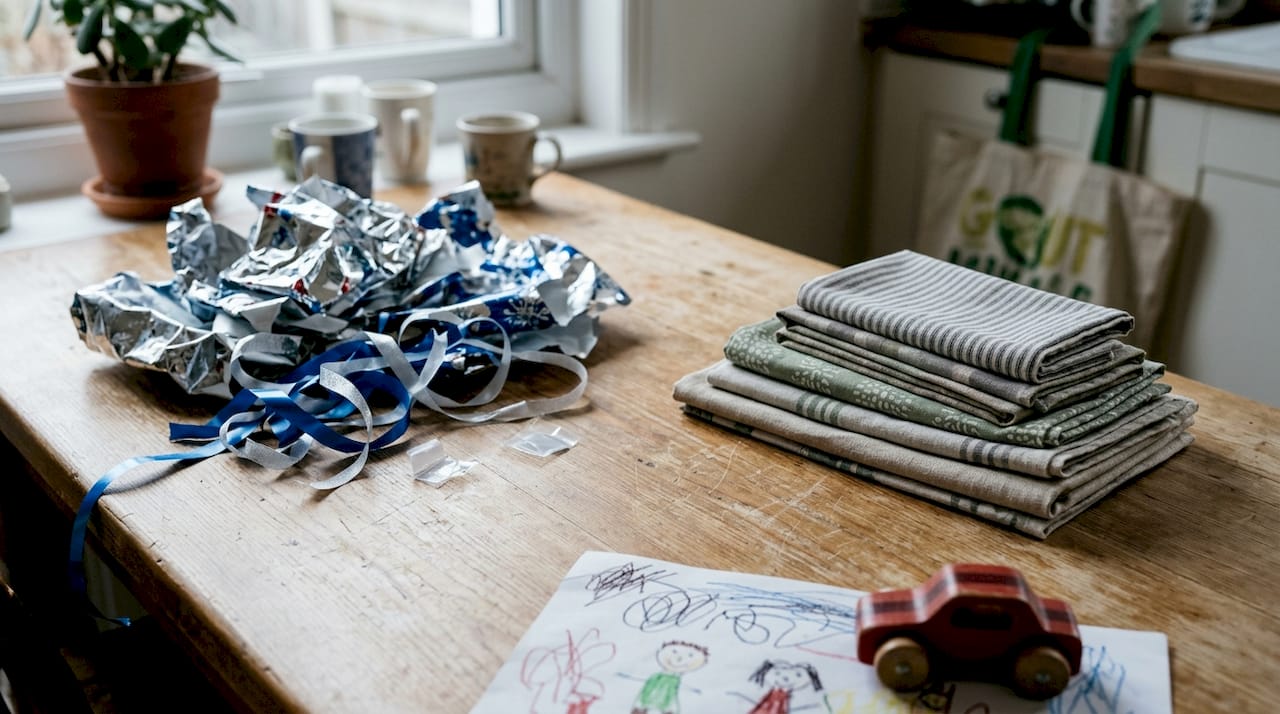
Reusable packaging cuts emissions by 70 to 90% compared to virgin materials, and a single fabric wrap can replace dozens of paper rolls over its lifetime. For a family that wraps gifts several times a year, this is a meaningful and cumulative saving.
Research into textile reuse offers a compelling analogy. Lifecycle benefits of textile reuse studies show that 251 clothing swaps can prevent over 4,137 kg of CO₂ emissions. Fabric gift wraps, used and reused across a family’s gifting occasions, carry comparable lifecycle advantages.
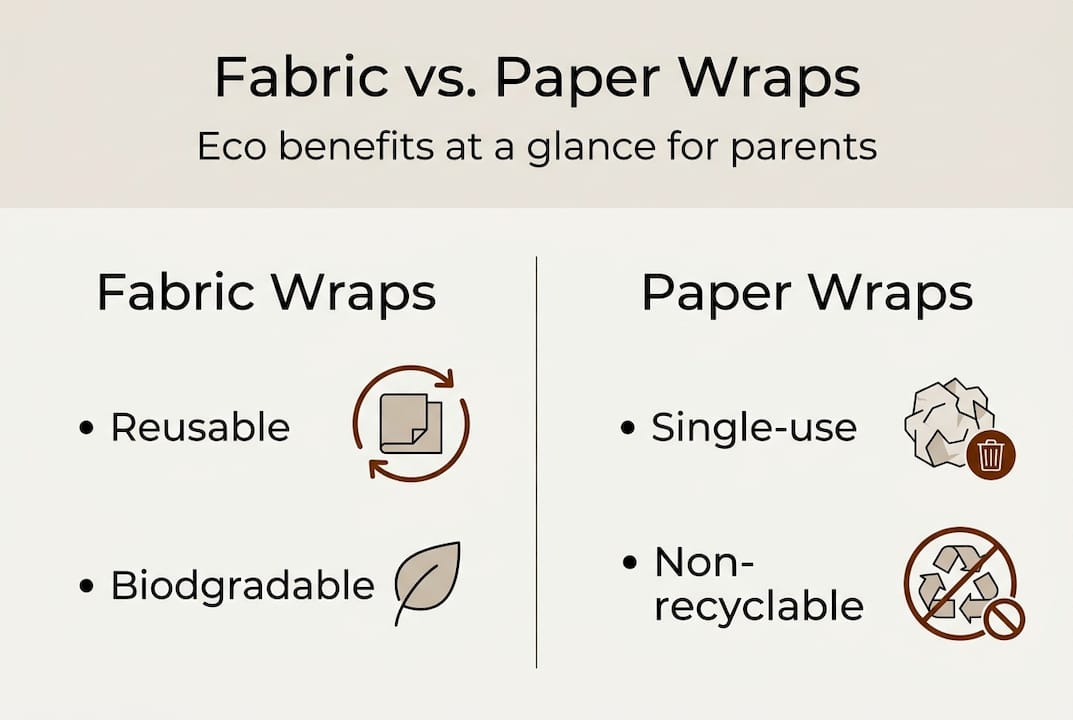
To make this tangible, consider the following comparison:
| Metric | Single-use paper wrap | Reusable fabric wrap |
|---|---|---|
| Uses per item | 1 | 100+ |
| Recyclable | 30% (at best) | Fully reusable |
| CO₂ per use (approx.) | High (virgin production) | Diminishes with each reuse |
| End of life | Landfill (mostly) | Compostable (natural fibres) |
| Personalisation | Limited | Embroidery, appliqué, dyeing |
“Choosing a reusable fabric wrap is not simply a practical swap. It is a quiet act of care for the world your child will inherit, made tangible in every fold and knot.”
The reusable wrap benefits extend beyond carbon savings. Consider the practical steps a UK family might take:
- Replace paper wrap for a newborn gift with one embroidered fabric wrap
- Reuse that same wrap for the child’s first birthday, then their second
- Pass it on as a keepsake or gift it forward to another family
- At the end of its life, compost or repurpose the natural fabric
Each step reduces demand for new paper production, eliminates plastic-coated waste, and keeps a beautiful object in circulation. The eco wrap savings accumulate quietly but powerfully over a family’s gifting years.
Comparing reusable fabric wraps to traditional paper
For parents weighing up the switch, a clear-eyed comparison is more useful than broad environmental claims. Let us look at where fabric wraps genuinely outperform paper, and where thoughtful care makes the difference.
In the UK, only 30% of wrapping paper is recyclable, with the remaining 70% destined for landfill due to metallic finishes, glitter, and plastic lamination. Even recyclable paper is often discarded incorrectly. Fabric wraps sidestep this entirely, as there is nothing to throw away.
For parents of toddlers, the shape problem is real. Oddly proportioned ride-on toys, soft animals with protruding limbs, and bulky board books defeat even the most patient paper-wrapper. Fabric wraps, with their adaptable drape and forgiving knot techniques, handle these shapes with grace. The fabric vs paper wrap distinction becomes especially clear in these moments.
Here is a practical side-by-side overview:
| Feature | Paper wrap | Fabric wrap |
|---|---|---|
| Eco credentials | Poor (70% non-recyclable) | Excellent (reusable, biodegradable) |
| Suitable for odd shapes | No | Yes |
| Personalisation | Printed only | Embroidered, bespoke |
| Keepsake potential | None | High |
| Cost over time | Recurring | One-off investment |
| Sensory quality | Disposable | Tactile, luminous, refined |
Care is straightforward, though worth noting. Fabric wraps need gentle washing with mild soap and air drying to prevent shrinkage and preserve embroidery. This small ritual is part of what makes them feel special rather than disposable.
Pro Tip: Begin a family wrap collection by assigning a dedicated fabric wrap to each child, personalised with their name. Bring it out for every birthday and celebration, and watch it gather meaning with each passing year. Explore top sustainable wrap solutions to find designs that will endure beautifully.
- Store fabric wraps folded in a linen drawer between uses
- Wash after each use on a cool, gentle cycle
- Air dry away from direct sunlight to preserve colour and embroidery
- Inspect embroidery threads periodically and repair any loose stitching
Investment, longevity and personalisation: what parents need to know
A quality fabric wrap costs more than a roll of paper at the supermarket checkout. This is simply true, and it is worth addressing honestly. However, the economics shift entirely once you consider how the cost is spread across uses.
A single fabric wrap used just ten times already costs less per use than most premium paper rolls. Used across a child’s early years, birthdays, and gifting occasions, the amortised value of reusables far outstrips the initial outlay. Unlike paper, which must be repurchased before every occasion, a fabric wrap is already waiting in your drawer, ready and beautiful.
Personalisation transforms this investment into something irreplaceable. Personalisation via embroidery using cotton and linen fabrics creates pieces that are fully biodegradable and deeply personal. A wrap embroidered with a newborn’s name and birth date becomes a first keepsake, as meaningful as a christening blanket or a hand-knitted cardigan.
Here are the most rewarding ways to personalise and maximise the life of your wraps:
- Choose a design that reflects the child’s personality or a family motif, such as a botanical sprig or a favourite animal
- Add a birth date or a short phrase in a refined embroidery font
- Select a colour palette that will endure across seasons and occasions
- Gift the wrap as part of the present itself, so the recipient keeps both
When choosing materials, prioritise organic cotton or linen over synthetic blends. The textile lifecycle study confirms that natural fibres outperform synthetics in both biodegradability and long-term durability. Synthetics may feel appealing initially, but they shed microfibres and do not break down at the end of their life.
- Cotton: Soft, washable, ideal for newborn gifts and gentle celebrations
- Linen: Crisp, structured, with a natural lustre that elevates any gift
- Avoid: Polyester, nylon, or acetate blends, regardless of eco-labelling
For investing in reusable wrap, the wisest approach is to start with one or two beautifully chosen pieces and build a small collection over time. Use our sustainability checklist to guide your choices and ensure every wrap you bring into your home earns its place.
Our take: what most eco guides miss about reusable fabric wraps
Most sustainability guides focus exclusively on carbon savings and recyclability rates. These matter, of course. But they miss something quieter and perhaps more enduring: the emotional architecture that reusable wraps help families build.
There is no direct lifecycle assessment for gift wrap specifically, but analogies from textile and packaging data confirm what common sense suggests: reusables made from cotton and linen are categorically superior to single-use alternatives, both environmentally and in terms of longevity. Prioritising these natural fibres over synthetic alternatives is not merely a technical preference; it is a values statement.
What the data cannot capture is the moment a child recognises their own wrap, embroidered with their name, reappearing at each birthday like a gentle ritual. That continuity, that sense of being known and remembered, is woven into the fabric itself. When you explore eco wrap tips for your family, consider not just the environmental credentials but the traditions you are quietly beginning. The most sustainable choice is also, often, the most beautiful one.
Discover eco-personalised fabric wraps for your family
If this feels like the right moment to begin a new gifting tradition, we would love to help you find the perfect wrap. Our 2026 newborn and toddler range at Nicholas & Rose brings together the finest organic cotton and linen fabrics with bespoke embroidery, creating wraps that are as meaningful as the gifts they hold.
Each wrap is designed to be used again and again, growing more precious with every occasion. Whether you are welcoming a new arrival or celebrating a toddler’s first birthday, a personalised fabric wrap from Nicholas & Rose transforms the act of giving into something truly lasting. Browse our collection and discover how beautifully sustainable gifting can feel.
Frequently asked questions
Are fabric wraps truly eco-friendly compared to paper?
Yes, fabric wraps cut emissions by 70 to 90% compared to virgin materials and last for years, making them a far superior environmental choice to single-use paper.
Can I wash and reuse fabric wraps for gifts?
Absolutely. Cotton and linen wraps are washable and durable, supporting over 100 uses when cared for with mild soap and air drying.
Do fabric wraps work for odd-shaped presents?
Yes, fabric wraps are particularly well suited to irregular shapes like toys, as their adaptable folding techniques accommodate almost any form without tearing or wasting material.
What is the best material for eco-wrapping fabrics?
Organic cotton or linen is the finest choice, as both are fully biodegradable and durable, and they accept embroidery beautifully for a personalised, heirloom finish.
Are there ways to make fabric wraps special for my child?
Yes, embroidery with your child’s name, birth date, or a bespoke motif transforms a fabric wrap into a keepsake that holds meaning far beyond the unwrapping moment.
Recommended
- Why Fabric Wraps Are Popular With Eco Parents – Nicholas & Rose Limited
- 6 Benefits of Custom Gift Wrap for Eco-Conscious Parents – Nicholas & Rose Limited
- 7 Top Benefits of Fabric Gift Wrap for Eco Parents – Nicholas & Rose Limited
- Why Invest in Reusable Wrap for Eco Gifting – Nicholas & Rose Limited
- Sustainable bag design explained: style, function and eco impact