

The role of gifting in sustainability for parents
TL;DR:
- Choosing reusable fabric wraps and durable gifts significantly reduces environmental impact during gift-giving occasions. Personalised, long-lasting items like quality cotton wraps foster emotional attachment and promote circular gifting practices. Focusing on usefulness, longevity, and pass-on potential maximizes sustainability and reduces waste.
Gifting shapes environmental outcomes at every stage of its lifecycle, and for baby showers and children’s gifts, the single most effective shift you can make is choosing a personalised reusable fabric wrap alongside a durable, genuinely useful gift. The wrapping alone matters more than most people realise: manufacturing foil or glitter-finished wrapping paper can produce carbon emissions several times its own weight, and neither material is recyclable through standard UK kerbside collections.
The simplest swaps for baby and children’s gifts:
- Replace single-use paper with a reusable cotton fabric wrap, personalised with embroidery for keepsake value
- Choose one durable, long-lived gift over several novelty items
- Consider a second-hand or vintage find, or gift an experience rather than a physical item
Table of Contents
- How does gifting affect sustainability?
- What actually makes a gift sustainable?
- Why reusable fabric wrap is a strong choice for baby gifts
- How to gift sustainably at a baby shower or child’s birthday
- Choosing a personalised reusable wrap: a brief buyer’s guide
- Key takeaways
- Why keepsakes matter more than we admit
- Nicholasandrose: personalised wraps for newborns and toddlers
- Useful sources
How does gifting affect sustainability?
Every gift either extends or accelerates material flows through the economy. When a gift is kept, repaired, and passed on, it earns its carbon footprint. When it is discarded within weeks, or torn from non-recyclable wrapping before the baby shower has even ended, that footprint is wasted entirely.
The mindful gifting SSE framework, introduced in a 2025 academic paper, asks givers to weigh impacts across three scales: self, society, and environment, before, during, and after the gifting moment. At the personal scale, a thoughtful gift strengthens a relationship. At the societal scale, it either reinforces or gently challenges the cultural expectation of abundance. At the environmental scale, it either reduces or compounds resource demand.
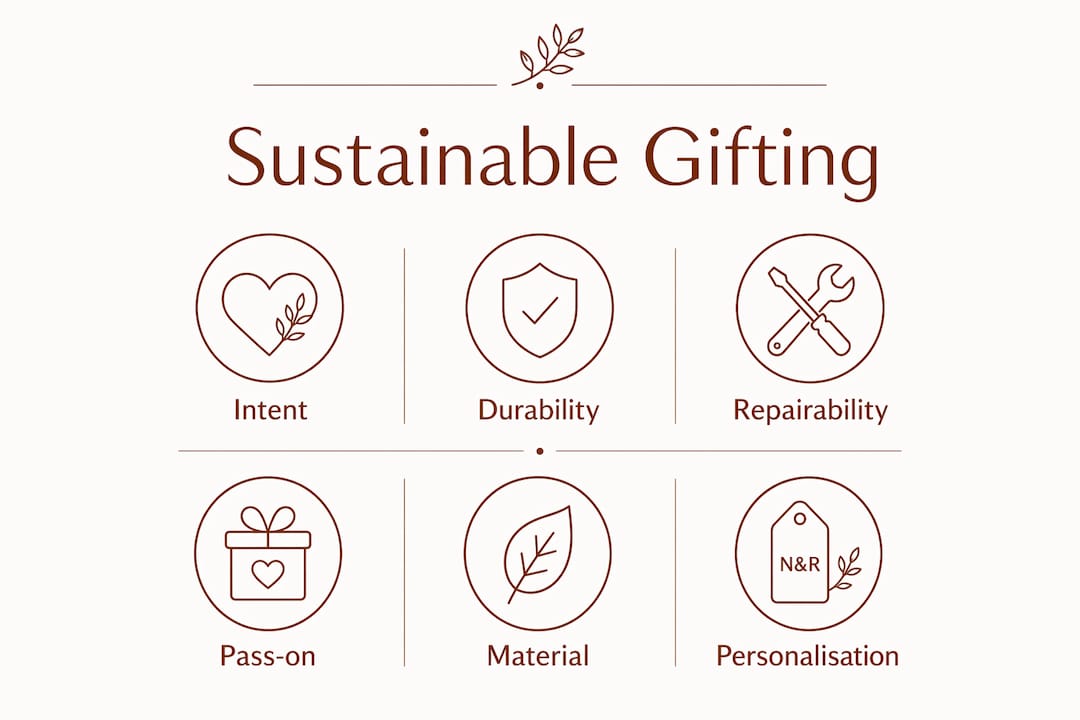
Circular gifting takes this further by shifting attention from the moment of giving to the full lifecycle: can the gift be repaired, reused, passed between siblings, or become a family memento? A fabric wrap that is reused across multiple significant family occasions embodies the principle of circular gifting.
Gifting behaviours that quietly inflate environmental footprint:
- Over-buying multiple small, novelty-only items that are outgrown within months
- Using foil, glitter, or laminated paper that cannot be recycled
- Choosing gifts primarily for visual impact rather than lasting usefulness
A Guardian analysis found that on Christmas Day, the CO₂ emissions per person significantly exceed those of a typical day, with gifting, travel, and food all contributing. Family celebrations, including baby showers and children’s birthdays, carry a similar pattern of compressed consumption.
What actually makes a gift sustainable?
The highest-impact criteria, in order: usefulness, longevity, repairability or pass-on potential, material transparency, and minimal single-use packaging. A gift that scores well on all five will almost always outperform one that carries an “eco” label but fails on durability.
Personalisation is worth examining carefully here. Personalisation increases emotional attachment only when the underlying product is durable and genuinely useful. A name embroidered onto a quality cotton wrap creates a keepsake that a family will store, reuse, and treasure. The same name printed onto a low-quality novelty item can actually reduce its pass-on value, because no one else can use it and the recipient may feel reluctant to donate it.
Research also shows that green consumers do not always give green gifts: social expectations, reciprocity, and the desire to impress can override environmental intentions at the point of purchase. Acknowledging this tension is the first step to navigating it gracefully.
A quick checklist before you buy:
- Does the child genuinely need or want this, or is it purely for the unwrapping moment?
- Will it last beyond six months of regular use?
- Can it be passed on to a younger sibling or donated in good condition?
- Is the packaging recyclable, reusable, or compostable?
Second-hand and vintage gifts are among the highest-impact choices available. A well-made wooden toy or a classic picture book bought from a charity shop carries a fraction of the footprint of its new equivalent, and often more character.
Pro Tip: When checking an “eco” product page, look past the label and ask whether the item is made from a single material (easier to recycle at end of life), whether the brand publishes repair guidance, and whether the packaging itself is non-recyclable — decorative finishes on otherwise sustainable products are a common greenwashing blind spot.
Why reusable fabric wrap is a strong choice for baby gifts
A quality reusable cotton wrap reduces single-use waste, tends to carry lower carbon over repeated uses than disposable paper, and, when personalised with embroidery, becomes something a family genuinely keeps. Circular gifting resources consistently recommend fabric wraps as one of the highest-impact packaging swaps available, particularly when the wrap itself functions as a secondary gift or keepsake.
| Metric | Reusable fabric wrap | Disposable wrapping paper |
|---|---|---|
| Typical cost | — | £2 per use |
| Expected lifespan | — | Single use |
| Recyclability | Washable and reusable; cotton biodegradable | Often non-recyclable (foil/glitter finishes) |
| Keepsake value | High when personalised with embroidery | None |
| Break-even point | After multiple uses, cost per wrap is lower | Cost accumulates with every occasion |
A high-quality fabric wrap repaired and passed between siblings or friends can offset many instances of disposable wrapping across several years, delivering a genuine payback on its embodied emissions. The emotional dimension matters too: a wrap embroidered with a child’s name and birth date tends to be stored carefully rather than discarded, which is precisely what keeps it in circulation.
Benefits at a glance:
- Reduces landfill waste from single-use paper and plastic ribbon
- Creates a lasting memento that grows in sentimental value
- Presents gifts beautifully without disposable plastics or foil finishes
- Supports eco gift wrapping habits that parents can build into every occasion
Pro Tip: To maximise the lifespan of a fabric wrap, wash it on a gentle cool cycle, air-dry flat to preserve the embroidery, and store it folded in a cotton bag rather than compressed in a drawer. Minor fraying at seams can be repaired with a few hand stitches, and a professional embroiderer can refresh faded thread at modest cost.
How to gift sustainably at a baby shower or child’s birthday
The simple workflow: decide on the gift intent first, then choose durable, second-hand, or experiential options, wrap in reusable fabric, and share a brief care note with the recipient so the wrap stays in use.
For baby showers, group gifting is one of the most effective ways to reduce both waste and duplication. Platforms that support curated gifting lists allow guests to coordinate contributions toward a single high-quality item rather than arriving with six versions of the same sleepsuit.
Practical steps:
- Share or request a wishlist before the event to avoid duplicates and unwanted items.
- Choose one considered gift over several smaller ones: useful baby gear, a keepsake textile, or a contribution to a long-term fund.
- Wrap in a personalised reusable fabric wrap and include a short note explaining how to care for and reuse it.
- For children’s birthdays, consider gifting an experience: a museum membership, a swimming lesson block, or a local theatre trip.
Pro Tip: Order personalised items at least two weeks before the occasion. Avoiding expedited shipping reduces transport emissions and gives you time to confirm embroidery details without pressure.
Choosing a personalised reusable wrap: a brief buyer’s guide
For baby showers and children’s gifts, a well-made personalised reusable cotton wrap is the right choice when you want a lasting keepsake that also reduces waste. The gift presentation becomes part of the gift itself.
Features to prioritise:
- Fabric weight and weave: a substantial cotton with a crisp hand-feel drapes beautifully and withstands repeated washing
- Embroidery quality: look for thread that is colourfast and stitched through a stabiliser to prevent puckering over time
- Size range: newborn wraps and toddler sizes serve different occasions; a brand offering both gives you flexibility
- Washability: machine-washable on a gentle cycle is the practical minimum
- UK shipping and returns: confirm the brand ships within the UK and has a clear returns or repair policy
When to prefer alternatives: if the recipient has specifically requested an experience, a charitable donation, or a second-hand find, honour that. The most sustainable gift is always the one that will genuinely be used and appreciated.
Key takeaways
Gifting reduces its environmental impact most reliably when the gift and its packaging are both chosen for longevity, usefulness, and the capacity to be reused or passed on.
| Point | Details |
|---|---|
| Wrapping paper footprint | Foil and glitter paper is non-recyclable and can produce up to 3.5 kg of CO₂ per kilogram manufactured. |
| Mindful gifting framework | The SSE approach asks you to weigh impacts on self, society, and environment across the whole gifting moment. |
| Personalisation works when… | Embroidery on a durable, quality item creates a keepsake; on a low-value product it can reduce pass-on potential. |
| Experiences and second-hand | Gifting time, skills, or preloved items carries a fraction of the footprint of new physical gifts. |
| Nicholasandrose | Personalised reusable cotton wraps for newborns and toddlers that function as both packaging and lasting keepsake. |
Why keepsakes matter more than we admit
The conversation around sustainable gifting tends to focus on materials and carbon numbers, which are genuinely important. What gets less attention is the social mechanism that makes reusable gifting actually work: emotional attachment. A wrap embroidered with a child’s name is not discarded after the first use because it has become something. It has a story. That is not sentimentality for its own sake; it is the practical engine of circularity.
Cultural pressure to give abundantly at baby showers and children’s birthdays is real, and research confirms that even committed green consumers often abandon their values at the gifting moment because of it. The more useful response is not to lecture but to model: one beautifully wrapped, genuinely considered gift says more than a table piled with novelties, and it leaves the new parent with something they will actually keep.
The brands and traditions worth supporting are those that make intentional gifting feel natural rather than austere. Fewer, better gifts, wrapped in something that stays in the family, is a quiet but durable shift in how we celebrate.
Nicholasandrose: personalised wraps for newborns and toddlers
Every piece of guidance in this article points toward the same practical conclusion: choose packaging that earns its place, and a gift that lasts.
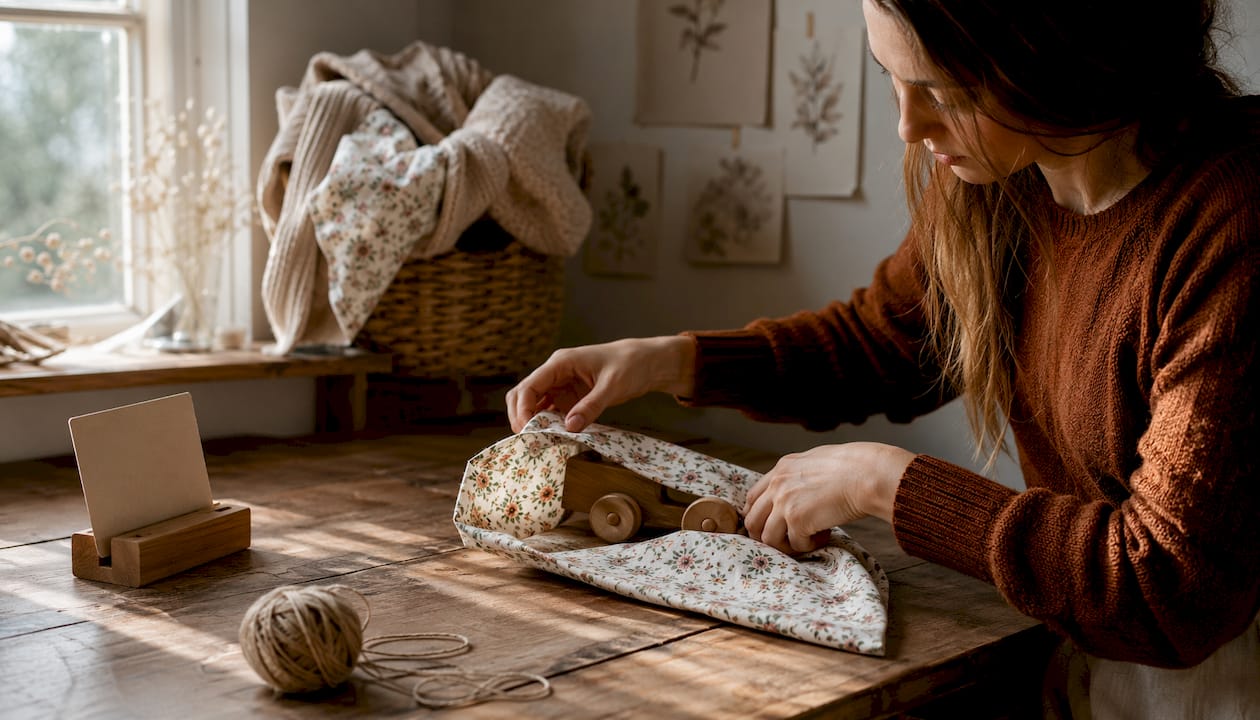
Nicholasandrose’s 2026 newborn and toddler range offers exactly that. Each wrap is crafted from quality cotton with a refined, tactile finish, personalised through bespoke embroidery with the child’s name or a meaningful detail that transforms the wrapping into a memento. Shipped within the UK, the range is designed for baby showers, first birthdays, and the milestone occasions that deserve something more considered than paper destined for the bin.
- Quality cotton fabric with a crisp drape and gentle hand-feel
- Bespoke embroidery personalisation for newborn and toddler sizes
- Reusable across multiple occasions and washable on a gentle cycle
- UK shipping with clear guidance on care and longevity
Browse the Baby & Beyond milestone wrap collection to find the right size, pattern, and personalisation for your next baby shower or children’s gift.
Useful sources
- Defining and delineating mindful gifting (2025) — introduces the SSE framework for evaluating gift impact across self, society, and environment.
- Unwrapping the environmental cost of holiday gifts, Illinois Extension — source for the 3.5 kg CO₂ per kilogram of foil-finished wrapping paper figure.
- The art of circular gifting, Eco Growth Hub — practical lifecycle framework and fabric wrap recommendation.
- There’s no such thing as a waste-free gift, Unsustainable Magazine — critical perspective on greenwashing, packaging, and the limits of “eco” labels.
- Average Briton causes 23 times more CO₂ on Christmas Day, The Guardian — contextualises the scale of celebratory consumption in the UK.
- Gifts, sustainable consumption and green anxieties, CORE — qualitative research on the tension between environmental values and social gifting norms.
Recommended
- Eco-conscious gifting for UK parents: sustainable choices – Nicholas & Rose Limited
- The role of eco values in gifting for UK families – Nicholas & Rose Limited
- Eco materials in gifting: safer, sustainable options for UK parents – Nicholas & Rose Limited
- Eco gift wrapping workflow: Sustainable steps for parents – Nicholas & Rose Limited