

Eco materials in gifting: safer, sustainable options for UK parents
Most parents assume that genuinely safe, sustainable baby gifts come with a luxury price tag and a waiting list from some obscure artisan workshop. That is simply not true any more. Eco materials have moved firmly into the mainstream, and the UK market is catching up fast. This article walks you through exactly what eco materials are, how to spot genuine certifications, and how to choose personalised, waste-free gifts that your family will treasure long after the wrapping is gone.
Table of Contents
- What are eco materials and why do they matter in gifting?
- Certifications that guarantee safety and sustainability
- How eco materials support child development and environmental impact
- Navigating price, claims, and practicality: what UK parents should know
- Personalisation and unique eco gifts: emotional value without waste
- Explore sustainable gifting solutions with Nicholas & Rose
- Frequently asked questions
Key Takeaways
| Point | Details |
|---|---|
| Safety and sustainability | Gifting with certified eco materials reduces chemical risks, meets UK parental values, and supports durability. |
| Certification matters | GOTS and Oeko-Tex mark genuine eco products, helping parents avoid greenwashing and misleading claims. |
| Durability saves money | Reusable eco gifts may cost more upfront but lead to long-term savings and less waste. |
| Personalisation adds value | Customising gifts with eco materials enhances emotional impact while minimising environmental footprint. |
| Practical tips | Always check for certifications, prioritise usefulness and reusability, and avoid vague organic claims. |
What are eco materials and why do they matter in gifting?
Eco materials are natural, recycled, or responsibly sourced materials that minimise harm to people and the planet across their entire lifecycle. In the context of baby and toddler gifting, this matters enormously because newborns have thinner skin, developing immune systems, and a habit of putting absolutely everything in their mouths.
Eco-friendly baby gifts such as organic cotton, bamboo, natural rubber, FSC-certified wood, and recycled plastics provide safer, non-toxic, durable, and environmentally friendly options for newborns and toddlers. These are not niche materials reserved for specialist shops. You will find them in high street stores, independent boutiques, and online marketplaces across the UK.
Here is a quick overview of the most common eco materials and what makes each one stand out:
- Organic cotton: Grown without synthetic pesticides or fertilisers, softer against sensitive skin, and biodegradable at end of life
- Bamboo: Naturally antibacterial, incredibly soft, and one of the fastest-growing plants on earth, requiring no replanting
- FSC-certified wood: Sourced from responsibly managed forests, durable, and free from toxic lacquers when properly certified
- Natural rubber: Derived from rubber trees, free from synthetic chemicals, and a brilliant choice for teethers and sensory toys
- Recycled plastics: Diverts waste from landfill, though quality and safety vary widely depending on the source and manufacturing process
The shift towards these materials is not just a trend. 62% of UK parents planned to buy at least one eco gift last Christmas, reflecting a genuine change in values. And when you think about cutting waste with textiles as part of your gifting approach, the environmental savings become even more significant.
“Choosing eco materials for baby gifts is not about perfection. It is about making thoughtful choices that are safer for your child and kinder to the world they will grow up in.”
Certifications that guarantee safety and sustainability
Here is where many parents get caught out. A product labelled “natural” or “eco-friendly” is not automatically safe or sustainable. Without third-party certification, those words mean very little. Two certifications stand above the rest for baby and toddler products in the UK.
GOTS (Global Organic Textile Standard) covers the entire supply chain, from the farm where fibres are grown to the factory where the finished product is made. It prohibits harmful chemicals, requires ethical labour practices, and demands environmental responsibility at every stage. Oeko-Tex Standard 100 focuses specifically on the finished product, testing for over 100 harmful substances including pesticides, heavy metals, and formaldehyde.
GOTS and Oeko-Tex certifications ensure eco materials are free from harmful chemicals, pesticides, and synthetic dyes across the supply chain. A brilliant real-world example is the Baa Baa Blanket by Naturalmat, which holds both GOTS and Oeko-Tex certification, giving parents genuine confidence in what they are gifting.
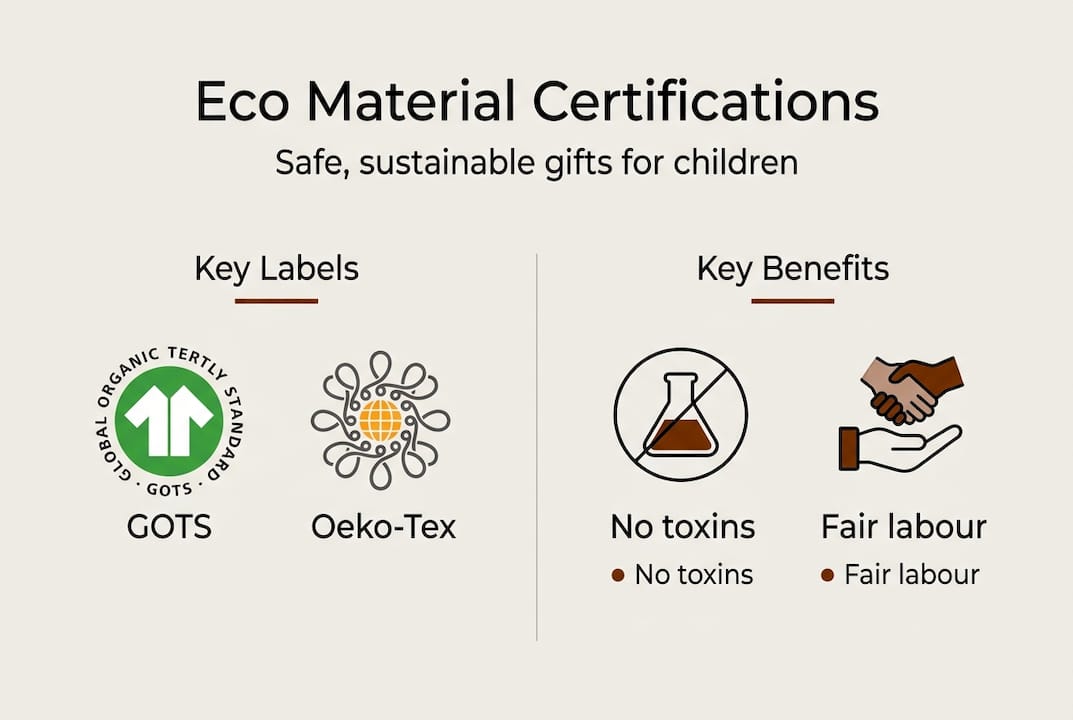
Here is how the main certification types compare:
| Certification | What it covers | Supply chain check | Chemical testing | Labour standards |
|---|---|---|---|---|
| GOTS | Organic textiles | Yes, full chain | Yes | Yes |
| Oeko-Tex Standard 100 | Finished product | No | Yes | No |
| Unverified ‘organic’ claim | Varies | No | No | No |
The table makes it clear why unverified claims offer so little reassurance. A product can legally state it “contains organic cotton” while the remaining 70% of the fabric is treated with synthetic chemicals.
Pro Tip: Before purchasing, look for the actual certification logo on the product or packaging, and check the brand’s website for supply chain transparency. If they cannot tell you where the fabric was woven or dyed, that is a red flag. Choosing certified gifts also contributes to carbon footprint reduction across the gifting lifecycle.
How eco materials support child development and environmental impact
Beyond safety, there is a compelling case for eco materials in terms of what they actively contribute to a child’s development. Wooden toys, for example, offer varied textures, weights, and sounds that plastic alternatives simply cannot replicate. These sensory differences matter in the early years when babies and toddlers are building neural connections at a remarkable rate.
Natural materials lower chemical exposure significantly. Conventional cotton farming uses roughly 16% of the world’s insecticides despite covering only 2.5% of cultivated land. Switching to organic cotton for clothing, blankets, and soft toys removes that chemical burden from your child’s immediate environment. Bamboo textiles go further still, offering natural temperature regulation and moisture-wicking properties that keep babies comfortable.
The environmental picture is equally compelling. Here is how eco materials compare to conventional alternatives across key impact areas:
| Material | Water usage | Durability | Reusability | Biodegradable |
|---|---|---|---|---|
| Organic cotton | 91% less than conventional | High | Yes | Yes |
| Bamboo | Very low | High | Yes | Yes |
| FSC-certified wood | Minimal | Very high | Yes | Yes |
| Conventional plastic | Low | Medium | Limited | No |
| Standard cotton | Very high | Medium | Limited | Slow |
Eco materials reduce chemical exposure, support child development, and minimise overall lifecycle impact via reusability and biodegradability. When you choose a gift made from FSC-certified wood or organic cotton, you are not just making a one-time purchase. You are investing in something that can be passed down, repurposed, or composted rather than sent to landfill.
Pro Tip: Opt for multi-purpose or reusable gifts wherever possible. A beautifully made wooden stacking toy or a personalised fabric wrap serves multiple functions across different stages of childhood, maximising both environmental and emotional value. Explore personalised eco gifts and sustainable gift wrap solutions for ideas that genuinely last.
“The most sustainable gift is one that is used, loved, and kept. Reusability is not a compromise. It is the point.”
Navigating price, claims, and practicality: what UK parents should know
Let us address the elephant in the room. Eco gifts can cost more upfront. A GOTS-certified organic cotton blanket will often be priced higher than a standard supermarket equivalent. But the long-term maths frequently tells a different story.
Eco gifts are not always more expensive long-term; certifications are key to avoiding greenwashing. A reusable fabric gift wrap, for example, replaces dozens of rolls of single-use wrapping paper over its lifetime. A well-made wooden toy outlasts three or four plastic equivalents. The upfront cost looks different when you factor in longevity.
Here are the most common pitfalls to watch out for:
- Vague organic claims: “Made with organic cotton” can legally mean as little as 5% organic content
- Recycled polyester risks: Recycled polyester can release toxins when heated, which matters for items washed at high temperatures or used near warmth
- Greenwashed packaging: Earthy tones and leaf logos do not equal sustainability
- Missing certifications: If a brand cannot name their certifying body, treat the claim with scepticism
Follow these steps to assess eco authenticity before you buy:
- Look for certification logos on the product itself, not just the website homepage
- Check the full material composition, not just the headline claim
- Research the brand’s supply chain transparency, ideally with named factories or farms
- Consider the full lifecycle of the gift, from production through to disposal or reuse
- Compare cost per use, not just the sticker price
Pro Tip: Ask brands directly about their supply chain. Genuinely sustainable companies are proud to share this information. If the response is vague or defensive, that tells you something important. Use our eco checklist for gifting and gift wrap sustainability checklist to stay organised when making gifting decisions. For broader eco budgeting tips, Emma’s Diary offers practical guidance tailored to new parents in the UK.
Personalisation and unique eco gifts: emotional value without waste
There is something quietly powerful about a gift that carries a name, a date, or a personal message. For new parents especially, those early weeks are a blur of exhaustion and wonder. A personalised keepsake cuts through the noise and becomes something genuinely treasured.
Personalisation boosts emotional value without excess waste, and durability and reusability trump novelty when it comes to meaningful gifting. This is particularly relevant in 2026, as UK gifting trends continue to shift away from disposable novelty items towards thoughtful, lasting pieces.
The good news is that personalisation and sustainability are not in conflict. Here are some of the most impactful options available to eco-conscious parents right now:
- Personalised embroidered fabric wraps: The gift wrap itself becomes a keepsake, used again and again rather than torn off and binned
- Heirloom-quality wooden toys: Engraved with a name or birth date, these become family pieces rather than forgotten clutter
- Organic cotton blankets with embroidery: Soft, certified, and personal enough to become a child’s favourite comfort object
- Milestone fabric wraps: Designed to mark specific moments, from birth to first birthday, with reusable fabric that replaces single-use paper entirely
- Handcrafted natural rubber toys: Unique, tactile, and free from the synthetic chemicals found in mass-produced alternatives
Think about the typical gifting moment for a newborn. Wrapping paper is often ripped off before the baby has even arrived home, sometimes before they are born. It goes straight in the bin. A reusable fabric wrap, personalised with the baby’s name through embroidery, does the opposite. It stays. It is used again. It becomes part of the story. Explore creating keepsakes and unique fabric gift ideas for inspiration, or discover why so many parents are choosing to personalise fabric wraps as their go-to gifting solution.
Pro Tip: Use a custom eco wrap as both the presentation and the gift. A beautifully embroidered fabric wrap costs less than a bouquet of flowers, lasts for years, and carries far more meaning than any amount of tissue paper ever could.
Explore sustainable gifting solutions with Nicholas & Rose
If this article has sparked some ideas, Nicholas & Rose makes it straightforward to act on them. The 2026 newborn and toddler range brings together reusable fabric gift wraps that can be personalised through embroidery, turning the wrapping itself into a lasting memento rather than landfill.
Browse the full range of eco-friendly baby gifts designed with both safety and sentiment in mind. The milestone gift wraps are particularly popular for marking those early firsts, from birth announcements to first birthdays. If you are looking for something with personality, the sunshine yellow furoshiki wrap and the woodland rabbit wrap are two beautiful starting points. Every wrap replaces single-use paper, carries a name if you choose, and becomes something worth keeping.
Frequently asked questions
What eco materials are best for baby gifts?
Organic cotton, bamboo, FSC-certified wood, and natural rubber are the top choices as they are safe, non-toxic, durable, and environmentally responsible for newborns and toddlers.
How can I avoid greenwashing in sustainable gifts?
Check for GOTS or Oeko-Tex certification logos on the product itself, and look for supply chain transparency to ensure eco claims are genuine rather than marketing language.
Are eco gifts more expensive in the long run?
Upfront costs can be higher, but reusables save money long-term through durability and repeated use, making the overall cost per use significantly lower than disposable alternatives.
Does personalisation increase the environmental impact?
Personalisation boosts emotional value without adding excess waste, particularly when applied to durable, reusable eco materials such as embroidered fabric wraps that are kept and used for years.
What pitfalls should parents avoid with eco gifting?
Beware of vague claims like “contains organic cotton” and always ask for full certifications. Avoid misleading organic claims by prioritising products with named, verifiable third-party standards.
Recommended
- Luxury personalised gifts for eco-conscious UK parents – Nicholas & Rose Limited
- UK eco wrapping checklist for sustainable celebrations – Nicholas & Rose Limited
- Unique fabric gift ideas for eco-conscious UK parents 2026 – Nicholas & Rose Limited
- 7 Steps to a Gift Wrap Sustainability Checklist for Parents – Nicholas & Rose Limited