

Eco gift wrapping workflow: Sustainable steps for parents
TL;DR:
- Most wrapping paper contains coatings and embellishments that make it unrecyclable and environmentally harmful.
- Sustainable options like fabric wraps, seed paper, and recycled kraft paper reduce waste and can be reused or planted.
- Incorporating eco-friendly wrapping into family routines teaches lasting values and transforms gift-giving into a meaningful ritual.
Every year, mountains of glittering, foil-coated wrapping paper are torn open and discarded within seconds, often destined for landfill before the festivities have even settled. For eco-conscious parents welcoming a new baby or celebrating a toddler’s first milestones, this feels deeply at odds with the values you are trying to nurture. The good news is that a thoughtful, sustainable wrapping workflow is not only achievable but genuinely beautiful. From reusable fabric wraps to plantable seed paper, this guide walks you through every step, so your gifts arrive with intention and leave a legacy far gentler on the earth.
Table of Contents
- Why eco gift wrapping matters for families
- Gathering eco-friendly materials and tools
- Step-by-step eco gift wrapping workflow
- Verifying and improving your eco wrapping workflow
- A fresh perspective: The future of eco gift wrapping for children
- Explore sustainable gift wrap options
- Frequently asked questions
Key Takeaways
| Point | Details |
|---|---|
| Eco wrapping cuts landfill | Switching to sustainable wraps like fabric or recycled paper can significantly reduce family waste. |
| Reusable materials are best | Organic cotton Furoshiki and upcycled paper provide both environmental and decorative benefits. |
| Engage children in wrapping | Including children helps promote eco values and makes gift giving more memorable. |
| Check recyclability | Use the scrunch test to confirm your wrapping is truly recyclable and avoid plastic or glitter. |
Why eco gift wrapping matters for families
Conventional gift wrapping carries a hidden environmental cost that most of us rarely pause to consider. Those luminous rolls of paper, so appealing on the shelf, are frequently laminated, glitter-dusted, or plastic-coated in ways that render them entirely unsuitable for recycling. In fact, 80% of wrapping paper is unrecyclable due to these coatings and embellishments. That statistic alone should give any thoughtful parent reason to pause.
The problem deepens during the gifting seasons that surround a new arrival. Busy households, overflowing with packaging and tissue paper, find recycling genuinely difficult. Research confirms that over 50% of consumers recycle less during peak gifting periods, overwhelmed by the sheer volume of waste. The result is that wrapping paper, ribbons, and bows pile into general waste bins and travel directly to landfill, contributing unnecessary carbon emissions along the way.
For families with young children, the stakes feel personal. Children absorb habits early, and the rituals surrounding gift-giving are among the most vivid memories of childhood. Choosing eco-friendly wrapping is not simply a practical decision; it is a quiet declaration of the values you wish to pass on.
Sustainable alternatives offer a genuinely compelling case. Switching to cutting gift wrap carbon through fabric or recycled materials can dramatically reduce your household’s gifting footprint. Fabric wraps, in particular, are reusable across dozens of occasions, while kraft paper and seed paper decompose naturally without releasing harmful compounds.
Here is a quick summary of why conventional wrapping falls short:
- Glitter and foil coatings prevent paper from breaking down in recycling streams
- Plastic ribbons and bows contribute to microplastic pollution
- Single-use tissue paper rarely makes it to the recycling bin
- Volume during gifting seasons overwhelms households and recycling facilities alike
“The wrapping that surrounds a gift should honour the thought behind it, not outlast it in a landfill.”
The scrunch test offers a simple, practical way to check whether paper is recyclable: scrunch it into a ball. If it holds its shape, it is likely paper-based and recyclable. If it springs back, it contains plastic or foil and belongs in general waste. Exploring sustainable Christmas wrapping options means you can sidestep this dilemma entirely.
Now that we have established the need for eco alternatives, let us consider what materials and tools make for an effective, elegant workflow.
Gathering eco-friendly materials and tools
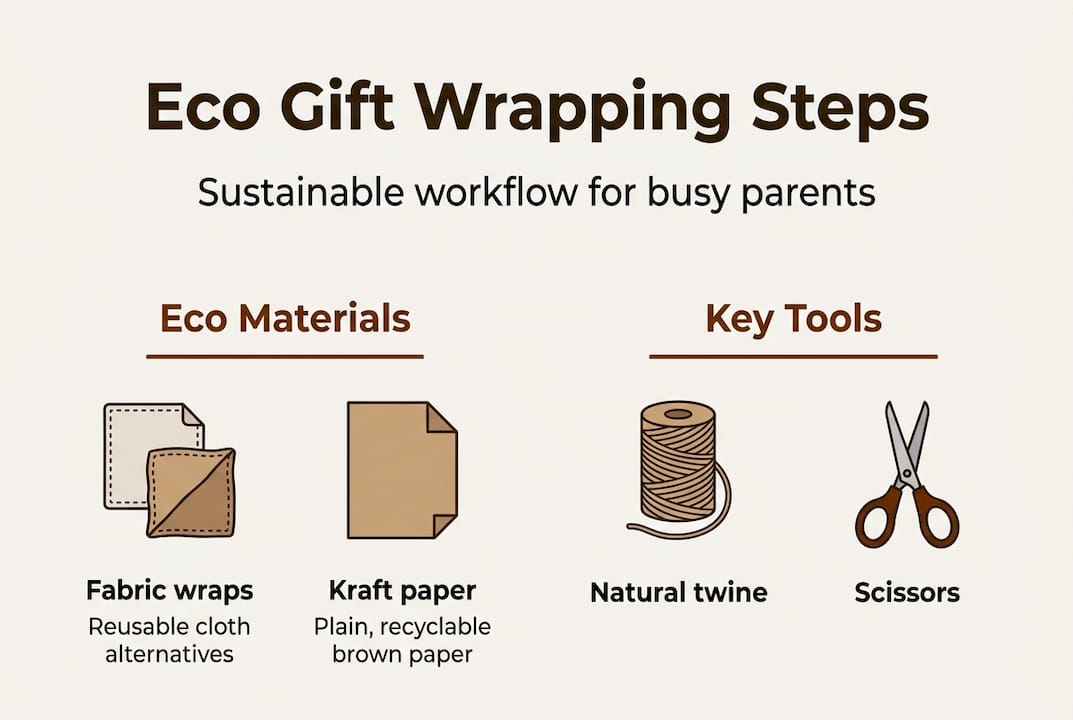
Building your eco wrapping toolkit is a genuinely pleasurable exercise, one that feels more like curating a collection than a chore. The foundation of any sustainable workflow is choosing materials that are either reusable, compostable, or made from recycled sources.
Furoshiki is the primary eco-friendly gift wrapping methodology, rooted in Japanese tradition and centred on reusable fabric cloths made from organic cotton, linen, or gauze. A single Furoshiki wrap can be used dozens of times, folded into beautiful shapes, and personalised with embroidery for a truly bespoke finish. For newborn and toddler gifts especially, a softly embroidered fabric wrap becomes part of the gift itself, a keepsake the family will treasure long after the occasion has passed.
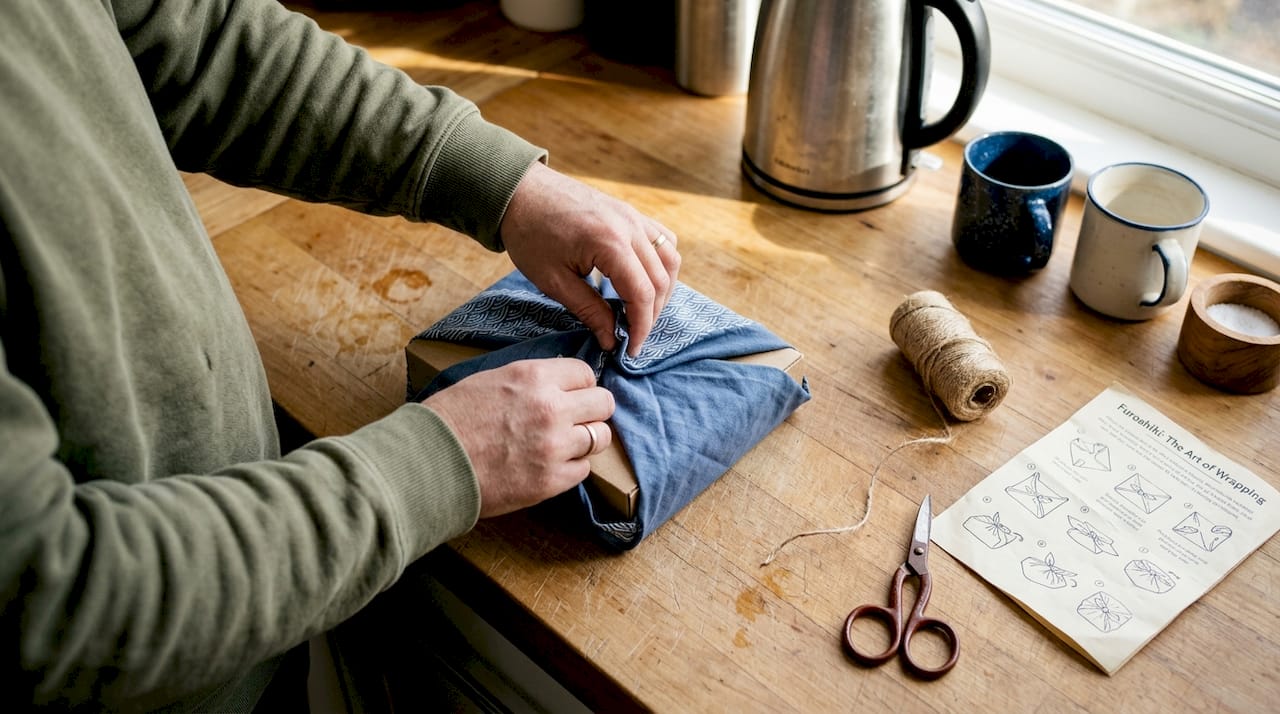
Beyond fabric, a range of natural alternatives offer wonderful results: recycled kraft paper paired with natural twine or sprigs of dried foliage, seed paper that the recipient can plant after unwrapping, and upcycled newspaper or vintage maps that lend a uniquely personal, educational charm.
| Material | Eco rating | Availability | Decorative uses |
|---|---|---|---|
| Organic cotton fabric | ★★★★★ | Specialist retailers | Embroidery, knots, layering |
| Recycled kraft paper | ★★★★☆ | Widely available | Stamps, twine, foliage |
| Seed paper | ★★★★★ | Online, craft shops | Tags, wrapping small gifts |
| Upcycled newspaper | ★★★★☆ | Free at home | Ribbon, wax seal |
| Tissue paper (recycled) | ★★★☆☆ | Supermarkets | Layering inside boxes |
When assembling your toolkit, avoid anything containing glitter, metallic foil, or plastic-coated ribbon. Instead, gather:
- Natural jute or cotton twine for securing parcels
- Dried flowers or sprigs of rosemary for a fragrant, tactile finish
- Beeswax or soy-based wax seals for an heirloom-quality touch
- Fabric scissors for clean, precise cuts
- Embroidery thread if you wish to personalise fabric wraps
Pro Tip: Iron your fabric wraps before use. A crisp, smooth cloth drapes beautifully and gives your parcel a polished, professional finish that rivals any shop-bought presentation. Explore eco gift wrap materials for further inspiration on sourcing the finest sustainable options, and browse top sustainable wrap solutions to see how others have elevated their gifting rituals.
Once you have everything ready, it is time to get hands-on with the wrapping itself.
Step-by-step eco gift wrapping workflow
Approaching wrapping as a considered ritual, rather than a rushed task, transforms the experience entirely. Here is a clear, step-by-step workflow to guide you.
- Lay out your materials on a clean, flat surface. Smooth your fabric or paper, ensuring there are no creases. For fabric wraps, a quick press with a warm iron at this stage makes all the difference.
- Measure your gift against the wrap. For Furoshiki fabric wraps, the cloth should be roughly three times the diagonal length of the item you are wrapping.
- Position the gift centrally, face down on the fabric or paper. For standard rectangular gifts, fold opposite corners up and over, tucking neatly before folding in the sides.
- Secure without tape. Tie natural twine or a cotton ribbon in a graceful knot at the top. For fabric wraps, a simple square knot holds beautifully and can be untied and reused with ease.
- Add your finishing touches. Tuck a sprig of dried lavender or a rosemary stem beneath the ribbon. Attach a handwritten tag on recycled card.
For awkward shapes, such as soft toys or oddly proportioned boxes, the Yotsu Musubi pouch wrap is your finest ally. Gather the fabric around the gift and tie all four corners together at the top, creating a charming bundle that works for almost any silhouette.
| Method | Best for | Pros | Cons |
|---|---|---|---|
| Furoshiki fabric fold | Boxes, books | Reusable, elegant, personal | Requires practice |
| Kraft paper wrap | Most shapes | Widely available, recyclable | Single-use unless stored carefully |
| Seed paper wrap | Small gifts, tags | Plantable, zero waste | Limited to smaller items |
| Yotsu Musubi pouch | Awkward shapes | Flexible, beautiful | Fabric must be generous in size |
Pro Tip: Upcycled maps make for wonderfully unique wrapping, particularly for gifts celebrating a child’s birthplace or a family home. They spark conversation and carry a story of their own. Discover more ideas through our fabric wraps workflow guide and explore reusable wrap tips for refining your technique.
You have wrapped your gifts. Now ensure your effort yields genuine environmental benefits.
Verifying and improving your eco wrapping workflow
Even the most well-intentioned eco wrap can fall short if small oversights creep in. Verification is a worthwhile final step, both for the planet and for your own peace of mind.
Begin with the scrunch test for any paper-based elements. As noted in research on festive recycling habits, the volume of gifting waste during peak seasons overwhelms households, and many items that appear recyclable are not. Scrunch the paper firmly. If it holds its shape, it is likely recyclable. If it springs back, it contains plastic or foil and must go to general waste.
Common mistakes to watch for include:
- Glitter accents on kraft paper or tags, which contaminate recycling streams
- Metallic ribbon that appears natural but contains plastic
- Sticky tape left on fabric wraps, which damages fibres and reduces reusability
- Non-recycled tissue paper tucked inside boxes, often overlooked
- Synthetic twine masquerading as natural jute
Expanding your workflow across future occasions is where the real reward lies. Store fabric wraps carefully after each use, folding them with the same care you would give a fine garment. Encourage family members to return fabric wraps after unwrapping, turning the gesture into a gentle, shared ritual. Offer a spare wrap to a friend who admires yours. Normalising this practice within your circle creates a ripple effect that extends well beyond your household.
“Reusing fabric wraps across gifting occasions can reduce wrapping-related waste by up to 90%, transforming a single purchase into a decade of beautiful, zero-waste gifting.”
Use our sustainability checklist to audit your wrapping choices before each occasion, and explore eco wrap choices for guidance on sourcing the most responsible materials available in the UK.
With these practical steps and checks in place, let us consider the broader and more enduring possibilities that eco gift wrapping opens up for your family.
A fresh perspective: The future of eco gift wrapping for children
There is a tendency to treat sustainable wrapping as a purely practical matter, a box to tick before the real celebration begins. We believe that perspective misses something profound. The wrapping that surrounds a gift for a newborn or a toddler is often the first thing a child touches, the first texture they feel, the first colour they see. That moment deserves more than a sheet of glittery paper destined for the bin.
Personalised, reusable fabric wraps have the quiet power to become family heirlooms. A cloth embroidered with a child’s name and birth date, used first to wrap a welcome gift, can later wrap birthday presents, then be folded away as a keepsake. Children who grow up with these rituals internalise eco-conscious values naturally, without lectures or explanations. The habit becomes part of who they are.
We also believe that designer eco wrap impact extends beyond aesthetics. When gifting is beautiful and sustainable simultaneously, it removes the false choice between elegance and responsibility. That is the future we are working towards.
Pro Tip: Save one special fabric wrap from each significant milestone and let your child participate in the wrapping ritual as they grow. By the time they are old enough to wrap gifts themselves, sustainability will feel entirely natural to them.
Explore sustainable gift wrap options
If you are ready to bring this workflow to life with wraps that are as beautiful as they are responsible, we would love to introduce you to our new 2026 collection. Designed with newborns and toddlers in mind, our reusable fabric wraps can be personalised with bespoke embroidery, transforming each gift into a lasting memento rather than a moment of waste.
Our milestone wraps for babies are crafted to honour the most tender occasions, from a first birthday to a new arrival, with the kind of refined, tactile quality that feels as special as the gift within. Explore the full baby and beyond wraps collection at Nicholas & Rose, where every wrap is made to be kept, cherished, and used again and again.
Frequently asked questions
What is the most eco-friendly gift wrapping method for babies?
Reusable fabric wraps using organic cotton or gauze, in the Furoshiki tradition, are widely considered the most sustainable option, as they eliminate single-use waste entirely and can be personalised as a keepsake.
How can I wrap awkward-shaped gifts sustainably?
Use a generous piece of flexible fabric and the Yotsu Musubi pouch wrap technique, gathering all four corners and securing with natural twine or a cotton ribbon, with no tape required.
Is recycled kraft paper a good alternative to fabric wrapping?
Recycled kraft paper is a strong eco-friendly choice, particularly when paired with natural twine or foliage, though it remains single-use and cannot match the longevity or personalisation of a fabric wrap.
How do I know if my wrapping paper is recyclable?
Apply the scrunch test: if the paper holds its shape when scrunched, it is likely recyclable; if it springs back, it contains plastic or foil and should go to general waste.
Recommended
- 7 Steps to a Gift Wrap Sustainability Checklist for Parents – Nicholas & Rose Limited
- Step by Step Eco Gift Wrapping for Personalised Gifts – Nicholas & Rose Limited
- Sustainable gift wrapping with fabric: save 90% waste – Nicholas & Rose Limited
- Why sustainable wrapping is growing among eco-conscious parents – Nicholas & Rose Limited