

Create sustainable festive fabric wraps for luxurious gifts
TL;DR:
- Reusable fabric wraps significantly reduce landfill waste and can be used for years.
- Choosing organic cotton, linen, or silk enhances the elegance and sustainability of gift wrapping.
- Mastering Furoshiki techniques creates beautiful, adaptable wraps suitable for various gift shapes.
Each year, the UK quietly discards 227,000 tonnes of single-use gift wrap, much of it destined for landfill before the festivities have even faded. For eco-conscious parents welcoming a new baby or celebrating a toddler’s milestones, this feels quietly at odds with the values they hold dear. Reusable fabric wraps offer something altogether more considered: a gift covering that is tactile, luminous, and worthy of the precious moment it marks. This guide walks you through every step, from choosing the finest sustainable fabrics to mastering the Furoshiki fold, so that your gifting becomes a ritual of pure sophistication rather than a source of waste.
Table of Contents
- Why choose festive fabric wraps?
- Choosing your fabrics and sizing
- How to wrap gifts using the Furoshiki technique
- Care tips, troubleshooting, and reuse ideas
- Why fabric wraps are more than just sustainable: Our take
- Ready to gift luxuriously and eco-consciously?
- Frequently asked questions
Key Takeaways
| Point | Details |
|---|---|
| Reduces holiday waste | Reusable fabric wraps can prevent hundreds of single-use gift papers from ending up in landfill. |
| Easy, versatile, and stylish | Furoshiki wrapping adapts to many shapes, making your gifts look elegant and unique every time. |
| Sustainable choices matter | Choosing organic, upcycled fabrics supports both the environment and the experience of gifting. |
| Simple maintenance | Caring for fabric wraps is straightforward—just gentle washing and careful storage. |
Why choose festive fabric wraps?
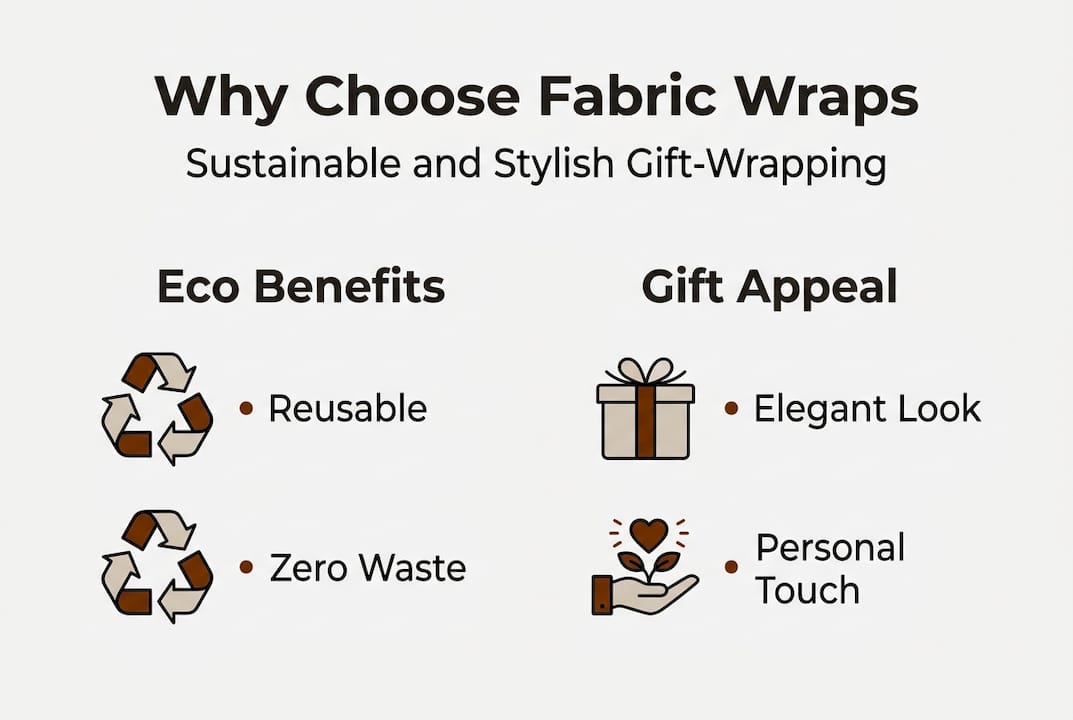
The numbers behind conventional gift wrap are quietly startling. That 227,000 tonnes of single-use wrap discarded annually in the UK represents an enormous, entirely avoidable burden on our environment. Fabric wraps, by contrast, can be reused dozens of times across years of celebrations, making them a genuinely meaningful alternative for families who care about what they leave behind.
Beyond the environmental case, there is an undeniable aesthetic pleasure in presenting a gift swathed in beautifully draped fabric rather than crinkled paper. The recipient notices the difference immediately. The crisp hand-feel of organic cotton, the cool drape of linen, or the luminous sheen of silk transforms the act of unwrapping into something ceremonial and memorable, particularly for newborn gifts that a family will photograph and treasure.
Fabric wraps also support the circular economy, each one used for years rather than seconds. When you choose to reuse fabric gift wraps across birthdays, baby showers, and holidays, you are quietly building a more thoughtful gifting culture within your family. And when you explore eco-luxury gifting as a philosophy, the wrap itself becomes part of the gift.
“Switching to reusable fabric wraps is one of the simplest yet most impactful changes a family can make to reduce festive waste, without sacrificing a single gram of beauty or generosity.”
Paper gift wrap vs. fabric wraps at a glance:
| Feature | Paper gift wrap | Fabric wrap |
|---|---|---|
| Uses | Single use | Dozens of uses |
| End of life | Landfill | Reusable or compostable |
| Aesthetic | Disposable | Heirloom quality |
| Personalisation | Limited | Embroidered, bespoke |
| Eco credentials | Poor | Excellent |
Key advantages of choosing fabric wraps:
- Reduces landfill waste significantly over time
- Biodegradable or long-lasting depending on fabric choice
- Elevates the gifting experience with tactile luxury
- Can be personalised with embroidery for a bespoke keepsake
- Suitable for customising party gifts and milestone occasions
- Teaches children about sustainability through joyful, hands-on tradition
Choosing your fabrics and sizing
With the case for fabric wraps clearly made, the next step is selecting materials that feel as beautiful as they look. The finest choices for reusable festive wraps are organic cotton, linen, and silk, each bringing its own character to the occasion. Organic cotton offers a crisp, reassuring hand-feel that launders beautifully and softens gracefully with each use. Linen carries a natural, earthy refinement that suits both rustic and elegant aesthetics. Silk, the most luxurious of the three, drapes with an almost liquid grace and catches light in a way that makes even the simplest knot look considered.
It is worth avoiding synthetic fabrics such as polyester or nylon. While they may feel soft initially, they shed microfibres during washing, contributing to water pollution, and they do not biodegrade at end of life. For families committed to luxurious eco gifts, the fabric itself is a statement of values.
When sourcing your fabrics, consider upcycling first. A length of unused curtain lining, a vintage scarf, or remnants from a dressmaking project can all become exquisite wraps with minimal effort. For those who prefer to buy new, look for luxury fabric wrap options certified organic or sustainably produced. Guidance on making Furoshiki wraps from scratch is widely available if you enjoy a creative project.
For sizing, cut sustainable fabrics into squares of at least 50cm, adjusting upwards for larger gifts. The table below offers a practical guide:
| Gift type | Recommended fabric size |
|---|---|
| Small jewellery box | 45 to 50cm square |
| Book or small toy | 60 to 70cm square |
| Clothing or soft toy | 75 to 90cm square |
| Large baby gift set | 100cm square or more |
What to look for when choosing eco-friendly fabric:
- GOTS (Global Organic Textile Standard) certification for cotton
- Natural, undyed or low-impact dyed options where possible
- Tightly woven fabric that holds a knot without slipping
- Washable at 30 to 40 degrees without losing colour or shape
- Soft enough for newborn-adjacent gifting contexts
Pro Tip: Fat eighths and fabric scraps from a haberdashery are ideal for smaller gifts. Piecing together complementary prints in a patchwork arrangement creates a wrap with genuine artisan character, and uses up remnants that might otherwise go to waste.
How to wrap gifts using the Furoshiki technique
Furoshiki is the centuries-old Japanese art of wrapping objects in cloth, and it translates beautifully into the context of festive gifting. Once you have mastered the basic fold, you will find it takes only moments to create something that looks genuinely considered and refined.
Basic Furoshiki wrap, step by step:
- Lay your fabric flat on a clean surface, positioned as a diamond with one corner pointing towards you.
- Place the gift in the centre of the fabric, slightly below the midpoint.
- Fold the corner nearest to you up and over the gift, tucking it snugly underneath.
- Fold the far corner down and over the gift in the same way, pulling gently for crisp corners.
- Bring the two remaining side corners up and tie them in a secure, elegant knot at the top of the gift.
- Adjust the knot and fabric drape until the finish feels balanced and graceful.
For boxes, the Otsukai Tsutsumi technique creates beautifully flat, structured sides. Bottles are best handled with the Bin Tsutsumi method, which spirals the fabric upwards into a elegant twist. For awkward or irregular shapes, the Yotsu Musubi pouch technique gathers all four corners into a central knot, accommodating almost any form. Detailed gift wrapping instructions can guide you through each variation with confidence.
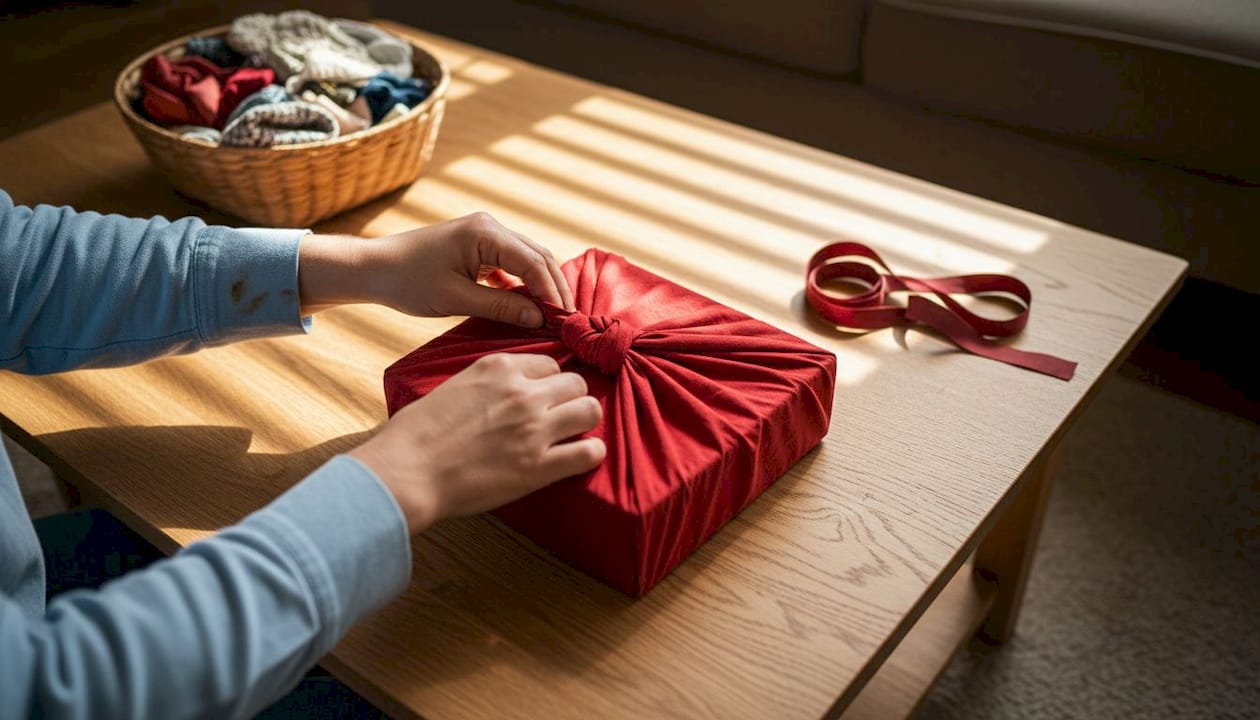
Once wrapped, consider how you store your collection. Proper storing of fabric wraps between uses keeps them pristine and ready for the next occasion without fraying or creasing.
Pro Tip: For very small gifts where tying a knot feels fiddly, tuck the fabric ends inside a narrow satin ribbon tied in a bow. The result is just as polished, and far less frustrating.
A single quality fabric wrap, cared for well, can replace hundreds of sheets of paper gift wrap over its lifetime. That quiet statistic is worth pausing over the next time you reach for the tape and scissors.
Care tips, troubleshooting, and reuse ideas
The longevity of a fabric wrap depends almost entirely on how it is cared for between uses. Fortunately, the routine is simple and takes very little time, making it easy to weave into the rhythm of family life.
Washing, drying, and storing your wraps:
- Wash wraps on a gentle cycle in cold or lukewarm water, using a mild, eco-friendly detergent
- Air dry rather than tumble dry to preserve the fabric’s structure and colour
- Iron on a low setting while slightly damp to restore a crisp, elegant finish
- Fold neatly along the grain of the fabric and store flat or rolled to minimise creasing
- Keep away from direct sunlight during storage to prevent fading over time
- For keeping wraps from fraying, hem edges with a simple running stitch or use a fabric sealant
For very small gifts, a standard square wrap can feel unwieldy. In these cases, fold the fabric into a smaller rectangle before beginning, or use a smaller scrap piece. The wrap need not be a perfect square to work beautifully. Odd-shaped gifts, such as a soft toy or a bottle of celebratory bubbles, respond well to the pouch or bottle techniques described in the Furoshiki section above.
Pro Tip: If you are making wraps at home rather than buying them ready-made, use pinking shears to cut the edges. This creates a charming, slightly textured border that resists fraying without a single stitch, making it an ideal no-sew finish for those short on time.
Beyond gifting, the creative reuse ideas for wraps are genuinely delightful. A wrap used for a newborn gift can later become a muslin-style cloth, a small play mat, or a keepsake bag for storing first mementos. Larger wraps make beautiful table runners for birthday teas or seasonal tablescapes. With a little imagination, each piece of fabric takes on a quiet life of its own, moving through the seasons of a child’s early years with grace and purpose.
Why fabric wraps are more than just sustainable: Our take
There is a tendency to frame reusable fabric wraps purely as an environmental choice, a swap made out of guilt about landfill statistics. We think that undersells them entirely. The most compelling reason to choose a beautifully made, embroidered fabric wrap for a newborn gift is not the waste it prevents. It is the story it carries.
A wrap personalised with a baby’s name and birth date becomes an heirloom, something a child might one day use to wrap a gift for their own child. That is a kind of magic that no sheet of foil paper can replicate. Fabric wraps also offer a quiet teaching moment for older siblings, showing them that care and creativity are part of how we honour the people we love.
We also gently push back on the idea that flat wraps are always superior to sewn bags. For families with young children, a simple drawstring bag made from a favourite fabric can be used and reused with far less fuss. Explore personalised gift wrap ideas to find the approach that suits your family’s rhythm best.
Ready to gift luxuriously and eco-consciously?
If this guide has stirred something in you, a desire to make your next baby gift as beautiful on the outside as it is within, we would love to help you find the perfect wrap.
Our 2026 newborn and toddler collection features exquisitely crafted milestone gift wraps designed to be kept, treasured, and used again across every celebration that follows. Each piece can be personalised with embroidery, transforming it from a simple covering into a lifelong keepsake. For a joyful, tactile option that photographs beautifully, our sunshine yellow wrap is a particular favourite for welcoming new arrivals. Begin your collection today and gift with genuine intention.
Frequently asked questions
What is the best fabric for reusable festive wraps?
Crisp organic cotton, linen, or silk are ideal since they are durable, sustainable, and elegant for multiple uses across many seasons. Each fabric offers a distinct texture and drape, so your choice can reflect the occasion and the recipient.
Can I make festive fabric wraps without sewing?
Yes, simply cut with pinking shears to prevent fraying, or tuck edges neatly beneath the knot for a clean finish. Sewing hems is entirely optional and adds longevity rather than being strictly necessary.
How do I wrap unusually shaped gifts?
Use the Furoshiki pouch or bottle techniques, which accommodate almost any form with elegance. For very small items, a narrow ribbon tied over gathered fabric creates a charming, polished result.
How do I keep my fabric wraps in good condition?
Wash in cold water on a gentle cycle and air dry, then store folded flat away from direct sunlight to minimise fading and fraying. With simple care, a quality wrap will remain beautiful across dozens of uses and many years.
Recommended
- Luxury Eco Christmas Wrapping Tutorial with Fabric Gifts – Nicholas & Rose Limited
- Custom Festive Wrap: Sustainable Luxury for Gifting – Nicholas & Rose Limited
- Role of Fabric Wraps at Christmas – Sustainable Luxury Gifting – Nicholas & Rose Limited
- Wrapping Gifts Without Paper: Elegant Fabric Solutions – Nicholas & Rose Limited
- The Best Eco-Friendly Gifts for Newborns and Conscious Parents