

Sustainable gift wrap for UK parents: ditch the paper
TL;DR:
- Traditional wrapping paper is mostly non-recyclable due to coatings and decorations, contributing to landfill waste.
- Using reusable fabric wraps and seed paper reduces environmental impact and creates meaningful keepsakes.
- Eco-friendly gift wrapping supports sustainable gifting, teaching responsibility and creating lasting family traditions.
In the UK, 227,000 miles of wrapping paper is used every single year, yet the vast majority ends up in landfill within moments of the gift being revealed. For parents welcoming a newborn or choosing a toddler’s first birthday gift, the quiet irony is striking: all that careful thought, all that love poured into a chosen present, swathed in something destined for the bin before the baby has even taken their first breath. There is a more considered way. This article guides you through the real environmental cost of traditional wrapping paper and introduces the beautiful, sustainable, and deeply personal alternatives that are capturing the hearts of eco-conscious families across Britain.
Table of Contents
- What makes traditional wrapping paper unsustainable?
- Environmental impact of wrapping paper: UK facts and figures
- Why recycling traditional wrapping paper is misleading
- Unique and sustainable alternatives for newborns and toddlers
- Our take: Why sustainable wrapping is more than just eco-consciousness
- Find your sustainable baby gift wrap
- Frequently asked questions
Key Takeaways
| Point | Details |
|---|---|
| Most wraps are unrecyclable | Commercial wrapping paper often contains coatings and decorations that stop it being recycled in the UK. |
| Huge UK environmental impact | Wrapping paper waste contributes to deforestation, landfill, and greenhouse gas emissions every year. |
| Eco wraps offer creative solutions | Reusable fabric wraps, seed paper, and personalised eco-friendly options help reduce waste while adding unique touches to baby gifts. |
| Recycling can be confusing | Parents should check if wrapping passes the ‘scrunch test’—plain papers are usually recyclable, fancy ones are mostly not. |
What makes traditional wrapping paper unsustainable?
At first glance, wrapping paper seems harmless. It is, after all, paper. But look more closely, and the picture becomes considerably less comforting for those of us who care about what we leave behind.
The truth is that most wrapping paper is rendered non-recyclable by the very things that make it visually appealing: glossy finishes, metallic inks, glitter, and plastic coatings. These elements bond with the paper fibres and contaminate the recycling stream, meaning that the shimmering, sparkle-edged roll you purchased with such good intentions cannot be processed alongside ordinary cardboard and newsprint. It simply should not go in your recycling bin.
Beyond its end-of-life fate, the manufacturing process itself is far from gentle. Traditional wrapping paper relies on virgin wood pulp, drawing on precious forests at a significant rate. The production demands considerable energy, water, and industrial chemicals, leaving a manufacturing footprint that sits uneasily with the warm, celebratory spirit of gift-giving.
Compare that to fabric versus paper wrapping, and the contrast is striking. A reusable fabric wrap, chosen with care and embroidered with a child’s name, sidesteps every one of these concerns: no coatings, no virgin timber, no single-use destiny.
| Wrapping type | Recyclable? | Reusable? | Biodegradable? |
|---|---|---|---|
| Glossy traditional paper | No | No | Partial |
| Glitter or foil paper | No | No | No |
| Plain kraft paper | Yes (usually) | No | Yes |
| Reusable fabric wrap | N/A | Yes | Depends on fabric |
| Seed paper | N/A | No | Yes |
“The prettiest wrap is often the least sustainable. True beauty, in gifting as in life, lies in what endures.”
Even paper that appears plain or simple can be problematic. Thin tissue paper, so commonly tucked into gift bags, is often too lightweight to be accepted by UK recycling facilities. It slips through sorting machinery and ends up classified as waste regardless. Before you reach for our handy gift wrap checklist, it is worth pausing to understand just how deeply embedded these issues are in what we consider an ordinary purchase.
The problem is not simply that people make poor choices. It is that the information surrounding recyclability is confusing, the labelling inconsistent, and the visual allure of decorated paper entirely at odds with its environmental reality.
Environmental impact of wrapping paper: UK facts and figures
Numbers have a way of making the invisible visible. When you learn that 50,000 trees are felled every year in Britain to supply the wrapping paper industry alone, and that each kilogram of that paper generates over three kilograms of CO2 emissions, the festive roll of paper on the shelf begins to look rather different.
The scale of annual usage across the UK reaches approximately 227,000 miles of wrapping paper, a figure so vast it requires a geographical comparison to land with any real meaning. That is enough to encircle the island of Guernsey many times over, all of it destined, in the main, for landfill.
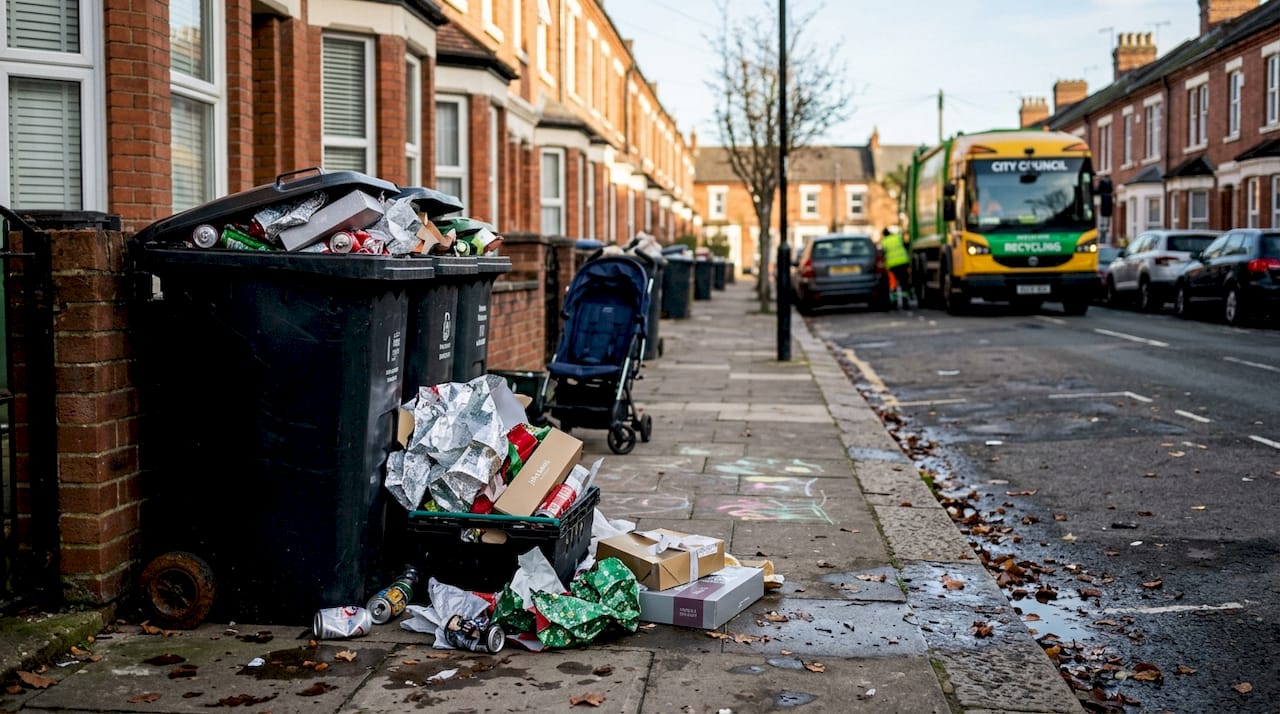
Landfill is not merely a storage problem. Organic matter decomposing under anaerobic conditions produces methane, a greenhouse gas considerably more potent than CO2 in the short term. Wrapping paper buried in landfill contributes, quietly and persistently, to this cycle.
| Metric | Traditional paper | Reusable fabric wrap |
|---|---|---|
| Annual UK usage | 227,000 miles | Reused across multiple gifts |
| CO2 per kg produced | Over 3kg CO2 | Minimal (durable, long-lasting) |
| End-of-life outcome | Mostly landfill | Kept as a keepsake or reused |
| Trees felled annually (UK) | 50,000 | None |
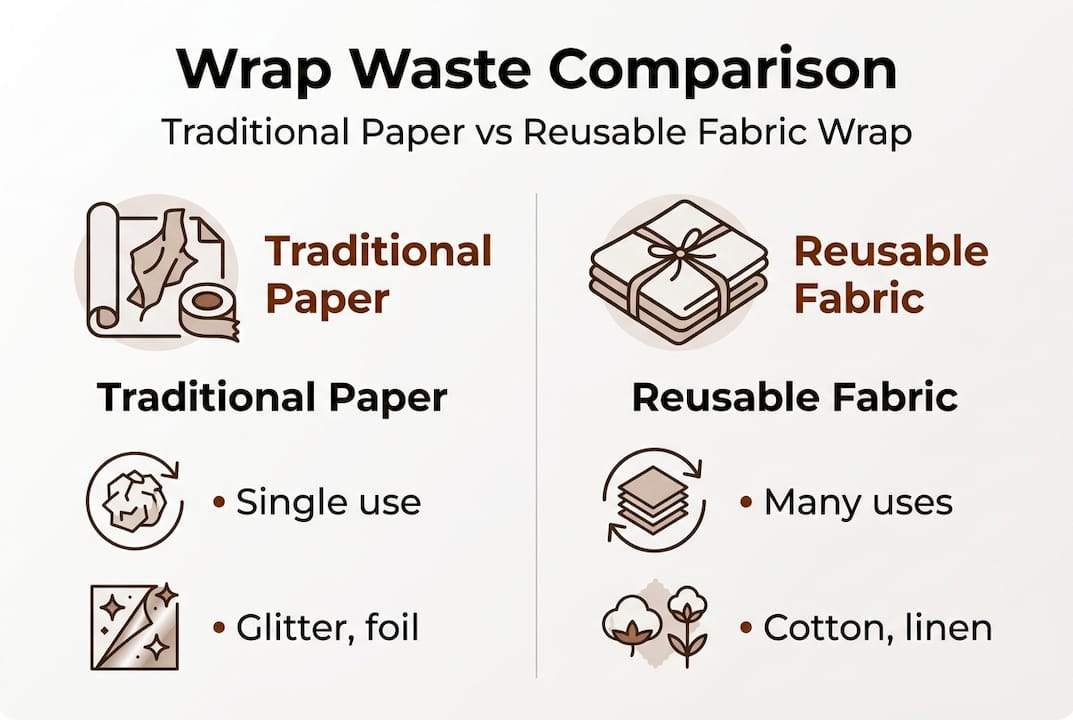
For eco-conscious parents, these figures are not abstract. They shape purchasing decisions, inform the traditions you build with your children, and reflect the values you quietly model every time a gift changes hands. Exploring UK eco-friendly gift wrap tips is one of the most practical steps you can take today.
The environmental cost of a single roll of wrapping paper extends from the forest to the factory to the landfill, touching carbon emissions, water consumption, and woodland loss at every stage. For a parent holding a newborn, that chain of consequence feels particularly personal.
Why recycling traditional wrapping paper is misleading
Here is where many well-meaning parents are quietly misled. The assumption that wrapping paper, being paper, must be recyclable is understandable. Paper goes in the recycling bin. Wrapping paper is paper. Therefore it can be recycled. The logic is tidy, but up to 70% of commercial wrapping paper is non-recyclable, and placing it in the recycling bin risks contaminating an entire batch of otherwise recoverable material.
UK recycling centres operate under strict contamination thresholds. A single glossy sheet mingled with clean paper and cardboard can render the whole collection unsuitable for processing. That means your careful sorting, that satisfying act of separating your waste thoughtfully, can be undone by one sparkly roll.
There is a simple test you can do at home to check whether a piece of paper is likely to be recyclable:
- Scrunch the paper into a ball. If it springs back, it contains plastic or foil and should not be recycled.
- Check for glitter or metallic inks. Any shimmer at all is a red flag for recyclability.
- Look for lamination or coating. A glossy feel is almost always a sign that recycling is not possible.
- Refer to the packaging label. Some brands now carry the OPRL (On-Pack Recycling Label) to guide consumers.
- When in doubt, leave it out. Your local council’s waste guidance is the most reliable source.
Pro Tip: The scrunch test is a reliable first step, but thin tissue paper fails even this simple check. Despite feeling flimsy and unassuming, it is typically too fine for sorting machinery and should be kept out of your recycling bin entirely.
Understanding your eco wrapping workflow before you buy, rather than after, prevents waste at its source rather than managing it after the fact. And reviewing reusable wrap comparisons can help you move away from the recycling confusion altogether.
Unique and sustainable alternatives for newborns and toddlers
Now that the recycling myths have settled, the genuinely joyful part begins. Choosing sustainable gift wrap for a baby or toddler is not a compromise. It is an opportunity to give something that lasts, that tells a story, and that carries meaning long after the gift inside has been discovered.
Reusable fabric wraps, seed paper, and recycled kraft paper are among the most widely available sustainable choices in the UK, with FSC-certified options and baby-themed designs increasingly easy to find. The Japanese art of furoshiki wrapping, using a square of fabric folded and tied around a gift, translates beautifully into nursery aesthetics, particularly when the fabric is soft, tactile, and embroidered with a child’s name or birth date.
Here are some of the loveliest alternatives for those gifting newborns and toddlers:
- Personalised fabric wraps: Soft cotton or linen wraps embroidered with a name, initials, or birth year transform the wrapping into a keepsake the family will treasure.
- Seed paper wrapping: After unwrapping, the paper can be planted directly into soil to grow wildflowers. A quiet lesson in renewal for curious little hands.
- Recycled kraft paper: Plain, warm-toned, and genuinely recyclable. Stamp it with nature motifs, tie it with jute twine, and it becomes quietly beautiful without the environmental cost.
- Reusable gift bags with fabric lining: These can be passed on from gift to gift, becoming part of a family’s gifting tradition over many years.
- Furoshiki-style wraps in baby themes: Woodland animals, pastel botanicals, and gentle geometric prints make these wraps as delightful to receive as the gift within.
Pro Tip: When choosing a reusable wrap for a newborn gift, select a generous size. A wrap large enough to swaddle a small toy can later be used as a play mat, dolly blanket, or a keepsake square framed for a nursery wall.
Understanding why reusable wrap is worth investing in goes beyond the environmental case. It reshapes the gifting ritual itself, making the wrapping as considered and personal as the gift. Exploring the benefits of custom gift wrap and discovering why personalised fabric wraps resonate so deeply with parents reveals a shift in how we think about the act of giving altogether. For those who love creative gift wrapping ideas, the fabric wrap opens a whole world of beautiful presentation possibilities.
Our take: Why sustainable wrapping is more than just eco-consciousness
We believe the conversation around sustainable wrapping is ready to grow beyond carbon footprints and recycling statistics, as important as those things are. At its most meaningful, the choice to wrap a newborn’s gift in a piece of embroidered linen rather than a glossy roll is an act of intentionality. It says: this moment matters. This child matters. And the way we mark their arrival reflects our values.
Reusable wraps become heirlooms. A fabric square embroidered with a baby’s name and birth date does not go in the bin. It goes in a memory box, folded alongside the first scan photograph and the hospital wristband. It becomes part of the family story.
Sustainable gifting is also one of the earliest, most natural ways to introduce children to the idea that beauty and responsibility belong together. Exploring eco-luxury gifting benefits reveals that the shift is not about sacrifice. It is about legacy, creativity, and the quiet pleasure of giving something genuinely worth keeping.
Find your sustainable baby gift wrap
If you are ready to move away from single-use wrapping paper and towards something that endures, we have created a 2026 newborn and toddler range designed with exactly this in mind. Each piece is crafted from beautifully soft fabric and can be personalised with bespoke embroidery, turning your wrap into a lasting memento rather than morning recycling.
Our Woodland Rabbit reusable wrap brings a gentle, nature-inspired aesthetic to any newborn gift, while the Sunshine Yellow furoshiki wrap brings warmth and joy to toddler celebrations. Both are designed to be kept, cherished, and used again and again. Start your sustainable gifting tradition today.
Frequently asked questions
Is any traditional wrapping paper recyclable in the UK?
Only plain, non-glossy kraft paper is usually accepted by UK recycling centres. Most commercial wrapping paper is rejected because of coatings, metallic inks, and decorations that contaminate the recycling process.
What are the best eco-friendly wrapping options for baby gifts?
Reusable fabric wraps, seed paper, recycled kraft paper, and personalised eco paper with baby themes are all sustainable choices that minimise waste and keep gifts out of landfill.
Do eco wraps have a lower carbon footprint than traditional paper?
Yes. Sustainable wraps avoid the energy-intensive manufacturing and virgin wood pulp that traditional paper relies on. With over 3kg of CO2 produced per kilogram of traditional wrapping paper, reusable and compostable alternatives are significantly kinder to the climate.
How can I personalise eco-friendly wraps for newborns?
Look for UK brands offering embroidered fabric wraps with baby-themed designs, FSC-certified papers, and reusable gift bags that can be decorated, adding a personal and lasting touch to any eco-conscious gift.
Recommended
- Sustainable gift wrap UK: Eco-friendly tips for parents – Nicholas & Rose Limited
- Eco-conscious holiday checklist: sustainable gifts for UK parents – Nicholas & Rose Limited
- 7 Steps to a Gift Wrap Sustainability Checklist for Parents – Nicholas & Rose Limited
- Luxurious eco wrapping ideas for UK newborn gifts – Nicholas & Rose Limited
- Sustainable fashion options for conscious women in 2026 – Prima Dons & Donnas