

Upcycled fabric wrapping process: a complete guide
TL;DR:
- The upcycled fabric wrapping process uses old fabrics and Japanese furoshiki techniques to create sustainable, reusable gift wraps. It emphasizes fabric selection, proper sizing, and simple folding methods that eliminate the need for tape or scissors, making the wraps both eco-friendly and personal. Proper finishing and embellishments enhance presentation, allowing the wraps to be reused multiple times and serve as lasting keepsakes.
The upcycled fabric wrapping process is an eco-friendly method where you transform old or surplus fabric into reusable, beautifully tied gift wraps using folding and knotting techniques rooted in the ancient Japanese tradition of furoshiki. Unlike conventional wrapping paper, which is discarded within moments of a gift being opened, fabric wraps endure through dozens of uses, making them a genuinely sustainable choice for newborn gifts, baby shower presents, and children’s celebrations. Reusable fabric wraps break even financially within one to two years by replacing the repeated cost of disposable paper. For those seeking a more thoughtful, waste-conscious approach to gifting, this guide covers every stage of the process with clarity and care.
What is the upcycled fabric wrapping process?
The upcycled fabric wrapping process draws directly from furoshiki, an ancient Japanese tradition of wrapping objects in cloth, which promotes a zero-waste, minimalist approach to everyday life. Rather than purchasing new fabric, the method encourages you to repurpose what you already own: a vintage scarf, a cotton tea towel, a soft bandana, or even a length of fabric cut from a worn garment. The result is a wrap that carries its own quiet story, one of intention, craft, and care for the world your child will grow into.
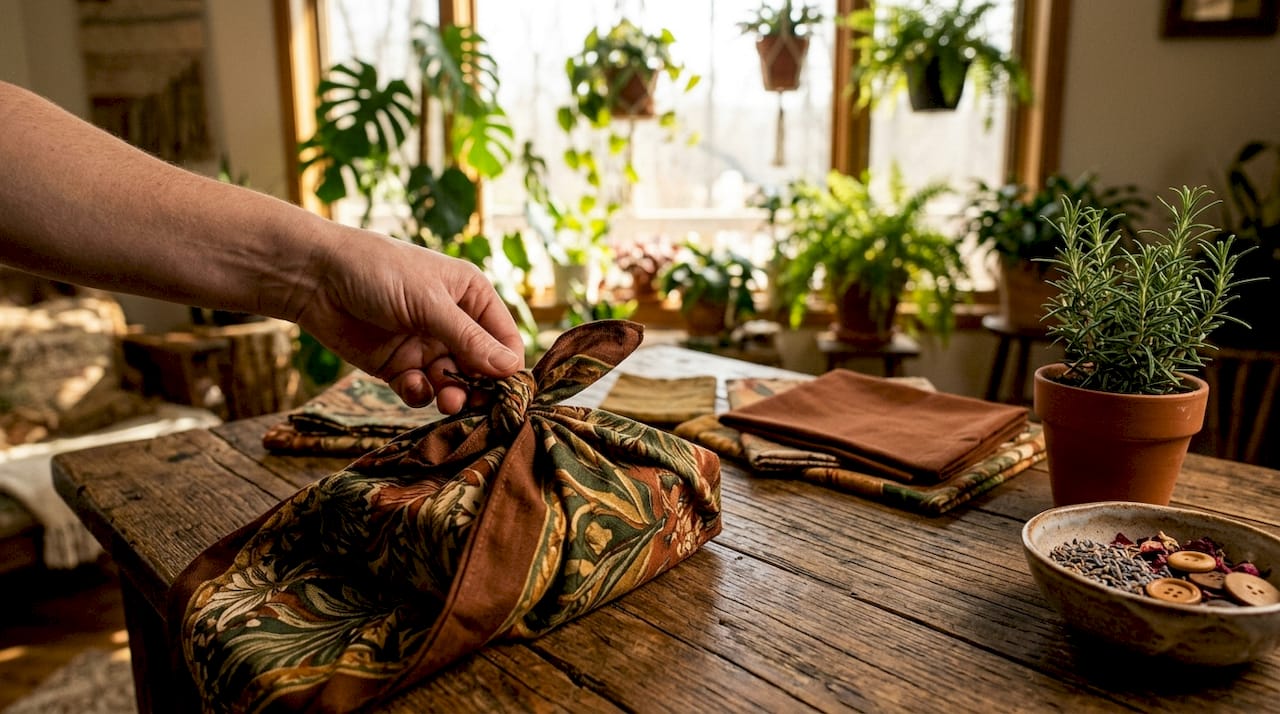
For newborn and baby shower gifts in particular, fabric wraps add a layer of personalisation that paper simply cannot offer. The wrap itself becomes part of the present, repurposed later as a muslin, a keepsake cloth, or a play scarf. This dual purpose is precisely what makes the practice so well suited to the early years of a child’s life, where every gift is received with tenderness and remembered long after the occasion has passed.
What fabric types and sizes work best for wrapping?
Choosing the right fabric is the foundation of a successful wrap, and the distinction between knit and woven fabrics matters more than most beginners expect. Knit fabrics do not fray because their looped construction holds the edges intact, making them ideal for anyone new to the process who would rather skip hemming entirely. Woven fabrics, such as cotton lawn, linen, or vintage silk, produce a more refined drape but require either a rolled hem or a fray-stop solution along the cut edges before use.
For sizing, precision matters. Pieces below 20 inches square are generally too small to wrap anything beyond a card, while pieces larger than 30 inches create floppy, unwieldy ends that detract from the presentation. A 20 to 30 inch square is the sweet spot for most gifts, from a soft toy to a small clothing set.
When selecting or preparing your fabric, consider the following:
- Knit jersey or interlock: No hemming required, forgiving to tie, and gentle against a newborn’s skin if repurposed afterwards.
- Cotton lawn or muslin: Lightweight with a beautiful drape; requires a simple rolled hem sewn at 1/4 inch fold, twice under, to prevent fraying.
- Vintage scarves or bandanas: The best eco-friendly wrap is often what you already own, and a silk scarf brings instant elegance to any gift.
- Tea towels: Sturdy, washable, and often printed with charming patterns suited to children’s gifts.
- Iron-on hem tape: A no-sew alternative for woven fabrics that creates a clean edge in minutes with a warm iron.
Pro Tip: Choose a fabric with a slight stretch or give. Stretchable fabric knots more securely and produces a neater, more polished finish than a stiff woven piece of the same size.
How do you wrap a gift using the furoshiki method?
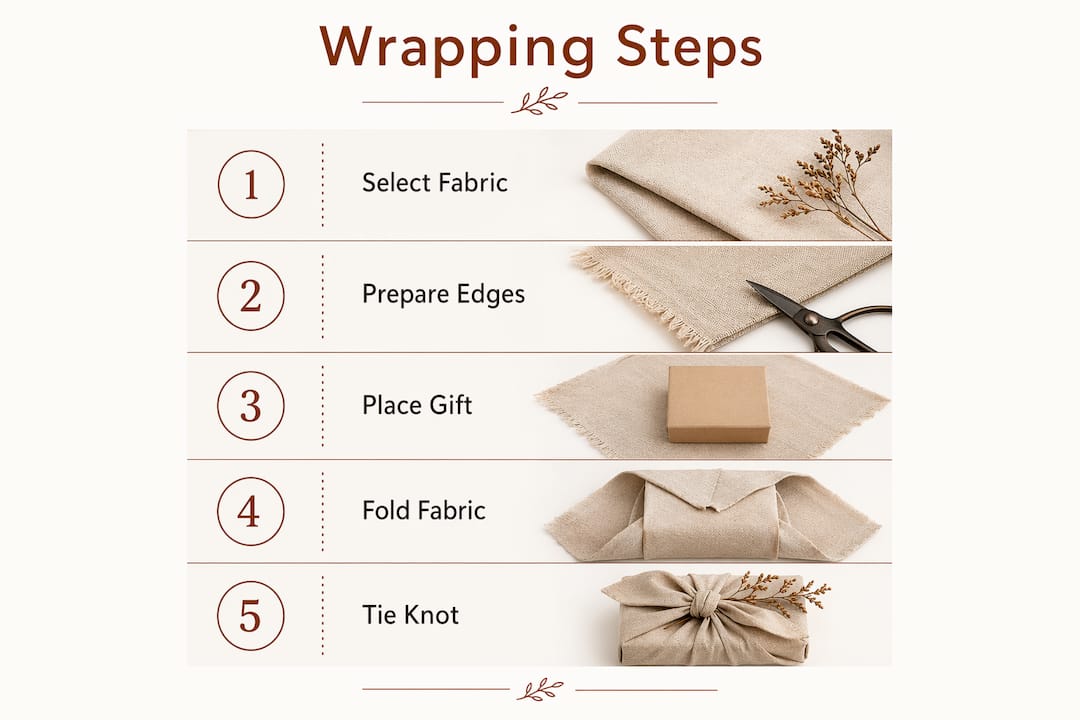
The basic furoshiki wrap requires no tape, no scissors during wrapping, and no adhesive of any kind. The process is meditative in its simplicity, and once learned, takes fewer than two minutes to complete beautifully.
The basic wrap: step by step
- Lay your fabric square flat on a clean surface, pattern side facing down.
- Place the gift diagonally at the centre of the fabric, so each corner of the gift points towards a corner of the cloth.
- Fold the corner nearest to you up and over the gift, tucking it gently beneath the far edge.
- Fold the opposite corner over the top, pulling it snugly.
- Tie the two remaining corners in a double knot at the centre top of the gift, creating a neat carry handle.
- Adjust the folds so the fabric lies smooth and the knot sits upright.
Adapting the method for different gift shapes
Furoshiki techniques vary by shape, and knowing which approach suits your gift transforms the result from functional to genuinely beautiful.
| Gift shape | Recommended technique | Key adjustment |
|---|---|---|
| Box or flat gift | Basic diagonal wrap | Tuck corners neatly under before knotting |
| Bottle or cylindrical gift | Bottle wrap | Roll fabric around the bottle, tie at the neck |
| Card or small flat item | Card envelope fold | Fold into thirds, tuck one end into the other |
| Soft toy or irregular shape | Carry wrap | Gather all four corners and tie in a single overhead knot |
For newborn gifts, the carry wrap is particularly charming. A soft rabbit toy or a folded sleepsuit gathered inside a sprigged cotton square, tied with a single generous knot at the top, looks as though it has arrived from a boutique rather than a kitchen table.
Pro Tip: For bottle-shaped gifts such as a baby bath wash or a celebratory bottle of fizz, use a longer rectangular piece of fabric rather than a square. Roll the bottle from one end, twist the excess at the top, and tie the two twisted ends together in a bow for an effect that is both secure and striking.
How do you avoid common mistakes in fabric wrapping?
Even a thoughtfully chosen fabric can produce a disappointing result if the finishing is overlooked. The most frequent issues are raw edges that fray after the first wash, fabric that is slightly too large and creates untidy excess, and knots that loosen during transit.
The solutions are straightforward once you know them:
- Fraying edges: A simple rolled hem folded twice at 1/4 inch and sewn or ironed flat resolves this permanently. For a no-sew fix, fray-stop liquid applied along the cut edge dries clear and holds well through multiple washes.
- Excess fabric: Rather than trimming, use the extra length creatively. Twist the ends into a rope-like coil and tuck them beneath the knot, or fold them into a decorative fan shape before tying.
- Loose knots: A double knot always holds more securely than a single. For particularly slippery fabrics such as satin or silk, tie the knot over a small piece of natural twine to give it grip.
- Dull presentation: One refined addition such as a velvet ribbon threaded through the knot transforms raw edges from looking rough to looking deliberate and polished.
“Recycled doesn’t mean rough. The difference between a beautiful upcycled wrap and a careless one lies entirely in the finishing touches.”
The pass-it-on philosophy extends the life of every wrap further still. When you give a gift wrapped in fabric, include a small note encouraging the recipient to rewrap their next gift in the same cloth. A single well-made wrap can travel through five or six pairs of hands before it retires to a drawer as a beloved piece of fabric. For baby shower gifts, this philosophy resonates deeply: the wrap that held a newborn’s first outfit might later wrap a birthday present for the same child at age three.
Pro Tip: Wash fabric wraps in a cool, gentle cycle and air-dry flat to preserve both the colour and the hand-feel. A well-cared-for wrap holds its beauty through years of use.
Creative ways to personalise and embellish fabric wraps
Embellishment is where the upcycled fabric wrapping process becomes genuinely expressive, and where a gift moves from thoughtful to truly memorable. The guiding principle is to choose additions that are either biodegradable, reusable, or themselves upcycled.
Consider these approaches for newborn, baby shower, and children’s gifts:
- Natural twine and dried botanicals: A sprig of dried lavender or a cinnamon stick tucked beneath the knot adds fragrance and texture without any waste.
- Washi tape and recycled paper tags: Paper-based tape is biodegradable and creates a far more pleasing aesthetic than plastic adhesive tape. Pair it with a kraft paper tag hand-written in ink.
- Fabric gift tags: Cut a small rectangle from a fabric scrap, fray the edges intentionally for a rustic effect, and write the recipient’s name with a fabric pen. For babies, a tag embroidered with their name becomes a keepsake in its own right.
- Tote bags as wraps: A small cotton tote bag makes a charming wrap for a collection of baby items and doubles as a useful bag for the parent afterwards.
| Embellishment | Eco credentials | Best suited to |
|---|---|---|
| Natural twine | Fully biodegradable | All gifts |
| Velvet ribbon | Reusable, elevates presentation | Newborn and shower gifts |
| Washi tape | Biodegradable, decorative | Cards and flat gifts |
| Fabric gift tag | Zero waste, personal | Children’s gifts |
| Dried botanicals | Compostable | Adult and shower gifts |
Colour and pattern coordination matters particularly for babies and young children. A soft duck-egg blue wrap printed with woodland creatures, tied with cream twine and a hand-stitched tag, creates a presentation that feels considered and warm. Nicholasandrose offers personalised embroidery options on their fabric wraps, allowing you to add a name or date that transforms the wrap itself into a lasting keepsake rather than a disposable gesture.
Key takeaways
The upcycled fabric wrapping process produces beautiful, reusable gift wraps through fabric selection, simple furoshiki folding, and considered finishing, with no tape or waste required.
| Point | Details |
|---|---|
| Choose fabric wisely | Knit fabrics need no hemming; woven fabrics require a rolled hem or fray-stop treatment. |
| Size for the gift | A 20 to 30 inch square suits most gifts and avoids unwieldy excess fabric at the ends. |
| Master the basic knot | The furoshiki diagonal wrap and double knot creates a secure, elegant carry handle with no adhesive. |
| Finish with intention | One quality addition such as a velvet ribbon or embroidered tag lifts the entire presentation. |
| Embrace the pass-it-on ethos | Encouraging recipients to reuse the wrap extends its life through multiple gifts and households. |
Why fabric wrapping changed how I think about gifting
By Helen
I came to furoshiki wrapping through a baby shower gift, of all things. I had a beautiful soft cotton scarf I no longer wore, a pale sage green with a faint floral print, and it seemed a shame to fold it into a drawer when it could carry something precious. The reaction from the new mother was something I did not expect: she held the wrapped gift for a long moment before she opened it, turning it over, admiring the knot. She said it felt like receiving two gifts at once.
That moment shifted something for me. Wrapping paper, however lovely, is gone in seconds. A fabric wrap lingers. It is touched, admired, and then reused. For newborn and children’s gifts especially, where the occasion is tender and the memory is meant to last, the wrap deserves the same care as the gift inside it.
What I have learned from years of fabric wrapping is that the quality of the finish matters far more than the cost of the fabric. A beautifully hemmed piece of upcycled cotton, tied with a velvet ribbon and a hand-stitched tag, outshines a hastily knotted piece of expensive silk every time. The craft is in the attention, not the expenditure. And knowing that the wrap will be washed, folded, and used again by someone else gives every gift a quiet continuity that paper simply cannot offer.
— Helen
Discover Nicholasandrose’s reusable fabric wraps
If you love the idea of the upcycled fabric wrapping process but would like a beautifully crafted, ready-made option for a special occasion, Nicholasandrose offers a collection designed with precisely this in mind. The Sunshine Yellow Furoshiki Wrap brings a luminous warmth to newborn and baby shower gifts, while the Woodland Rabbit Duck Egg Wrap carries the gentle charm of a morning garden into every fold. Both wraps are crafted for reuse, personalised through embroidery with a name or date, and designed to become a treasured keepsake long after the gift inside has been enjoyed. For those gifting a new arrival in 2026, these wraps offer something wrapping paper never could: a memento that endures.
FAQ
What is the furoshiki wrapping method?
Furoshiki is an ancient Japanese technique of wrapping objects in cloth using folds and knots rather than tape or adhesive. The basic process involves folding opposite corners over the gift and tying the remaining two corners in a double knot to create a reusable, elegant wrap.
What size fabric do I need for gift wrapping?
A square of fabric measuring between 20 and 30 inches suits most gifts, from a folded clothing set to a soft toy. Pieces smaller than 20 inches are generally too restrictive, while larger pieces create excess fabric that is difficult to tie neatly.
Do I need to sew the edges before wrapping?
Not always. Knit fabrics do not fray and require no hemming, making them ideal for beginners. For woven fabrics such as cotton or linen, a simple rolled hem or a fray-stop liquid applied to the edges prevents unravelling after washing.
Can fabric wraps be used for newborn and baby gifts?
Fabric wraps are particularly well suited to newborn and baby shower gifts because the wrap itself becomes part of the present, repurposed as a muslin, a play cloth, or a keepsake. Nicholasandrose’s 2026 newborn range offers personalised fabric wraps embroidered with the baby’s name, creating a lasting memento alongside the gift.
How many times can a fabric wrap be reused?
A well-made and properly cared for fabric wrap can be reused many times across multiple recipients. The pass-it-on philosophy encourages each recipient to rewrap their next gift in the same cloth, extending the fabric’s lifecycle indefinitely and reducing waste with every use.
Recommended
- Sustainable gift wrapping with fabric: save 90% waste – Nicholas & Rose Limited
- Premium Gift Wrapping Instructions for Reusable Fabric – Nicholas & Rose Limited
- Wrapping Gifts Without Paper: Elegant Fabric Solutions – Nicholas & Rose Limited
- What is fabric wrap etiquette: guide for eco parents – Nicholas & Rose Limited