

What is mono-material wrapping: a guide for eco gifters
TL;DR:
- Mono-material wrapping uses a single polymer, typically PE or PP, to ensure recyclability and reduce waste. Reusable fabric wraps provide a zero-waste, meaningful alternative, especially for children’s gifts. Choosing genuine mono-material or fabric wraps supports sustainability and long-lasting gift presentations.
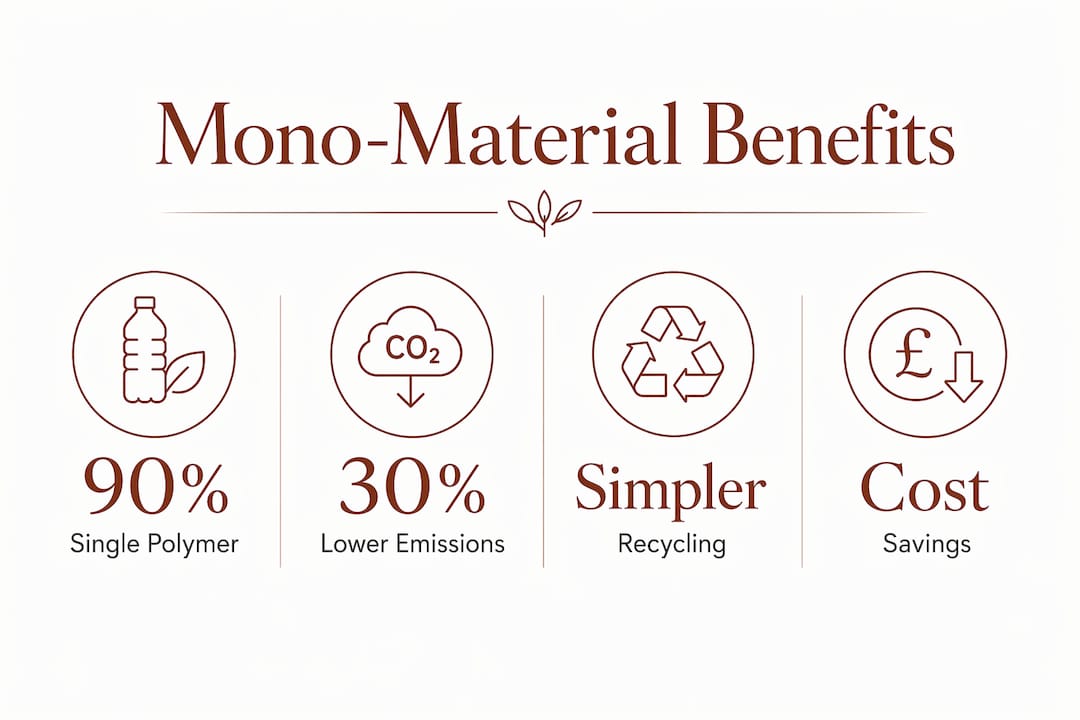
Mono-material wrapping is packaging or gift wrap composed of a single, uniform material family, typically one polymer such as polyethylene or polypropylene, with at least 90% of total weight from that single polymer type. That threshold is the recognised industry benchmark for design-for-recycling compliance, and it matters enormously when you are choosing wrapping for a newborn gift or a baby shower present. Conventional wrapping paper frequently combines paper fibres, plastic coatings, metallic foils, and adhesive laminates, making it almost impossible to recycle cleanly. Mono-material wrapping removes that complexity entirely, sending one material type into one recycling stream. For eco-conscious gift-givers, understanding this distinction is the first step towards making choices that genuinely reduce waste.
What is mono-material wrapping and why does it matter for recycling?
Mono-material wrapping solves a problem that multi-material packaging creates: the need to separate incompatible materials before recycling can begin. When a gift wrap combines a paper base with a polyethylene coating and a foil accent, a Material Recovery Facility (MRF) cannot process it as paper or as plastic. The result is contamination, and contaminated bales are rejected and sent to landfill.
Mono-material packaging improves recycling by eliminating the separation step entirely. Because the entire wrap is one polymer family, it enters a single recycling stream without dismantling, cutting, or sorting. MRFs process it faster, with lower contamination risk, and at reduced operational cost.
Consumer behaviour is equally important here. Recycling confusion is one of the strongest barriers to correct disposal. When a gift-giver cannot tell whether the wrapping goes in the paper bin or the plastic bin, it often goes in neither. Mono-material wrapping removes that cognitive burden. One material, one bin, one clear action.
The benefits for newborn and baby shower gifting are particularly meaningful. Gifts for very young children are often unwrapped quickly, sometimes before the baby has even arrived home. Wrapping that ends in landfill within minutes of being torn open represents a significant and avoidable waste. Choosing mono-material wrapping, or better still a reusable fabric alternative, changes that story entirely.
- Multi-material gift wraps combine paper, plastic film, foil, and adhesives that cannot be separated at standard MRFs.
- Mono-material wrapping enters a single recycling stream, reducing contamination and processing time.
- Consumer recycling clarity improves when one material type requires one disposal action.
- Rejected contaminated bales from mixed-material wrapping go directly to landfill, negating any recycling intent.
How does mono-material wrapping work technically?
Mono-material wrapping achieves its performance through molecular engineering rather than by layering different materials. Techniques such as orientation, surface control, and blending within polymer groups allow a single polymer to deliver sealing strength, print quality, and stiffness that previously required composite structures. This is a shift from redundancy to precision in packaging design.

Polymer types and their properties
Polyethylene (PE) and polypropylene (PP) are the two most widely used polymers in mono-material wrapping. PE offers excellent flexibility and moisture resistance, making it well suited to soft wraps and pouches. PP provides greater stiffness and a crisper hand-feel, which suits structured gift boxes and bags. Both polymers are widely accepted in household recycling streams across the United Kingdom.
Achieving barrier performance without mixed materials
One genuine challenge for mono-material design is oxygen and moisture barrier performance. Polyolefins alone can struggle to match the barrier properties of multi-layer laminates that combine aluminium foil with plastic film. The industry solution is to use secondary packaging such as outer boxes or aluminium over-wraps to compensate, while keeping the primary wrap itself mono-material. This preserves the recyclability of the main wrap without sacrificing product protection.
Visual consistency and aesthetic appeal
Mono-material design enables colour matching between different components of a package by using the same resin throughout. In gift wrapping for babies and children, this translates to a visually coherent, luminous finish without the refractive inconsistencies that appear when different materials sit side by side. A wrap, ribbon, and tag made from the same polymer family will hold colour uniformly, creating a refined, considered aesthetic.
- Select a single polymer family (PE or PP) as the base material.
- Apply orientation techniques to improve mechanical strength without adding other materials.
- Use surface treatments within the same polymer group to achieve print and seal performance.
- Address any barrier gaps with secondary packaging rather than introducing incompatible laminates.
- Verify that the finished product meets the 90% single polymer weight threshold for recycling compliance.
Pro Tip: When assessing a mono-material wrap, check the recycling label. A product genuinely designed for recycling will carry a single resin identification code, such as PE or PP, without additional symbols indicating mixed materials.
Recent resin science improvements mean mono-material systems now match or exceed the protective performance of multi-material composites. The earlier perception that single-material wrapping meant inferior quality no longer holds. Engineered mono-material films are a serious, high-performance alternative.
What are the environmental and economic benefits of mono-material wrapping?
A December 2025 study found that mono-material solutions perform significantly better than multi-layer counterparts across climate change, acidification, and eutrophication metrics. That means lower carbon emissions, less acid rain contribution, and reduced water pollution, all from a packaging choice that also costs less to process at end of life.
The economic case is equally clear. Simpler sorting at MRFs reduces processing costs. Brands that adopt mono-material wrapping spend less on material complexity during manufacture and less on waste management at disposal. For small businesses and independent gift brands, that saving is meaningful.
In the newborn and children’s gift market, mono-material wrapping is increasingly adopted across personal care, cosmetic, and gift product categories. Parents and gift-givers in this market are among the most environmentally motivated consumers. A gift wrapped thoughtfully, in materials that can be recycled or reused, carries a deeper emotional resonance than one buried in foil and plastic film.
| Benefit | Detail |
|---|---|
| Lower carbon footprint | Mono-material production and processing generates fewer emissions than multi-layer alternatives. |
| Reduced recycling contamination | Single polymer streams are accepted cleanly at MRFs, avoiding landfill rejection. |
| Cost savings in processing | Simpler sorting and fewer material types reduce operational costs throughout the supply chain. |
| Stronger brand perception | Eco-conscious gift-givers respond positively to transparent, recyclable wrapping choices. |
| Aesthetic consistency | Same-resin components hold colour uniformly, creating a polished, refined presentation. |
The 90% purity threshold acknowledges that absolute purity is rarely achievable due to additives and processing aids. The standard sets a practical, widely accepted benchmark rather than an impossible ideal. Brands working towards this threshold are making a genuine contribution to circular economy goals, even if perfection remains out of reach.
Reusable fabric gift wrap, such as the bespoke embroidered wraps from Nicholasandrose, takes these benefits further still. A fabric wrap that is kept, treasured, and used again produces no waste at all. It becomes part of the gift itself, a tactile, heirloom piece that outlasts the occasion by years.
How to choose mono-material wrapping for newborn and kids gifts
Choosing genuinely sustainable wrapping requires more than reading the word “eco” on a label. The following guidance helps you identify wrapping that delivers on its environmental promise, particularly for the precious occasion of a newborn gift or baby shower.
- Check the resin code. A genuine mono-material wrap carries a single resin identification code (PE, PP, or similar) on the packaging. Multiple codes indicate mixed materials.
- Look for recycling scheme membership. In the United Kingdom, products certified under OPRL (On-Pack Recycling Label) guidelines carry clear disposal instructions. A mono-material wrap should state “Recycle” without caveats.
- Avoid foil accents and laminated finishes. Metallic foils and gloss laminates are almost always multi-material additions that disqualify a wrap from single-stream recycling.
- Prioritise reusable fabric wraps. A reusable fabric gift wrap eliminates the recycling question entirely. Fabric wraps are kept, not discarded, making them the most circular option available.
- Consider personalisation as a sustainability strategy. A wrap embroidered with a baby’s name becomes a keepsake. The recipient keeps it precisely because it is personal, which means it never reaches the bin.
Pro Tip: For newborn gifts and baby shower presents, choose a fabric wrap that can be repurposed as a comforter cloth, play mat cover, or memory keepsake. Nicholasandrose’s embroidered wraps are designed with exactly this longevity in mind.
When selecting sustainable gift wrap solutions for children, think beyond the moment of unwrapping. The wrapping is part of the gift experience, and for a newborn, that experience is shared by parents and family who will remember it long after the occasion has passed. A thoughtfully chosen wrap, whether mono-material or reusable fabric, signals care and intention in a way that conventional paper never can.
Retailers and gift brands should also be cautious of products marketed as mono-material that include multi-material closures, labels, or ties. A wrap body made from PE with a foil-printed label attached by a different adhesive is not truly mono-material at the point of disposal. Scrutinise the whole product, not just the primary wrap.
Key takeaways
Mono-material wrapping is the most recyclable form of gift packaging available, and reusable fabric wraps go further by eliminating waste entirely.
| Point | Details |
|---|---|
| Industry definition | Mono-material wrapping contains at least 90% of a single polymer type by weight, meeting design-for-recycling standards. |
| Recycling advantage | Single polymer streams enter MRFs without separation, reducing contamination and landfill rejection. |
| Technical performance | Orientation and surface control within one polymer family now matches the performance of multi-material composites. |
| Environmental impact | A 2025 study confirms mono-material solutions outperform multi-layer packaging on climate, acidification, and eutrophication metrics. |
| Best choice for gifting | Reusable, personalised fabric wraps from Nicholasandrose produce zero waste and become lasting keepsakes for newborns and children. |
Why I believe the future of gifting lies in wrapping that stays
The conversation around sustainable packaging has shifted considerably in recent years, and what strikes me most is how the gift wrap category has lagged behind. We scrutinise the provenance of a baby gift with great care, choosing organic cotton, natural dyes, and ethically made toys, and then we wrap it in foil-coated paper that goes straight in the bin.
Mono-material wrapping is a meaningful step forward because it removes the excuse of complexity. One material, one stream, one clear choice. But I think the more profound shift comes when we stop treating wrapping as disposable at all. A fabric wrap embroidered with a newborn’s name is not packaging. It is part of the gift. It is the first soft thing a baby might touch, the cloth a parent folds away in a memory box, the piece that resurfaces years later and carries the whole weight of that original moment.
The innovation in eco gifting that excites me most is not about finding a better polymer. It is about redesigning the ritual of giving so that nothing is wasted, nothing is forgotten, and everything carries meaning. Mono-material wrapping is a sound, responsible choice. Reusable, personalised fabric wrapping is something richer still.
— Helen
Nicholasandrose: sustainable wrapping for life’s earliest gifts
For parents, grandparents, and friends choosing gifts for newborns and young children, the wrapping deserves as much thought as the gift inside.
Nicholasandrose creates reusable fabric gift wraps personalised through bespoke embroidery, designed specifically for newborn and toddler gifting occasions. Each wrap is crafted to become a keepsake rather than waste, with the baby’s name, birth date, or a personal message stitched with care. The 2026 newborn and toddler range brings new designs suited to baby showers, first birthdays, and christening gifts. Browse the full collection and find a wrap that will be treasured long after the ribbon is untied.
FAQ
What is the mono-material packaging definition?
Mono-material packaging is a structure made from a single polymer family, with at least 90% of total package weight from that one material type. This threshold is the recognised industry standard for design-for-recycling compliance.
How does mono-material wrapping differ from conventional gift wrap?
Conventional gift wrap typically combines paper, plastic coatings, foil, and adhesives that cannot be separated for recycling. Mono-material wrapping uses one polymer throughout, allowing it to enter a single recycling stream cleanly.
What are the main benefits of mono-material wrapping?
The primary benefits are improved recyclability, reduced landfill contamination, lower carbon emissions, and simpler disposal for consumers. A 2025 study confirmed measurable improvements across climate change, acidification, and eutrophication metrics compared to multi-layer alternatives.
Is reusable fabric gift wrap better than mono-material wrapping?
Reusable fabric wrapping eliminates waste entirely rather than managing it through recycling. For newborn and children’s gifts, a personalised fabric wrap from Nicholasandrose becomes a lasting keepsake, making it the most circular and meaningful option available.
How do I know if a gift wrap is genuinely mono-material?
Check for a single resin identification code (such as PE or PP) on the product. Avoid wraps with foil accents, gloss laminates, or multiple recycling symbols, as these indicate mixed materials that disqualify the product from single-stream recycling.
Recommended
- Wrapping workflow for eco gifts: 2026 guide – Nicholas & Rose Limited
- Eco Aware Wrapping: Defining Sustainable Luxury – Nicholas & Rose Limited
- Luxury Christmas Wrapping Tutorial for Eco-Conscious Gifts – Nicholas & Rose Limited
- Create personalised eco-conscious gift wrap in 5 steps – Nicholas & Rose Limited