

Why upcycled fabric matters for baby gifts that last
Personalised, reusable fabric gift wrap matters because it cuts single-use wrapping waste and turns the moment of unwrapping into a keepsake the recipient keeps rather than bins. Roughly 227,000 miles of wrapping paper are discarded every Christmas in the UK, much of it destined for landfill within hours of being torn open. Research from the University of Bath found that personalised gifts trigger something called vicarious pride, making recipients far more likely to treasure and care for what they’ve been given. Nicholas & Rose Limited builds embroidered, washable fabric wraps around exactly this insight, offering something a newborn’s parents will still be folding away years later.
What that means in practice:
- Single-use wrapping paper is used once, then discarded, often within an hour of a baby shower.
- A personalised fabric wrap is designed to be reused, washed, and passed on.
- Embroidery on natural cotton creates a physical memory of the occasion, not just a container for the gift inside.
Key Takeaways
Personalised, reusable fabric wraps matter because they eliminate single-use wrapping waste while creating a keepsake recipients are measurably more likely to treasure and keep.
| Point | Details |
|---|---|
| Waste reduction is measurable | UK households discard 227,000 miles of wrapping paper and 108 million rolls each Christmas alone. |
| Personalisation extends a gift’s life | Bath University research shows personalised items are kept and cared for more than generic gifts. |
| Fabric avoids recycling pitfalls | Foil, glitter, and laminates make much decorative paper unrecyclable, a problem fabric never has. |
| Care routine is simple | Gentle machine wash, low-heat iron on reverse, and flat storage keep embroidery sharp for years. |
| Nicholas & Rose offers the practical solution | The Baby & Beyond range provides washable, embroidered cotton wraps sized for newborn and toddler gifts. |
Table of Contents
- How reusable fabric wraps reduce waste and why that matters
- Why personalisation turns a wrap into a keepsake
- Practical benefits of a fabric wrap beyond sentiment
- How to choose the right personalised wrap for a baby gift
- Caring for a personalised wrap so it lasts for years
- Why Nicholas & Rose wraps are built for this exact moment
- Fabric wraps versus recycled paper and biodegradable alternatives
- How upcycled fabric supports a genuinely circular approach
- What it feels like to receive a gift wrapped this way
- A note from Helen
- Order a personalised Nicholas & Rose wrap for your next gift
- Frequently asked questions
- Sources
How reusable fabric wraps reduce waste and why that matters
Wrapping paper’s biggest failure is timing. It exists for the length of one gift reveal, then heads straight to the bin, and often the recycling bin can’t even take it.
Statistic: UK households discard around 227,000 miles of wrapping paper and 108 million rolls each Christmas, alongside roughly 125,000 tonnes of seasonal plastic packaging waste.
A baby shower produces a smaller mountain than Christmas, but the pattern repeats at every birthday, every christening, every “new baby” visit for years to come. Do the sums on a single family: buy one reusable fabric wrap for a first birthday and reuse it for five subsequent birthdays and it has already replaced at least five rolls of paper that would otherwise have gone to landfill.
Much of that discarded paper was never recyclable to begin with. Foil coatings, glitter, and plastic laminates contaminate recycling streams, which is why councils apply the ‘scrunch test’ to decide what they’ll actually accept. Fabric sidesteps the problem entirely, because there’s no single-use layer to sort or reject in the first place. Choosing sustainable gift wrapping with fabric avoids that guesswork completely.
Pro Tip: Choose machine-washable cotton and steer clear of stick-on embellishments or heavy sequins. Trims that trap dirt or fray in the wash are the fastest way to shorten a wrap’s working life.
Why personalisation turns a wrap into a keepsake
A name embroidered on cotton does something a printed pattern never quite manages. It signals thought, not just spend, and that distinction changes how a recipient treats the object afterwards.
The University of Bath’s 2024 research identified this as “vicarious pride”: recipients of personalised gifts reported higher self-esteem and appreciation than those given generic equivalents, and were measurably less likely to discard or alter the item afterwards. ScienceDaily’s summary of the same body of work notes that customised gifts were tended to more carefully and changed less often by their recipients across the studies reviewed.
Personalised gifts evoke vicarious pride in the recipient, increasing appreciation and the likelihood the item is kept and cared for rather than replaced or discarded.
Picture a newborn’s name stitched across the corner of a wrap used to present a first babygrow. That piece of fabric outlives the gift inside it by years, folded into a keepsake box long after the babygrow has been outgrown. The Conversation’s coverage of the same findings makes a practical suggestion worth borrowing: tell the recipient why you chose this particular fabric or thread colour. A short handwritten note tucked inside, explaining the choice, amplifies the pride effect the Bath researchers measured.
Practical benefits of a fabric wrap beyond sentiment
Sentiment aside, a well-made fabric wrap simply does more work than a sheet of paper ever could. It survives a car boot, a nursery shelf, and several rounds of the washing machine without losing its shape or its stitching.
Parents of newborns and toddlers find these wraps earn their keep in several ways:
- Keepsake display: folded and framed, or draped over a Moses basket as a nursery accent.
- Quick swaddle-style wrap: a soft square doubles as an emergency cover for pram or car seat.
- Toy or gift wrap, reused: the same cloth wraps next year’s birthday present.
- Photo prop: a textured backdrop for newborn photography sessions.
- Storage pouch: once its wrapping duty is done, it holds small keepsakes or nursery items.
Look for washable, breathable natural fibres and embroidery stitched densely enough to survive repeated laundering, not printed or ironed-on lettering that cracks after a few washes. That durability is the real difference between a novelty and something built to last, as covered in why fabric gift wrap beats paper waste.
How to choose the right personalised wrap for a baby gift
The quick answer: pick a washable natural fibre, in a size that suits the occasion, with embroidery placed and stitched to survive years of handling.
Beyond that, a short checklist keeps the decision simple when you’re comparing options in a shop or on a product page:
- Fabric type: cotton and linen blends offer the best balance of softness, structure, and washability.
- Size: newborn gifts tend to suit smaller squares; toddler birthday presents often need a larger wrap to cover bulkier boxes.
- Embroidery placement and font: a corner name in a clean serif reads well at any age; scripted names on a central panel suit framed keepsakes.
- Finish and safety: check for secure stitching and no loose trims that could pose a hazard near young children.
- Colour and pattern: choose tones that suit a keepsake box or nursery shelf, not just the wrapping moment itself.
Pro Tip: Ask for a higher contrast between thread and fabric than feels necessary at first glance. Embroidery softens and fades slightly with each wash, and strong contrast keeps a name legible for years rather than months.
Where a brand sources fabric from reclaimed or surplus cotton stock, that’s a genuine sustainability bonus worth asking about, though it shouldn’t be the only factor guiding your choice. The SLY Collective’s overview of sustainable fabric options is a useful primer if you want to understand natural fibre choices in more depth before you buy.
Caring for a personalised wrap so it lasts for years
Reasonable care, not special treatment, is what keeps an embroidered wrap looking sharp for years of reuse. The routine is closer to caring for a favourite shirt than an heirloom textile.
- Wash on a gentle machine cycle using a mild detergent.
- Avoid bleach or heavily scented fabric conditioners, which can dull embroidery thread over time.
- Iron on the reverse side, on a low heat setting, to protect the stitched design.
- Fold flat or roll loosely for storage rather than scrunching it into a drawer.
Pro Tip: Catch a loose thread or small snag the moment you spot it. A quick stitch now prevents a full section of embroidery unravelling after a few more washes.
A little routine care from the outset means the wrap is still doing its job at the next birthday, and the one after that. For more everyday reuse ideas, 7 smart ways to reuse gift wrap covers ground beyond the laundering basics.
Why Nicholas & Rose wraps are built for this exact moment
A baby shower or a first birthday only happens once. Nicholas & Rose Limited designs specifically for that weight of occasion: luxury cotton, embroidered by hand-finished thread, washable, and built to be kept rather than discarded with the ribbon.
The range brings together the practical and the sentimental in one piece of fabric:
- Washable natural cotton that softens with use rather than wearing thin.
- Embroidered personalisation using durable thread designed to survive repeated laundering.
- Multiple sizes suited to both newborn gifts and larger toddler birthday presents.
- A choice of patterns to suit nursery décor or keepsake framing.
- Gift-ready packaging that needs no additional wrapping paper on top.
Helen, who oversees the brand’s product development, has built the new baby and beyond range for 2026 specifically around newborn and toddler gifting, extending the brand’s original focus into pieces designed to be kept from the very first wear.
Fabric wraps versus recycled paper and biodegradable alternatives
Recycled paper and biodegradable wraps are genuine improvements on standard glossy wrapping paper, and it’s worth being honest about what each one actually solves.
Recycled-content paper reduces the demand for new raw materials, but it’s still a single-use product. It gets torn open once, then joins the waste stream again, just with a slightly lighter environmental footprint per sheet. Biodegradable wraps, often made from plant-based films, break down faster than plastic-laminated paper, but most require specific composting conditions that a standard council collection doesn’t provide. Left in a general waste bin, biodegradable material can behave much like ordinary rubbish.
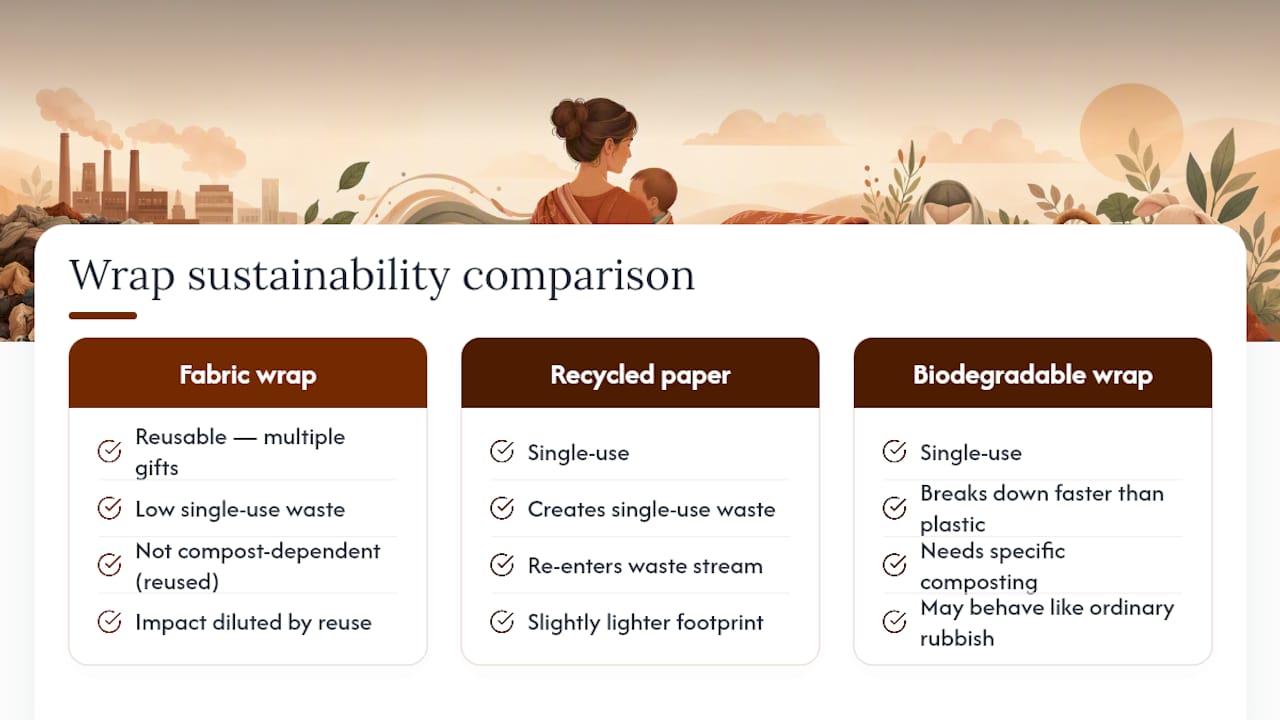
Fabric wrap solves a different part of the problem entirely. Instead of making single-use waste marginally less harmful, it removes the single-use step altogether. The same piece of cotton wraps a christening gift, then a first birthday present, then a fifth birthday present, with each reuse further diluting the environmental cost of manufacturing it in the first place.
That’s not a criticism of recycled or biodegradable options, both are sensible choices where reusable fabric genuinely isn’t practical, such as posting a parcel through the mail. For gifts handed over in person, though, at a baby shower, a nursery visit, a birthday party, fabric offers a form of reuse that paper-based alternatives, however well-intentioned, simply can’t match.
How upcycled fabric supports a genuinely circular approach
Circularity, in plain terms, means keeping materials in active use for as long as possible instead of extracting new resources, using them once, and discarding them. Textile waste is one of the areas where that cycle breaks down most visibly, with vast quantities of fabric produced, worn briefly or not at all, and discarded.
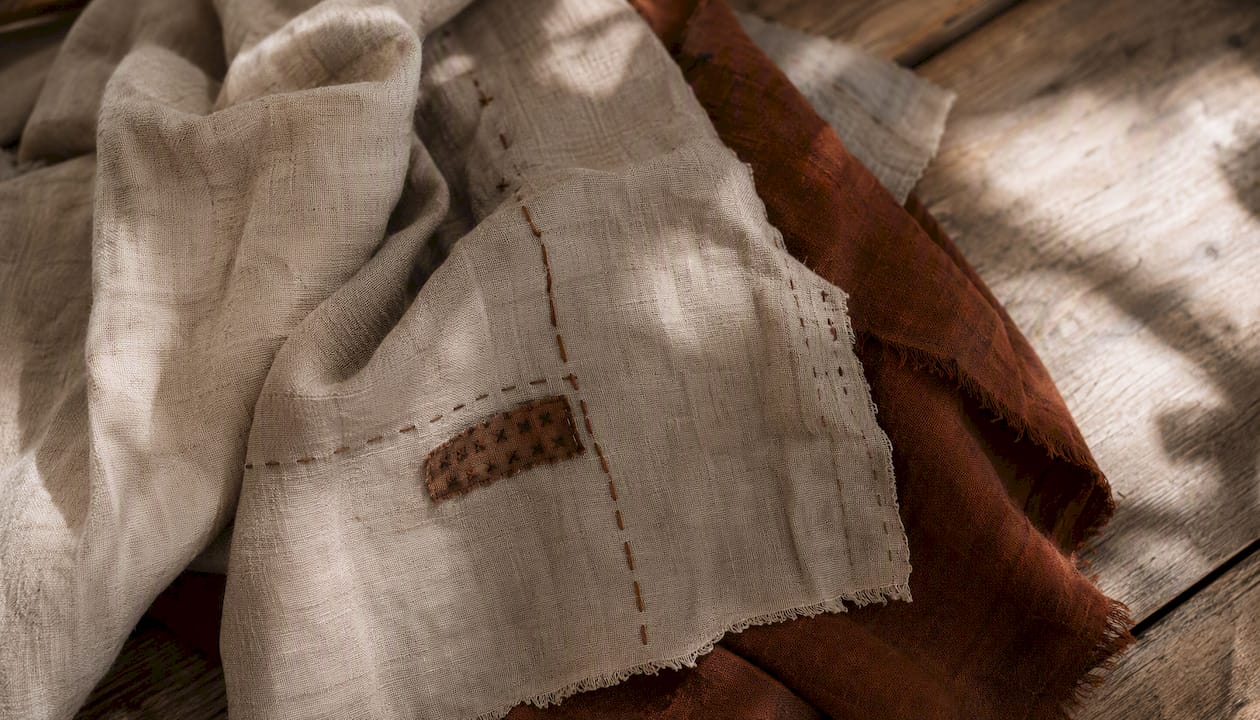
Sourcing wrap fabric from reclaimed or surplus cotton stock, rather than freshly manufactured yardage, shortens that wasteful cycle at the very start. It means existing material gets a second working life as a gift wrap, rather than new cotton being grown, processed, and dyed purely to wrap a single present once.
The reuse element then extends the same principle at the consumer end. A wrap that’s used for one birthday and then folded away for the next isn’t just avoiding paper waste, it’s also getting the maximum possible use out of the fabric that made it in the first place. Isonomia’s analysis of wrapping alternatives makes the same point about cloth wrapping more broadly: reuse across years, not just once, is what actually changes the sustainability maths.
That’s the quiet advantage of choosing fabric with a genuine sourcing story behind it. The environmental benefit isn’t a single transaction at checkout, it compounds every time the wrap goes back into use.
What it feels like to receive a gift wrapped this way
There’s a specific kind of pause that happens when someone unwraps a gift and realises the wrapping itself was made to be kept. It’s different from the brief flash of pleasure at a nicely patterned paper, because it comes with the understanding that someone chose this fabric, this colour, this stitched name, on purpose.
That reaction sits alongside, but separate from, the personalisation itself. A parent receiving a fabric wrap for a new baby isn’t only responding to their child’s name stitched into the corner. They’re also registering that the gift arrived without contributing to the pile of torn paper already destined for the bin, often before they’ve even finished thanking the sender. Knowing that the fabric itself carries a sustainability story, reclaimed cotton given a new working life, adds a second layer of meaning that a printed paper simply cannot offer, however pretty the design.
For a lot of eco-conscious buyers, that combination is precisely the point. The wrap says something about the child being welcomed, and something about the values of the person doing the welcoming, in the same folded square of cloth.
A note from Helen
Every wrap we design starts with the same question: will this still mean something in five years? A roll of paper can’t answer that. A piece of embroidered cotton, chosen and stitched with a specific baby or birthday in mind, usually can. That’s the whole idea behind Nicholas & Rose, building keepsakes for the moments that deserve to be remembered, not just unwrapped.
Order a personalised Nicholas & Rose wrap for your next gift
Browse the Baby & Beyond collection and choose your size and embroidery details directly on the product page, no separate consultation needed.
Ordering is straightforward:
- Select the wrap size suited to your gift, newborn or toddler.
- Choose thread colour and font style for the embroidery.
- Add your personalisation text, a name, a date, or a short message.
- Check the current lead time for embroidered orders before your event date.
- Add an optional gift message, then complete checkout.
Personalised embroidery takes a little longer than a standard order, so it’s worth checking lead times against your baby shower or birthday date before you buy. Once ordered, your wrap ships within the UK and arrives ready to use, no extra paper required.
Frequently asked questions
Why does upcycled fabric matter more than choosing recycled wrapping paper? Recycled paper reduces raw material demand but is still discarded after one use. Fabric wrap removes the single-use step entirely, getting reused across multiple gifts and years rather than one unwrapping.
Does personalisation actually change how a gift is treated, or is that just marketing? University of Bath research found personalised gifts trigger measurably higher appreciation and are less likely to be discarded or altered by recipients, an effect researchers call vicarious pride.
What fabric should I choose for a baby gift wrap that needs to last? Washable natural cotton or a cotton-linen blend holds embroidery well through repeated laundering and softens with use rather than wearing thin.
How do I keep embroidered personalisation looking sharp over time? Wash on a gentle cycle with mild detergent, avoid bleach, iron on the reverse on low heat, and store the wrap folded flat rather than scrunched.
Is fabric wrap really more sustainable than biodegradable wrapping options? Biodegradable wraps often need specific composting conditions unavailable through standard household waste collection. Fabric’s advantage is reuse across years, not a faster breakdown after a single use.
Sources
- Reducing Christmas wrapping paper waste | BusinessWaste
- Personalised gifts create lasting emotional connections and enhance self‑esteem | University of Bath
- Personalized gifts create lasting emotional connections and enhance self‑esteem | ScienceDaily
- Environmental impact of wrapping paper | EcoHomeLife
Recommended
- Why Fabric Wraps Are Popular With Eco Parents – Nicholas & Rose Limited
- Fabric wrap in luxury sustainable gifting: why it matters – Nicholas & Rose Limited
- Unique fabric gift ideas for eco-conscious UK parents 2026 – Nicholas & Rose Limited
- Why personalise fabric wraps for eco-conscious gifting – Nicholas & Rose Limited