

Embroidered wrapping: 10 advantages for baby gifts
Embroidered fabric gift wrap turns packaging into a reusable, protective keepsake that reduces waste and transforms the unboxing moment into something quietly unforgettable. For newborn gifts, baby showers, and milestone occasions, the advantages of embroidered wrapping extend far beyond aesthetics.
The headline benefits at a glance:
- Reusable across many occasions, replacing single-use paper year after year
- Protective natural cushioning for delicate items such as jewellery and baby keepsakes
- Personalised with names, dates, and motifs that make the wrap itself a memento
- Durable stitched-in threads that resist fading and peeling far longer than printed designs
- Multi-sensory raised texture and soft drape that make unwrapping feel ceremonial
- Eco-conscious reduced waste and a shift away from the single-use recycling model
- Emotionally resonant heirloom quality that recipients keep, not discard
- Occasion-ready suited to baby showers, christenings, first birthdays, and beyond
Browse Nicholasandrose’s personalised newborn and milestone wraps to see these qualities in cotton and embroidery.
Key takeaways
Embroidered fabric gift wrap is the most complete sustainable wrapping option for baby and milestone gifts: reusable, protective, personalised, and kept as a keepsake rather than discarded.
| Point | Details |
|---|---|
| Reuse replaces recycling | A fabric wrap used across multiple occasions displaces many sheets of single-use paper. |
| Stitches outlast printing | Embroidered threads resist fading and peeling, keeping the wrap beautiful through years of washing. |
| Personalisation creates keepsakes | A name and date embroidered at birth makes the wrap a lasting memento, not just packaging. |
| Natural fibres are the best choice | Cotton and linen wash well, feel soft against baby skin, and have lower end-of-life impact. |
| Nicholasandrose | Offers personalised luxury cotton wraps for newborns and milestones, shipped within the UK. |
Table of Contents
- What sets embroidered wrapping apart from paper or printed alternatives?
- Why embroidered wraps are kinder to the environment
- How embroidered fabric protects gifts and lasts for years
- The emotional depth that only embroidered wrapping can offer
- When and how to use embroidered wrapping for baby and milestone gifts
- Choosing the right fabric and embroidery method for UK buyers
- Is embroidered wrapping worth the cost?
- How embroidered wrapping compares with other sustainable options
- How to source authentic, ethically made embroidered wraps in the UK
- Why embroidered wraps are the right choice for baby and milestone gifts
- Personalised embroidered wraps for baby gifts, available now in the UK
- Sources
What sets embroidered wrapping apart from paper or printed alternatives?
Embroidered fabric gift wrap is, at its simplest, a length or pouch of woven cloth onto which a design has been stitched, either by hand or machine, and then used as you would use paper: to enclose, protect, and present a gift. The forms it takes are varied and beautiful. Fabric envelopes with button closures, drawstring pouches, furoshiki-style wraps knotted around a parcel, and keepsake scarves are all common expressions of the idea.
What separates embroidered wrapping from printed paper or foil-pressed labels is permanence of design and tactile depth. A printed motif sits on the surface of its substrate; an embroidered motif is woven into the fabric itself, creating a raised, three-dimensional texture that you can feel with your fingertips. That distinction matters practically as well as aesthetically, because stitches integrated into cloth resist fading and peeling in ways that surface printing simply cannot.
The lifecycle contrast with paper is stark. A sheet of paper wrap is typically torn open, folded into a recycling bin, and forgotten within minutes of a gift being opened. A well-made embroidered pouch, by contrast, tends to be folded carefully and kept. Textile wraps shift the sustainability model from single-use recycling toward repeated reuse and keepsake retention, which is a fundamentally different relationship between packaging and recipient.
Why embroidered wraps are kinder to the environment
The environmental advantages of embroidered wrapping rest on one principle: reuse is more valuable than recyclability. A fabric wrap used ten times over its lifetime displaces ten sheets of paper, ten rolls of tape, and ten trips to the recycling bin. That cumulative reduction is the core of the sustainability case, and Nicholasandrose’s fabric wrap guidance suggests the saving can reach 90% less waste compared with paper alternatives.
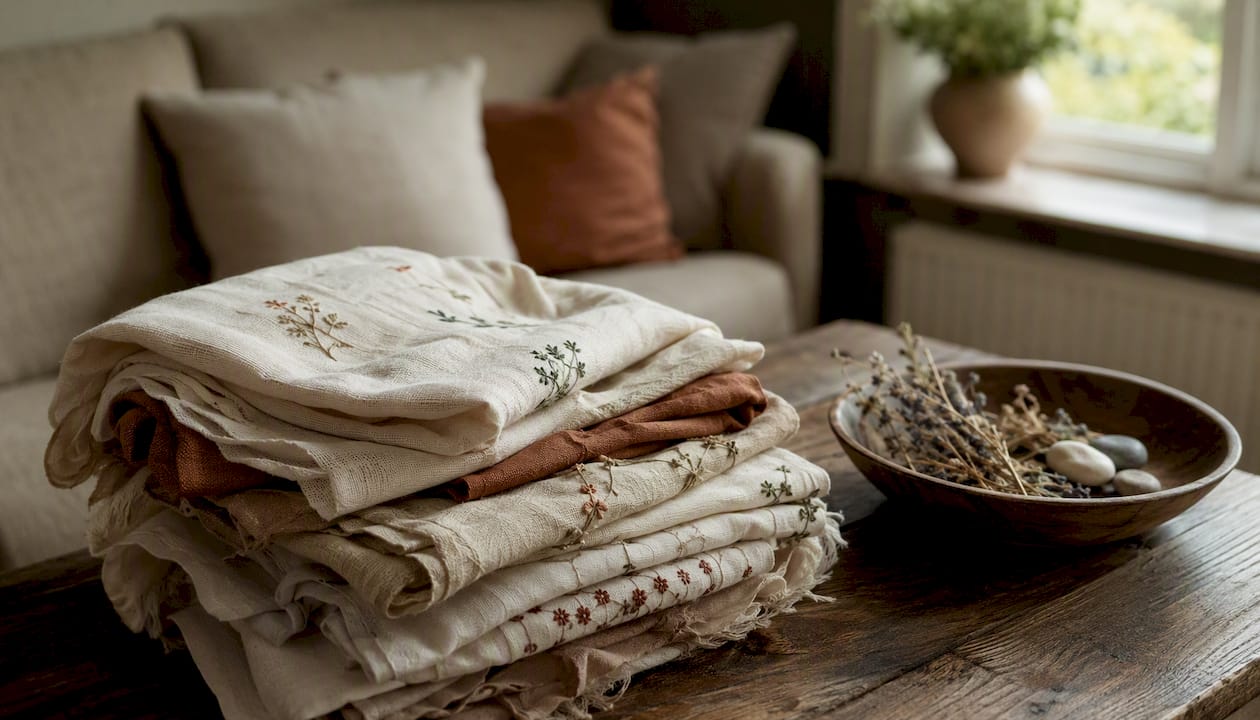
The table below outlines the key lifecycle considerations for embroidered fabric wraps versus single-use paper.
| Factor | Embroidered fabric wrap | Single-use paper wrap |
|---|---|---|
| Reusability | Many uses across years | Single use |
| End-of-life options | Reuse, donate, repurpose, compost (natural fibres) | Recycle (if uncoated and unfoiled) |
| Material preference | Natural fibres (cotton, linen) for lowest impact | FSC-certified, uncoated paper |
| Thread consideration | Avoid metallic threads for compostability | Avoid foil or glitter coatings |
| Packaging footprint | Flat, low-profile; avoids carrier DIM surcharges | Bulky rolls; often over-packaged |
To maximise the sustainability benefit, choose wraps made from natural fibres such as cotton or linen, avoid metallic or synthetic threads where possible, and buy from ethically made or locally embroidered sources. Flat fabric wraps also tend to post more efficiently within the UK, keeping dimensional weight low and avoiding the carrier surcharges that bulkier gift boxes attract.
How embroidered fabric protects gifts and lasts for years
Textile packaging balances protection and style in a way that paper cannot. Padded cotton sleeves and fabric pouches cushion knocks and absorb minor moisture, reducing the need for bulky void-fill inside a gift box. For delicate items — a silver keepsake, a pair of baby shoes, a fine piece of jewellery — a snugly wrapped fabric pouch offers genuine physical protection alongside its beauty.
Durability is equally compelling. Because threads are stitched into the fabric rather than printed onto its surface, embroidered designs resist fading and peeling across many washes and years of use. A cotton wrap with a name embroidered in the first weeks of a baby’s life can still look luminous when that child reaches their fifth birthday.
Caring for an embroidered wrap is straightforward:
- Wash on a cool, gentle cycle (30°C or below) to preserve thread colour and fabric structure
- Dry flat or on a low heat, away from direct sunlight, to prevent shrinkage
- Store folded flat in a drawer or linen cupboard rather than compressed in a box
- Iron on the reverse side, using a pressing cloth to protect raised stitches
Pro Tip: Use a single layer of medium-weight woven fusible interfacing behind any flap or closure before embroidering. This prevents distortion during stitching and gives the finished piece a structured, luxurious hand-feel that holds its shape wash after wash.
Practical sewing guidance, including French seams and stabiliser techniques, further improves durability and gives a professional finish to embroidered pouches and bags.
The emotional depth that only embroidered wrapping can offer
There is something quietly profound about receiving a gift wrapped in cloth that carries a name, a date, or a motif chosen specifically for you. The perceived effort behind hand or machine embroidery signals care in a way that a printed sticker or a foil label never quite achieves. For newborn gifts and milestone occasions, that signal is especially powerful.
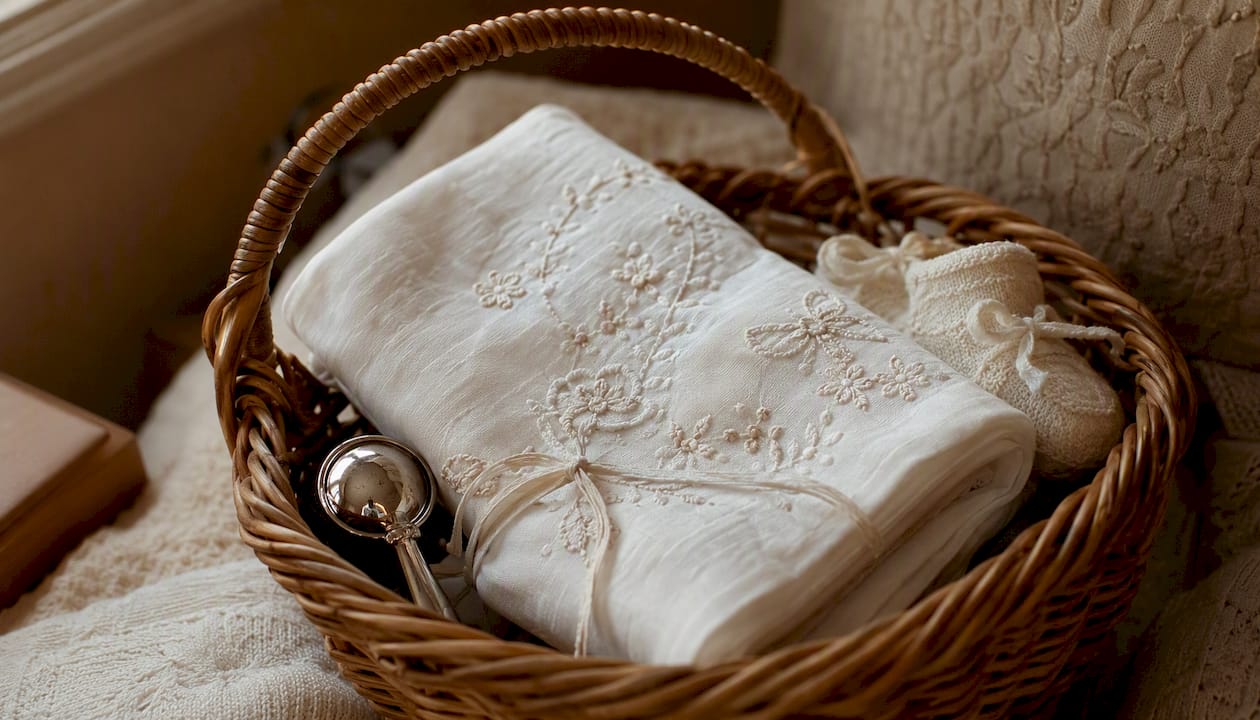
A cotton wrap embroidered with a baby’s name and birth date becomes, in the moment of unwrapping, two gifts at once: the item inside and the wrap itself. Parents keep these pieces. They fold them into memory boxes, use them as drawer liners for tiny clothes, or repurpose them as keepsake pouches for first teeth and hospital wristbands. Fabric envelopes with embroidery are repeatedly cited as items recipients retain and reuse rather than discard.
Motif choices deepen this emotional resonance further. A tiny embroidered pram, a bunny, a cluster of stars, or simply a set of initials in a serif typeface each carry their own quiet poetry. Embroidered fabrics add texture, depth and premium value that positions them firmly in the luxury tier of gifting, and that perceived luxury amplifies the emotional weight of the occasion being celebrated.
When and how to use embroidered wrapping for baby and milestone gifts
Embroidered wrapping suits any occasion where the gift deserves to be remembered, but it excels at the moments that mark the beginning of a life or the passage of time.
Best occasions:
- Baby showers (before the birth, when the wrap itself can be personalised in advance)
- Newborn arrival gifts
- Christenings and naming ceremonies
- First birthdays and subsequent milestone birthdays
- Keepsake gifts for toddlers starting nursery or school
How to wrap with fabric: four practical techniques
- Fabric envelope: fold the wrap around the gift like a letter, tuck the flap, and secure with a button or ribbon closure. Place the embroidered motif on the outer flap so it faces upward when presented.
- Drawstring pouch: slide the gift inside, pull the cord, and tie a bow. Ideal for soft items, small toys, or jewellery. Position the embroidered name or motif on the front panel.
- Furoshiki-style knot wrap: lay the fabric flat, centre the gift, bring two opposite corners up and tie them at the top, then tuck the remaining corners neatly. The embroidered detail sits on the uppermost layer.
- Scarf wrap with ribbon closure: wrap the fabric loosely around the gift and secure with a satin ribbon. This suits larger, irregularly shaped items and photographs beautifully for social sharing.
For social media presentation, position the embroidered motif facing the camera and place the wrapped gift on a neutral linen or wooden surface. Natural light from a window to one side brings out the texture of the raised stitches without flattening the image. Nicholasandrose’s reusable gift wrap tips offer further presentation ideas aligned with the brand’s earthy, refined aesthetic.
Choosing the right fabric and embroidery method for UK buyers
The fabric you choose shapes everything: how the wrap feels in the hand, how well it washes, and how long the embroidery holds its form.
Fabric comparison for baby and milestone wraps:
| Fabric | Softness | Washability | Best for |
|---|---|---|---|
| Cotton (medium weight) | High | Excellent at 30°C or below | Newborn gifts, everyday reuse |
| Linen | Crisp, textured | Good; softens with washing | Keepsake envelopes, adult gifts |
| Silk blend | Luminous, delicate | Hand wash only | Special occasions, luxury gifting |
For baby gifts specifically, medium-weight cotton is the most practical choice: soft against skin, reliably washable, and robust enough to hold dense embroidery without distorting.
On the question of hand versus machine embroidery: hand embroidery offers uniqueness and a raised, irregular texture that reads as genuinely artisanal, but it is slower and carries a higher price per piece. Machine embroidery delivers speed, consistency, and lower cost for larger runs, making it the practical choice for personalised gifting at scale without sacrificing quality of finish.
A quick selection checklist when buying:
- Fibre content: natural fibres (cotton, linen) for washability and compostability
- Stitch density: tighter stitches hold their shape longer through repeated washing
- Thread type: polyester threads offer colour fastness; cotton threads suit a more natural aesthetic
- Backing and interfacing: look for a clean reverse side with no loose threads or puckering
- Wash instructions: confirm the label matches the care you intend to give it
Is embroidered wrapping worth the cost?
The upfront cost of an embroidered fabric wrap is higher than a roll of paper. Price is driven by fabric quality, the complexity and size of the embroidered design, whether the work is hand or machine stitched, and any personalisation such as a name or date. A personalised cotton wrap for a newborn gift is generally more expensive than a sheet of paper from a supermarket roll.
The value-per-use framing changes the calculation entirely. A fabric wrap used across five or six gift occasions over several years costs a fraction per use of its paper equivalent, and it carries emotional weight that paper never accumulates. Embroidered designs stitched into fabric resist fading and peeling, meaning the wrap looks as considered on its fifth outing as it did on its first.
For buyers purchasing at scale, such as small retailers offering sustainable gift-wrapping tiers or event hosts preparing baby shower favours, the economics shift further. Offering sustainable gift-wrapping options can increase average order value and customer satisfaction, making embroidered wrap a commercially sensible choice as well as an ethical one.
- A single personalised wrap replaces multiple paper purchases over its lifetime
- Keepsake retention means the wrap continues to carry brand or gifting value long after the occasion
- Personalisation adds perceived luxury that justifies the price point for milestone gifts
- Buying from ethically made sources supports fair labour and sustainable production
How embroidered wrapping compares with other sustainable options
Sustainable wrapping has expanded well beyond paper alternatives, and embroidered fabric sits within a broader field of reusable options. Understanding where it excels helps you choose with confidence.
Plain fabric wraps (unembroidered cotton or linen) are washable and reusable, but they lack the personalisation and heirloom quality that embroidery provides. They suit everyday gifting but rarely become keepsakes. Recycled paper, even FSC-certified and uncoated, remains single-use; its sustainability case rests on recyclability rather than reuse, which is a weaker model for reducing total waste. Beeswax wraps and plant-based alternatives serve food packaging rather than gift presentation and are not suited to the occasion-gifting context. Furoshiki cloth (plain or printed) is reusable and beautiful, but without embroidery it lacks the personalised, named quality that makes a newborn or milestone wrap a lasting memento.
Embroidered fabric wrapping occupies a distinct position: it is the only option that combines reusability, physical protection, personalisation, and keepsake retention in a single piece. For baby and milestone gifting, that combination is unmatched by any other sustainable format. Nicholasandrose’s reusable gift wrap comparison explores these trade-offs in further detail for buyers weighing their options.
How to source authentic, ethically made embroidered wraps in the UK
Finding a wrap that is genuinely well-made and ethically produced requires a little more discernment than picking the first result in a search. These practical steps will guide you toward quality.
Look for transparency on materials and origin. A reputable UK seller will state the fibre content clearly (cotton, linen, or a named blend) and indicate where the embroidery is produced. Vague descriptions such as “fabric wrap” with no fibre content listed are a signal to look elsewhere.
Check the reverse side of the embroidery. A well-finished embroidered piece has a clean back with no loose threads, no puckering, and a backing or interfacing that prevents the stitches from pulling the fabric out of shape. This is visible in good product photography and worth asking about directly.
Ask about personalisation lead times. Authentic personalisation takes time. A seller offering same-day personalised embroidery is almost certainly using a printed label rather than true stitching. Expect a lead time of several days for machine embroidery and longer for hand work.
Seek out UK-based makers and small-batch producers. Buying from a UK-based brand reduces shipping emissions and supports local craft. Nicholasandrose, for example, ships personalised cotton wraps within the UK and publishes care and sustainability guidance on its blog, giving buyers confidence about both the product and its provenance.
Read care instructions before purchasing. A wrap with no wash guidance is a wrap the seller does not expect you to keep. Genuine quality comes with clear instructions.
Why embroidered wraps are the right choice for baby and milestone gifts
The conventional wisdom around sustainable gifting tends to focus on the wrap’s environmental credentials alone: is it recycled? Is it recyclable? Those are reasonable questions, but they miss the deeper value that embroidered fabric wrapping offers, particularly for the occasions that matter most.
A newborn gift wrapped in paper is opened in seconds. The paper is gone before the afternoon is out, often before the parents have had a chance to photograph the moment. An embroidered cotton wrap with the baby’s name stitched in soft thread is a different proposition entirely. It stays. It is folded into a drawer, brought out again for the next gift, and eventually becomes part of the texture of a child’s early years. That is not a marketing claim; it is the natural behaviour of people who receive something beautiful and useful at once.
The gifting market has spent years telling buyers that sustainable means sacrifice: less beautiful, less special, less memorable. Embroidered wrapping disproves that entirely. The raised stitches, the crisp hand-feel of quality cotton, the quiet luxury of a bespoke motif — these are not consolation prizes for choosing the eco-conscious option. They are the point.
Personalised embroidered wraps for baby gifts, available now in the UK
Nicholasandrose offers personalised, reusable luxury cotton gift wraps designed specifically for newborn arrivals, baby showers, and children’s milestone gifts. Each wrap is embroidered with your choice of name, initials, or date, alongside motifs from the 2026 newborn and toddler range: think soft bunnies, tiny prams, and delicate floral clusters that feel as considered as the gift inside.
Ordering is straightforward. Choose your wrap size and pattern, enter the personalisation details at checkout, and Nicholasandrose handles the embroidery and ships within the UK. Gift-message options are available at checkout, and every wrap arrives with care instructions so it lasts through many future occasions.
Browse the full baby and milestone collection and find the wrap that will be kept long after the gift inside has been loved into everyday use.
Sources
These sources informed the article’s claims on protection, durability, lifecycle impact, and embroidery technique. Each is worth reading for deeper context on the specific point it covers.
- Textile packaging balances protection and style
- Fabric envelope with embroidery: a handmade gift that becomes a keepsake
- Hand vs. machine embroidery on scarves: which is better?
- Complete guide to embroidered fabrics for apparel manufacturing
- Why hand embroidered clothing is worth the investment
- Sewing beautiful embroidered fabric gift wraps
- Wrapping: how to choose the right wrapping option for your sustainability and marketing objectives
Recommended
- What is hand embroidered wrapping: a gift worth keeping – Nicholas & Rose Limited
- How embroidery elevates sustainable gift wrap for eco-parents – Nicholas & Rose Limited
- Embroidered Christmas wrap: luxury, eco-friendly gifting – Nicholas & Rose Limited
- Embroidery gift wrap guide for newborn and baby gifts – Nicholas & Rose Limited