

Personalise Christmas wraps sustainably: eco gifting 2026
TL;DR:
- Reusable fabric wraps significantly reduce waste compared to single-use paper.
- Personalised, handmade wraps become cherished keepsakes and teach children about sustainability.
- Proper planning and careful personalisation enhance the beauty and longevity of eco-friendly gift wrapping.
There is something quietly heartbreaking about watching a beautifully wrapped gift torn open in seconds, the paper discarded before the day has even reached its warmth. For eco-conscious parents in the UK, this familiar scene carries an added weight: the knowledge that most decorative wrapping paper cannot be recycled and travels swiftly to landfill. Yet gifting remains one of the most tender acts of love we offer our children and newest arrivals. This guide explores how personalised, reusable fabric wraps can transform that act, weaving sustainability into every fold and thread, so that the wrapping itself becomes as cherished as the gift within.
Table of Contents
- Why sustainable and personalised wraps matter
- Preparing for your personalised Christmas wrap workflow
- Step-by-step guide to personalising and wrapping sustainably
- Troubleshooting and avoiding common mistakes
- What parents miss about sustainable wrapping: the ripple effect
- Discover sustainable gifts with Nicholas & Rose
- Frequently asked questions
Key Takeaways
| Point | Details |
|---|---|
| Eco wraps reduce waste | Reusable wraps lower environmental impact and cut holiday waste dramatically. |
| Personalisation strengthens bonds | Custom designs add meaning and emotional value to every gift. |
| Simple workflow saves time | A step-by-step approach streamlines wrapping for eco-conscious families. |
| Troubleshooting keeps it easy | Practical solutions prevent common mistakes and make reuse possible. |
| Family values ripple forward | Sustainable wrapping inspires lasting eco habits in children. |
Why sustainable and personalised wraps matter
The environmental conversation around gift wrap is no longer a niche concern. Each year, UK households generate enormous volumes of wrapping paper waste over the festive season alone, much of it laminated or glittered, making it impossible to recycle through standard kerbside collections. The numbers are sobering: producing paper creates roughly 3kg of CO2 per kilogram of paper produced, a figure that stacks quickly when you consider the sheer volume used across the country each December.
For parents welcoming a newborn or celebrating a toddler’s first Christmas, this tension feels particularly acute. The instinct is to make gifting beautiful and memorable, yet the disposable wrapping that surrounds those gifts often ends up in the bin before the baby has even arrived home from the hospital. It is a quiet contradiction that many thoughtful parents find increasingly difficult to ignore.
Reusable fabric wraps offer a genuinely elegant resolution. Rather than a single-use sheet destined for the recycling bin (if it qualifies at all), a beautifully crafted piece of fabric becomes part of a circular economy gift wrap approach, passing between family members, reused for birthdays, baby showers, and future Christmases, gathering meaning with every use.
Personalisation deepens that meaning considerably. When a wrap carries a child’s name, a birth date, or a delicate embroidered motif chosen specifically for them, it transforms from packaging into a keepsake. The emotional value is not incidental; it is the whole point. A gift wrapped in a bespoke fabric piece says something that a roll of high street paper simply cannot.
Consider the contrast:
| Feature | Disposable paper | Reusable fabric wrap |
|---|---|---|
| Lifespan | Single use | Years of reuse |
| Recyclability | Often not recyclable | Fully reusable |
| Personalisation | Limited, printed | Embroidered, bespoke |
| Emotional value | Minimal | Grows with each use |
| Carbon footprint | High per use | Reduced over time |
Key reasons eco-conscious parents are making the switch:
- Reusable wraps reduce household waste significantly across multiple celebrations
- Fabric wraps can be laundered, stored, and reused for years
- Personalised wraps become heirloom pieces, not landfill
- Children learn the value of thoughtful, sustainable gifting from an early age
Expanding your approach to sustainable Christmas wrapping does not mean sacrificing beauty. Quite the opposite: the tactile richness of quality fabric, the luminous thread of careful embroidery, creates a gifting experience that feels genuinely refined.
“The most beautiful gift is one that carries intention. When wrapping itself becomes a keepsake, the act of giving is transformed entirely.”
Preparing for your personalised Christmas wrap workflow
Understanding why sustainable wraps matter, let us get ready with the right materials and a thoughtful approach to preparation. Like any meaningful ritual, the experience improves considerably when you begin with care.
Start by gathering your core materials. WRAP guidance specifically recommends reusing fabrics and maps as part of a circular Christmas approach, and with good reason: these materials drape beautifully, hold embroidery or hand-painted details with grace, and carry a warmth that paper simply cannot replicate.
Your sustainable wrap preparation checklist:
- Reusable fabric wraps: Choose organic cotton, linen, or muslin for a gentle, tactile quality suited to newborn and toddler gifts
- Natural ribbons and ties: Opt for cotton or jute rather than synthetic satin, which cannot be composted
- Eco-friendly inks: If you plan to add hand-painted touches, use water-based, non-toxic inks safe for little hands
- Recycled maps or tissue: For inner layering, vintage maps or unbleached tissue add character without waste
- Embroidery threads: Choose organic or recycled threads for personalised name stitching
Once your materials are assembled, think carefully about the personal touches that will make each wrap truly singular. A newborn’s name stitched in soft lettering, a set of tiny handprints transferred onto cloth, or a short poem chosen for the child’s parents all transform the wrapping into something worth keeping long after the gift itself has been played with and loved.
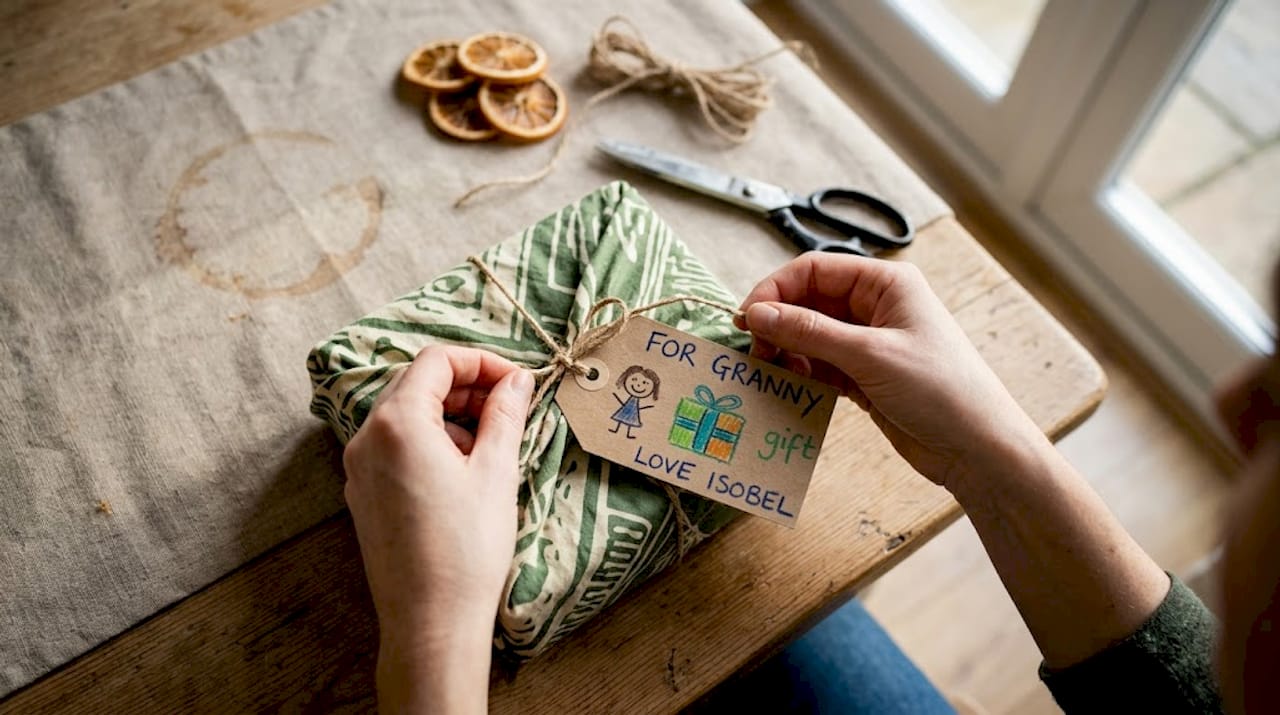
For busy parents juggling preparations, organisation is everything. Set aside a calm afternoon, gather your wraps and personalisation materials, and work through one gift at a time. Batching your wrapping sessions, rather than rushing everything on Christmas Eve, preserves both your patience and the quality of the result.
Pro Tip: Invite your toddler or older child to help choose the fabric colour or ribbon for a sibling’s or cousin’s gift. Their involvement creates a sense of ownership and teaches them, gently and joyfully, that thoughtful gifting is worth a little effort.
For further inspiration on materials and aesthetics, exploring designer gift wrap ideas can spark beautifully unexpected combinations, while fabric wraps at Christmas offers a deeper look at luxury textile choices suited to the season.
Step-by-step guide to personalising and wrapping sustainably
With your materials prepared, here is how to create sustainable, personalised wraps that feel as considered as the gifts they hold.
Step 1: Choose your fabric wrap Select a piece suited to the gift’s size and the recipient’s spirit. Soft muslin for a newborn’s first gift; a crisper linen weave for a toddler’s celebration. The fabric should feel intentional, not simply functional.
Step 2: Add your personalisation This is the heart of the process. Whether you are commissioning embroidered lettering, pressing a child’s handprint in eco-friendly ink, or attaching a handwritten tag on recycled card, ensure the personalisation is completed before wrapping. Allow inks to dry fully and embroidery to be pressed flat.
Step 3: Lay and fold with care Place the gift at the centre of the fabric. Bring opposing corners together first, then fold the remaining fabric neatly, working with the drape of the material rather than against it. Reusable holiday wrap techniques suggest working slowly, smoothing each fold as you go, for a result that looks effortlessly elegant.
Step 4: Secure with natural ties Use a length of organic cotton ribbon or jute twine to secure the wrap. Tie it simply and beautifully. A sprig of dried rosemary or a small dried orange slice tucked beneath the ribbon adds a sensory, nature-inspired finish that delights without waste.
Step 5: Add a finishing card A small card on recycled paper, noting who the wrap belongs to and inviting the recipient to reuse it, closes the loop. This small gesture communicates the wrap’s value and encourages a circular gifting spirit.
Pro Tip: Keep a small basket of natural decorations, dried botanicals, seed paper tags, and cotton ribbon offcuts, ready for finishing touches. Knowing where everything lives saves time and keeps your wrapping sessions serene rather than frantic.
Reusable wraps lower carbon footprints over their lifetime when compared to repeated single-use paper purchases, making each reuse genuinely meaningful.
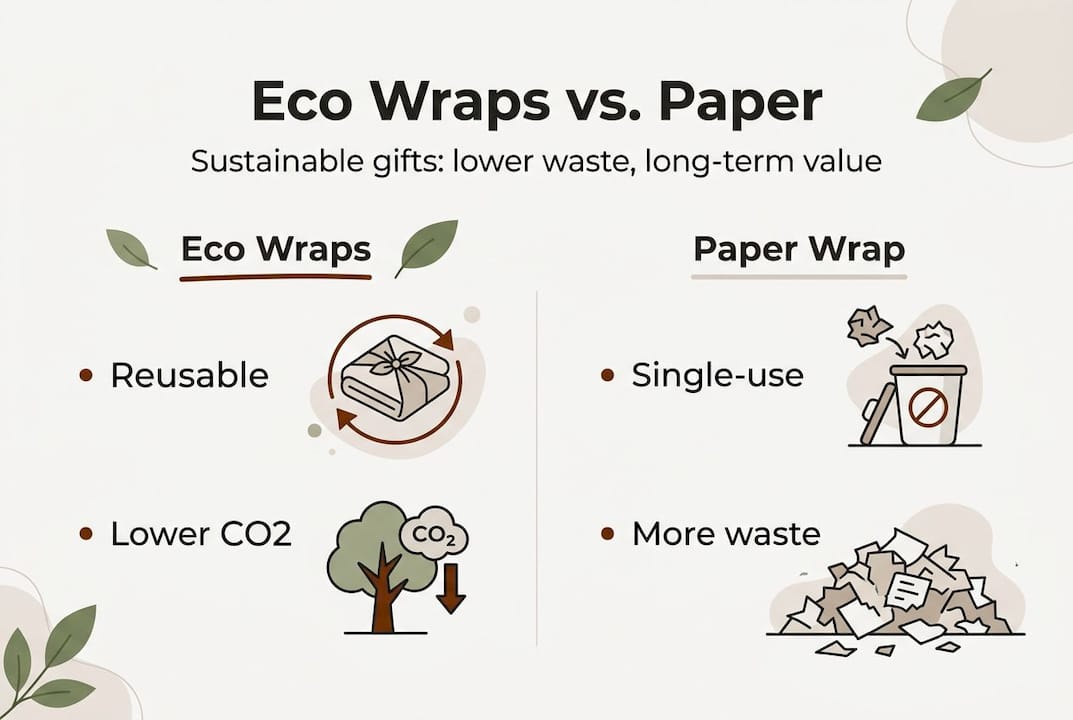
| Approach | Time investment | Long-term value | Environmental impact |
|---|---|---|---|
| Traditional paper | Low initially | None | High (single use) |
| Reusable fabric wrap | Moderate | Very high | Significantly reduced |
| Custom embroidered wrap | Higher initially | Heirloom quality | Lowest per use |
For those seeking a truly bespoke presentation, exploring custom festive wrap options can elevate the experience further.
Troubleshooting and avoiding common mistakes
Now, let us ensure your workflow runs smoothly with practical solutions to the hurdles that occasionally arise.
Even the most carefully planned wrapping session encounters a snag. A smudged ink print, a ribbon that refuses to hold its bow, or a fabric wrap that seems too large for the gift in hand: these are not failures, simply moments that invite a little patience and creativity.
Common challenges and how to resolve them:
- Fabric stains during personalisation: If eco-friendly ink transfers unexpectedly, act quickly with cold water and a gentle, plant-based soap. Avoid heat until the stain has lifted, as warmth can set the mark permanently
- Wrap too large for the gift: Extra fabric can be folded back creatively or secured with additional ribbon to create a gathered, luxurious effect rather than a flat package
- Personalisation errors: A misplaced letter in an embroidered name can feel disheartening, but small embroidery motifs such as a tiny star or floral sprig can be stitched over minor imperfections with great charm. For ink-based personalisation, layering a second design element over a smudge often produces a more interesting result than the original plan
- Rushed timeline: If time is genuinely short, prioritise personalising the outer tag rather than the wrap itself. A beautifully written, heartfelt card on recycled paper carries enormous warmth
Pro Tip: After unwrapping, fold and store your fabric wraps in a labelled cotton bag. Keeping wraps organised by size means they are ready to use for the next birthday, baby shower, or seasonal celebration without any searching.
WRAP guidance advises sharing wrapping workflows and reusing designs across the family as part of a genuinely circular gifting practice, a principle that is as practical as it is beautiful.
“A wrap that is stored, shared, and reused is not simply packaging. It is a quiet act of stewardship, passed from one set of hands to another with care.”
For further creative approaches to seasonal presentation, innovative gift wrapping and Christmas eco wrapping steps offer a wealth of refined inspiration.
What parents miss about sustainable wrapping: the ripple effect
Stepping back, there is a dimension to sustainable wrapping that most guides overlook entirely. It is not simply about reducing landfill or choosing organic ribbon over synthetic satin, important as those choices are. It is about what children absorb when they witness thoughtful gifting practised consistently by the people they love most.
When a child sees their parent carefully unfold and store a beautiful fabric wrap after a celebration, they are learning something profound about the value of objects and the importance of intention. When their own name, stitched in soft thread, reappears on their birthday wrap years later, they understand continuity, care, and the quiet pleasure of things made to last.
The ripple effect extends outward too. Grandparents, friends, and siblings who receive gifts wrapped in reusable fabric frequently ask about the wrap itself. A single bespoke piece can shift an entire family’s gifting culture over time, one celebration at a time. Exploring sustainable luxury tips alongside your own practice deepens this understanding considerably. The wrap is never just the wrap. It is the beginning of a conversation that, handled with grace, can last a lifetime.
Discover sustainable gifts with Nicholas & Rose
If this guide has stirred something in you, a quiet desire to make your gifting as beautiful and considered as the love it carries, then Nicholas & Rose was made precisely for that feeling.
At Nicholas & Rose, we create reusable fabric gift wraps that can be personalised through embroidery, including our new 2026 newborn and toddler range, designed for the most precious early celebrations. Every wrap is crafted to become a cherished memento rather than a morning’s waste. Browse our collection to find a wrap as unique as the little one you are celebrating, and begin a gifting tradition worth passing on.
Frequently asked questions
How do reusable wraps help the environment compared to disposable paper?
Reusable fabric wraps avoid single-use waste entirely and, given that producing paper generates 3kg of CO2 per kilogram, each reuse represents a meaningful reduction in your family’s carbon footprint.
What materials can I use to personalise eco-friendly Christmas wraps?
Fabric, recycled maps, organic ribbons, eco-friendly inks, and child-created artwork such as handprints all work beautifully. WRAP recommends fabrics and maps specifically as part of a circular Christmas approach.
Is it possible to fix mistakes in personalised wraps?
Yes, most errors including smudges or minor embroidery misplacements can be gently corrected with eco-friendly inks or creative stitched overlays. WRAP’s circular gifting principles encourage reusing and adapting wraps rather than discarding them.
How can I involve children in the personalisation process?
Children can contribute their own artwork, choose ribbon colours, or press their handprints onto fabric using non-toxic inks, making the wrap a genuinely collaborative and joyful creation.
Recommended
- Sustainable Christmas Wrapping: A Luxurious Eco Choice – Nicholas & Rose Limited
- Designer Gift Wrap: Stylish, Sustainable Christmas Impact – Nicholas & Rose Limited
- Create personalised eco-conscious gift wrap in 5 steps – Nicholas & Rose Limited
- Innovative Gift Wrapping: Sustainable Luxury for Christmas – Nicholas & Rose Limited