

How to care for fabric gift wrap: an eco-friendly guide
TL;DR:
- Proper care transforms fabric gift wraps into durable keepsakes that can be reused for generations. Following fibre-specific instructions, gentle washing, and flat drying preserve their shape and beauty, enhancing eco-conscious gifting. Thoughtful storage and personalisation elevate these wraps into meaningful family heirlooms that enrich every celebration.
You have found the perfect gift. You have wrapped it in fabric so beautiful it almost rivals what is inside. Then, after the ribbons are untied and the joy settles, the wrap gets stuffed into a drawer, never to look quite as lovely again. Knowing how to care for fabric gift wrap properly changes that story entirely. It transforms something thoughtful into something enduring, a bespoke keepsake that survives every birthday, every baby shower, every celebration your family holds dear.
Table of Contents
- What you need: materials and preparation for caring for fabric gift wrap
- How to wash fabric gift wrap properly
- Drying and ironing techniques to maintain fabric gift wrap quality
- Storing and reusing fabric gift wrap to extend lifespan
- Making and personalising furoshiki-style fabric gift wraps
- Why proper care transforms fabric wraps into lasting heirlooms for eco-conscious families
- Explore personalised reusable fabric gift wraps at Nicholas & Rose
- Frequently asked questions
Key Takeaways
| Point | Details |
|---|---|
| Follow care labels | Always follow the specific washing instructions printed on your fabric wrap to preserve its quality. |
| Use gentle detergent | Choose mild, unscented liquid detergents and avoid bleach or fabric softeners to protect fibres. |
| Dry carefully | Lay fabric wraps flat or use low heat tumble drying; avoid hanging to prevent stretching. |
| Proper storage | Store wraps flat or loosely folded in a dry, cool area to maintain shape and avoid creases. |
| Personalise with care | Making and caring for personalised fabric wraps enhances their luxury and ensures sustainable reuse. |
What you need: materials and preparation for caring for fabric gift wrap
Before you wash a single thread, preparation is the most important step most people skip. The care label on your wrap is not decoration. It holds fibre-specific intelligence, telling you whether your fabric is a gentle cotton that forgives a cool machine wash or a delicate silk blend that demands a more reverent approach. Read it first, always.
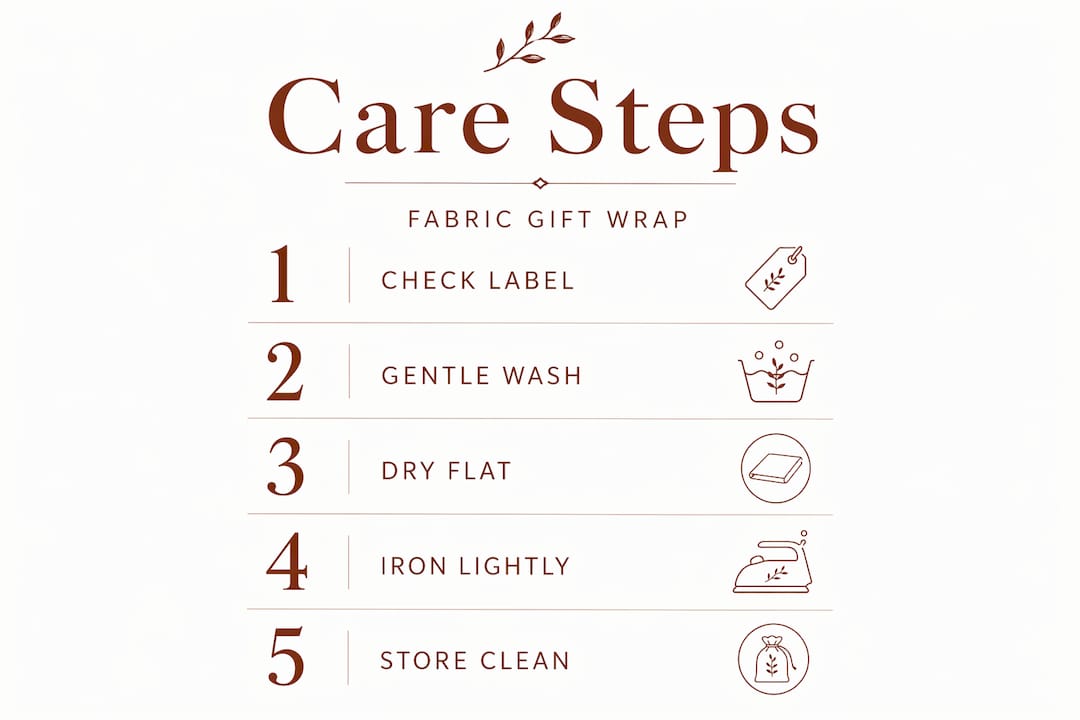
Gathering the right materials before you begin protects your wrap from accidental damage that no amount of ironing will undo. The choice of detergent matters more than many expect. A harsh powder detergent or one loaded with optical brighteners can dull colour, weaken fibre over time, and leave a residue that affects the fabric’s natural drape. Following wrap care guidance, you should use a gentle, unscented liquid detergent and avoid bleach, optical brighteners, fabric softeners, and dry cleaning entirely. Each of these can alter texture or undermine the structural integrity of your wrap.
Here is what to gather before you begin:
- Gentle, unscented liquid detergent
- A washing machine with a delicate or gentle cycle setting
- Cold or lukewarm water (never hot)
- A clean, flat surface for drying
- A steam iron set to medium heat
- Acid-free tissue paper for storage (more on this shortly)
The table below summarises how to handle common fabric gift wrap fibres before washing:
| Fabric type | Pre-wash check | Water temperature | Special notes |
|---|---|---|---|
| Cotton | Check for embroidery or print | Cold to lukewarm | Most forgiving; gentle cycle safe |
| Silk or silk blend | Always hand wash or dry clean label | Cold only | Highly delicate; check label carefully |
| Linen | Check for shrinkage note | Cold to lukewarm | May crease easily; iron while damp |
| Cotton blend | Check fibre composition | Cold | Follow the most delicate fibre’s rules |
For further guidance on preparing your wrap beautifully before gifting, our premium gift wrapping instructions offer a detailed walkthrough that complements this care routine.
Having prepared with the right materials and knowledge, let us move on to the step-by-step cleaning process.
How to wash fabric gift wrap properly
Washing your fabric wrap correctly is where most damage either happens or is prevented. The instinct to throw it in with a regular load is understandable, but fabric gift wrap maintenance requires a gentler hand. Cotton and blended fibres respond well to a machine wash on a gentle or delicate cycle, but only when given the space to move freely. An overloaded drum creates friction that pills surface fibres and dulls that luminous finish you fell in love with.
Follow these steps for a safe, effective wash:
- Check the care label one final time before loading.
- Turn the wrap inside out to reduce surface abrasion against other items.
- Place the wrap alone or with one other gentle item to avoid overcrowding.
- Set your machine to the gentle or delicate cycle.
- Select cold or lukewarm water. For cotton, avoiding heavy agitation prevents shrinkage and stubborn creases.
- Add a small measure of your chosen gentle, unscented liquid detergent.
- Do not add fabric softener. It coats fibres and gradually diminishes that crisp hand-feel.
- Once the cycle finishes, remove the wrap promptly to prevent creasing from sitting damp.
Different fibres respond differently to agitation and temperature. Cotton is relatively forgiving. Silk and fine blends are not. If your wrap carries an embroidered name or personalised motif, treating it with particular care preserves that craftsmanship through every wash.
Pro Tip: Turn your wrap inside out before washing to protect the outer surface and any embroidered personalisation from direct friction with the drum.
For broader reusable gift wrap tips that sit alongside these washing guidelines, you will find a thoughtful collection of ideas to keep your gifting practice both beautiful and responsible.
Once washing is complete, proper drying preserves your wrap’s shape and luxurious feel.
Drying and ironing techniques to maintain fabric gift wrap quality
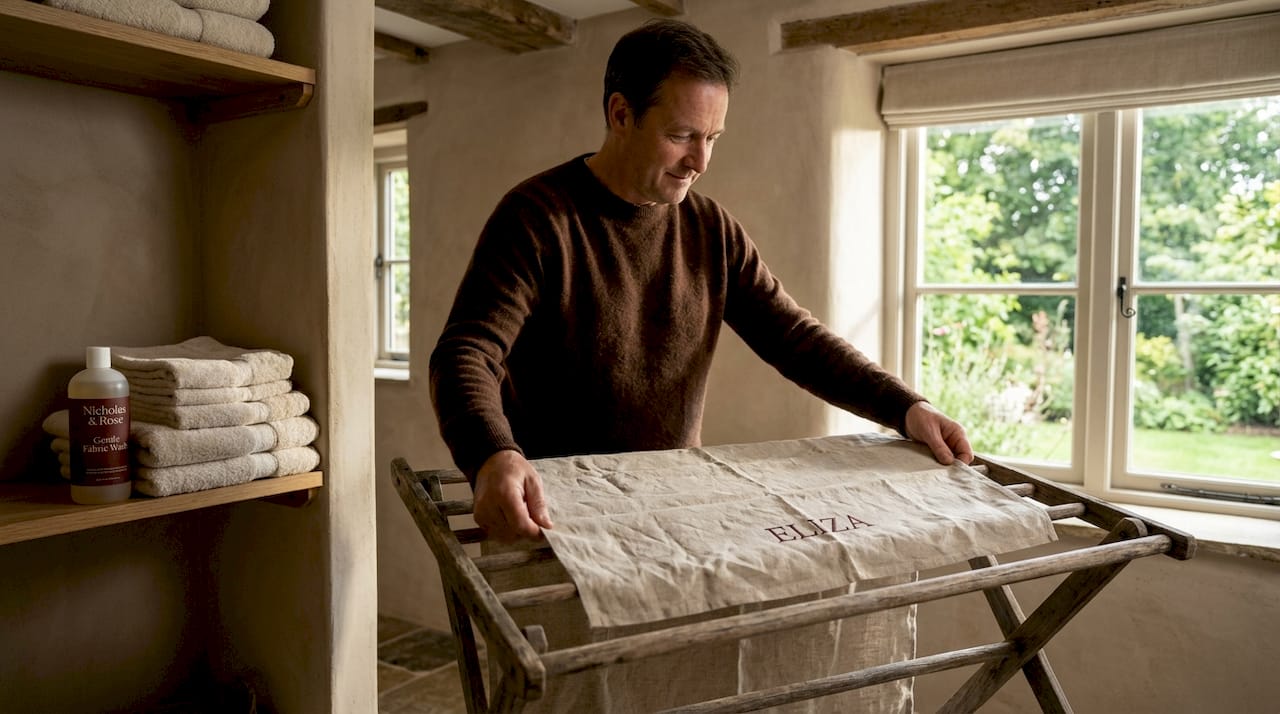
Drying is the step where even careful laundering can unravel. Hanging a wet fabric wrap on a line or radiator seems harmless, but hanging to dry may cause the wrap to stretch in ways that distort its shape and undermine the elegant drape central to its luxury appeal. The weight of water in a damp fabric pulls fibres downward unevenly, and once stretched, that distortion is difficult to reverse.
The three main drying methods compared:
| Drying method | Benefits | Drawbacks |
|---|---|---|
| Air-dry flat | Preserves shape perfectly; no heat risk | Requires space; slower drying time |
| Tumble dry on low | Convenient; gentle warmth eases creases | Must monitor to avoid over-drying |
| Hang to dry | Familiar and easy | Stretches fabric; risks permanent distortion |
Clearly, laying your wrap flat on a clean surface or using a tumble dryer on a low heat setting are your two best options. Air-drying on a flat surface or tumble drying on low heat prevents both shrinkage and creases, which is particularly important for cotton wraps with fine embroidered detail.
Once dry or nearly dry, ironing restores that refined, gift-ready finish:
- Set your iron to a medium temperature suited to the fabric.
- Iron while the fabric is still slightly damp, as moisture helps fibres relax without force.
- Use the steam function to ease wrinkles gently.
- Avoid pressing directly onto embroidered areas; iron around them or use a pressing cloth.
- Never use a high heat setting on silk or delicate blends.
Pro Tip: Remove your wrap from the dryer while it is just slightly damp, then lay it flat or fold it neatly to finish drying naturally. This one step alone eliminates most stubborn creases before they set.
After refreshing your fabric wrap, proper storage helps maintain its luxury and eco appeal between uses.
Storing and reusing fabric gift wrap to extend lifespan
Storing fabric gift wrap correctly is the quiet act that makes all previous care worthwhile. A beautifully washed and dried wrap, stored carelessly, arrives at the next celebration looking crumpled and tired. That is a simple problem with equally simple solutions.
Follow these guidelines for storing fabric wraps between occasions:
- Ensure your wrap is completely dry before folding or storing. Even slight dampness invites mould and persistent creasing.
- Store flat or loosely folded in a cool, dry drawer or shelf away from direct sunlight. Light fades colour gradually, and heat weakens natural fibres over time.
- Avoid long-term hanging, even for display purposes, as gravity distorts fabric shape slowly but surely.
- Place a sheet of acid-free tissue paper between folds when stacking multiple wraps. This reduces friction and prevents colour transfer between fabrics.
- Rotate your wraps between uses so each one wears evenly and none develops permanent fold lines from always being stored in the same position.
Reusing fabric gift wrap is where sustainability becomes genuinely satisfying. Unlike paper that is discarded, often before the guest of honour has even arrived, a well-cared-for fabric wrap can serve multiple lives. Our guide on how to store fabric gift wraps covers fraying prevention and long-term reuse in detail.
Beyond wrapping gifts, think creatively. A favourite wrap might become a decorative scarf tied around a birthday hamper, a napkin for a baby shower table setting, or a small bag for keepsakes. The ways to reuse gift wrap are more varied than most people realise, and each use extends the story of that piece of fabric.
With proper storage and thoughtful reuse, your fabric gift wrap becomes a cherished and sustainable tradition.
Making and personalising furoshiki-style fabric gift wraps
The Japanese art of furoshiki, the practice of wrapping items in cloth using only folds and knots, is perhaps the most elegant argument for fabric over paper. No tape. No scissors. No waste. Just fabric shaped around a gift with patience and intention.
To make your own reusable fabric wrap at home, follow these steps:
- Choose your fabric. Cotton, silk, or a fine blend each offer different textures. Selecting fabric approximately three times the size of your gift gives you enough material to fold, knot, and finish beautifully.
- Cut the fabric into a square or rectangle, depending on your gift’s shape.
- Hem or sew the edges neatly with a lining fabric for a polished, durable finish. Raw edges fray with washing.
- Press the fabric before wrapping, so your folds are crisp and intentional.
- Personalise before wrapping. Embroidered names, motifs, or dates transform a simple cloth into a bespoke memento.
- Furoshiki wraps use folds and knots rather than tape or scissors, making them endlessly adaptable to odd-shaped gifts and entirely reusable after a gentle wash.
Personalisation is where fabric gift wraps transcend the ordinary:
- Embroidery adds a handcrafted, heirloom quality that no printed paper achieves.
- Natural dyes bring botanical colour that deepens the wrap’s eco credentials.
- Monograms or birth dates transform the wrap into a keepsake a family will return to for years.
For beautifully finished results, our gift wrap folding techniques guide walks through each fold with clarity and confidence.
Why proper care transforms fabric wraps into lasting heirlooms for eco-conscious families
Here is what most guides on fabric gift wrap maintenance quietly overlook: the drying step carries more consequence than the washing step. Most people instinctively understand that hot water or harsh detergent can damage fabric. Fewer realise that improper drying can distort and stretch premium wraps, undermining their luxurious appearance far more permanently than a vigorous wash cycle.
A wrap that has been lovingly personalised with a newborn’s name, carefully selected for its colour and drape, and gifted with genuine intention deserves better than being hung damp over a radiator. It deserves to be laid flat, dried gently, and folded with care. That is not pedantry. It is the difference between a wrap that is used twice and one that is used twenty times.
There is also something worth naming about the sentimental dimension of this practice. When a fabric wrap is cared for properly, it begins to accumulate meaning. The cotton wrap used at a first birthday is washed, stored, and reused at the second. The embroidered keepsake from a baby shower returns for a sibling’s arrival. These objects become part of a family’s story in the way that a crumpled sheet of paper never could. This is what why you should reuse gift wrap truly means at its heart.
Eco-conscious parenting is often framed as sacrifice, as choosing the less convenient option in service of a principle. Fabric gift wrap, cared for well, offers the opposite experience. Quality, beauty, and responsibility existing in the same object, growing richer with each use.
Explore personalised reusable fabric gift wraps at Nicholas & Rose
If this guide has settled something in you, a quiet certainty that fabric wraps are worth the investment and the care, the next step is finding wraps worthy of that commitment.
At Nicholas & Rose, every fabric gift wrap is designed with longevity and personalisation at its core. The 2026 newborn and toddler collection offers bespoke embroidered wraps created specifically for baby showers and children’s birthdays, each one a keepsake long after the ribbon is untied. Every wrap comes with care guidance aligned to the expert principles in this article, so your investment is protected from first wash to hundredth use. Supporting a UK-based specialist means supporting considered, sustainable craft made with genuine care for both family and planet.
Pro Tip: Pair a personalised Nicholas & Rose wrap with a thoughtful eco-friendly gift inside for a presentation that feels as beautiful as it is responsible.
Frequently asked questions
What detergent should I use to wash fabric gift wraps?
Use a gentle, unscented liquid detergent, as powdered detergents may leave residue and gradually damage fibres over repeated washes.
Can I hang fabric gift wraps to dry?
Avoid hanging fabric wraps to dry, as hanging may cause stretching in unexpected ways. Lay flat or tumble dry on low heat instead.
How often should I wash reusable fabric gift wraps?
Wash your fabric gift wrap after each use or when visibly soiled, keeping it fresh, hygienic, and ready for the next occasion.
Are furoshiki-style wraps suitable for all gift shapes?
Yes. Because furoshiki wraps use folds and knots rather than tape or scissors, they adapt beautifully to unusual shapes and can be reused immediately after washing.
What is the best way to store fabric gift wraps between uses?
Store wraps flat or loosely folded in a cool, dry place away from direct sunlight to prevent fading, fibre weakening, and deep creasing between celebrations.
Recommended
- What is fabric wrap etiquette: guide for eco parents – Nicholas & Rose Limited
- 7 Steps to a Gift Wrap Sustainability Checklist for Parents – Nicholas & Rose Limited
- 7 Reusable Gift Wrap Tips for Luxury Eco-Conscious Gifting – Nicholas & Rose Limited
- Sustainable gift wrapping with fabric: save 90% waste – Nicholas & Rose Limited