

Reducing Single Use Wrapping – Meaningful Choices for Eco-Conscious Families
Every parent experiences the fleeting excitement when a newborn’s gift is wrapped beautifully, only to see that paper tossed aside in seconds. Yet the environmental consequences of single-use wrapping do not disappear as quickly. Choosing sustainable alternatives matters deeply for families who care about their child’s future, especially since research reveals that single-use paper products harm terrestrial, freshwater, and marine environments. Discover how personalised fabric wraps transform celebrations into cherished, eco-friendly moments while protecting the world your little one will inherit.
Table of Contents
- Single Use Wrapping Explained And Common Myths
- Packaging Waste In The UK: Impact And Statistics
- How Reusable Fabric Wraps Work For Gifts
- Environmental And Health Benefits Of Switching
- Cost, Convenience, And Pitfalls Of Disposable Wraps
Key Takeaways
| Point | Details |
|---|---|
| Single-use wrapping creates significant waste | Most single-use wrapping, including paper and plastic, ends up in landfill and is rarely recyclable, contributing to a major environmental problem. |
| Myths about paper wrapping need debunking | Misconceptions such as “it’s just paper” or “recycling solves the problem” overlook the harmful environmental impact of coated papers and the ineffectiveness of recycling this material. |
| Reusable fabric wraps offer sustainable alternatives | Personalised fabric wraps can be used multiple times, significantly reducing waste while providing a meaningful keepsake for gifts. |
| Cost-effective in the long run | Although disposable wrapping seems cheaper initially, it leads to continuous repurchasing, making reusable fabric wraps a more economical choice over time. |
Single use wrapping explained and common myths
Single-use wrapping is designed to be used once, then discarded. This includes traditional wrapping paper, plastic films, and adhesive-based gift wraps that end up in landfill after a few minutes of opening a present. Most single-use wrapping cannot be recycled effectively, despite what the packaging suggests.
The reality of single-use paper wrapping is particularly striking. Unlike the assumption that paper products are harmless, research shows that single-use paper products create significant environmental damage to terrestrial, freshwater, and marine ecosystems. This challenges the common belief that choosing paper over plastic automatically solves the problem.
Understanding the waste cycle
When you purchase a gift for a newborn or toddler, the wrapping often lasts mere seconds before being torn away. The child won’t remember the presentation—but the planet remembers the waste. That single use generates trash that persists for decades.
Most conventional wrapping papers contain plastic coatings, metallic inks, and synthetic dyes that make them impossible to recycle. Your local recycling bin refuses them for good reason. The result? Straight to landfill with millions of tonnes annually from gift-giving alone.
Common myths about single-use wrapping
Three persistent misconceptions distort how we think about wrapping waste:
-
“It’s just paper, so it’s fine.” Paper wrapping with plastic coating cannot decompose in standard conditions. The assumption that paper is always better overlooks the environmental costs of substitute materials, which sometimes create worse outcomes than the original product.
-
“Recycling solves the problem.” Most facilities cannot process decorated wrapping paper, glossy finishes, or paper combined with plastic. Contaminated batches fail recycling entirely.
-
“Banning single-use wrapping removes all environmental impact.” Simply switching to another single-use material without addressing consumption patterns merely transfers the problem. The solution requires fundamentally different thinking about how we wrap gifts.
Why newborn and toddler gifts make this urgent
Parents often receive dozens of gifts during pregnancy and after birth. Each wrapped present contributes to the waste mountain. For families with ecological values, this contradiction between love for the child and harm to their future planet creates genuine conflict.
The gift itself matters. But a personalised reusable fabric wrap transforms wrapping from a throwaway moment into a keepsake. The wrapping becomes part of the gift memory, not forgotten waste.
To clarify the impact and benefits of different wrapping approaches, see the comparison below:
| Aspect | Single-Use Paper/Plastic | Reusable Fabric Wrap |
|---|---|---|
| Lifetime Uses | One-time only | Dozens to hundreds |
| Recycling Feasibility | Rarely recyclable | Designed for reuse |
| Chemical Exposure Risk | High (dyes, coatings) | Low (natural fibres) |
| Environmental Footprint | High landfill rates | Minimal long-term waste |
| Cost Over 10 Years | £200–£400 | £40–£80 |
| Emotional Value | Forgotten quickly | Often treasured as keepsake |
Single-use wrapping trains us to see beautiful presentation as disposable. Reusable alternatives teach children that elegance and care can be permanent.
Pro tip: When selecting gifts for newborns or toddlers, ask gift-givers to use reusable fabric wraps instead of paper. You’ll reduce waste whilst creating a keepsake your child remembers for years.
Packaging waste in the UK: Impact and statistics
The United Kingdom generates staggering volumes of packaging waste annually, yet most people remain unaware of the true scale. Gift wrapping alone contributes significantly to this burden, particularly during peak gifting seasons around newborn celebrations and children’s milestones.
Current UK recycling rates for household waste reach 44.6%, though packaging waste performs better at between 64.1% and 75.2% in 2024. These figures mask a critical problem: wrapping paper and decorative packaging fall outside effective recycling streams almost entirely, despite being counted in optimistic statistics.
The wrapping paper paradox
When parents wrap newborn gifts, they rarely consider the aftermath. A gift takes seconds to unwrap; the packaging lasts centuries in landfill. The sheer volume of gift wrap during pregnancy announcements, baby showers, and birthday celebrations creates environmental damage disproportionate to the joy it provides.
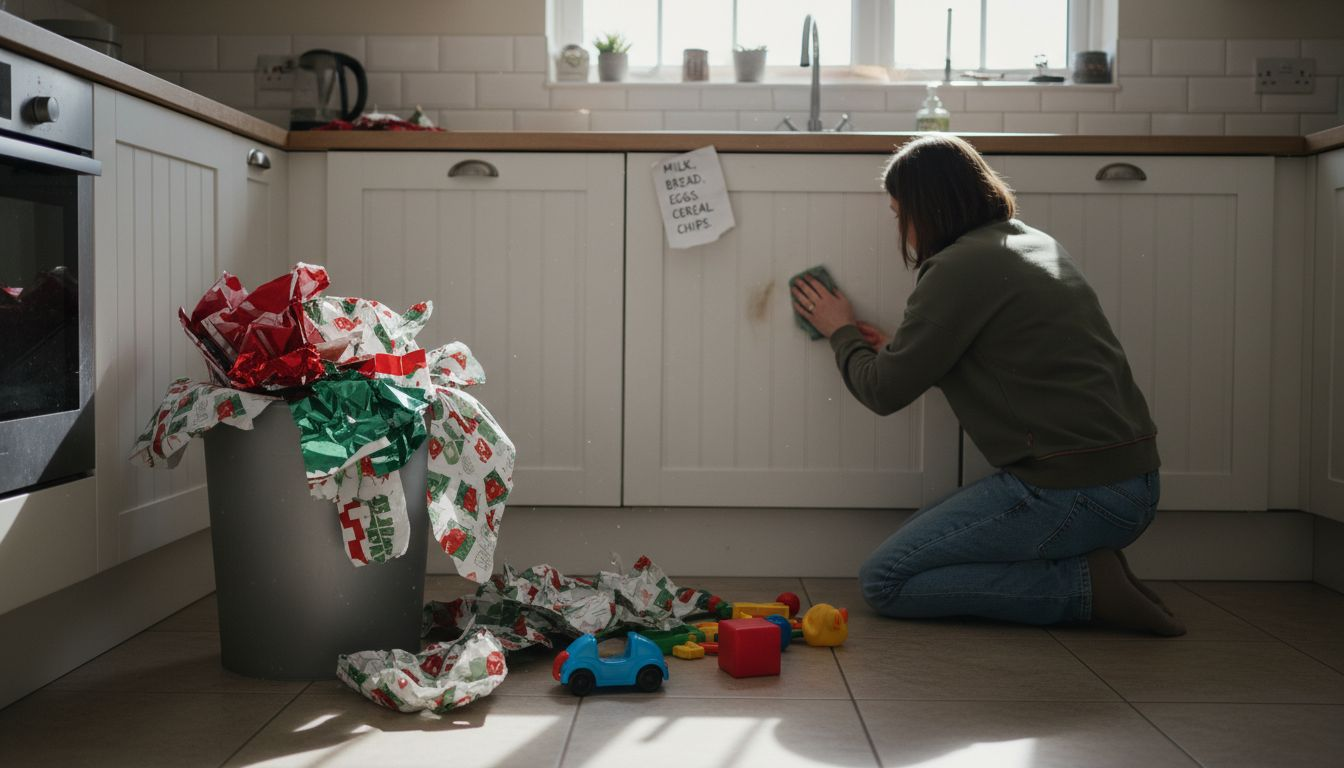
Most decorative wrapping paper contains plastic coatings, foil layers, and synthetic dyes that contaminate recycling batches. Local councils cannot process them effectively, so they’re classified as general waste rather than recyclable material.
What the statistics reveal
The UK’s packaging waste picture shows persistent challenges:
- Over 11 million tonnes of packaging waste generated annually across commercial and household sources
- Only a fraction of decorative gift wrap enters recycling systems successfully
- Plastic packaging presents ongoing environmental problems linked to waste management, with government targets requiring all plastic packaging to be recyclable, reusable, or compostable by 2025
- Gift-wrapping waste peaks during festive periods and celebration seasons
Why newborn gifts amplify the problem
Expectant parents receive numerous gifts throughout pregnancy and after birth. Each wrapped present contributes to landfill waste. The contradiction is stark: gifts given with love for the child create environmental harm to that same child’s future.
A single baby can receive 50 wrapped presents within its first year. Across the UK, that multiplies into millions of tonnes of single-use wrapping destined for disposal before children even develop memories of their gifts.
Gift wrapping waste during celebrations represents one of the easiest environmental impacts to eliminate—yet remains normalised across families who care deeply about sustainability.
Meaningful alternatives exist
Personalised reusable fabric wraps transform this narrative entirely. Rather than waste, wrapping becomes a keepsake. Environmental impact and alternatives for gift wrap demonstrate how thoughtful choices during peak gifting moments create lasting positive change.
Pro tip: Track your gift wrap waste for one month—count the pieces you discard. Most families are shocked by the volume, which motivates switching to reusable fabric alternatives for newborn and toddler celebrations.
How reusable fabric wraps work for gifts
Reusable fabric wraps function as an elegant, sustainable alternative to traditional wrapping paper. Rather than tearing open and discarding, these wraps fold around your gift, fasten securely, and return to you for future use. The concept transforms gifting from a wasteful moment into a meaningful ritual.
These wraps are typically made from durable natural fibres like organic cotton or linen, materials that withstand repeated use without degradation. Unlike paper that disintegrates after one opening, quality fabric maintains its beauty and structural integrity through dozens of gift-giving cycles.
The mechanics of fabric wrapping
Reusable fabric gift wraps function inspired by traditional Japanese techniques, where fabric becomes the wrapping method itself. The process works through simple geometry: you place your gift at the centre of the fabric square, then fold and tie the corners together using the fabric’s natural edges.
The beauty lies in simplicity. No tape, no scissors, no waste. The fabric itself creates the seal through thoughtful folding and, optionally, a tied knot or bow.
Why fabric wraps work better for newborn gifts
For parents celebrating new arrivals, fabric wraps offer distinct advantages:
- Personalisation through embroidery transforms the wrap into a keepsake bearing the baby’s name, birth date, or a meaningful message
- The wrap itself becomes a cherished memento, not discarded after one use
- Parents receive dozens of gifts during pregnancy and early years; reusable wraps reduce waste exponentially
- Beautiful fabrics enhance the gift presentation, making unwrapping a sensory experience rather than rushed destruction
- Toddlers grow up learning that elegance and care are permanent, not disposable
Supporting circular economy principles
Reusable fabric wraps actively reduce demand for single-use materials whilst supporting broader environmental goals. Fabric wraps within reusable packaging systems reduce landfill and environmental pollution, fostering behaviour change towards sustainable consumption patterns.
When you receive a gift wrapped in personalised fabric, you’re encouraged to reuse that same wrap for your next gift. This ripple effect multiplies environmental benefits across your entire social circle.
A single reusable fabric wrap eliminates the need for hundreds of sheets of wrapping paper over a lifetime—yet costs less than annual paper consumption.
Practical usage for families
Using fabric wraps requires no special skill. Premium gift wrapping instructions for reusable fabric demonstrate how to wrap boxes, oddly-shaped items, and bottles with the same piece of fabric.
After unwrapping, simply fold, store, and reuse. Machine wash when needed—quality fabrics withstand dozens of washes without fading or losing texture.
Pro tip: Keep your personalised fabric wraps in a dedicated storage box so they’re ready for the next celebration, and gift-givers in your circle will naturally adopt the same practice.
Environmental and health benefits of switching
Switching from single-use wrapping to reusable fabric alternatives delivers immediate environmental and health advantages. This shift protects your family whilst reducing your household’s ecological footprint significantly.
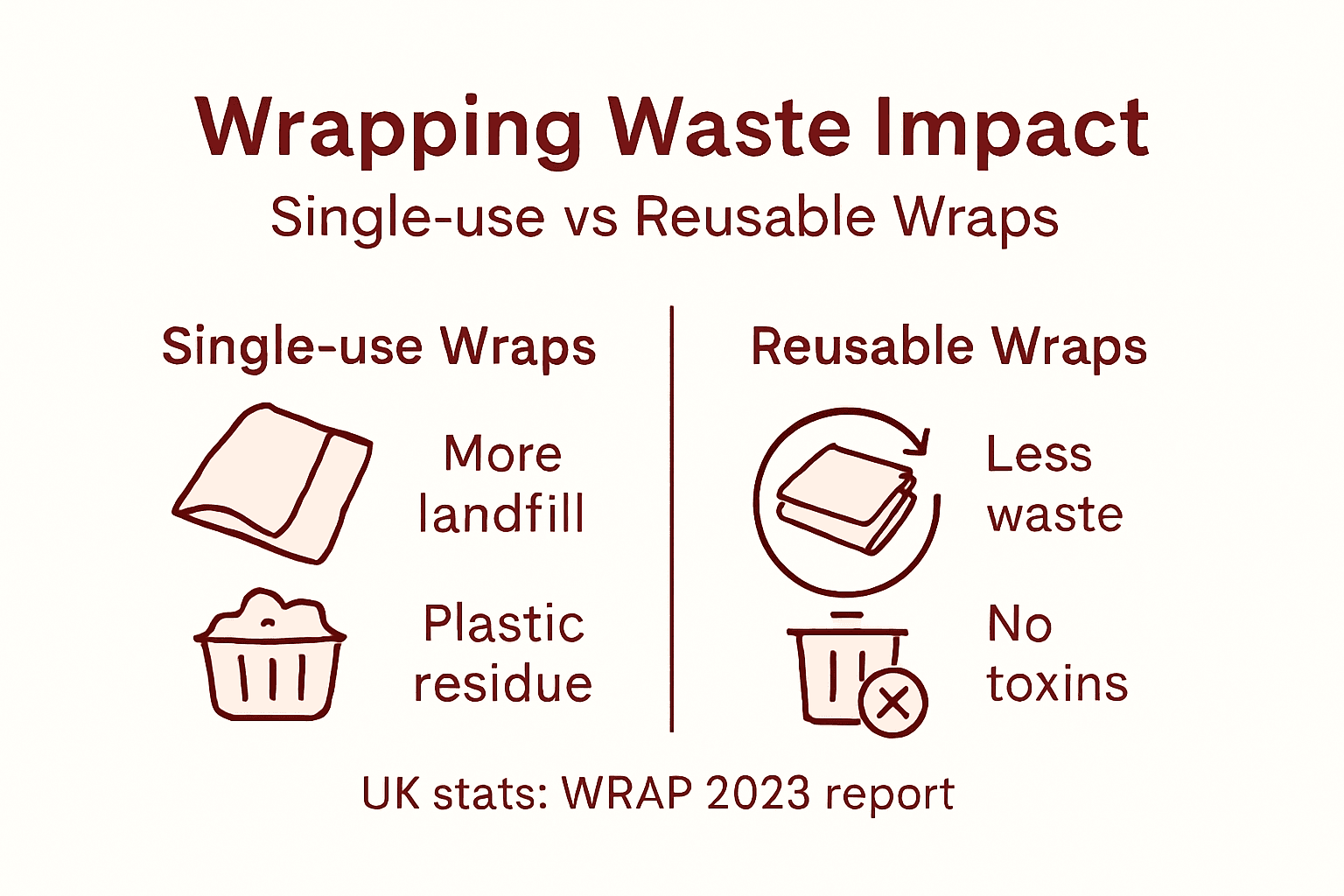
The environmental case is compelling. Single-use wrapping generates millions of tonnes of landfill waste annually, consuming finite resources and creating pollution throughout its lifecycle. Reusable fabric wraps eliminate this cycle by functioning for decades rather than seconds.
Reducing plastic pollution and microplastics
Single-use plastics and plastic-coated papers release harmful substances into the environment. Switching to reusable packaging reduces plastic pollution and prevents microplastics from entering food systems, protecting your child’s health directly.
Microplastics from degraded wrapping materials contaminate soil, water, and ultimately reach your family’s dinner table. Fabric wraps eliminate this pathway entirely by remaining intact and non-toxic throughout countless uses.
Key environmental benefits
Adopting reusable fabric wraps generates measurable positive impact:
- Reduced resource consumption through eliminating demand for virgin paper pulp and plastic film production
- Lower greenhouse gas emissions from manufacturing, transportation, and disposal cycles
- Conservation of landfill space by removing millions of tonnes of single-use wrapping waste
- Decreased water pollution from paper bleaching and plastic manufacturing processes
- Protection of forests by reducing demand for virgin paper pulp harvesting
Health benefits for your family
Beyond environmental gains, fabric wraps protect your children directly. Single-use wrapping contains chemical dyes, bleaches, and plastic coatings that can off-gas or contaminate items they contact. Reusable fabric wraps from natural fibres eliminate chemical exposure entirely.
Newborns and toddlers explore the world through touch and taste. Fabric wraps made from organic cotton or linen present no chemical risks, unlike plastic-coated paper that releases volatile organic compounds near food or toys.
Explore at-a-glance the positive effects of switching to reusable fabric wraps:
| Benefit Type | Short-Term Advantage | Long-Term Advantage |
|---|---|---|
| Environmental | Reduced holiday waste | Lower resource consumption |
| Health & Safety | No chemical off-gassing | No microplastics near food |
| Financial | Fewer repeat purchases | Significant savings over time |
| Social Impact | Conversation starter | Inspires sustainable habits |
| Child Development | Sensory experience | Teaches care, not disposability |
Breaking the consumption cycle
Environmentally friendly wrap choices involve broader sustainability principles that reshape how families view gifting. When you adopt reusable wraps, you demonstrate to your children that beauty and care need not be disposable.
This cultural shift matters. Children who grow up receiving gifts wrapped in cherished, reusable fabrics develop fundamentally different attitudes towards consumption and environmental responsibility than those trained to expect single-use experiences.
Switching one family to reusable fabric wraps prevents approximately 100 sheets of wrapping paper per year from entering landfill—multiplied across generations, this creates profound environmental healing.
The ripple effect across your community
When friends and family receive gifts wrapped in beautiful personalised fabric, they’re inspired to adopt the same practice. This ripple effect amplifies environmental benefits exponentially across your entire social circle.
Pro tip: Gift a personalised reusable fabric wrap to friends expecting babies, including a handwritten note explaining the environmental and health benefits—you’ll inspire lasting change whilst providing a practical tool they’ll use for years.
Cost, convenience, and pitfalls of disposable wraps
Disposable wrapping appears economical at first glance. A roll of wrapping paper costs mere pounds, making it seem like the obvious choice for budget-conscious families. This perception masks significant hidden costs that accumulate across years and affect your household’s finances and health.
Convenience represents the primary reason families continue using disposable wraps. Grab paper, wrap quickly, discard. No folding techniques to master, no storage considerations, no washing required. Yet this convenience comes with substantial long-term consequences.
The true cost of disposable wraps
Hidden costs of plastic convenience include significant healthcare expenditures linked to chemicals in disposable wraps, expenses not reflected in the product’s price tag. You’re not paying the true cost when you purchase wrapping paper—society absorbs the environmental cleanup, healthcare burdens, and resource depletion costs.
Consider the mathematics. A family with young children uses approximately 200 sheets of wrapping paper annually. Over 18 years, that’s 3,600 sheets destined for landfill. Multiply by millions of UK families, and the scale becomes staggering.
Hidden pitfalls of disposable wraps
Beyond financial externalities, disposable wrapping presents practical problems:
- Chemical exposure from dyes, bleaches, and plastic coatings that off-gas near food and toys
- Psychological costs of contributing to environmental harm whilst claiming to care about your child’s future
- Guilt cycles where eco-conscious families feel conflicted about their wrapping choices
- Waste management burden on local councils and landfill infrastructure
- Resource depletion through continuous demand for virgin paper pulp and plastic films
The convenience paradox
Research reveals that convenience and lack of awareness represent significant barriers to replacing disposable wraps, even among environmentally conscious consumers. Families perceive reusable alternatives as less convenient despite evidence showing otherwise.
This perception contradicts reality. Once you master basic fabric wrapping techniques, reusable wraps actually save time—no searching for tape, no wrestling with paper edges, no cleanup of scraps. The learning curve takes minutes.
Breaking the convenience myth
Non-disposable wrapping offers lasting impact through multiple uses that eliminate repeat purchasing and storage challenges. A personalised fabric wrap becomes your signature, recognised and appreciated by gift recipients.
Parents who switch to reusable wraps report surprising benefits: reduced shopping trips for replacement rolls, simplified gift wrapping routines, and meaningful conversations with children about sustainability.
The real convenience lies not in disposable wraps, but in eliminating the need to purchase, store, and dispose of wrapping materials repeatedly throughout your lifetime.
Cost comparison over time
A quality personalised reusable fabric wrap costs £20–40 initially. Over 50 uses, that’s 40–80 pence per gift—substantially cheaper than disposable paper. Over 200 uses across a lifetime, the cost approaches negligible amounts.
Disposable wrapping, by contrast, requires continuous repurchasing. A family spending £30 annually on wrapping paper over 18 years invests £540 in material destined for landfill.
Pro tip: Calculate your family’s annual wrapping paper spending, multiply by the years until your children leave home, then compare that total to the cost of five quality personalised fabric wraps—the financial case for switching becomes undeniable.
Transform Your Gift Giving with Thoughtful Reusable Wraps
The article highlights the urgent challenge of reducing single-use wrapping waste that harms our environment and contradicts eco-conscious family values. If you want to break free from the cycle of disposable paper that ends up in landfill almost immediately, personalised reusable fabric wraps offer a meaningful solution. These wraps combine lasting beauty and environmental care, turning every newborn and toddler gift into a treasured memento rather than forgotten rubbish.
Discover how our newborn and toddler range of embroidered fabric wraps can help you embrace sustainability while celebrating special moments. Act now to create memories that matter and reduce wrapping waste today. Learn more at Nicholas and Rose and join families who cherish elegance without disposability.
Frequently Asked Questions
What are the environmental impacts of single-use wrapping?
Single-use wrapping contributes significantly to landfill waste and pollution. Most wrapping papers contain plastic coatings and synthetic dyes, making them non-recyclable and harmful to ecosystems.
How do reusable fabric wraps compare to single-use wrapping paper?
Reusable fabric wraps can be used multiple times, reducing overall waste and resource consumption. They also avoid chemical exposure from dyes and plastics found in single-use wraps, making them a safer choice for families.
What are the benefits of using personalised reusable fabric wraps for gifting?
Personalised reusable fabric wraps not only minimise waste but also become cherished keepsakes. They allow for personalised touches, such as embroidery of names and dates, creating an emotional connection that single-use wrapping cannot provide.
How can switching to reusable fabric wraps save money in the long run?
While the initial cost of a reusable fabric wrap may be higher, they can replace hundreds of sheets of wrapping paper over their lifetime, resulting in significant savings. A family that regularly wraps gifts can save more than half the cost of disposable wraps over time.
Recommended
- Reusable Wraps in Sustainability: Lasting Impact – Nicholas & Rose Limited
- What Makes Wrap Environmentally Friendly: Key Benefits Explained – Nicholas & Rose Limited
- Why Invest in Reusable Wrap for Eco Gifting – Nicholas & Rose Limited
- 6 Benefits of Custom Gift Wrap for Eco-Conscious Parents – Nicholas & Rose Limited