

The role of eco awareness in holidays: your 2026 guide
Eco awareness in holidays means making travel and celebration choices that actively reduce environmental harm while supporting local communities and natural ecosystems. It shapes everything from where you choose to stay, to how you wrap a gift for a newborn, to whether you fly in peak season or seek quieter paths through the world. The rewards reach far beyond personal conscience: destinations thrive, cultures are respected, and the small, considered acts of each traveller accumulate into something genuinely restorative.
At its heart, eco-aware travel asks a simple question: does this choice leave a place better than I found it?
- Eco awareness guides destination selection, accommodation choices, and transport decisions
- It encourages spending that flows directly into local economies rather than global chains
- It reduces waste, water use, and carbon emissions across the entire holiday experience
- It extends naturally into gifting, where reusable, personalised wraps replace single-use paper destined for landfill
Why eco awareness matters so deeply for how you holiday
The shift in traveller mindset is striking. Sustainability expert Juliet Kinsman describes 2026 as the year the conversation moved from “Is it sustainable?” to “Does it make this place better?” That regenerative framing changes everything. It transforms a holiday from a passive act of consumption into something closer to stewardship.
The Booking.com Travel & Sustainability Report 2026 found that 85% of travellers value sustainable travel, yet a persistent gap remains between intention and action. Understanding why that gap exists is the first step to closing it.
Key principles underpinning eco-aware holidays include:
- Viewing a destination as someone’s home, not a backdrop for your leisure
- Choosing suppliers who report transparently on energy, water, and waste
- Prioritising experiences that preserve rather than extract from natural and cultural heritage
- Recognising that social sustainability, supporting local people and indigenous cultures, is inseparable from environmental sustainability
Dr. Susanne Becken, a leading sustainability expert at the University of Surrey, emphasises that eco awareness in travel must encompass both environmental and community dimensions. The two are not separate concerns.
How eco awareness shapes your holiday choices and behaviours
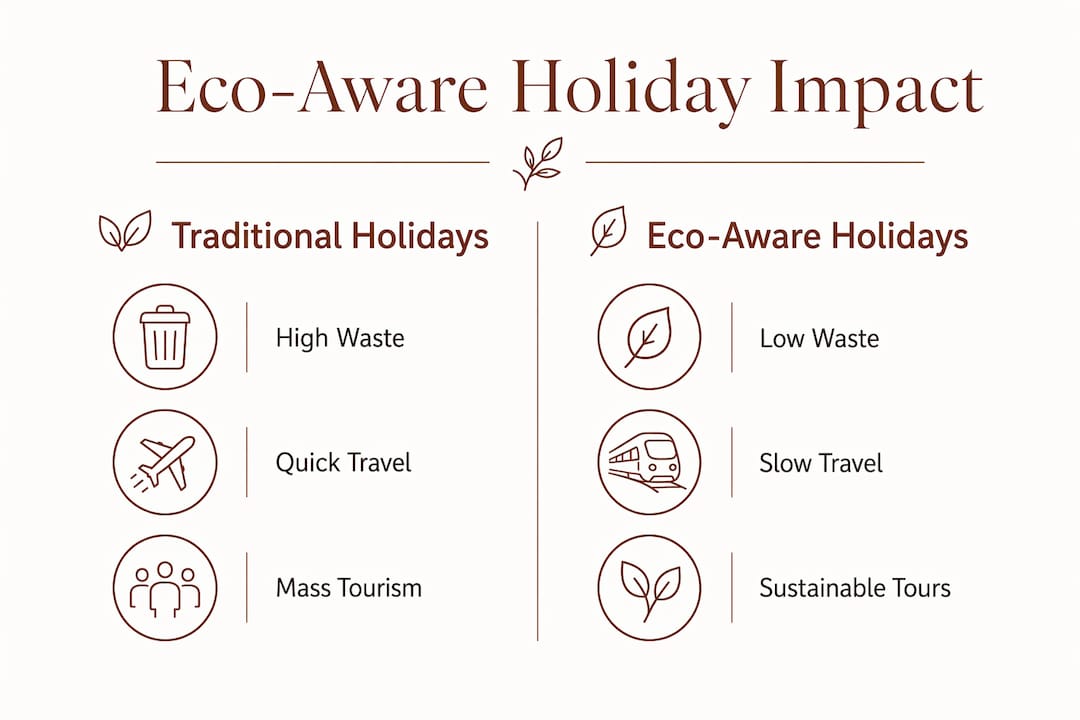
The practical influence of eco awareness on travel decisions is visible and growing. According to Euronews travel research from 2026, 43% of travellers now plan to avoid overcrowded destinations, and 42% intend to travel off-season. Extreme weather events have accelerated this shift, making destination timing and resilience part of every thoughtful traveller’s calculus.
Eco-conscious choices tend to cluster around several distinct behaviours:
- Seeking accommodations with recognised sustainability certifications rather than large chain hotels
- Booking guided nature tours or wildlife conservation experiences led by local experts
- Shopping at independent local businesses rather than international retailers
- Reducing single-use plastic consumption throughout the trip
- Choosing slower, lower-carbon transport where the journey itself becomes part of the experience
Dr. Becken’s research highlights that younger generations show higher participation in tours involving indigenous culture and conservation, and a clear preference for local shopping over global brands. This is not mere trend-following. It reflects a genuine understanding that tourism money, directed thoughtfully, can sustain communities and protect the very places that make travel worthwhile.
Pro Tip: Plan longer stays in fewer locations rather than rushing between multiple destinations. Extended stays reduce the operational waste of repeated hotel turnovers, including laundry cycles and daily cleaning, while giving you time to engage meaningfully with local culture and economy.

Practical eco-friendly activities and sustainable holiday practices
Adopting sustainable travel practices does not require sacrifice. Often, the most eco-aware choices are also the most memorable.
Popular eco-friendly holiday activities worth seeking out:
- Guided nature walks and wildlife conservation volunteering with certified local operators
- Cultural immersion experiences led by indigenous guides, which support communities directly
- Farm-to-table dining at locally owned restaurants, reducing food miles and supporting regional producers
- Sea or river kayaking with conservation-focused operators who follow low-impact protocols
- Visiting artisan markets and independent craft studios rather than souvenir chains
On-trip habits that compound into real environmental impact:
- Carrying a reusable water bottle and refusing single-use plastics at every opportunity
- Reusing towels and linen rather than requesting daily changes
- Turning off air conditioning and lighting when leaving your room
- Choosing public transport, cycling, or walking over private hire vehicles
- Consolidating your itinerary to minimise internal flights and unnecessary relocations
Tourism destinations that integrate sustainability programmes into their offering see stronger visitor trust and longer-term resilience. Your choices as a traveller actively shape which destinations thrive.
Sustainable gifting and eco-aware celebration on holidays
Gifting is woven into almost every holiday tradition, yet it generates a disproportionate share of seasonal waste. Holiday seasons produce a noticeable increase in household waste, with wrapping paper and single-use packaging among the primary culprits. The pattern is similar across the UK.
For newborn and toddler gifts especially, the wrapping often outlasts the occasion only in the bin. Reusable fabric gift wraps offer a genuinely different proposition: they become part of the gift itself, a keepsake with texture and warmth that no sheet of printed paper can replicate.
Sustainable gifting choices that reduce waste without diminishing the joy of giving:
- Reusable fabric wraps, personalised through embroidery, that the recipient keeps and uses again
- Gifts of experience, a museum visit, a nature class, a story session, over plastic toys in non-recyclable packaging
- Wooden and organic cotton toys that support sustainable consumption and carry no microplastic risk
- Handmade or locally sourced gifts that carry a story alongside their substance
Nicholasandrose creates personalised reusable fabric gift wraps for newborns and toddlers, drawing on the Japanese Furoshiki tradition of cloth wrapping to create something that endures long after the celebration. Each wrap can be embroidered with a name or date, transforming it from packaging into an heirloom. The WWF’s guidance on earth-friendly gifting specifically recommends reusable fabric wraps as a way to reduce single-use waste while creating meaningful traditions.
What makes eco awareness during holidays genuinely difficult
The gap between intention and action that the Booking.com data reveals is not simply a matter of willpower. Real barriers shape behaviour, and acknowledging them honestly is more useful than pretending the path is straightforward.
Cost perception. Eco-certified accommodations and locally owned guesthouses often carry a higher nightly rate than large chain hotels, at least at first glance. The full-cost comparison, including what stays in the local economy, looks different, but the upfront price remains a deterrent for many travellers.
Information scarcity. Greenwashing is widespread in the travel industry. Without clear, verified certification standards, it is genuinely hard to distinguish a hotel with authentic sustainability practices from one that has simply printed a leaflet about towel reuse. Certifications such as Green Key and EarthCheck provide independent verification, but awareness of them remains uneven among travellers.
Convenience and habit. Booking a familiar chain, flying direct, and buying the first gift wrap you see at the supermarket are all frictionless choices. Eco-aware alternatives require planning, research, and occasionally a willingness to accept a less polished experience. For families travelling with young children, that friction feels especially acute.
Social pressure. Gift-giving traditions carry deep cultural weight. Choosing a reusable fabric wrap over elaborate paper and ribbon can feel like a departure from expectation, even when the recipient would welcome it.
How governments and the tourism industry are responding
The policy and industry response to environmentally conscious vacations has accelerated considerably. The UK government’s commitment to net zero by 2050 filters into tourism through planning restrictions on high-carbon developments, support for rail and active travel infrastructure, and guidance on sustainable procurement for public-sector events.

Green tourism initiatives at the industry level include the expansion of certification schemes such as Green Tourism, which operates across the UK and Ireland, and the integration of sustainability reporting into mainstream hotel and airline operations. Visit Britain has embedded sustainability criteria into its destination management frameworks, encouraging local tourism bodies to measure and reduce their environmental footprints.
At the international level, the UN Tourism organisation promotes the Sustainable Development Goals as a framework for destination planning, linking biodiversity protection, community benefit, and climate resilience into a single coherent standard. Travellers who seek out certified destinations and operators are, in effect, voting for that framework with their spending.
The industry still has considerable distance to travel. Carbon offsetting schemes vary wildly in quality, and voluntary sustainability pledges without third-party verification carry limited weight. The most credible progress comes from destinations and operators who publish verified data on energy use, waste reduction, and community investment.
The long-term benefits of eco-aware holidays for places and people
The cumulative effect of responsible travel choices reaches well beyond any individual trip. Destinations that attract eco-aware travellers tend to invest more in natural and cultural preservation, creating a virtuous cycle where the quality of the experience improves over time rather than degrading under pressure.
Academic research published in Sustainability confirms that tourism destinations integrating social responsibility programmes see stronger visitor trust and improved long-term resilience. Communities that benefit directly from tourism spending develop a genuine stake in protecting the assets that draw visitors: clean coastlines, intact forests, living cultural traditions.
For local economies, the difference between a traveller who spends at independent businesses and one who stays within a resort complex is substantial. Money that circulates locally funds schools, repairs infrastructure, and sustains the artisan skills that make a place worth visiting. Eco-aware travellers, almost by definition, direct their spending more locally.
The environmental benefits compound over decades. Reduced pressure on fragile ecosystems during peak seasons allows wildlife populations to recover. Lower carbon travel choices, taken collectively, contribute to the broader effort to limit warming that threatens the world’s most visited natural landscapes. And the habit of thoughtful, considered consumption that eco-aware travel cultivates does not stay at the airport. It comes home.
Key takeaways
Eco awareness in holidays shapes every decision from destination to gift wrap, and the cumulative effect of those choices determines whether tourism sustains or depletes the places and people it touches.
| Point | Details |
|---|---|
| Intention versus action | 85% of travellers value sustainable travel, yet a persistent gap between intent and action remains the central challenge. |
| Behaviour shifts are measurable | 43% of travellers plan to avoid overcrowded spots and 42% plan off-season travel, reflecting growing eco-conscious decision-making. |
| Gifting carries environmental weight | Holiday waste rises sharply each season; reusable fabric wraps personalised through embroidery reduce single-use waste while creating lasting keepsakes. |
| Local spending sustains destinations | Directing holiday spending to independent businesses and local guides protects the cultural and natural assets that make destinations worth visiting. |
| Regeneration over harm reduction | The 2026 mindset shift, from doing less damage to actively improving places, defines the most meaningful form of eco-aware travel. |
Recommended
- Sustainable Christmas 2025: your guide to a greener festive season – Nicholas & Rose Limited
- Why choose reusables for holidays: eco-friendly gifting – Nicholas & Rose Limited
- Green gifting trends 2025: what eco-conscious gift-givers need to know – Nicholas & Rose Limited
- Top eco trends for Christmas: sustainable gifting for children – Nicholas & Rose Limited