

Why Choose Sustainable Wrapping for Christmas Gifts
Each Christmas, British households generate over 227,000 miles of discarded wrapping paper, creating an environmental problem that sophisticated luxury consumers refuse to ignore. For those who value both style and sustainability, the move towards personalised fabric wrapping is reshaping how gifts are presented across the United Kingdom. This guide separates fact from myth, empowering you to discover elegant wrapping solutions that protect the planet as thoughtfully as they adorn your presents.
Table of Contents
- Sustainable Wrapping: Core Concepts And Myths
- Popular Types Of Eco-Friendly Wrapping Fabrics
- How Personalised Fabric Wrapping Works
- Environmental Benefits Versus Traditional Paper
- Cost, Longevity, And Style Comparisons
Key Takeaways
| Point | Details |
|---|---|
| Sustainable Wrapping Practices | Embracing sustainable wrapping involves choosing eco-friendly materials and methods that minimise waste and promote resource efficiency. |
| Benefits of Fabric Wraps | High-quality fabric wraps can be reused, reducing overall waste and providing a more aesthetically pleasing alternative to traditional paper. |
| Cost-Effectiveness | Although the initial investment for fabric wraps may be higher, they offer significant long-term savings through their durability and reusability. |
| Personalisation | Personalised fabric wraps not only enhance the gift-giving experience but can also serve as cherished keepsakes, thereby increasing their value. |
Sustainable Wrapping: Core Concepts and Myths
Christmas gift wrapping practices have long been associated with significant environmental waste, generating tonnes of discarded paper annually. Understanding sustainable wrapping means recognising the profound impact our packaging choices can have on global ecosystems. Global environmental organisations like WRAP are transforming unsustainable systems by promoting circular economy principles that minimise waste and maximise resource efficiency.
Sustainable wrapping transcends simple material selection. It involves a holistic approach considering the entire lifecycle of packaging materials, from production through disposal. Circular design principles from sustainable packaging research emphasise creating packaging solutions that can be reused, recycled, or composted, thereby reducing environmental strain. This means moving beyond traditional single-use wrapping paper towards innovative alternatives like reusable fabric wraps, biodegradable materials, and minimalist packaging techniques.
Common myths surrounding sustainable wrapping often prevent people from making environmentally conscious choices. Many believe sustainable options are more expensive or less aesthetically pleasing, when in reality, eco-friendly wrapping can be both cost-effective and elegantly designed. Fabric wraps, for instance, can be beautifully personalised, reused multiple times, and significantly reduce annual waste compared to traditional paper wrappings.
Pro tip: Invest in versatile, high-quality fabric wraps that can be used across multiple gift-giving occasions, transforming your sustainability efforts into a stylish and practical tradition.
Popular Types of Eco-Friendly Wrapping Fabrics
Navigating the world of sustainable gift wrapping fabrics requires understanding the nuanced environmental characteristics of different textile materials. Comprehensive fabric sustainability assessments reveal a complex landscape of ecological considerations, where each material presents unique advantages and potential trade-offs. Organic cotton, hemp, linen, and recycled synthetics have emerged as frontrunners in environmentally responsible wrapping solutions.
Advanced eco-friendly fabric technologies now offer remarkable sustainable textile options that balance performance with environmental responsibility. Organic cotton stands out for its reduced chemical usage and lower water consumption, while hemp presents exceptional durability and minimal environmental impact. Recycled polyester derived from plastic bottles represents an innovative approach to transforming waste into beautiful, functional wrapping materials. Linen, created from flax plants, offers natural biodegradability and requires minimal processing compared to other textile alternatives.
Certification plays a critical role in verifying the sustainability credentials of fabric wraps. Look for internationally recognised standards like Global Organic Textile Standard (GOTS) and OEKO-TEX, which guarantee stringent environmental and ethical production practices. These certifications ensure that your chosen wrapping fabric meets comprehensive sustainability criteria, from raw material sourcing to final manufacturing processes.
Pro tip: When selecting eco-friendly wrapping fabrics, prioritise multi-use materials that can be repurposed after gift-giving, maximising both sustainability and practicality.
The following table outlines key environmental attributes of popular sustainable wrapping fabrics:
| Fabric Type | Eco Credentials | Durability | Typical Uses |
|---|---|---|---|
| Organic Cotton | Low chemical use, GOTS | Very robust, washable | Everyday and festive wrapping |
| Hemp | Minimal impact, OEKO-TEX | Highly long-lasting | Sturdy reusable gift wraps |
| Linen | Biodegradable, low water | Good resilience | Decorative, lightweight wraps |
| Recycled Polyester | Repurposed plastics | Excellent strength | Modern, colourful covers |
How Personalised Fabric Wrapping Works
Traditional fabric wrapping techniques offer an elegant alternative to conventional disposable paper, transforming gift presentation into an art form of sustainability. Personalised fabric wrapping combines aesthetic creativity with environmental consciousness, allowing individuals to craft bespoke gift coverings that reflect both personal style and ecological responsibility. The process involves selecting high-quality, durable fabrics that can be creatively folded, stitched, and embellished to create unique wrapping solutions.

The Japanese furoshiki technique provides a sophisticated foundation for personalised fabric wrapping, demonstrating how traditional methods can revolutionise modern gift presentation. Cultural gift-wrapping practices reveal intricate approaches to sustainable packaging, where fabric selection becomes a critical element of the gift-giving experience. Different fabric weights, textures, and designs enable crafters to create wraps that are not just protective coverings, but meaningful extensions of the gift itself. Embroidery, appliqué, and custom printing techniques allow for further personalisation, transforming simple fabric into a memorable, reusable gift wrap.
Personalisation extends beyond aesthetic choices, incorporating practical considerations of fabric durability, wash-ability, and versatility. Luxury fabrics like silk, high-quality cotton, and lightweight linens offer different characteristics suitable for various gift types and personal preferences. The key is selecting materials that can withstand multiple uses, maintain their appearance, and provide an eco-friendly alternative to single-use wrapping papers. Professional embroidery services can add monograms, special messages, or intricate designs that elevate the fabric wrap from a simple covering to a cherished keepsake.
Pro tip: Invest in a small collection of neutral-toned, high-quality fabrics that can be versatilely styled and personalised for different occasions, maximising both sustainability and creative potential.
Environmental Benefits Versus Traditional Paper
Consumer perceptions about packaging environmental impact reveal complex trade-offs between traditional paper wrapping and more sustainable alternatives. Sustainable gift wrapping requires understanding the nuanced environmental considerations beyond simple material selection. While paper appears environmentally friendly, its production involves significant resource consumption, including substantial water and energy expenditures that often go unnoticed by consumers preparing for festive gift-giving.
Traditional paper wrapping presents both advantages and considerable ecological challenges. Paper packaging offers key environmental benefits when produced responsibly, including biodegradability and potential recyclability. However, the environmental cost includes deforestation risks, high energy consumption during manufacturing, and limited reusability. One discarded paper wrap represents multiple environmental compromises: trees harvested, energy expended, and waste generated for a single-use product that typically survives mere moments before destruction.
Comparing fabric and paper wrapping reveals stark differences in long-term environmental impact. Fabric wraps can be reused dozens of times, dramatically reducing waste and resource consumption compared to single-use paper alternatives. Each reuse represents a tangible reduction in environmental strain, transforming gift presentation from a disposable transaction to a sustainable practice. Professional-grade fabric wraps crafted from organic cotton, hemp, or recycled materials offer superior durability, aesthetic appeal, and ecological responsibility compared to traditional paper wrappings.
Pro tip: Calculate the potential environmental savings by replacing just five paper wrappings with a single high-quality, reusable fabric wrap.
See how fabric and paper gift wrapping compare across core factors:
| Factor | Fabric Wraps | Traditional Paper Wraps |
|---|---|---|
| Environmental Impact | Reusable, fewer resources | High water and energy usage |
| Cost Over Time | Savings through multi-use | Repeated annual purchases |
| Style Potential | Customisable, luxury finishes | Limited designs, easily torn |
| Longevity | Lasts several years | Typically disposed after one use |
Cost, Longevity, and Style Comparisons
Sustainable packaging investments reveal complex economic considerations beyond simple price comparisons. Fabric gift wrapping represents a sophisticated approach to balancing financial prudence with environmental responsibility, challenging conventional assumptions about cost-effectiveness. While initial investments might appear higher, the long-term economic benefits create a compelling narrative of sustainable consumer choices.
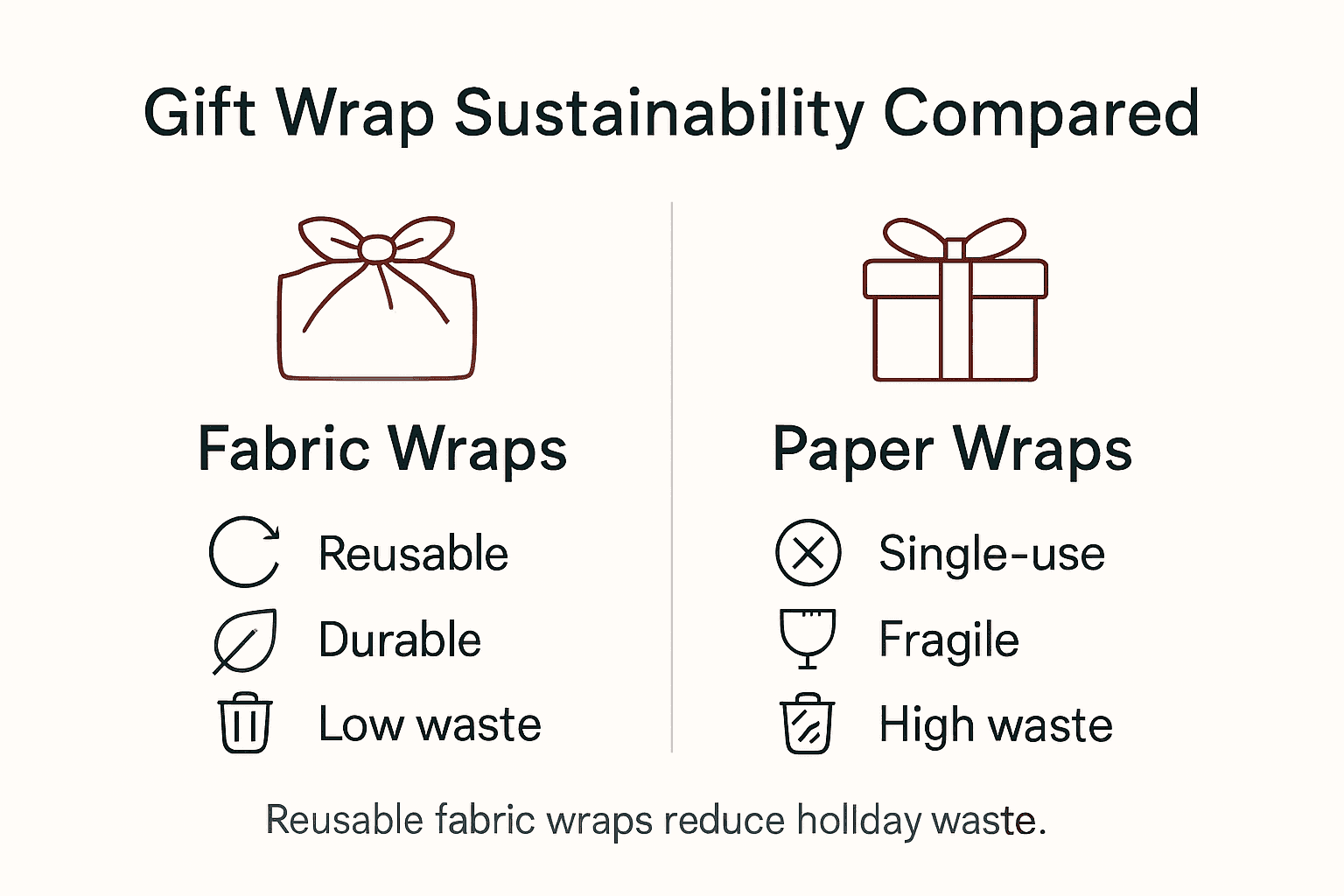
The economics of sustainable wrapping extend far beyond mere monetary calculations. Packaging solutions can be strategically designed to reduce overall expenses, with fabric wraps offering remarkable durability that traditional paper alternatives cannot match. A single high-quality fabric wrap might replace dozens of single-use paper wrappings, translating into significant financial savings over multiple gift-giving seasons. Professional-grade fabric wraps crafted from organic materials represent an investment in both aesthetic elegance and environmental stewardship.
Style considerations demonstrate that sustainable wrapping need not compromise visual appeal. Modern fabric wraps offer extraordinary versatility, with options ranging from minimalist neutrals to intricate, personalised designs that elevate gift presentation. The ability to launder, press, and reuse these wraps means they maintain their aesthetic integrity far longer than disposable paper alternatives. Moreover, the tactile quality of fabric wraps adds a layer of luxury and thoughtfulness that paper simply cannot replicate, transforming the act of gift-giving into a more meaningful experience.
Pro tip: Calculate your potential annual savings by investing in a versatile collection of fabric wraps that can be styled for multiple occasions and recipients.
Embrace Sustainable Luxury with Reusable Fabric Wraps This Christmas
Choosing sustainable wrapping for your Christmas gifts answers the urgent challenge of reducing environmental waste while enhancing the elegance and longevity of your gift presentation. Our curated Reusable Fabric Wrap - Luxurious Christmas Collection offers beautifully crafted fabric wraps that can be personalised through embroidery, combining style with eco-consciousness. Each wrap is designed for multiple uses, turning your festive tradition into a lasting celebration of sustainability.
Discover the difference that thoughtfully selected, durable fabrics can make in your holiday preparations. Visit Nicholas & Rose today to explore unique, personalised wraps that reduce waste and elevate your gift-giving experience. Take the first step towards greener celebrations by browsing our exclusive collection and creating memorable moments with sustainable fabric wrapping. Don’t miss this opportunity to gift beautifully and responsibly this Christmas.
Frequently Asked Questions
What are the environmental benefits of using sustainable wrapping for Christmas gifts?
Sustainable wrapping, such as fabric wraps, significantly reduces waste by being reusable and recyclable, unlike traditional paper which often ends up in landfills. They also minimise resource consumption during production, contributing to less environmental strain.
How can I personalise fabric wrapping for my gifts?
You can personalise fabric wrapping by choosing unique fabrics, using techniques like the Japanese furoshiki method, adding embroidery, or custom printing designs. This transforms the fabric into a meaningful and bespoke gift covering.
Are fabric wraps more expensive than traditional wrapping paper?
While the initial cost of fabric wraps may seem higher, they offer long-term savings as they can be reused multiple times, replacing numerous single-use paper wrappings and ultimately reducing overall spending on gift wrapping.
What types of fabrics are considered eco-friendly for gift wrapping?
Eco-friendly fabrics include organic cotton, hemp, linen, and recycled polyester. These materials are chosen for their low environmental impact and durability, making them suitable for sustainable gift wrapping.
Recommended
- Sustainable Christmas Wrapping: A Luxurious Eco Choice – Nicholas & Rose Limited
- Christmas Wrap Waste: Environmental Impact and Alternatives – Nicholas & Rose Limited
- Sustainable Gift Wrap Choices: Eco-Luxury for 2025 – Nicholas & Rose Limited
- Eco Conscious Gift Wrapping Explained: Sustainable Luxury – Nicholas & Rose Limited