

Why choose reusables for holidays: eco-friendly gifting
TL;DR:
- Choosing reusable items like fabric gift wrap and cloth nappies significantly reduces holiday waste and adds lasting sentimental value. Reusables are most eco-friendly when used frequently, washed at low temperatures, and stored properly across seasons, but their benefits depend on mindful maintenance. Thoughtful, everyday reuse fosters sustainable traditions that build meaningful family memories beyond mere waste reduction.
Most of us have stood before a mountain of crumpled wrapping paper on a festive morning, wondering where it all came from and where it will end up. For eco-conscious parents, that sinking feeling is all too familiar, especially when a newborn or toddler is at the centre of the celebrations. The assumption that single-use items are simply more convenient for busy holiday seasons is a seductive one, but it quietly unravels when you consider the full picture. Choosing reusable alternatives, from fabric gift wrap to cloth nappies, can reduce holiday waste dramatically while adding a layer of personal warmth and lasting meaning to every gift you give.
Table of Contents
- The case for reusables: how holiday waste adds up
- How reusables work: system thinking for eco families
- Are reusables always better? Nuance and edge cases
- Putting reusables into practice: tips for stress-free, sustainable holidays
- Why reusables for holidays are an overlooked opportunity
- Explore sustainable gift solutions for your next holiday
- Frequently asked questions
Key Takeaways
| Point | Details |
|---|---|
| Minimise holiday waste | Reusable items reduce the biggest sources of holiday rubbish without sacrificing style or convenience. |
| System approach matters | True eco-benefits rely on how often you reuse and how efficiently you clean reusables. |
| Personal touch possible | Reusable gifts and wraps can be just as personal and special—if not more—than single-use items. |
| Practical family routines | Simple steps like coordinated kits and best-practice washing make it easy to shift holiday habits. |
| Edge cases exist | Reusables are most effective when used with care—always consider practical realities, not just ideals. |
The case for reusables: how holiday waste adds up
The festive season is, without question, one of the most wasteful periods of the year for UK families. Wrapping paper, disposable tableware, single-use decorations, and the relentless churn of nappies during a busy gathering all converge to fill bins that are already straining. Understanding the true scale of this waste is the first step towards making a genuinely informed choice.
Consider the numbers. Disposable nappies create 15,800 tonnes of waste every single year in the UK alone, making up more than 8% of a typical household bin. Now multiply that across a holiday season of gatherings, baby showers, and festive visits, and the figure becomes quietly staggering. Gift wrap, too, contributes a significant portion of seasonal rubbish, with holiday wrap waste accumulating in bins across the country before the celebrations have even concluded.
“The real cost of single-use holiday items is not merely financial. It is the quiet, cumulative weight of waste that lingers long after the joy of unwrapping has faded.”
Here is a concise view of the waste generated by common holiday disposables compared to their reusable counterparts:
| Item | Single-use impact | Reusable alternative | Estimated annual saving |
|---|---|---|---|
| Wrapping paper | Landfill after one use | Fabric gift wrap | Dozens of uses per piece |
| Disposable nappies | 15,800 tonnes/year (UK) | Cloth nappies | Significant long-term reduction |
| Paper tableware | Non-recyclable if food-soiled | Fabric napkins, reusable plates | Hundreds of pieces per year |
| Single-use containers | Discarded after one trip | Reusable travel containers | Multiple seasons of use |
The most impactful swaps you can make for a sustainable holiday season include:
- Fabric gift wrap embroidered with a name or date, treasured rather than discarded
- Cloth nappies used consistently throughout gatherings and travel
- Reusable tableware for baby showers and festive parties
- Reusable travel containers for snacks and baby food on the go
When you explore eco-friendly Christmas wrap solutions designed for families, the difference between a beautiful, considered gift and a piece of paper destined for the bin becomes impossible to ignore.
How reusables work: system thinking for eco families
Reusables are not simply a swap of one item for another. They represent a shift in how you think about resources, maintenance, and the gentle rhythm of domestic life. The environmental logic behind them rests on what researchers call a life-cycle assessment, which weighs the total environmental cost of producing, using, washing, and eventually retiring an item.
The life-cycle impact of reusables shows that the environmental balance shifts from the disposal end of the equation towards the washing and maintenance end. In other words, a reusable item is only as green as the energy and water used to clean it. This is a crucial distinction, and one that liberates rather than burdens you, because it means the choices you make around laundering genuinely matter.
Research on the environmental benefits of reusable systems confirms that reusable products become more environmentally favourable as the number of uses increases, with the impact shifting from disposal to washing and reprocessing. The more times you use and wash a fabric gift wrap or a cloth nappy, the more the initial production cost is amortised across its lifespan.
Here is how to build a genuinely low-impact reusable routine for holidays:
- Plan your reusables before the season begins. Audit what you already own and identify the single-use items you reach for most often during gatherings.
- Choose quality over quantity. One beautifully crafted, embroidered fabric wrap used thirty times is far superior to five cheaply made alternatives that pill and fade after a handful of washes.
- Wash at 30°C or 40°C where possible. Lower temperatures use significantly less energy without compromising cleanliness for most textile items.
- Line dry whenever the season allows. Tumble drying is one of the highest energy costs in a reusable laundry routine.
- Store items thoughtfully between seasons. Proper folding and storage prolongs life and reduces the need for replacement.
The comparison between a well-managed reusable system and a disposable habit is striking:
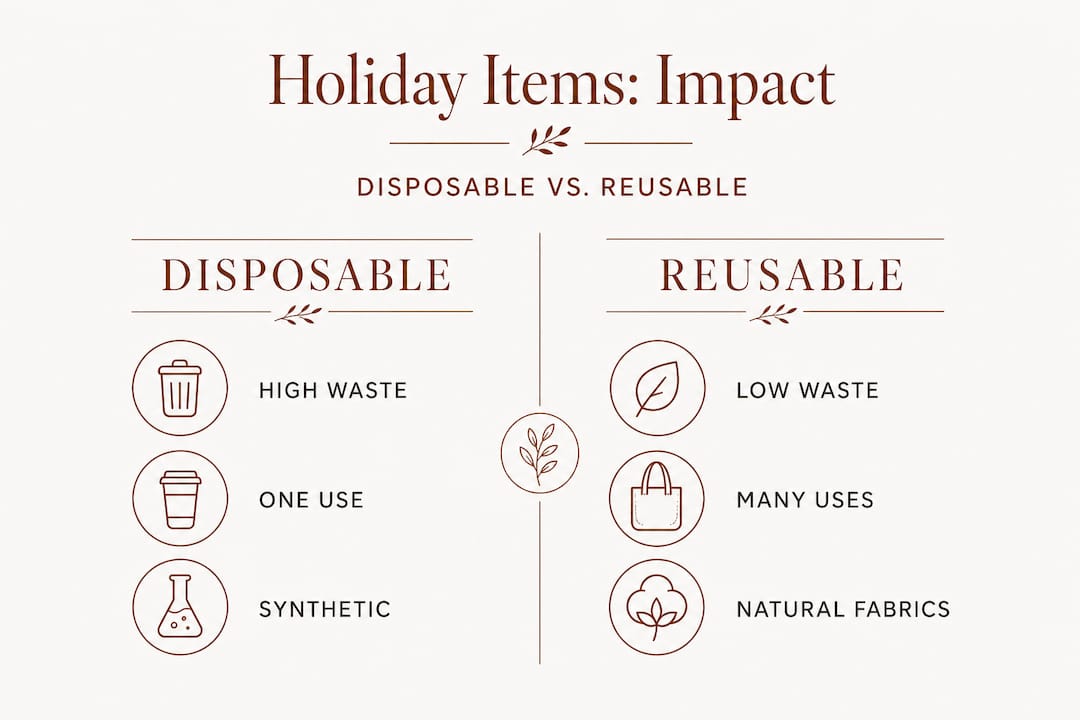
| Factor | Disposable approach | Reusable system |
|---|---|---|
| Waste generated | High, every occasion | Minimal after initial purchase |
| Long-term cost | Ongoing, recurring | Low after initial investment |
| Environmental impact | Disposal-heavy | Shifts to washing, manageable |
| Emotional value | None | Potentially an heirloom |
Pro Tip: Plan your reusables as a coordinated system rather than isolated swaps. A reusable gift wrap, a set of cloth nappies, and fabric napkins for a baby shower all share similar laundering requirements, so you can wash them together efficiently, saving both energy and time.
Explore the world of eco-luxury reusable gifting to understand how thoughtful design can elevate a simple piece of fabric into something genuinely cherished.
Are reusables always better? Nuance and edge cases
Honesty is essential here, because the most damaging thing we can do is oversimplify. Reusables are not automatically the greener choice in every conceivable situation, and understanding the nuances will make you a more confident, well-informed parent rather than a guilt-ridden one.
Experts are clear that ‘reusable’ is not automatically better when it drives higher energy and water use through inefficient washing, frequent replacement, or limited reuse. The life-cycle logic demands honest self-reflection: if you purchase a reusable item and use it only twice before it languishes in a drawer, the environmental case collapses.
The factors most likely to undermine reusable benefits include:
- Washing reusables on high-temperature cycles unnecessarily
- Buying low-quality items that degrade quickly and require early replacement
- Purchasing multiple reusables for the same purpose, creating overconsumption
- Failing to use an item enough times to offset its production footprint
- Travelling with reusables in circumstances where laundering facilities are unavailable
There are genuine edge cases where a single-use option may, in highly specific circumstances, show a marginally lower immediate footprint. For example, using one disposable nappy during an unavoidable long-haul journey, rather than carrying soiled cloth nappies across multiple flights, is a pragmatic concession that does not undo a broader reusable commitment.
Statistic to hold in mind: Disposable nappies account for over 8% of a typical UK bin, a figure that makes the case for reusable nappies compelling as a default, even if occasional exceptions are made.
Pro Tip: Before purchasing any reusable, ask yourself three questions. How will I clean this during a busy holiday? How many times will I realistically use it before the end of next year? And is there a higher-quality version that will last far longer, making investing in reusable wrap or similar items a genuinely worthwhile decision?
When choosing for special occasions such as baby showers and newborn gifts, the emotional value of a designer reusable gift wrap adds a dimension that no disposable can replicate. A beautifully embroidered fabric wrap, folded with care around a first gift, becomes part of the memory rather than part of the rubbish.
Making the best choice for your family’s reality:
- Default to reusables for high-frequency uses such as nappies, gift wrap, and food containers
- Allow yourself pragmatic flexibility for rare, low-frequency scenarios
- Focus on quality and longevity rather than collecting as many reusables as possible
- Consider the full emotional and monetary value, not merely the environmental calculus
Putting reusables into practice: tips for stress-free, sustainable holidays
The theory is clear. The practice is where most families need the most support, because holidays are inherently hectic, and adding a new system into a season of celebrations can feel like one more thing to manage. It does not have to be that way.
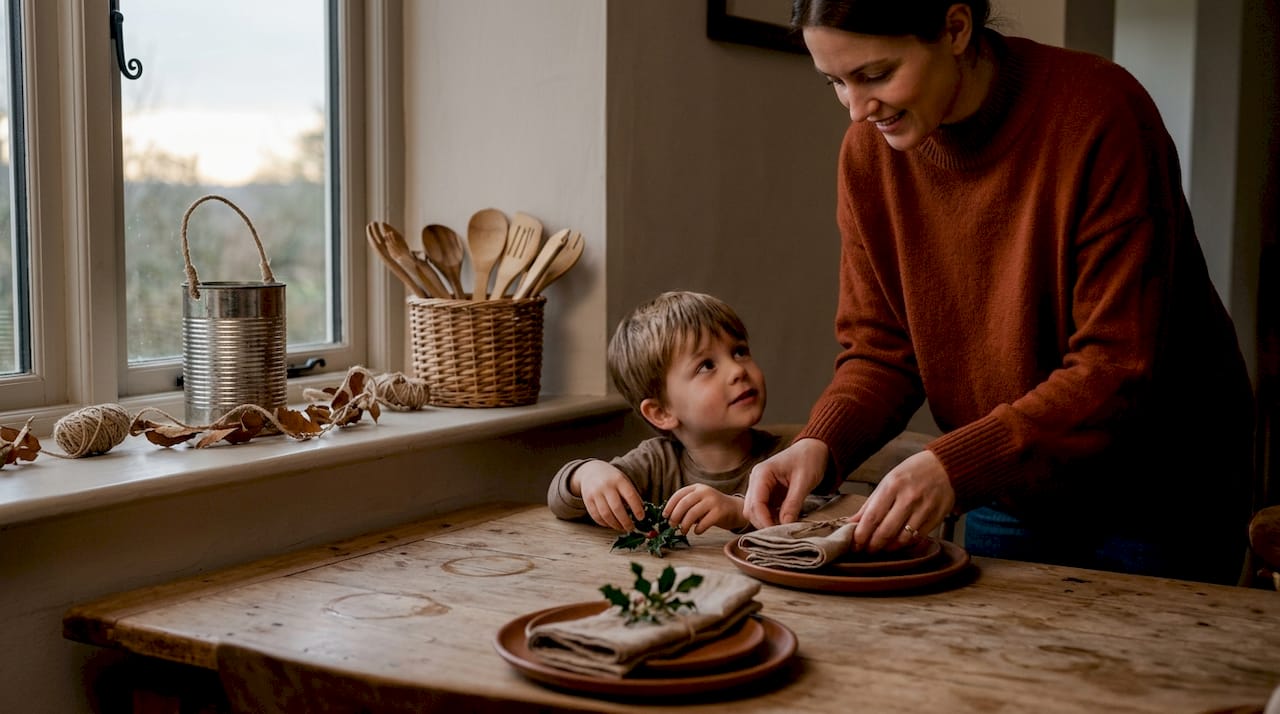
Holiday reusables are a practical waste-reduction tool precisely because they replace the grab-and-go disposables that pile up during short trips and festive gatherings. The key is preparation, and a little planning transforms the experience from effortful to effortless.
Step-by-step guide to making the reusable shift for holidays:
- Start with your highest-volume items. Gift wrap and nappies create the most waste during holiday seasons, so address these first.
- Prepare a travel-ready reusables kit. A small, dedicated bag containing wet bags, reusable wraps, fabric napkins, and a spare set of cloth nappies removes the temptation to reach for disposables.
- Assign a laundering day before and after each gathering. Building this into your routine ensures your reusables are always ready and never become a source of stress.
- Label and personalise where possible. A gift wrap embroidered with a baby’s name or a significant date transforms a practical item into a treasured keepsake, lending it a longevity that disposables can never achieve.
- Involve older children in the process. Asking a toddler to choose which fabric wrap to use for a gift creates a sense of ownership and plants the seeds of eco-conscious habit.
- Review and refresh your kit annually. Each new holiday season is an opportunity to retire worn items, replace them thoughtfully, and add to your collection with purpose.
Creative and personal touches for holiday reusables:
- Choose fabrics that reflect the season, soft ivory for winter celebrations, gentle botanical prints for spring baby showers
- Pair a personalised fabric wrap with a handwritten note for a gifting ritual that feels genuinely luxurious
- Use coordinating ribbons and natural twine to add tactile beauty to a reusable parcel
- Browse reuse gift wrap tips for creative ideas that go far beyond simply swapping one product for another
For new parents navigating their first festive season with a baby, the eco checklist for newborn gifts is an invaluable guide that simplifies the decisions considerably. The goal of ethical gifting is not perfection but intention, and every thoughtful choice adds up to a genuinely different kind of holiday.
Why reusables for holidays are an overlooked opportunity
There is a quiet pressure in eco-conscious circles to pursue zero-waste perfection, to account for every gram of packaging and every degree of a wash cycle. We understand that impulse entirely. But in our experience, that pursuit of perfection is often the very thing that stops families from making any meaningful change at all.
The real win is not a flawless carbon-neutral Christmas. It is the visible, consistent, unhurried practice of choosing thoughtfully, one gift, one gathering, one season at a time. Children who grow up watching their parents reach for a beautiful embroidered fabric wrap rather than a roll of disposable paper absorb something profound. They learn that care and beauty and sustainability are not in opposition, that a gift can be wrapped in something as lovely as the gift itself, and that the wrapping is worth keeping.
Holiday occasions carry an emotional charge that ordinary weekdays simply do not. They are the moments children remember most vividly, the textures, the rituals, the smell of a festive morning. When those rituals are woven through with thoughtful, reusable choices, the values embedded in them travel forward into the next generation with remarkable staying power.
Personalisation deepens this further. A fabric wrap embroidered with a newborn’s name and birth date is not merely sustainable. It is an heirloom. It will be folded away and brought out again for a first birthday, a christening, a celebration years hence, each use adding another layer of meaning. This is what seasonless gift wrap ideas can offer: not a product, but a family tradition in the making.
The overlooked opportunity is not reducing waste. It is building something lasting from the materials of everyday generosity.
Explore sustainable gift solutions for your next holiday
The shift to reusable gifting is one of the most beautiful and lasting changes an eco-conscious family can make, and it need not be complicated.
At Nicholas and Rose, our 2026 newborn and toddler collection of personalised fabric gift wraps is designed for families who believe that a gift deserves to be wrapped in something as considered as the thought behind it. Each piece is crafted from luxurious fabric and can be personalised with embroidery featuring a name, date, or meaningful detail, creating a memento that outlasts any festive season. Explore our full range at nicholasandrose.co.uk and discover wrapping that becomes part of the gift itself.
Frequently asked questions
How many times do I need to reuse an item for it to be greener than single-use?
Most evidence suggests that reusing an item multiple times tips the environmental balance in your favour, with a dozen or more uses generally considered the threshold, particularly when washed at lower temperatures.
Do reusables really save money over the holidays?
Yes, savings accumulate quickly when reusables replace single-use holiday items such as gift wrap, nappies, and tableware, though a meaningful upfront investment is usually required.
Can I still personalise gifts with reusable wrap?
Absolutely. Reusable fabric wraps can be embroidered with names, dates, and personalised details, creating a bespoke gifting experience that far exceeds the charm of disposable paper.
Are cloth nappies much better for the environment in the UK?
Reusable nappies can significantly lower household waste, but the environmental benefits are most pronounced when they are washed at low temperatures, line dried, and used consistently across multiple children if possible.
What is the main downside to choosing reusables for holidays?
If washed inefficiently or used infrequently, the environmental advantages of reusables can diminish considerably, which is why quality, longevity, and a sensible laundering routine matter so much.
Recommended
- 7 Pros of Reusable Wrapping for Eco-Friendly Christmas Gifts – Nicholas & Rose Limited
- Reusable Holiday Wrap: Eco-Luxury Gifting Explained – Nicholas & Rose Limited
- Eco-friendly Christmas wrap: Curated, reusable family solutions – Nicholas & Rose Limited
- Eco-conscious holiday checklist: sustainable gifts for UK parents – Nicholas & Rose Limited