

Role of mindful gifting: thoughtful ideas for baby showers
Mindful gifting turns every exchange into an intentional act, one that deepens relationships, protects wellbeing, and quietly reduces the waste that conventional gift-giving leaves behind. Rather than reaching for the nearest impressive-looking option, it asks you to pause and consider whether a gift truly serves the person receiving it, the values you hold, and the world beyond the wrapping.
The three primary roles mindful gifting plays are:
- Strengthening connection by showing the recipient they have been genuinely seen and considered
- Protecting wellbeing for both giver and receiver, reducing the financial pressure and emotional noise that excessive gifting creates
- Reducing environmental impact by favouring durable, reusable, and purposeful choices over disposable novelty
A 2025 academic review at the University of Stirling analysed 85 articles on gift-giving and mindful consumption, concluding that the practice asks givers to consider the impact of a gift on the self, society, and the environment before, during, and after the exchange. That three-part framework, self, society, environment (SSE), is the clearest definition the research offers, and it is a useful lens for every occasion from Christmas morning to a newborn’s first gift.
Table of Contents
- What mindful gifting actually means, and how it differs from impulse buying
- What the research says about why intentional gifting works
- Why mindful gifting matters for wellbeing, relationships, and the planet
- How to gift mindfully: a practical checklist
- Occasions where mindful gifting makes the greatest difference
- How presentation and wrapping extend the meaning of a gift
- Gifting rules, heuristics, and etiquette that reduce pressure
- Common mistakes that undermine mindful gifting
- Personalised reusable cotton wraps as a mindful gifting example
- The role mindful gifting should play in your life
- Key takeaways
- A note on what mindful gifting has taught me
- Nicholasandrose wraps: a considered choice for your next baby gift
- Useful sources for further reading
What mindful gifting actually means, and how it differs from impulse buying
Mindful gifting is the practice of choosing a gift with deliberate attention to the recipient’s genuine needs, your own values, and the broader impact of the exchange. The University of Stirling’s SSE framework captures this elegantly: a mindful gift considers the self (your intentions and financial wellbeing), society (the relationship and the recipient’s actual desires), and the environment (the materials, packaging, and afterlife of the gift).
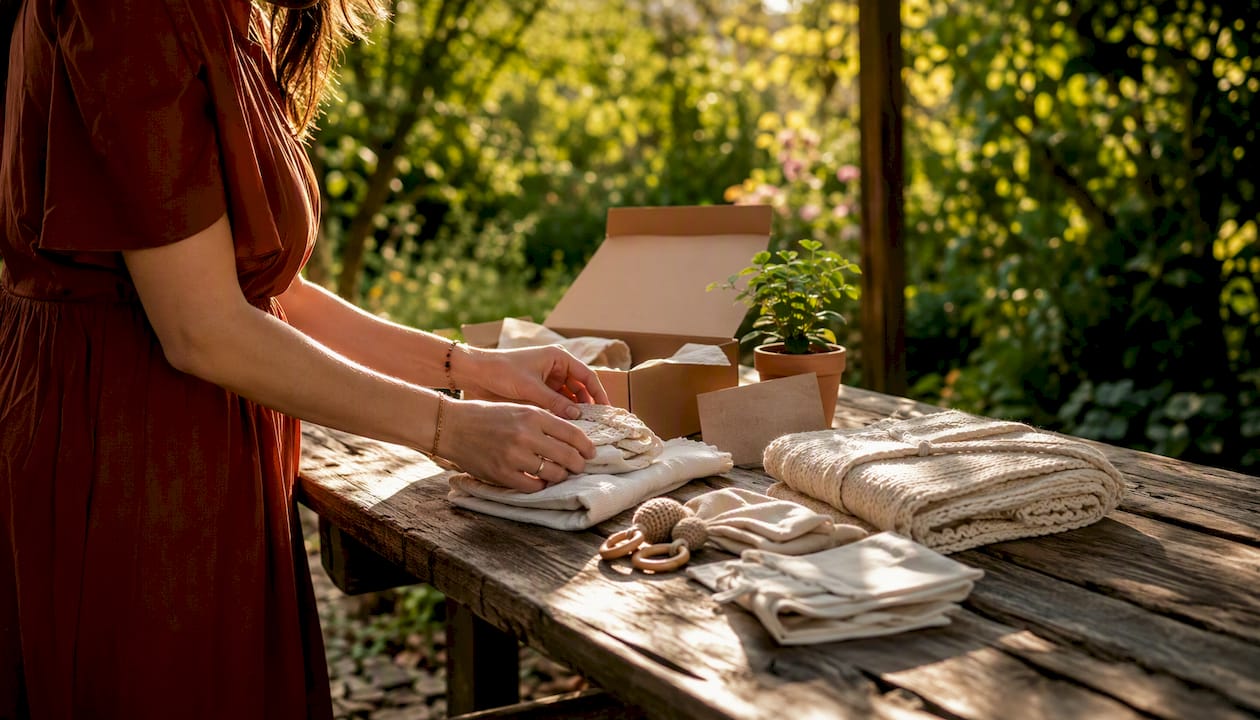
The contrast with conventional gifting is immediate. An expensive impulse purchase, chosen because it looks generous under pressure, may impress for a moment but rarely lands with lasting meaning. A personalised, useful gift, say a hand-embroidered cotton wrap chosen specifically for a new baby, carries the giver’s attention in every stitch.
Mindful gifting also extends to receiving. Accepting a gift graciously, even when it misses the mark, and knowing when regifting is appropriate rather than wasteful, are both part of the exchange. The practice is not about austerity; it is about attentiveness.
Key distinctions at a glance:
- Mindful gifting: — driven by knowledge of the recipient, considered values, and long-term usefulness
What the research says about why intentional gifting works
The evidence base for mindful giving practices has grown considerably. The University of Stirling review led by Dr Ines Branco-Illodo and colleagues synthesised numerous studies and established that mindful gifting cultivates empathy, ethics, and sustainability rather than demanding austerity. Researchers at the Gies College of Business, University of Illinois echoed this, framing mindful gifting as a social nudge that can reduce waste while maintaining, even strengthening, social connection.
The psychological mechanisms are well-documented. Neuropsychological research links gift exchange to the brain’s reward systems, with dopamine and oxytocin both activated during meaningful giving and receiving. Gift-giving, at its most intentional, functions as a strategic social act that builds trust and deepens connection.
Perhaps the most practically useful finding: monetary cost has little to no relationship to how much a recipient values a gift. Personalised, useful, or sentimental items consistently outperform expensive impulse purchases in recipient satisfaction. For anyone buying for a new baby or a young child, this reframes the entire exercise.
Why mindful gifting matters for wellbeing, relationships, and the planet
The benefits of mindful gifting operate across three distinct dimensions, each reinforcing the others.
- Mental and emotional wellbeing: Mindful gifting increases wellbeing for both giver and receiver compared with conventional festive shopping. Homemade presents, meaningful experiences, and donations in a recipient’s name tend to yield stronger wellbeing effects than a last-minute purchase. For the giver, the absence of financial anxiety and the presence of genuine intention create a calmer, more satisfying exchange.
- Relationship-building: A gift that reflects real knowledge of the recipient, their tastes, their new arrival, their child’s favourite colour, communicates something no price tag can. It says: I paid attention. For new parents especially, a personalised keepsake such as an embroidered cotton wrap carries that message long after the occasion has passed.
- Environmental impact: Reusable fabric wraps replacing single-use paper and plastic represent one of the most tangible ways to reduce holiday and occasion waste. Choosing durable materials and intentional choices responds directly to the soaring environmental burden of conventional gift wrapping.
How to gift mindfully: a practical checklist
Practising mindful gifting does not require a complete overhaul of how you shop. It requires a small shift in sequence: think before you buy, not after.
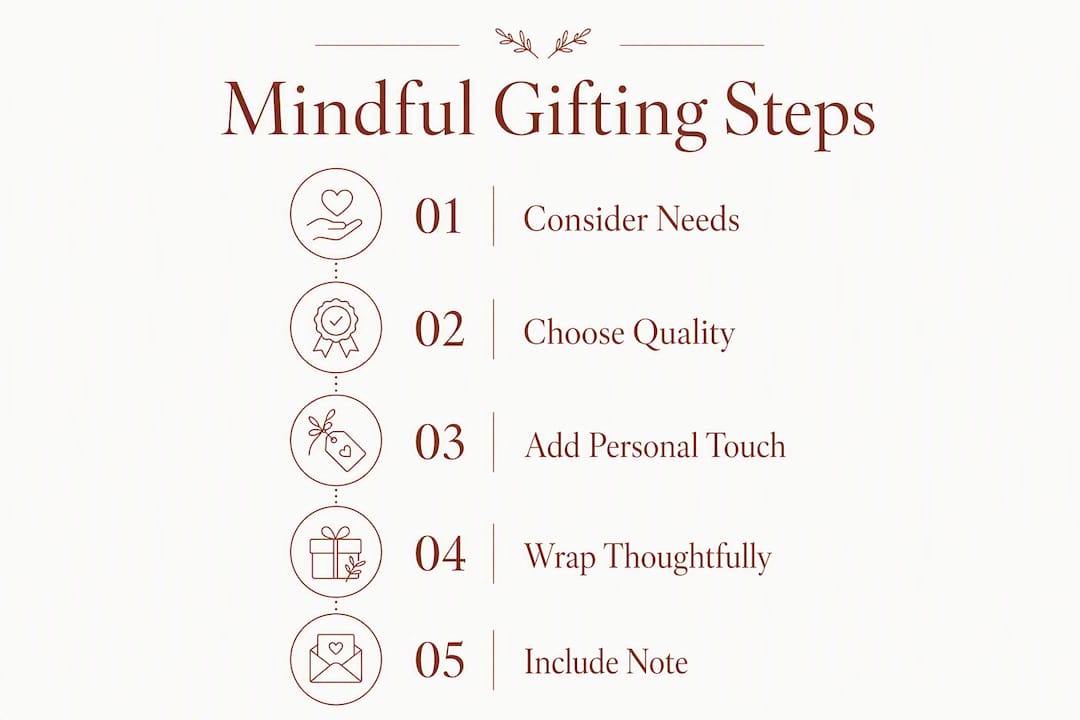
- Pause before purchasing. Ask whether this gift serves the recipient’s genuine needs or your desire to appear generous.
- Consider the SSE framework. Does this gift reflect well on your values (self), suit the recipient and your relationship (society), and use materials that last (environment)?
- Curate a portfolio for babies and children. Pair one practical item, clothing, a feeding essential, with one personalised keepsake. This approach avoids clutter while delivering lasting sentiment.
- Check the gift’s afterlife. Will it be used, kept, or discarded within a week? Durable, reusable items earn their place; novelty items rarely do.
- Present with intention. The wrapping, a handwritten note, and the moment of giving are all part of the gift’s meaning.
- Follow up warmly. A brief message after the occasion, acknowledging the recipient’s response, closes the exchange with genuine care.
Mindful gift ideas for newborns and young children lean naturally toward utility and sentiment: a soft cotton wrap with an embroidered name and birth date, a set of quality wooden toys, or a contribution to a memory box. The portfolio approach, one practical item paired with one personalised keepsake, is particularly well-suited to baby showers and first birthdays, where parents are often overwhelmed by volume and underwhelmed by meaning.
Pro Tip: Avoid “improving” gifts that carry an implicit critique. A parenting book given without invitation, or a sleep-training guide slipped into a baby shower bag, can feel like judgement dressed as generosity. The Gies College research puts it plainly: successful mindful gifting is about being interested, not just interesting. Ask and listen before you decide.
For older children, experience gifts, a pottery class, a day at a nature reserve, a cooking session, tend to outlast any toy in memory and leave no physical waste behind.
Occasions where mindful gifting makes the greatest difference
Mindful giving practices are not reserved for Christmas. The occasions where intention matters most are often the ones closest to the beginning of life.
- Baby showers: The temptation here is to buy what looks adorable rather than what will be used. A personalised reusable wrap, sized for a newborn and embroidered with the baby’s name, serves as both presentation and keepsake. Pair it with a practical essential and you have a gift that will be remembered.
- Newborn gifts: These arrive at a moment of profound change for a family. A gift that acknowledges the new arrival by name, and that can be kept, displayed, or reused, carries far more weight than another set of babygrows.
- Children’s birthdays: As children grow, their preferences become clearer. Ask a parent or the child directly what they actually want. Experience gifts gain value as children reach school age; for younger children, quality over quantity is the guiding principle.
- Christmas and holidays: The Gies College research recommends fewer, more thoughtful gifts or experiences as a direct response to the financial and environmental cost of festive excess. The John Lewis Christmas advertisement has long understood this instinctively: the most affecting gifts in those narratives are never the most expensive.
Cultural sensitivity matters here. Some families observe gifting traditions that differ significantly from mainstream UK norms, whether in timing, presentation, or the types of gifts considered appropriate. Asking, rather than assuming, is always the more gracious approach.
How presentation and wrapping extend the meaning of a gift
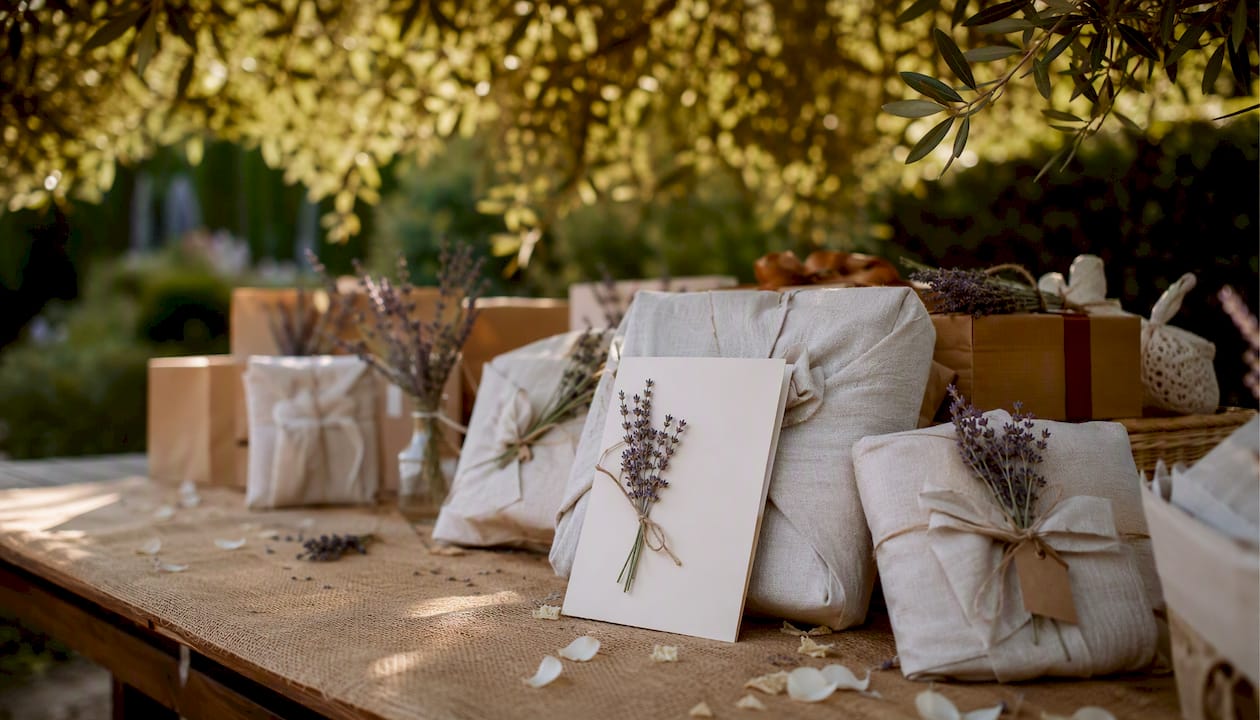
The wrapping is not an afterthought. Reusable, personalised wrapping can transform packaging into a keepsake, making the presentation itself a lasting memento rather than immediate waste.
Single-use wrapping paper, often laminated or glitter-coated and therefore unrecyclable, contributes meaningfully to post-occasion waste. A cotton fabric wrap, by contrast, can be washed, stored, and reused across multiple occasions, or kept as a soft, tactile reminder of the moment it marked.
Practical benefits of reusable fabric wrap:
- Replaces single-use paper and plastic with a durable, washable alternative
- Can be personalised through embroidery, adding a name, date, or short message
- Doubles as a keepsake, a swaddle cloth, a decorative piece, or a future wrapping layer
- Reduces the environmental burden of sustainable gift wrapping without sacrificing elegance
Pro Tip: A handwritten note tucked inside the wrap, and a shared moment of unwrapping rather than a pile opened in haste, adds meaning without adding cost. These small rituals are what recipients remember long after the gift itself has been absorbed into daily life.
Gifting rules, heuristics, and etiquette that reduce pressure
Simple heuristics help manage expectations without draining the joy from giving. The three-gift rule, something they want, something they need, something to read, and the seven-gift rule used by some families to structure Christmas giving, are templates rather than mandates. Adopt whichever framework suits your family’s values, or create your own.
Practical etiquette for mindful gifting:
- Set family agreements early. Explicit limits on spending, agreed before the occasion, prevent the “January debt hangover” that researchers at Gies College identify as a direct consequence of unmanaged festive gifting.
- Offer alternatives openly. Cash, a contribution to an experience, or a donation to a cause the recipient cares about are all legitimate and often welcome alternatives to a physical gift.
- Do not create indebtedness. A gift given with an expectation of reciprocity is not a gift; it is a transaction. Keep the exchange genuinely generous.
- Respect a “no gifts” request. When a family asks for no presents at a children’s party, honour it. A card with a heartfelt note is always appropriate.
Common mistakes that undermine mindful gifting
Even well-intentioned givers can slip into patterns that undermine the practice.
- Buying to impress rather than to connect. A gift chosen for its price tag or its visual impact on others is not a mindful gift; it is a performance.
- “Improving” gifts that imply judgement. Unsolicited parenting books, diet-related items, or anything that implies the recipient needs to change are rarely received as kindly as intended.
- Gifting unsuitable second-hand items. Regifting and upcycling are genuinely sustainable choices, but only when the item is in excellent condition and genuinely suited to the recipient.
- Overcomplicating the presentation. Elaborate wrapping that takes longer to remove than the gift took to choose can feel performative rather than personal.
A well-intentioned gift can still cause discomfort when it arrives with strings attached, implicit expectations, or a subtext the giver did not intend. The correction is simple: ask before you decide, and give without conditions.
Personalised reusable cotton wraps as a mindful gifting example
Nicholasandrose offers a concrete, practice-aligned answer to the question of how to gift mindfully for a new arrival. The brand’s personalised reusable cotton fabric wraps, including a 2026 newborn and toddler range, are designed specifically for baby showers, newborn gifts, and children’s birthdays.
Each wrap embodies the SSE framework in a tangible way:
- Self: a considered, elegant choice that reflects well on the giver’s values and avoids the waste of impulse buying
- Society: personalised through embroidery with a name, birth date, or short message, making the gift specific to this child, this family, this moment
- Environment: crafted in durable cotton, washable and reusable across occasions, replacing disposable wrapping paper that would otherwise go directly to landfill
The wrap itself becomes part of the gift’s sentimental value. A fabric square embroidered with a baby’s name and arrival date is not discarded on Christmas morning; it is folded and kept, used again as a swaddle, displayed in a nursery, or passed along to a sibling.
Pro Tip: When choosing what to embroider, a name and date is always meaningful, but a short phrase, “welcome, little one” or a family surname, adds a layer of warmth that a name alone cannot. Keep the embroidery legible and the palette soft; these wraps are often photographed at the moment of unwrapping, and the image tends to last as long as the wrap itself.
Care is straightforward: machine wash on a gentle cycle, reshape while damp, and store flat or folded. The cotton softens with each wash, gaining the kind of worn-in warmth that makes a keepsake feel genuinely loved rather than merely preserved.
For personalised gifting that deepens connection, the combination of reusable material and bespoke embroidery is one of the most considered choices available for a new baby or young child.
The role mindful gifting should play in your life
Start small. Choose one personalised, reusable wrap for your next baby shower gift, pair it with a single practical essential, and write a note by hand. That single act contains everything mindful gifting asks of you: attention, intention, and care for the world the child is arriving into.
Key takeaways
Mindful gifting strengthens relationships, protects wellbeing, and reduces waste by replacing impulse with intention at every stage of the exchange.
| Point | Details |
|---|---|
| Thoughtfulness outweighs price | Monetary cost has virtually no relationship to how much a recipient values a gift; personalised and useful items consistently outperform expensive impulse purchases. |
| Use the SSE framework | Before buying, consider the impact on self, society, and environment; this three-part check covers intention, relationship fit, and material sustainability. |
| Portfolio approach for babies | Pair one practical item with one personalised keepsake to avoid clutter while delivering lasting sentiment at baby showers and children’s birthdays. |
| Presentation is part of the gift | Reusable fabric wrap with embroidered personalisation turns packaging into a keepsake rather than immediate waste. |
| Nicholasandrose for newborn gifts | Nicholasandrose’s personalised reusable cotton wraps, embroidered with a name or date, offer a bespoke, sustainable choice for baby showers and children’s gifts shipped within the UK. |
A note on what mindful gifting has taught me
There is a quiet confidence that comes with giving a gift you know is right. Not right because it is expensive, or because it will photograph well, or because it fills a gap in a list, but right because it reflects something true about the person receiving it. Working with newborn and children’s gifting, and watching how a personalised reusable wrap lands differently from a generic present, has reinforced something the research confirms: the gifts that endure in memory are almost never the ones that cost the most. They are the ones that arrived with the giver’s full attention. The response from families who have received a Nicholasandrose wrap, seeing a baby’s name embroidered in soft thread on cotton that will outlast the occasion by years, captures that quality precisely. It is the difference between a gift that is opened and a gift that is kept.
Nicholasandrose wraps: a considered choice for your next baby gift
For a baby shower or newborn gift that genuinely practises what this article describes, Nicholasandrose’s personalised reusable cotton wraps offer something the high street rarely does: a gift that is both the presentation and the keepsake, personalised through embroidery with the baby’s name, birth date, or a short phrase chosen by you.
The 2026 newborn and toddler range is sized for the earliest gifts, soft enough for a newborn, durable enough to be reused across siblings and occasions, and elegant enough to be kept long after the wrapping moment has passed. Each wrap ships within the UK, arrives ready to give, and replaces the disposable paper that would otherwise be in the bin before the baby is even home.
Pair a wrap with a single practical essential, add a handwritten note, and you have a mindful gift that requires no further justification. Browse the full range and choose your embroidery at nicholasandrose.co.uk.
Useful sources for further reading
- University of Stirling: 'Tis the season for mindful gifting, say researchers — the 2025 academic review that introduced the SSE framework and Dr Branco-Illodo’s definition of mindful gifting
- Gies College of Business, University of Illinois: Study on mindful gifting and holiday cheer — multi-university research on social benefits, family rules, and reducing festive excess
- The Conversation: ‘Mindful gifting’ could be the kindest thing you do for yourself and others this Christmas — accessible explainer covering wellbeing benefits, wrapping alternatives, and the portfolio approach
- Psychology Today: The psychology of gift-giving — neuropsychological research on dopamine, oxytocin, and the social function of gift exchange
- Los Angeles Times: Secrets of the best gifts — research summary on why thoughtfulness consistently outperforms monetary spend
- Greater Good, UC Berkeley: How psychology can help you choose a great gift — practical psychological guidance on gift selection and recipient satisfaction
- Root & Still: Mindful gifting ideas for wellness — wellness-focused partner resource with sustainable and experience-based gift suggestions
- Nicholasandrose: What is climate-friendly gifting? — author Helen’s guide to climate-conscious gifting and reusable wrap solutions
- Nicholasandrose: Why sustainable gift wrapping matters — practical case for reusable wrapping as an environmental and sentimental choice
Recommended
- What is green gifting? A guide for eco-conscious givers – Nicholas & Rose Limited
- The role of gifting in sustainability for parents – Nicholas & Rose Limited
- Personalised newborn gift examples: UK ideas for 2026 – Nicholas & Rose Limited
- Guide to sustainable gifting for eco-conscious occasions – Nicholas & Rose Limited