

What is green gifting? A guide for eco-conscious givers
TL;DR:
- Green gifting involves selecting products with verified, measurable environmental benefits that reduce harm throughout their lifecycle. It emphasizes certification, minimal packaging, and durability, offering meaningful and sustainable alternatives to conventional presents. For children, it includes organic textiles, experience gifts, seed kits, and reusable wraps that foster eco-conscious values and lasting memories.
Green gifting is the practice of giving presents that have a measurable, independently verifiable positive impact on the environment, going far beyond vague labels like “natural” or “eco-friendly.” For those celebrating a new arrival, a first birthday, or a baby shower, the gifts you choose carry weight beyond the moment of unwrapping. They speak to the values you wish to pass on. Green gifting has shifted from a niche consideration to a mainstream expectation, and understanding what it truly means is the first step toward gifting with genuine intention.
What is green gifting and how is it defined?
Green gifting is defined as the selection and presentation of gifts whose entire lifecycle, from raw material sourcing through to end of life, demonstrably reduces environmental harm. A 2026 analysis identifies longevity, ethical sourcing, and minimal ecological footprint as the three pillars of a genuinely green gift. This definition matters because the word “sustainable” is applied so broadly that it has lost much of its meaning without these anchors.
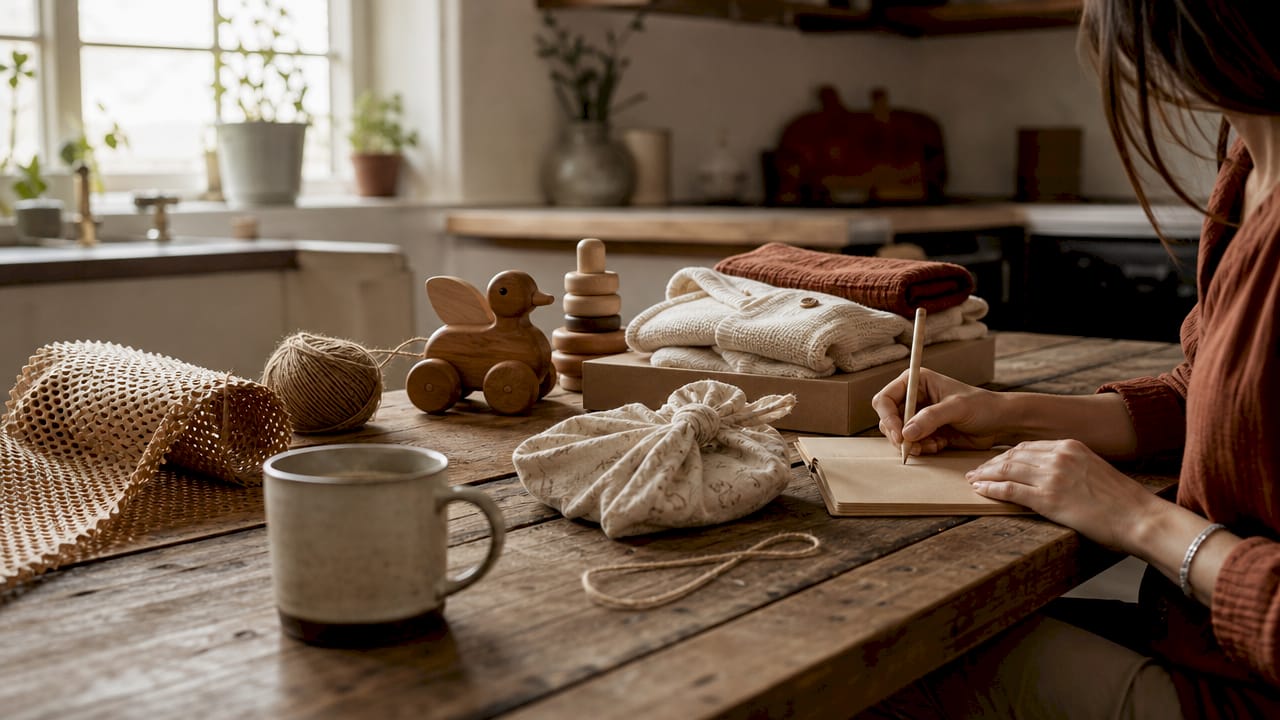
The distinction between a truly green gift and a conventionally wrapped present is not merely aesthetic. It encompasses the energy used in manufacturing, the origin of materials, the carbon cost of shipping, and what happens to both the gift and its packaging once the celebration is over. Lifecycle impacts, including production energy and product longevity, are as central to green gifting as the product itself.
For new parents and gift buyers choosing presents for babies and young children, this definition opens a thoughtful space. A beautifully embroidered reusable fabric wrap from Nicholasandrose, for example, replaces single-use paper that is torn off and discarded before the baby has even been lifted from the Moses basket. The wrap becomes a keepsake, a memento woven into the memory of the occasion.
What criteria must a gift meet to be truly green?
Three core tests separate a genuine green gift from one that merely carries the aesthetic of sustainability.
-
Specific environmental claim. The gift’s environmental benefit must be stated in precise, measurable terms. “Made with organic cotton certified to GOTS standards” is a specific claim. “Eco-conscious” is not. Vague language is the first signal of greenwashing, where products use appealing terminology without the data to support it.
-
Independent verification. Credible green gifts carry certifications or published supply chain transparency that a third party has assessed. Certifications such as GOTS (Global Organic Textile Standard), FSC (Forest Stewardship Council), or verified carbon offset data confirm that the claim has been tested beyond the brand’s own marketing.
-
Minimal packaging and shipping impact. A gift made from recycled materials but shipped in layers of plastic bubble wrap and non-recyclable tissue has undermined its own credentials. Plastic-free packaging and consolidated shipping are effective tactics for reducing the carbon footprint of bulk gifting, particularly relevant for baby showers where multiple gifts arrive simultaneously.
Beyond these three tests, consider the gift’s end of life. Compostable products such as agave fibre washcloths extend their useful life for up to six months before decomposing fully, a far more considered outcome than a plastic toy destined for landfill. Durability is equally valid: a gift designed to last years, like a hand-embroidered fabric wrap, avoids the cycle of replacement entirely.
Pro Tip: When evaluating a supplier’s green credentials, search for their published impact data rather than relying on product descriptions. If a brand cannot point you to a specific certification page or third-party report, treat the claim with caution.
Which green gift options are ideal for baby showers and children?
Choosing sustainable gift ideas for babies and young children is one of the most rewarding expressions of green gifting, because the gifts you give at this stage genuinely shape early relationships with the natural world. The following options combine environmental integrity with the joy and wonder appropriate to these occasions.
-
Seed kits and microgreen growing sets. Microgreen kits typically grow within 7 to 10 days using organic seeds and biodegradable growing media, making them one of the most immediately engaging green gifts available. For toddlers and young children, watching something grow from seed to table is a formative, tactile experience that no plastic toy can replicate.
-
Organic and natural fibre baby products. Clothing, blankets, and soft toys made from GOTS-certified organic cotton or natural wool carry verified environmental credentials and are gentler against a newborn’s skin. These gifts also tend to be more durable, passing through siblings and cousins rather than ending their life in a charity shop bag.
-
Experience-based gifts. Growth-focused kits such as patio garden sets or nature exploration packs nurture a child’s connection to the environment from an early age. Gifting experts recognise that experiences and interactive presents carry emotional value that outlasts any physical object, making them a particularly thoughtful choice for birthdays.
-
Reusable fabric gift wrap with personalisation. Nicholasandrose’s embroidered fabric wraps serve a dual purpose: they replace single-use wrapping paper entirely, and they become a personalised memento the family keeps long after the occasion has passed. The 2026 newborn and toddler range is designed specifically for these moments, with soft drape and luminous colour that makes the presentation as beautiful as the gift within.
-
Sustainable wooden or natural material toys. Toys crafted from FSC-certified wood or natural rubber biodegrade at end of life and avoid the microplastic shedding associated with conventional plastic toys. Brands with transparent supply chains and published environmental data are the ones to seek out.
Pro Tip: When selecting gifts for a baby shower, choose presents that grow with the child rather than serving a single developmental stage. A beautifully made organic blanket or a personalised fabric wrap will be used and treasured for years, making the environmental investment far more efficient.
How does green gifting compare to traditional gifting?
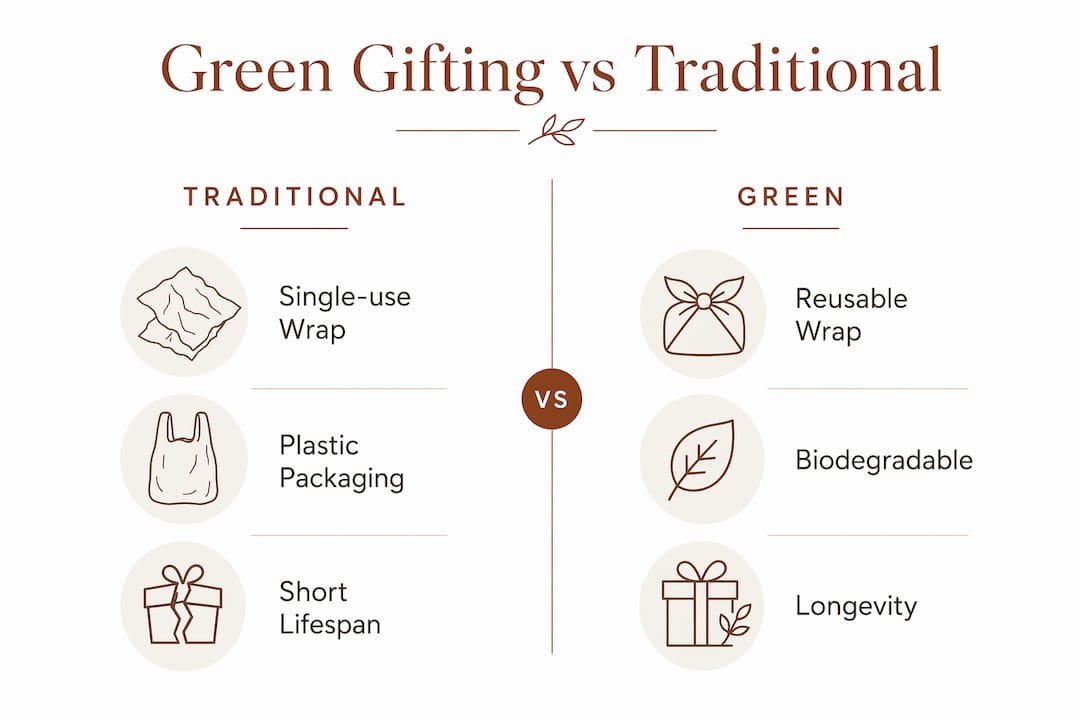
The contrast between green gifting and conventional gift practices is most visible at the moment of unwrapping, but the real differences run much deeper.
| Factor | Traditional gifting | Green gifting |
|---|---|---|
| Packaging | Single-use paper, plastic ribbon, tissue | Reusable fabric wrap, recycled or compostable materials |
| Carbon footprint | Higher due to virgin materials and unoptimised shipping | Reduced through sustainable materials and consolidated delivery |
| Product longevity | Often designed for short-term use or single developmental stage | Prioritises durability, repairability, and longevity |
| End of life | Landfill or incineration | Compostable, recyclable, or reusable |
| Emotional value | Transactional; focused on novelty | Mindful; focused on meaning, personalisation, and memory |
Traditional gifting for baby showers and children’s birthdays frequently involves wrapping paper that is torn off and binned before the gathering has ended, often before the baby has even arrived home. The shift toward sustainability in personal gifting reflects a growing recognition that this cycle of waste is neither necessary nor desirable.
Green gifting also carries a measurable cost advantage over time. A reusable fabric wrap used across multiple occasions replaces dozens of rolls of wrapping paper. Sustainable materials for gifts can cut carbon footprint substantially compared to conventional alternatives, making the choice both ecologically and economically sound.
Pro Tip: Sustainable gift wrapping is not an afterthought. The wrap is the first thing a recipient sees and touches. Choosing a reusable, embroidered fabric wrap from Nicholasandrose transforms the presentation into part of the gift itself, a piece the family will return to long after the occasion.
What practical steps can individuals take to adopt green gifting?
Adopting eco-friendly gifting habits does not require a complete overhaul of how you celebrate. It requires a more deliberate approach to the choices you already make.
-
Verify supplier credentials before purchasing. Look for brands that publish their certifications, supply chain information, and environmental impact data openly. A supplier who cannot answer specific questions about their materials or manufacturing process is unlikely to meet the standard of a genuine green gift.
-
Choose products with recognised certifications. GOTS for textiles, FSC for wood products, and verified carbon offset schemes are reliable markers of authenticity. These certifications require ongoing compliance, not a one-time application, which makes them meaningful signals of sustained commitment.
-
Replace single-use wrapping with reusable fabric alternatives. The circular economy principles behind reusable fabric gift wrap are straightforward: one wrap used ten times replaces ten rolls of paper. Nicholasandrose’s personalised fabric wraps add an embroidered name or date, transforming the wrap into a keepsake that the family will store and return to rather than discard.
-
Consolidate shipping for baby shower gifts. Bulk gifting carries hidden environmental costs when each item is shipped individually. Coordinating with other guests to consolidate deliveries, or choosing a local supplier, reduces the carbon cost of the occasion considerably.
-
Consider the gift’s entire journey. From the energy used in its production to what happens when it is no longer needed, a truly green gift has been thought through at every stage. The eco gift wrapping workflow developed for parents offers a practical framework for making these decisions without adding complexity to the gifting process.
-
Embrace personalisation as a sustainability tool. A personalised gift is less likely to be regifted or discarded. When Nicholasandrose embroiders a child’s name onto a fabric wrap, that object acquires a significance that generic packaging never could. Personalisation and sustainability, far from being opposing values, reinforce each other beautifully.
Key takeaways
Green gifting is the most meaningful choice for baby showers and children’s occasions because it combines verified environmental benefit with lasting emotional value through personalisation and reusable presentation.
| Point | Details |
|---|---|
| Definition of green gifting | A green gift must have a specific, measurable, and independently verified environmental benefit. |
| Three core tests | Specific claim, independent verification, and minimal packaging and shipping impact distinguish genuine green gifts. |
| Best options for babies and children | Organic textiles, seed kits, experience gifts, and reusable fabric wraps offer lasting ecological and emotional value. |
| Green versus traditional gifting | Reusable wrapping, durable materials, and mindful sourcing reduce landfill waste and carbon footprint significantly. |
| Practical adoption | Verify certifications, consolidate shipping, and choose personalised reusable wraps to make every occasion more sustainable. |
Why green gifting for newborns changed how I think about celebration
The first time I wrapped a newborn gift in a single-use paper printed with cheerful animals, I did not think twice about it. The paper was torn off in seconds, bundled into a bin bag, and gone. The gift remained, but the wrapping, which had taken real resources to produce, had served its purpose in under a minute. That realisation stayed with me.
What strikes me most about green gifting for babies and young children is that it is not a sacrifice. The gifts are often more beautiful, more considered, and more lasting than their conventional equivalents. A GOTS-certified organic blanket feels different in your hands from a synthetic alternative. A seed kit watched over by a two-year-old becomes a story the family tells for years. And a hand-embroidered fabric wrap, soft and luminous, folded carefully and stored in a drawer, becomes part of the texture of a child’s earliest memories.
The personalisation in gifting that Nicholasandrose brings to reusable fabric wraps is, to my mind, the most elegant solution to the wrapping problem. It removes the guilt of the bin bag entirely and replaces it with something the family genuinely wants to keep. That is not a compromise. That is a better gift.
The families I have spoken with who have received personalised fabric wraps describe them as among the most treasured items from their child’s early years. Not the wrap as a functional object, but the wrap as a record of a moment, of the people who gathered to celebrate a new life. That is what green gifting, at its finest, can be.
— Helen
Discover Nicholasandrose’s reusable fabric gift wraps
Nicholasandrose creates premium reusable fabric gift wraps designed specifically for newborn and toddler gifts, each one available with bespoke embroidery to make the occasion truly unforgettable. The Woodland Rabbit Duck Egg wrap and the Ray of Confetti Sunshine Yellow wrap are crafted to replace single-use paper entirely, offering a gift presentation that is as beautiful as what lies within. Each wrap carries the child’s name or a special date in embroidered thread, becoming a memento the family keeps long after the wrapping paper would have been forgotten. For baby showers, first birthdays, and every celebration in between, Nicholasandrose offers a more graceful way to give.
FAQ
What is green gifting in simple terms?
Green gifting is the practice of choosing presents whose environmental impact has been measured and verified, covering the product itself, its packaging, and how it is delivered. It goes beyond vague “eco” labels to require specific, transparent evidence of sustainability.
What are sustainable gifts for a baby shower?
Sustainable gifts for a baby shower include GOTS-certified organic textiles, FSC-certified wooden toys, microgreen growing kits, and reusable fabric gift wraps with personalised embroidery. The most lasting choices are those designed to grow with the child or serve the family across multiple occasions.
How do I spot greenwashing in gift products?
Greenwashing is identified by vague language such as “eco-conscious” or “natural” without supporting certifications or published impact data. Genuine green gifts carry third-party certifications like GOTS or FSC and provide transparent supply chain information.
Is reusable fabric gift wrap genuinely more sustainable than wrapping paper?
Reusable fabric gift wrap eliminates single-use waste entirely. One fabric wrap used across multiple occasions replaces dozens of rolls of paper, and when personalised with embroidery, it becomes a keepsake rather than packaging, removing the incentive to discard it altogether.
What are the benefits of green gifting for children?
Green gifting for children introduces sustainable values from the earliest age, through gifts made from natural materials, experiences that connect them to the natural world, and wrapping that models mindful consumption. The benefits of eco-conscious gifting extend beyond the occasion itself, shaping the habits and values children carry into adulthood.
Recommended
- Eco-conscious gifting for UK parents: sustainable choices – Nicholas & Rose Limited
- Eco gift wrapping workflow: Sustainable steps for parents – Nicholas & Rose Limited
- Eco-conscious holiday checklist: sustainable gifts for UK parents – Nicholas & Rose Limited
- Personalisation in Gifting: Creating Keepsakes for Eco-Conscious Famil – Nicholas & Rose Limited