

The role of tradition in luxury eco-friendly wrapping
TL;DR:
- Wrapping a gift for a new life transforms love and intention into a meaningful ritual, not just material. Traditional fabric wrapping emphasizes storytelling, anticipation, and sustainability, creating lasting emotional and environmental value. Using reusable natural fabrics and thoughtful techniques fosters family traditions, reduces waste, and builds enduring legacies beyond fleeting gift-giving moments.
There is something quietly profound about the act of wrapping a gift for a new life. Before the baby has even arrived, before tiny hands have torn a single sheet, the wrap itself becomes a declaration of love and intention. Yet most of that paper is gone within seconds, destined for the bin before the day is out. The question worth asking is not simply which paper to choose, but whether paper was ever the point at all. Time-honoured traditions, from Japanese cloth wrapping to heirloom fabric rituals, suggest that true luxury in gifting has always lived in the gesture, not the material.
Table of Contents
- Why tradition matters: the ritual and psychology of wrapping
- Traditional methods: furoshiki and fabric wrap for modern gifting
- Eco-friendly materials: pitfalls and what actually gets recycled
- Sustainable wrapping mechanics: sizing, shaping and luxury finishing
- Longevity and legacy: tradition as future-proof eco-luxury
- What most luxury gift guides miss about tradition and sustainability
- Start your sustainable wrapping tradition
- Frequently asked questions
Key Takeaways
| Point | Details |
|---|---|
| Tradition shapes mindful gifting | Family-based rituals make gifts more meaningful while guiding waste-free choices. |
| Reusable wraps blend luxury and sustainability | Traditional cloth and fabric wraps offer elegance and minimise environmental impact. |
| Material choices affect recyclability | Select pure paper or fabric and avoid glitter or plastics to ensure true eco-friendly wrapping. |
| Efficient mechanics reduce waste | Measuring and shaping materials carefully maintains luxury aesthetics with minimal waste. |
| Legacy wraps build lasting traditions | Reusable, timeless designs support a cycle of eco-luxury gift giving year after year. |
Why tradition matters: the ritual and psychology of wrapping
Gift wrapping, at its most meaningful, is not a task to be completed but a ritual to be savoured. In many cultures, the care taken to present a gift signals something deeper than the contents within. The deliberate fold, the chosen fabric, the moment of anticipation before opening: these are the elements that linger in memory long after the gift itself has been forgotten.
As House & Garden observes, tradition in gift wrapping is “often less about the material itself and more about the ritual and psychology of presentation, anticipation, signalling thoughtfulness, and creating an occasion.” This reframing is quietly revolutionary. It releases us from the obligation to buy the most elaborate, most expensive paper, and redirects our attention toward the experience we are crafting for the recipient.
“The most meaningful wrap is not the most elaborate one. It is the one that tells a story, carries a name, and can be held again years from now.”
For eco-conscious parents choosing a gift for a newborn or toddler, this distinction is especially important. The traditions we build around gifting become part of a child’s early understanding of celebration and care. When those traditions are grounded in thoughtfulness and sustainability, they quietly teach something lasting about our relationship with the world.
The following principles underpin the psychology of traditional gift wrapping:
- Anticipation builds meaning: the effort visible in a carefully wrapped gift heightens the emotional resonance of opening it.
- Rituals signal love: consistent gifting rituals within families create a sense of belonging and continuity across generations.
- Intention over extravagance: a modest, beautifully presented gift wrapped in reusable fabric carries far more weight than an excessive, wasteful display.
- Sustainability as an act of care: choosing materials that do not end in landfill models environmental mindfulness for children from their very first birthdays.
If you are new to approaching wrapping as a conscious, joyful act, eco-conscious gift wrapping explained offers a gentle starting point for reframing your approach.
Traditional methods: furoshiki and fabric wrap for modern gifting
Some of the most elegant solutions to modern problems have ancient roots. Furoshiki, the Japanese art of cloth wrapping, has been practised for over a thousand years, used to carry goods, bundle belongings, and present gifts with a grace that disposable paper has never quite managed to replicate. What makes furoshiki remarkable is that it requires no tape, no scissors, and no ribbon. The cloth itself does all the work, shaped and knotted into forms that are both beautiful and entirely functional.
As Ralph’s Orchard notes, furoshiki is “explicitly positioned as a traditional technique that maps well to modern eco-conscious wrapping because it is reusable and avoids disposable paper and adhesives.” For parents seeking a gift presentation that is both luxurious and genuinely kind to the planet, this is more than a trend. It is a philosophy.
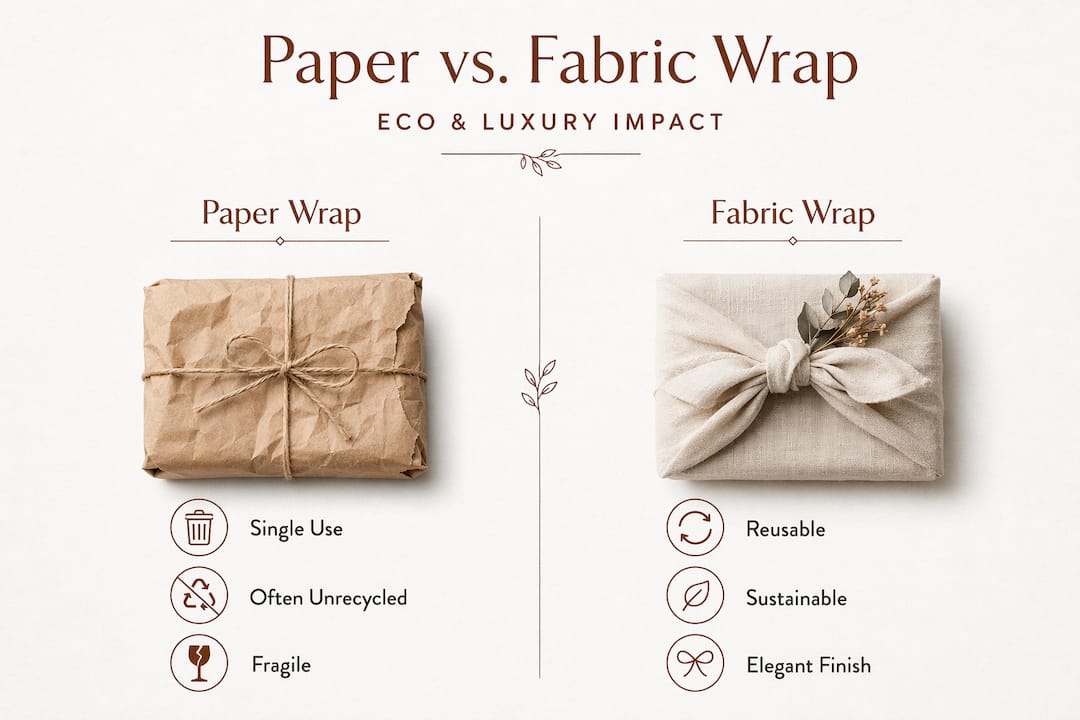
Here is how fabric wrapping compares to traditional paper approaches:
| Feature | Disposable paper wrap | Reusable fabric wrap |
|---|---|---|
| Environmental impact | Single use, often unrecyclable | Reused for many occasions |
| Tactile quality | Thin, tears easily | Soft, rich drape and texture |
| Personalisation | Limited to printed designs | Embroiderable, truly bespoke |
| Cost over time | Repeated annual purchase | One investment, lasting years |
| Emotional value | Discarded within moments | Kept, displayed, and treasured |
| Occasion suitability | Generic | Tailored to newborn and toddler |
For those selecting best eco gift wrap materials, natural cotton and linen fabrics consistently outperform paper alternatives on every measure that matters: sensory quality, environmental longevity, and personal significance.
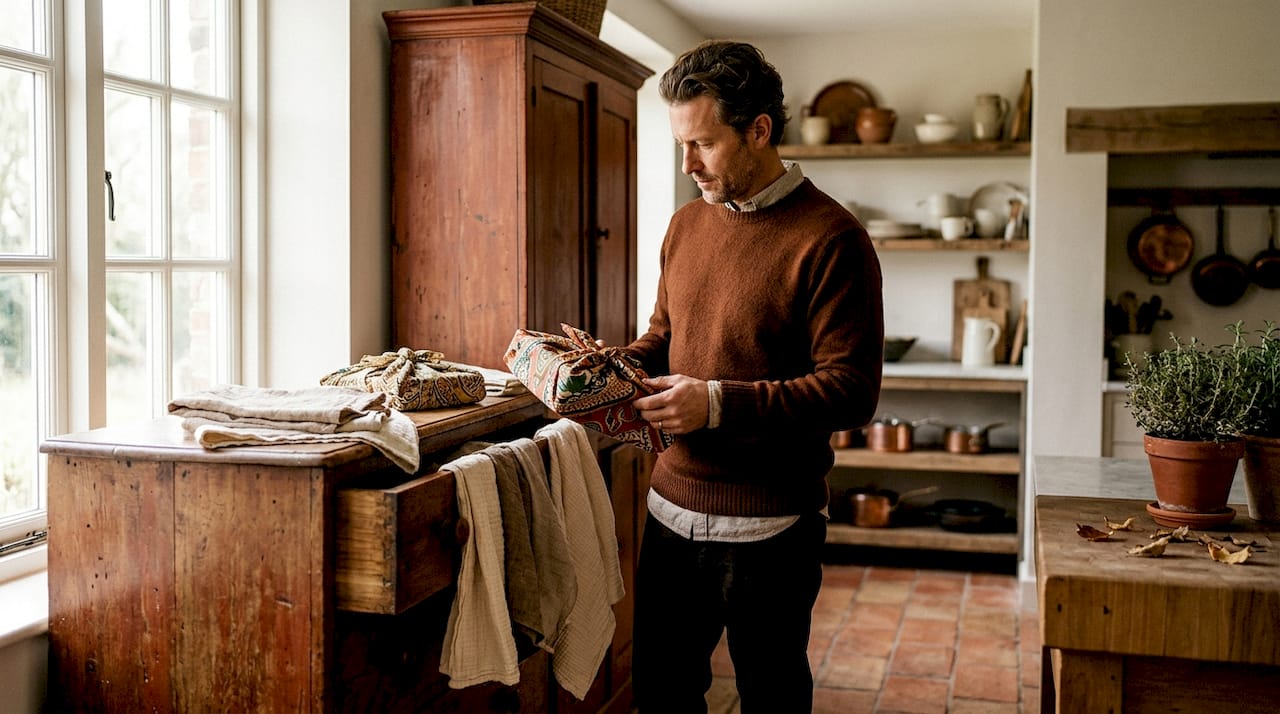
Pro Tip: When wrapping an oddly shaped toddler gift, choose a generously sized square of fabric and use a simple furoshiki knot at the top. The result is sculptural, elegant, and entirely waste-free. For additional creative presentation ideas, sustainable party decor tips offers inspiration for the broader celebratory setting.
The beauty of high-end fabric gift wrap lies precisely in its capacity to become something more than packaging. When embroidered with a child’s name and birth date, a fabric wrap transforms into a keepsake. It is the kind of object that might be folded carefully into a memory box, or brought out again at each birthday, its soft texture carrying the weight of every celebration it has witnessed. Understanding why reusable gift wrap matters starts with recognising this potential for emotional continuity.
Eco-friendly materials: pitfalls and what actually gets recycled
Navigating the world of sustainable wrapping can feel deceptively simple until you look closely at what is actually in the paper you are buying. Much of what lines the shelves during gifting season is marketed with green language while containing materials that have no place in a recycling bin. Glitter embedded in paper is microplastic. Metallic foil coatings are plastic film bonded to paper fibre. Cellophane overlays are petroleum-based. Each of these additions renders an otherwise paper product entirely unrecyclable.
According to Eco Home Life, sustainable wrapping benchmarks in the UK “commonly hinge on whether wrapping materials contain unrecyclable contaminants such as glitter, foil, or plastic coatings, and whether tape and closures contaminate recycling streams.” This matters enormously when you consider that the UK generates an estimated 227,000 miles of wrapping paper waste every Christmas alone. For baby gifts, the waste arrives throughout the year, at baby showers, birth celebrations, naming ceremonies, and first birthdays.
What you should avoid:
- Foil-effect papers: visually striking but non-recyclable due to plastic lamination.
- Glitter finishes: contain microplastics that persist in the environment for centuries.
- Plastic cellophane wrappers: petroleum-derived and non-biodegradable.
- Standard sticky tape: even small amounts of plastic tape can contaminate an entire bag of paper recycling.
- Tissue paper with dye bleed: certain heavily dyed tissues contain chemicals that disrupt recycling processes.
When considering sustainable gift wrap choices UK, the clearest path forward is to choose materials that require no recycling at all, because they are never discarded in the first place. Reusable fabric wraps sidestep the recycling question entirely, and choosing sustainable materials that cut carbon makes a measurable difference to the environmental footprint of your gifting practice over time.
Sustainable wrapping mechanics: sizing, shaping and luxury finishing
Even when you have chosen the right materials, how you use them determines whether your wrap is truly sustainable or simply sustainable-adjacent. Excess material, however eco-friendly, still represents unnecessary resource use. The traditional crafts approach to this is elegantly simple: measure carefully, cut precisely, and let the material work with the gift rather than fighting against it.
As BBC Future reports, the mechanics and methodology of wrapping “can reduce waste by matching paper dimensions to the gift,” a principle that applies equally to fabric. The difference with fabric, of course, is that any offcut or leftover piece finds a future use rather than a bin.
For a refined, waste-conscious wrapping process, follow these steps:
- Measure before you fold: lay the gift on your fabric square and ensure it covers the item with enough to gather at the top or meet at the centre with a neat fold. Approximately 2.5 times the largest dimension is a reliable guide.
- Choose your technique by gift shape: a box suits the classic diagonal fold; a cylindrical gift responds beautifully to a roll-and-gather approach; an irregular shape is best handled with a generous central knot.
- Secure without adhesives: use a length of natural ribbon, a fabric tie, or a simple knot formed from the wrap itself. These are not only waste-free but add visual warmth.
- Finish with intention: a small sprig of dried botanicals, a handwritten label on recycled card, or a personalised embroidered tag elevates the presentation without adding unrecyclable elements.
- Consider the unboxing experience: a wrap that unfolds slowly and beautifully creates the same anticipation as layers of tissue paper, but with none of the waste.
Pro Tip: For the very best results with newborn gifts, choose a fabric square in a soft, breathable cotton or muslin. The gentle drape of natural fibre is both tactilely beautiful and kind to sensitive newborn skin, should the fabric come into contact during the unwrapping moment. Explore more about the sustainable gift wrapping process to build this practice with confidence, and find guidance on selecting reusable gift wrap that suits every gifting occasion. For those seeking additional creative inspiration, creative birthday wrapping step-by-step offers approachable ideas for toddler gifting moments.
Longevity and legacy: tradition as future-proof eco-luxury
The most sustainable object is the one that endures. When we speak of tradition in gifting, we are speaking of exactly this quality: the capacity for something to carry meaning beyond its immediate moment of use. A fabric wrap embroidered with a child’s name does not lose its relevance when the birthday passes. It gains it.
As House & Garden suggests, the tradition of wrapping is also expressed through design longevity and finishing choices, with guidance toward “avoiding strictly seasonal wrapping paper and choosing elements that can last beyond an event.” For parents building a family gifting ritual, this principle is foundational. A wrap chosen with a timeless motif, soft botanical print, or classic embroidered initial remains beautiful whether used for a first Christmas, a second birthday, or a naming day celebration years hence.
The legacy of thoughtful wrapping shows itself in the following ways:
- Reusable wraps accumulate meaning: each use adds a layer of memory, and the fabric itself becomes a record of celebrations.
- Children learn by observation: when a child sees the same beautiful wrap appear year after year, unwrapping becomes a ritual rather than a transaction.
- Non-seasonal designs endure: a wrap in a timeless colour palette or a delicate botanical motif serves every occasion, eliminating the false urgency of seasonal disposal.
- Named and personalised pieces become heirlooms: a fabric embroidered with a child’s name or a meaningful date is something that could be passed between siblings, cousins, or even the next generation.
- Sustainability compounds over time: a fabric wrap used ten times over ten years eliminates ten rolls of single-use paper. The environmental maths are straightforward, and the emotional maths are richer still.
Explore 2026 sustainable wrap trends to see how this philosophy is shaping the most considered gifting choices for the year ahead. For those creating a wider sustainable celebration, sustainable decoration solutions offers a thoughtful guide to extending eco-conscious choices across the entire occasion.
What most luxury gift guides miss about tradition and sustainability
Most high-end gift guides stop at the surface. They will tell you to choose beautiful paper, tie an artful bow, and select a ribbon in a fashionable colour. What they rarely acknowledge is that the most luxurious gifting traditions are not built on beautiful materials alone. They are built on stories that persist, objects that return, and rituals that deepen with each repetition.
In our experience, the families who find the most joy in gifting are not those who spend the most on wrapping. They are those who have created a small but consistent ritual around it. Perhaps it is always the same fabric for newborn gifts. Perhaps a specific embroidered motif travels between family members at each new arrival. Perhaps the wrap itself is part of the gift, intended to be used as a keepsake cloth or a soft play mat long after the present inside has been enjoyed.
As explored in why reusable gift wrap matters, the true value of a considered wrap lies in this capacity for continuity. Paper, however beautiful, communicates a single moment. Fabric, especially fabric that carries a name or a date or a hand-stitched motif, communicates a legacy. It says: this child was welcomed with intention, with care, and with a respect for the world they are arriving into.
This is the gift that most luxury guides miss entirely: the wrap can outlast everything else. It can be the most meaningful object in the room.
Start your sustainable wrapping tradition
If this way of gifting feels like coming home to something you always sensed was possible, we would love to help you take the first step. At Nicholas and Rose, we design luxury eco-friendly wrapping that transforms the act of gift presentation into something lasting, bespoke, and genuinely beautiful. Our 2026 newborn and toddler range is crafted from natural fabrics, each piece available with personalised embroidery so that the wrap itself becomes a cherished memento.
Whether you are preparing for a baby shower, a first birthday, or a naming celebration, our fabric wraps are designed to arrive beautifully and remain beloved. Explore our collection to find the wrap that will begin your family’s own tradition of thoughtful, sustainable gifting.
Frequently asked questions
Why can’t all gift wrap be recycled in the UK?
Many wraps contain plastic, foil, or glitter, which make them unrecyclable in most UK recycling facilities, even when they appear to be standard paper.
Are fabric wraps like furoshiki widely accepted for newborn gifts?
Yes, fabric wraps are growing in popularity for newborn gifting across the UK. As the furoshiki tradition demonstrates, cloth wrapping requires no tape, ribbon, or scissors, and can be reused and repurposed beautifully after the gift is opened.
What is the most sustainable material for luxury gift wrapping?
Reusable natural fabric, such as cotton or linen, is the most sustainable choice. As furoshiki practice shows, cloth wrapping is reusable across many occasions, eliminating the need for repeated purchases of single-use materials.
How can I tell if wrapping paper is recyclable?
Check that it is pure paper, completely uncoated, and free from glitter or plastic elements. Only pure paper gift wrap is recyclable at home in most UK areas; if it scrunches and holds its shape, it is likely to be acceptable for your kerbside recycling bin.
Recommended
- Eco Aware Wrapping: Defining Sustainable Luxury – Nicholas & Rose Limited
- Luxury Christmas Wrapping Tutorial for Eco-Conscious Gifts – Nicholas & Rose Limited
- Sustainable Holiday Wrapping Guide for Luxury Christmas Gifts – Nicholas & Rose Limited
- Why Reusable Gift Wrap Matters for Eco-Luxury – Nicholas & Rose Limited