

Sustainable luxury explained: a guide for eco-conscious gifters
TL;DR:
- Genuine sustainable luxury emphasizes durability, traceability, and circularity, not superficial green claims. Brands should be transparent about sourcing, repair, and end-of-life processes, supported by third-party certifications. Personalised, reusable products like Nicholasandrose’s fabric wraps extend a product’s life and embody luxury’s enduring value.
Sustainable luxury is high-quality, durable craftsmanship paired with verifiable environmental and social responsibility across the full life of a product. It is not a marketing aesthetic. A truly sustainable luxury item is built to last, sourced with traceable provenance, and designed to circulate rather than end in landfill. Three things to hold onto before reading further: what counts is durability, traceability, and circularity; what does not count is a single-use green claim without independent proof; and the one action you can take right now is to ask any brand for its supply-chain map and aftercare offer before you buy. Standards such as GOTS, B Corp certification, and science-based targets give you a shortcut to verified claims. Nicholasandrose’s personalised reusable cotton fabric wraps for newborns and children sit squarely within this framework: they replace disposable paper, carry an embroidered name that turns packaging into a keepsake, and are designed to be reused again and again.
- What counts: durability, traceable provenance, circular business models (resale, repair, reuse), and third-party credentials.
- What does not count: vague eco imagery, one-off charity tie-ins, or recycled packaging bolted onto a product with no other sustainability story.
- One action now: before purchasing, ask the brand for its material sourcing standard and what happens to the product at end of life.
Table of Contents
- What are the core principles that make luxury genuinely sustainable?
- How are luxury brands acting on sustainability right now?
- How can you spot genuine sustainable luxury when shopping in the UK?
- Greenwashing, measurement gaps, and the trade-offs you should know about
- Sustainable luxury extends to gifting, experiences, and how you care for what you own
- Nicholasandrose reusable fabric wrap: sustainable luxury in practice
- Key takeaways
- Why sustainable luxury matters to us at Nicholasandrose
- Nicholasandrose: personalised fabric wraps for meaningful, lasting gifts
- Useful sources and further reading
What are the core principles that make luxury genuinely sustainable?
Sustainable luxury marketing research identifies five pillars that distinguish genuine practice from surface-level positioning. Each one maps to a design or business decision you can verify.
Durability and repairability sit at the foundation. A product built to last decades, with a repair network to match, creates far less environmental harm than one replaced every season. Brands that design for repairability publish spare-parts availability, offer in-house mending services, and use construction methods that allow components to be replaced rather than discarded.
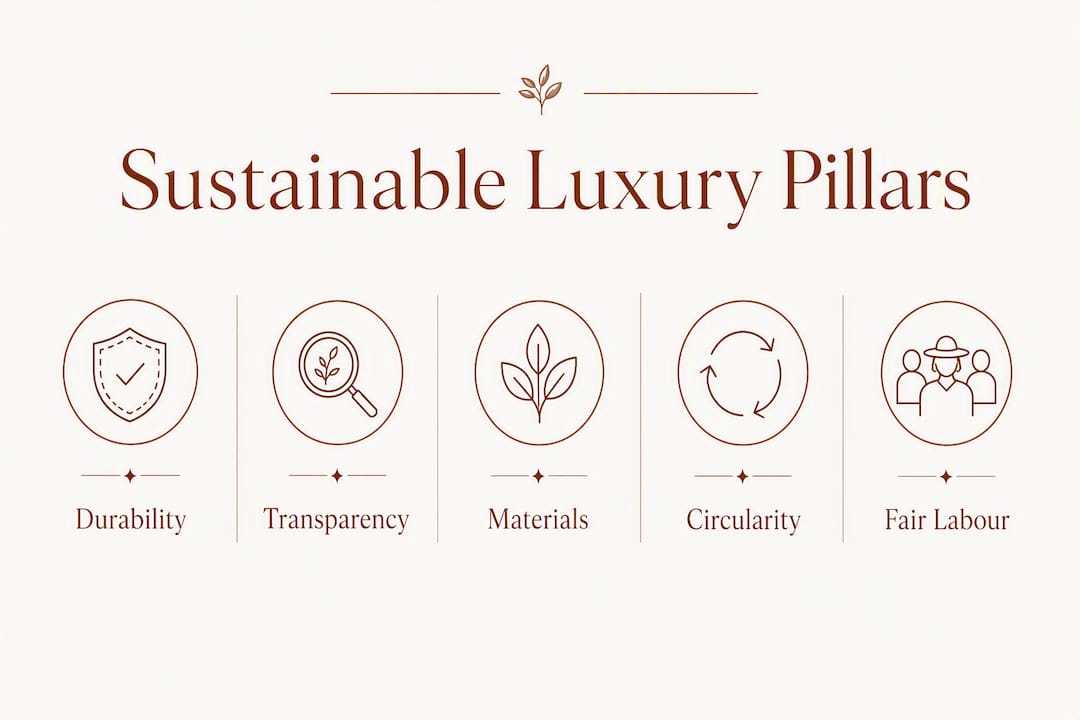
Responsible and innovative materials go beyond organic cotton labels. MDPI research on sustainable-luxury determinants points to supply-chain transparency often supported by blockchain-verified provenance, regenerative fibres, and recycled inputs certified under standards such as the Global Recycled Standard (GRS). The material story must be traceable from field to finished product.
Transparency and traceability mean a published supply-chain map, not a paragraph about “ethical sourcing.” Consumers increasingly demand verified credentials and published ESG reports rather than aesthetic sustainability messaging alone, and independent audits are the strongest trust signal available.
Circular business models close the loop. Resale platforms, rental schemes, takeback programmes, and repair services all extend a product’s useful life and capture value that would otherwise be lost. Academic frameworks describe this as “value-in-reuse” and align it with UN Sustainable Development Goal 12 on responsible consumption.
Fair labour and community investment complete the picture. Social sustainability means living wages, safe conditions, and investment in the communities where products are made, not just environmental metrics.
| Pillar | What to look for |
|---|---|
| Durability & repairability | Published repair services, spare parts, construction quality |
| Materials & sourcing | GOTS, GRS, or equivalent certification; traceable provenance |
| Transparency & traceability | Published supply-chain map; third-party audit or ESG report |
| Circular models | Resale, rental, takeback, or repair programme |
| Fair labour | Living-wage commitments; named factory partners; NGO partnerships |
Pro Tip: Ask a brand directly: “Where was this made, and what happens if it needs repair?” A brand confident in its sustainability credentials will answer both questions without hesitation.
How are luxury brands acting on sustainability right now?
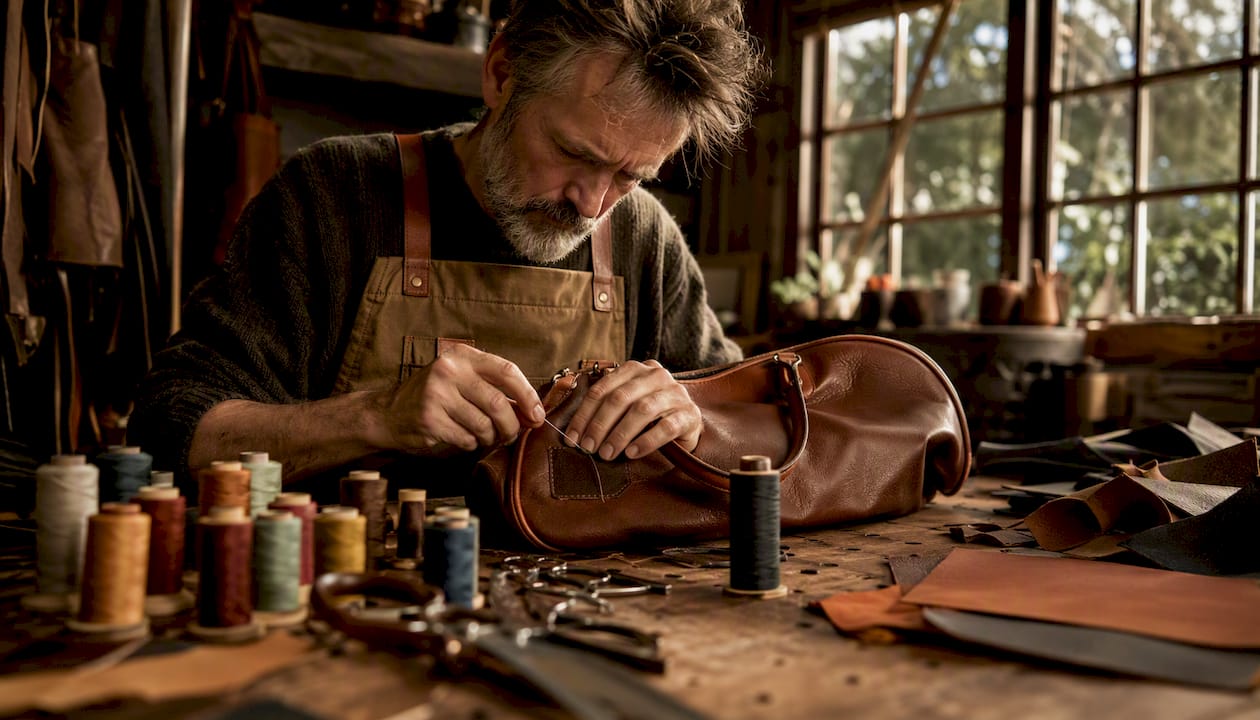
The strategic shift across the luxury sector is real, though uneven. Bain & Company’s LuxCo 2030 vision argues that the most credible path forward is to decouple growth from volume, creating value through craft, scarcity, and circular lifetime value rather than selling more units. Several well-known brands illustrate different facets of this approach.
Stella McCartney has built her label’s identity around refusing animal-derived materials and publishing detailed environmental profit-and-loss accounts. Gucci’s no-deforestation and no-conversion policy represents a biodiversity commitment at the sourcing level. Burberry has set science-based targets and published annual sustainability reports audited by third parties. Chanel and Hermès both invest heavily in artisan training and repair infrastructure, treating craft longevity as a sustainability argument in itself. Farfetch, as a resale and marketplace platform, has extended the circular economy into luxury retail by giving pre-owned pieces a formal second life.
“Luxury brands that prove the math and protect the magic — demonstrating measurable impact while preserving the emotional and craft values that define the category — are the ones gaining legitimacy with a new generation of discerning consumers.”
The table below maps common brand strategies to the dimensions shoppers care about most.
| Strategy | Transparency & traceability | Materials & sourcing | Circularity | Carbon targets |
|---|---|---|---|---|
| Supply-chain mapping | Published supplier lists | Certified inputs | N/A | Scope 3 reporting |
| Regenerative materials | Field-to-product provenance | Organic / regenerative fibre | Compostable end-of-life | Lower extraction emissions |
| Resale & rental platforms | Platform-verified authenticity | Extends existing materials | Core circular model | Reduced production demand |
| Repair & aftercare | Named repair partners | Preserves original materials | Extends product life | Avoids replacement emissions |
| Responsible packaging | Material certifications | FSC paper, recycled content | Reusable or compostable | Reduced logistics footprint |
Third-party directories such as Good On You provide independent ratings that cut through brand-owned messaging, rating labels on labour, environment, and animal welfare using publicly available data.
How can you spot genuine sustainable luxury when shopping in the UK?
A confident checklist is more useful than a general principle. Work through these steps before committing to a purchase.
- Request supply-chain transparency. Ask the brand for its supplier list or a published factory map. If none exists, that absence is itself informative.
- Check for third-party credentials. Look for GOTS, GRS, B Corp, or a published science-based target. A brand’s own “eco” label carries no independent weight.
- Ask about repair and aftercare. Does the brand offer repairs, spare parts, or a care guide? A product with no aftercare story is designed to be replaced.
- Examine resale and takeback options. Can you return the item at end of life? Is there a resale programme or a recommended secondary market?
- Inspect material provenance. Where was the fibre grown or sourced? Is the processing certified? “Natural” is not the same as “sustainably sourced.”
- Evaluate packaging and delivery. Reusable, recycled, or compostable packaging matters. Carbon-offset delivery claims should come with a named scheme and a verifiable certificate.
- Cross-reference independent ratings. Consult Good On You, B Corp directories, or published ESG reports rather than relying solely on brand marketing.
Suggested questions to ask a retailer directly:
- “Which third-party standard covers your materials?”
- “Do you offer repairs, and how do I access that service?”
- “What happens to this product at end of life?”
- “Is your carbon reporting independently verified?”
Pro Tip: Personalisation is a quiet but powerful sustainability tool. A gift embroidered with a child’s name or birth date is far more likely to be kept for years than an anonymous item. When choosing between two comparable products, the personalised option often has the longer life, and a longer life means less waste. Nicholasandrose’s personalised fabric wraps are built on exactly this principle.
Greenwashing, measurement gaps, and the trade-offs you should know about
Greenwashing in luxury takes subtler forms than a green logo. Watch for vague language (“responsibly made,” “eco-conscious design”) with no certification to back it. Imagery of forests and clean water alongside products with no environmental credentials is a classic misdirection. One-off charity donations, however generous, do not substitute for structural changes to materials, labour, or logistics.
Measurement gaps are equally common. Many brands report only Scope 1 and 2 carbon emissions (direct operations and purchased energy) while omitting Scope 3, which covers the supply chain and product use phase and typically represents the largest share of a fashion brand’s footprint. Without Scope 3 reporting, a carbon-reduction claim tells only part of the story.
Trade-offs are real and worth acknowledging honestly. Locally produced goods reduce transport emissions but may require more water or land than efficiently farmed alternatives elsewhere. Natural fibres are biodegradable but can be resource-intensive to grow. Scarcity-based luxury models reduce volume but can make sustainable options inaccessible to most consumers. None of these tensions have clean answers, but a brand that acknowledges them openly is more credible than one that does not.
The remedies are practical: prioritise brands with published third-party audits over those with self-declared claims; favour certifications with defined standards (GOTS, B Corp) over vague in-house labels; and treat a brand’s willingness to discuss trade-offs as a positive signal rather than a weakness.
Sustainable luxury extends to gifting, experiences, and how you care for what you own
Circular thinking applies as naturally to a gift as it does to a wardrobe. The wrapping, the object inside, and the way both are used over time all carry environmental weight. For newborn and baby-shower gifting in particular, the choices you make at the point of purchase ripple forward for years.
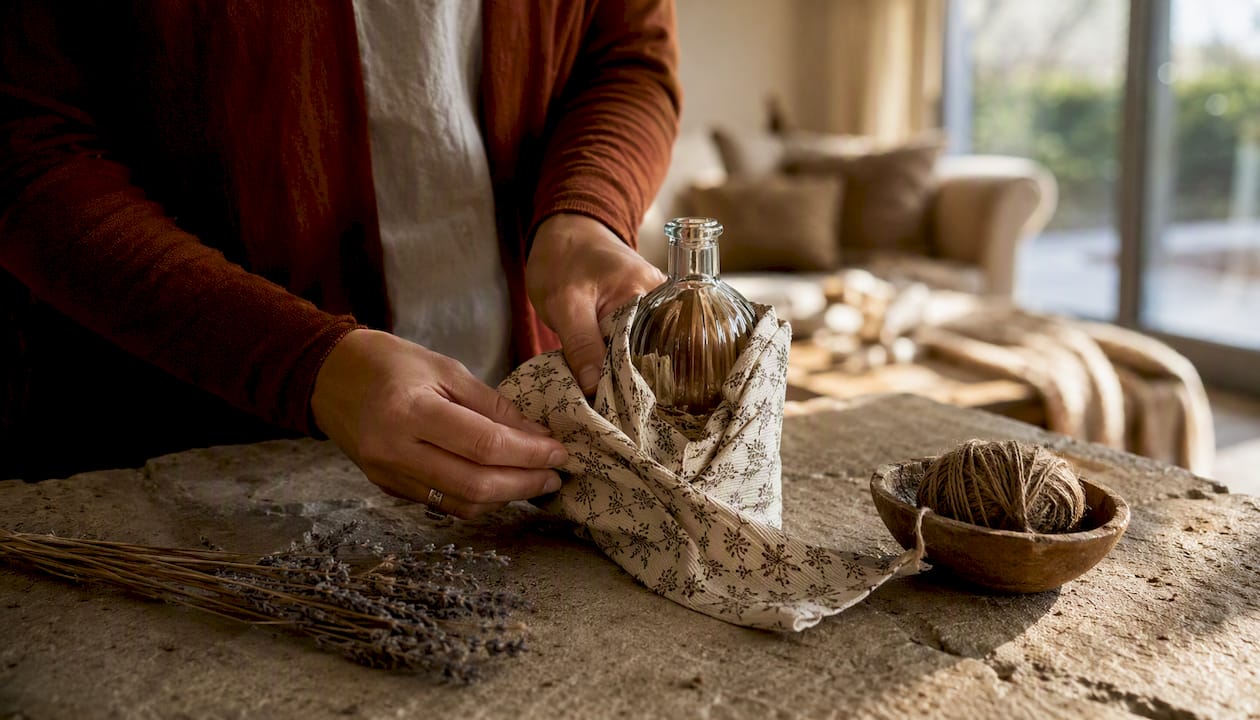
Reusable packaging is the most immediate change. A sheet of single-use paper wrap is typically discarded within minutes of a gift being opened, often before the baby has even arrived home. Reusable fabric wrapping, by contrast, becomes part of the gift itself, folded away and brought out again for the next occasion.
Personalised keepsakes and heirloom textiles carry a different kind of value. Research on sustainable-luxury consumer behaviour finds that emotional durability and personalisation increase product retention, meaning a named or embroidered piece is kept far longer than its anonymous equivalent. For newborn gifts, this translates directly: an embroidered cotton wrap bearing a child’s name becomes a memento, not a material.
Experiential gifts (a class, a membership, a shared experience) carry no physical footprint at all and align with the sustainable-luxury principle of valuing access over accumulation. For those who prefer a tangible gift, repairable and long-lasting items, such as quality wooden toys or hand-stitched textiles, outperform trend-driven alternatives on every sustainability measure.
Product care extends the life of luxury items considerably. Professional cleaning, correct storage, and prompt minor repairs all reduce the need for replacement. Brands that provide care guides, offer repair services, or partner with specialist restorers are investing in the long-term value of their products rather than in the next sale.
| Gifting option | Sustainability benefit | Longevity signal |
|---|---|---|
| Reusable fabric wrap | Eliminates single-use paper waste | Used across multiple occasions |
| Personalised embroidered textile | Emotional durability; kept as memento | Retained for years, often decades |
| Heirloom wooden toy | Durable, repairable, biodegradable | Passed between children |
| Experiential gift | Zero physical footprint | Memory-based value |
| Certified organic clothing | Responsible materials; durable construction | Worn through multiple growth stages |
For sustainable newborn gift ideas that combine all three qualities, reusable personalised fabric wraps offer a practical starting point that requires no compromise between beauty and responsibility. You might also find it useful to explore conscious gifting principles for luxury products more broadly, which apply across categories from fragrance to textiles.
Nicholasandrose reusable fabric wrap: sustainable luxury in practice
Nicholasandrose’s personalised cotton fabric gift wraps offer a concrete illustration of sustainable-luxury principles applied to gifting. Each wrap is made from reusable cotton, personalised through embroidery with a name, date, or short message, and designed for newborn and children’s milestone occasions. The wrap does not end in a bin. It folds away, is brought out again, and over time becomes a textile keepsake woven into a family’s story.
The sustainability case maps directly to the pillars described above. Cotton fabric is durable and repairable in a way that paper is not. Personalisation through embroidery creates the emotional attachment that research links to longer product retention. Reuse eliminates the recurring waste of single-use wrapping. And the keepsake quality means the wrap is far more likely to be stored carefully than discarded.
“A personalised textile is far more likely to be kept and reused as a memento than single-use paper wrap, making embroidery and customisation a material driver of emotional durability.”
Key determinants of luxury marketing accordant with sustainability-oriented value perspectives, MDPI
Practical details for gifters:
- Personalisation: choose a name, birth date, or short message for embroidery at the point of order.
- Sizes and patterns: available in a range of sizes and designs suited to newborn and toddler gifts, with a Baby & Beyond collection offering milestone-specific options.
- Care: machine-washable cotton; gentle cycle recommended to preserve embroidery; air-dry flat to maintain shape.
- Reuse: fold and store between occasions; the fabric holds its quality across repeated use and washing.
Key takeaways
Sustainable luxury is defined by durability, traceable provenance, and circular design, not by green imagery or self-declared claims, and personalisation is one of the most effective tools for extending a product’s useful life.
| Point | Details |
|---|---|
| Durability over novelty | Choose products built to last and designed for repair, not seasonal replacement. |
| Provenance and proof | Prioritise third-party certifications (GOTS, B Corp, science-based targets) over brand-owned eco labels. |
| Circular options matter | Resale, repair, and reusable packaging all reduce environmental impact across a product’s full life. |
| Personalisation extends life | Embroidered or customised items are retained far longer, making personalisation a practical sustainability tool. |
| Nicholasandrose for gifting | Personalised reusable cotton fabric wraps for newborns replace single-use paper and become lasting keepsakes. |
Why sustainable luxury matters to us at Nicholasandrose
Every gift we wrap in paper is a small, quiet decision, and most of those decisions end the same way: in a bin, often within the first few minutes of a celebration. At Nicholasandrose, we started from a simple observation about newborn gifting specifically. The wrapping paper is frequently discarded before the baby has even come home, sometimes before the shower is over. That felt like a gap worth closing.
Our personalised reusable cotton fabric wraps are our answer to that gap. They are not a compromise between beauty and responsibility. The embroidery, the tactile quality of the cotton, the care taken in choosing a pattern for a new arrival: these are the same qualities that define luxury in any other context. The difference is that our wraps are designed to stay, to be folded away and brought out again, to carry a name that makes them worth keeping.
The broader movement toward sustainable luxury is, at its heart, a return to the original meaning of the word: something made with such care and intention that it outlasts the moment it was given.
Nicholasandrose: personalised fabric wraps for meaningful, lasting gifts
The most considered gift for a new arrival is one that serves the occasion beautifully and then continues to serve long after the celebration has passed.
Nicholasandrose’s personalised reusable fabric wraps for newborns and milestones are crafted from soft, durable cotton and embroidered with a name, date, or message of your choosing. They replace single-use paper wrapping entirely, arriving as part of the gift rather than something to be discarded alongside it. Each wrap is machine-washable, designed to hold its quality across years of use, and sized for newborn and toddler gifts. The 2026 Baby & Beyond collection includes milestone-specific patterns for baby showers, first birthdays, and christenings.
To personalise a wrap for your next gift, visit the Baby & Beyond collection and choose your pattern, size, and embroidery details at checkout.
Useful sources and further reading
The sources below offer deeper reading on sustainable luxury across academic, industry, and consumer-facing perspectives.
- Sustainable luxury marketing: a synthesis and research agenda (White Rose Research) — A peer-reviewed synthesis of the academic literature on sustainable luxury marketing; useful for understanding how consumer behaviour and brand strategy interact.
- Building business resilience: how luxury can reclaim sustainability’s meaning (California Management Review) — Argues that luxury brands must integrate sustainability into craft and governance, not treat it as a communications exercise.
- The paradoxes and opportunities of sustainable luxury (book chapter) — Theoretical framework for understanding circular value creation in luxury, including SDG alignment.
- Eco-chic: how to balance indulgence and responsibility (London Business School) — Accessible overview of the tensions between luxury positioning and environmental responsibility.
- Sustainable Luxury — Sustainability Directory — Practitioner-oriented summary of sustainable-luxury principles and consumer expectations.
- Ellen MacArthur Foundation — circular economy resources — The leading reference for circular economy principles as they apply to fashion and product design.
- Why personalise fabric wraps for eco-conscious gifting — Nicholasandrose — Explains the sustainability case for personalised reusable fabric wraps and the role of emotional durability in reducing waste.
Recommended
- Eco Aware Wrapping: Defining Sustainable Luxury – Nicholas & Rose Limited
- Sustainable Gift Wrap Choices: Eco-Luxury for 2025 – Nicholas & Rose Limited
- Luxury personalised gifts for eco-conscious UK parents – Nicholas & Rose Limited
- Eco Conscious Gift Wrapping Explained: Sustainable Luxury – Nicholas & Rose Limited